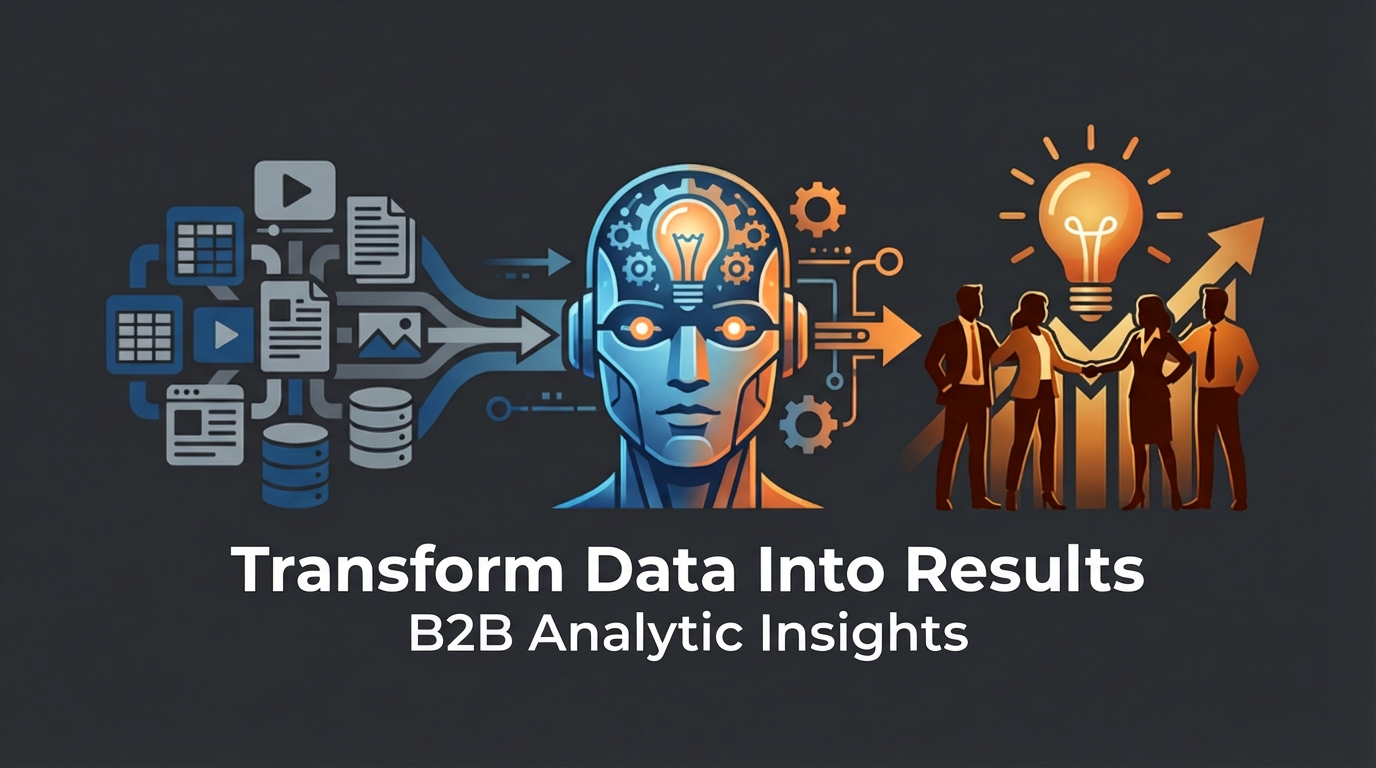

The landscape of business intelligence and operational excellence is undergoing a seismic shift, propelled by artificial intelligence. For decades, organizations have navigated their operations with analytics predominantly rooted in descriptive and diagnostic capabilities. We’ve meticulously dissected historical sales figures, identified recurring patterns in customer churn, and understood “what happened” and “why.” This backward-looking perspective, while foundational, now represents merely the foothills of the analytical mountain range. The true summit, where competitive advantage is not just sustained but actively engineered, lies in predictive and prescriptive analytics—the realm where AI shines brightest. As a seasoned executive with over 25 years in leveraging data for strategic outcomes in credit risk, financial analysis, and enterprise operations, I’ve witnessed firsthand the profound impact of moving beyond mere hindsight to foresight and active intervention. This evolution isn’t merely a technological upgrade; it’s an analytics transformation that redefines how decisions are made, strategies are formulated, and value is unlocked.
Consider the persistent challenges in enterprise operations. We grapple with unpredictable supply chain disruptions, spiraling credit losses driven by economic volatility, and the perennial struggle to optimize resource allocation. Traditional analytics can highlight these issues post-factum. But what if we could anticipate them? What if we could not only predict the likelihood of a credit default but also prescribe targeted interventions to mitigate that risk before it materializes? This is the promise of AI-driven analytics maturity, a promise that is rapidly transitioning into a tangible reality for those organizations willing to invest strategically.
The Analytics Maturity Continuum: From Historical Analysis to Proactive Intervention
The journey from rudimentary data reporting to advanced AI-driven decision-making can be conceptualized as a continuum, often categorized into distinct stages of analytical maturity. Understanding these stages is crucial for identifying an organization’s current standing and charting a pragmatic course for advancement.
Descriptive Analytics: The “What Happened?” Stage
At its core, descriptive analytics provides a retrospective view of business performance. It answers fundamental questions by aggregating and summarizing historical data. Think of executive dashboards displaying quarterly revenue trends, year-over-year growth comparisons, or the average duration of a customer relationship. This stage is indispensable for baseline understanding and performance monitoring. In a B2B context, this might involve analyzing historical credit delinquencies across different industry sectors or assessing the historical operational efficiency of various manufacturing plants. While essential, relying solely on descriptive analytics is akin to driving a car by constantly looking in the rearview mirror. It informs, but it doesn’t predict or guide.
Diagnostic Analytics: Uncovering the “Why It Happened”
Building upon descriptive insights, diagnostic analytics delves deeper to explore the root causes of observed phenomena. It seeks to explain anomalies and patterns. Why did customer churn spike in Q2? Why did credit losses increase in a specific portfolio? This stage often involves statistical analysis, data mining, and hypothesis testing to identify underlying drivers. For instance, diagnosing a rise in credit risk might involve correlating it with changes in macroeconomic indicators, industry-specific downturns, or shifts in a client’s financial statements. This ability to understand causality is a significant step forward, providing context for past events. However, even with diagnostic analytics, interventions remain reactive rather than proactive.
Predictive Analytics: Forecasting the “What Will Happen?”
This is where AI begins to truly flex its muscles. Predictive analytics leverages statistical models, machine learning algorithms, and historical data to forecast future outcomes and probabilities. It’s about anticipating, not just observing. Imagine predicting the likelihood of a customer defaulting on a loan, estimating future demand for a product, or forecasting potential equipment failures in an industrial setting. In credit risk, this translates to models that assign a probability of default to each applicant or existing client, enabling more informed lending decisions and proactive risk monitoring. The power here lies in transforming uncertainty into quantifiable probabilities, allowing for risk mitigation and opportunity identification before events unfold. However, even with sophisticated predictions, the “so what?” remains. What action should be taken?
Prescriptive Analytics: Recommending the “What Should We Do?”
The pinnacle of the analytics maturity continuum, prescriptive analytics goes beyond prediction to offer actionable recommendations. It not only forecasts outcomes but also suggests optimal courses of action to achieve desired results or mitigate identified risks. This stage often involves optimization algorithms, simulation, and sophisticated decision-making frameworks. For a credit-risk scenario, a prescriptive system might not only predict a high probability of default but also recommend specific interventions: adjust the credit limit, offer a structured repayment plan, or initiate early collection efforts with a tailored communication strategy. In enterprise operations, it could optimize supply chain routes in real-time based on predicted disruptions or recommend maintenance schedules to prevent equipment downtime. This is where analytics transitions from an information provider to a strategic advisor, directly impacting the bottom line through optimized processes and maximized ROI.
The AI Imperative: Driving Analytics Transformation
The acceleration towards higher analytical maturity is inseparable from the advancement and deployment of AI. AI, in its various forms—machine learning, natural language processing, deep learning—provides the engine for moving beyond traditional statistical methods to uncover deeper patterns, handle vast datasets, and generate highly accurate predictions and prescriptions.
Beyond Pilots: The Challenge of Scaling AI for ROI
The intention to achieve top AI maturity is widespread, as evidenced by the KPMG 2026 Tech Report indicating that 70% of organizations aim for this level. However, a starkreality check reveals that only 25% actually achieve it. The chasm between ambition and achievement stems from multiple factors: a critical shortage of skills, a lack of organizational readiness, and the inherent difficulty in scaling AI solutions beyond initial pilots to deliver tangible ROI. You see, the brilliant proof-of-concept in the lab often stumbles when confronted with the complexities of enterprise systems, data cleanliness issues, and resistance to change.
Consider the challenge of integration. AI models are not standalone entities; they must seamlessly integrate into existing workflows and operational systems to be effective. This requires robust data pipelines, API integrations, and a cohesive architectural strategy. The 2026 trends highlight that successful AI maturity emphasizes integrated workflows. This means moving beyond siloed data science projects to truly embed AI into every facet of B2B operations, from credit underwriting to supply chain optimization.
The Power of Data: Fueling AI-Driven Insights
The efficiency and accuracy of AI models are directly proportional to the quality and volume of data they are fed. For B2B organizations, this means harmonizing data from disparate sources: CRM systems, ERPs, financial ledgers, external market data, and even unstructured text data from customer interactions. The ability to collect, clean, and consolidate this data is a foundational prerequisite for any analytics transformation. Without it, even the most sophisticated AI algorithms will yield unreliable results. Remember, garbage in, garbage out.
Time-to-Insight: Accelerating Decision Velocity
One of the most profound impacts of AI-driven prescriptive analytics is the dramatic reduction in “time-to-insight.” In traditional analytical processes, the cycle from data collection to analysis to decision-making could span weeks or even months. By 2026, it’s projected that 40% of queries will utilize natural language, signaling a shift towards more intuitive, real-time access to insights. AI-powered platforms automate much of the data preparation, model building, and insight generation, enabling near real-time decision support. Imagine a credit analyst receiving an instant, AI-generated recommendation for a loan application, complete with risk profile and mitigation strategies, rather than waiting days for a manual review. This velocity of insight allows organizations to respond to market changes, competitive pressures, and emerging risks with unprecedented agility.
Navigating the Human Element: Skills, Governance, and Organizational Readiness
While AI provides the technological backbone, the successful adoption and maximal leverage of prescriptive analytics critically depend on the human element. This isn’t just about hiring data scientists; it’s about fostering an analytics-driven culture.
Building AI-Ready Workforces: The Skill Gap and Training Imperative
The KPMG report underscores the skills gap as a significant barrier to achieving AI maturity. This isn’t merely a technical deficit; it’s a gap in analytical thinking across all levels of an organization. The January 2026 acquisition by Information Services Group of an AI Maturity Index platform specifically designed to assess workforce AI readiness and enhance employee capabilities is a clear indicator of this critical need. It highlights the shift from purely technical skills to a broader understanding of how AI can be applied, interpreted, and governed effectively. Training programs must extend beyond the analytics team to empower business leaders with the literacy to ask the right questions, interpret AI outputs, and confidently act on prescriptive recommendations.
Establishing Robust AI Governance and Ethical Frameworks
As AI systems become more autonomous and their recommendations more impactful, the need for robust governance frameworks becomes paramount. The 2026 trends reveal that 69% of companies lack sufficient oversight of their AI stack, a worrying statistic given the potential for biased outcomes, opaque decision-making, and regulatory non-compliance. The accelerating adoption of ISO/IEC 42001 by 2025 emphasizes the growing importance of trustworthy AI scaling, with 2026 prioritizing governance tooling and agent control.
For B2B operations, particularly in highly regulated sectors like financial services, this means establishing clear guidelines for model development, deployment, monitoring, and auditing. It involves defining accountability for AI-driven decisions and ensuring transparency in how algorithms arrive at their recommendations. Effective governance builds trust—both internally among employees and externally with customers and regulators.
Fostering Cross-Functional Collaboration and Organizational Change
Analytics transformation is not an IT project; it’s a strategic business initiative that requires cross-functional collaboration and a willingness to embrace organizational change. The shift towards closing the insight-to-action gap requires cross-functional governance and real-time response structures. This means breaking down departmental silos and fostering a collaborative environment where data scientists, business analysts, domain experts, and executive leadership work in concert. Leadership buy-in is non-negotiable. Without it, even the most brilliant analytical models will remain relegated to the periphery. The December 2025 collaboration between the Software Engineering Institute (SEI) and Accenture to develop an AI adoption maturity model specifically for enterprise roadmaps highlights the integrated approach needed to achieve predictable benefits from AI.
Strategic Recommendations for Advancing Analytics Maturity
Achieving advanced analytics maturity, particularly towards prescriptive capabilities, is a multi-faceted endeavor that demands a clear strategic roadmap.
1. Articulate a Clear AI Strategy Aligned with Business Objectives: Don’t chase AI for AI’s sake. Clearly define the business problems you aim to solve and the strategic objectives you wish to achieve. Whether it’s reducing credit losses by X%, optimizing supply chain efficiency by Y%, or improving customer retention by Z%, tying AI initiatives directly to measurable business outcomes is critical for securing executive sponsorship and demonstrating ROI.
2. Invest in Data Foundations and Infrastructure: Your AI systems are only as good as the data they consume. Prioritize initiatives to cleanse, integrate, and standardize your data assets. This includes modernizing data infrastructure to support large-scale data processing and real-time analytics. Consider a robust data governance framework from the outset to ensure data quality, security, and compliance.
3. Develop and Nurture an Analytics-Centric Culture: This is where the human element is paramount. Invest in training and upskilling programs not just for your analytics teams, but for business users and leadership. Foster a culture of data literacy where decisions are routinely informed by analytical insights. Create interdisciplinary teams that bring together technical expertise with deep domain knowledge. Recognize that successful analytics requires both technology and human expertise.
4. Start Small, Scale Smart, and Show Value Quickly: Don’t attempt to boil the ocean. Identify high-impact use cases where prescriptive analytics can deliver tangible value in a relatively short timeframe. Implement pilot projects, demonstrate measurable ROI, and use these successes to build momentum and secure further investment. The market growth projection for AI maturity assessment, reaching USD 5.38 billion by 2035 at a 13.48% CAGR, indicates substantial investment in this area, driven by proven value. Remember, only 31% succeed in production deployment; focus on that critical journey from pilot to operationalized system.
5. Prioritize Ethical AI and Robust Governance: As you deploy more sophisticated AI models, establish clear ethical guidelines and a comprehensive governance framework. This includes transparency in model development, accountability for AI-driven decisions, and bias detection and mitigation strategies. Proactive engagement with regulatory developments, such as ISO/IEC 42001, is essential for building trustworthy AI systems. Ensure you have visibility (as 69% lack oversight) into your AI stack.
6. Embrace Integrated Workflows and Continuous Improvement: AI-driven analytics should not exist in isolation. Integrate predictive and prescriptive insights directly into operational workflows, decision-making processes, and enterprise systems. Establish mechanisms for continuous model monitoring, recalibration, and improvement. The real power comes when insights are not just generated, but actively consumed and acted upon within the flow of business.
The journey from descriptive insights to prescriptive action is not without its challenges. It demands significant investment in technology, talent, and organizational change. However, for organizations willing to embrace this analytics transformation, the rewards are substantial. It promises not just competitive advantage, but a fundamentally more intelligent, resilient, and proactive approach to navigating the complexities of the modern B2B landscape. The future of enterprise operations and strategic decision-making belongs to those who master the art and science of prescriptive analytics. It’s time to move beyond understanding what happened, to actively shaping what’s to come.