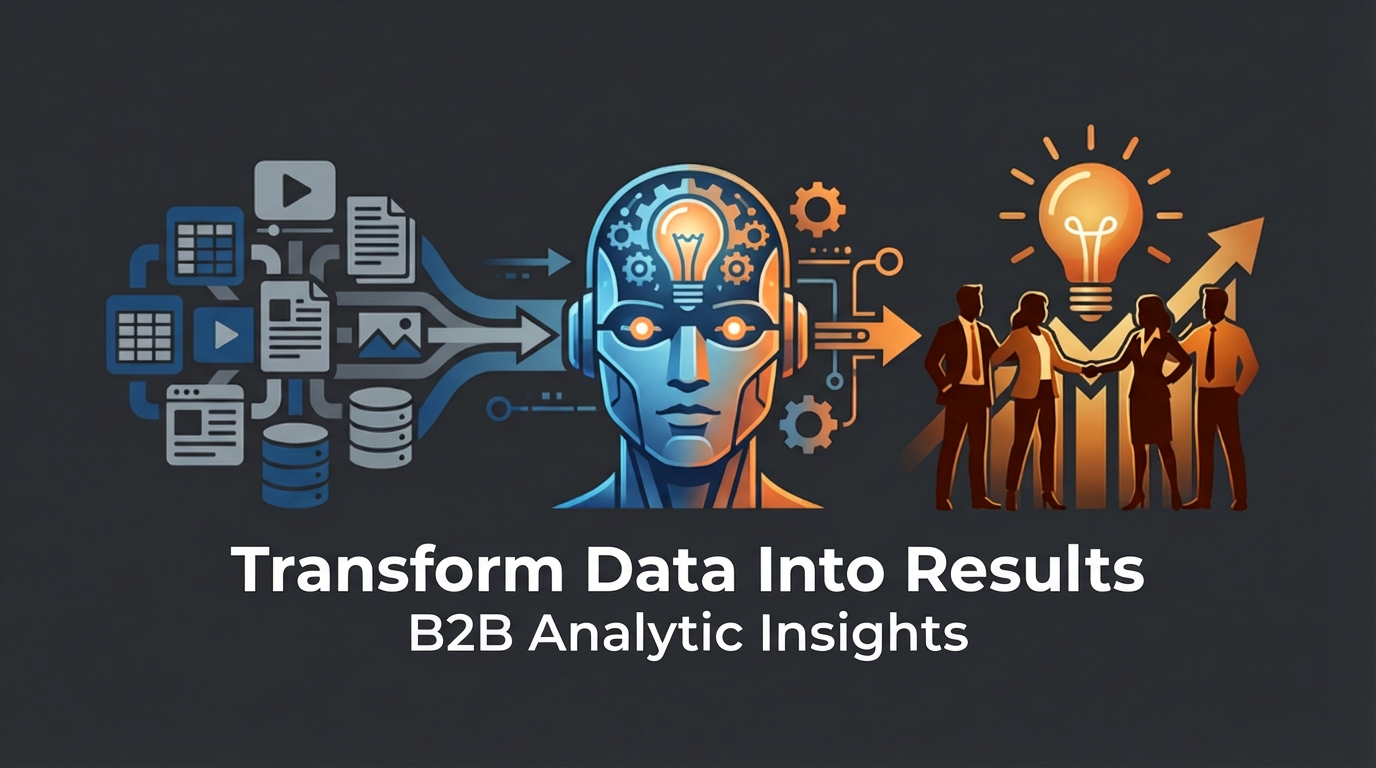

The bedrock of sound business operations, particularly in credit risk, financial analysis, and enterprise operations, has long been robust data analysis. For decades, Business Intelligence (BI) tools served as the linchpin, providing dashboards and reports that illuminated past performance. Yet, the landscape is shifting at an unprecedented velocity. We are not experiencing an incremental improvement; we are witnessing an analytics transformation, fundamentally altering how we derive value from data. The traditional BI toolkit, once our trusted compass, is increasingly becoming a relic in an era defined by AI.
The Dawn of Autonomous Analytics: Beyond Retrospective Reporting
Traditional BI tools, for all their utility, operated on a fundamentally retrospective model. They were designed to analyze what has happened, presenting data in visual formats amenable to human interpretation. This reactive approach, while valuable, falls short in today’s dynamic business environment. Consider the escalating complexities in credit risk modeling, where market fluctuations and borrower behavior demand real-time, predictive insights. Similarly, in enterprise operations, manual analysis of supply chain data for anomalies or inefficiencies can lead to costly delays.
From Dashboards to Decision Ecosystems
The paradigm shift we are observing, and indeed leveraging, is the evolution from static, retrospective reporting to autonomous, real-time predictive and prescriptive analytics. By 2026, the capabilities embedded within AI-enabled BI tools have reached a point where they automatically surface insights and recommend actions via natural language interfaces. This makes traditional BI dashboards, often criticized for being data graveyards requiring extensive manual exploration, increasingly obsolete. The focus has moved from merely displaying data to actively guiding decision-making. We’re moving from a car where you constantly monitor the gauges to an autonomous vehicle that anticipates and course-corrects without explicit instruction.
Real-time Responsiveness and Proactive Intelligence
One of the most significant advancements is the capacity for rapid, real-time responses to market changes. Imagine a multi-national financial institution facing sudden shifts in sovereign credit ratings. A traditional BI system might identify the impact days later, post-facto. An AI-powered system, however, can detect anomalies, forecast immediate and cascading effects on investment portfolios, and proactively notify relevant stakeholders with recommended mitigation strategies, all in near real-time. This reduces human error inherent in manual querying and analysis, replacing it with systemic, automated intelligence.
Key Advances: The Pillars of Next-Generation Analytics
The capabilities driving this evolution are not theoretical; they are integrated, tangible features demonstrating clear ROI for organizations that embrace them. These advancements are not simply “nice-to-haves”; they are becoming table stakes for competitive advantage.
Built-in Forecasting and Predictive Modeling
The days of separate data science teams laboriously building predictive models are not entirely over, but the entry barrier has been significantly lowered. Modern AI-enabled BI tools come equipped with built-in forecasting capabilities. This translates directly to applications like sales projections, where historical data is no longer the sole determinant. AI can factor in external macroeconomic indicators, seasonal trends, and even competitor activities to provide more accurate, granular forecasts. Critically, for risk management, churn prediction is no longer a post-mortem exercise but a proactive tool. Anticipating customer churn in a B2B context, for instance, allows for targeted retention strategies before the fact, significantly impacting customer lifetime value.
Reducing Human Error and Enhancing Accuracy
The manual extraction, transformation, and loading (ETL) of data, followed by human-driven analysis in traditional BI, is rife with opportunities for error. Misinterpretations, data entry mistakes, and analytical biases are inherent. AI-driven systems automate much of this process, from data ingestion to insight generation. This doesn’t eliminate the need for human oversight but shifts it from tedious data manipulation to critical evaluation of AI-generated insights and strategic action. The time-to-insight is dramatically reduced, moving from days or weeks to hours or even minutes, providing a significant competitive edge in fast-moving industries.
Contextual AI Governance: Embedding Trust and Control
While the automation is powerful, the need for governance is paramount, especially in regulated industries like financial services. The trend for 2026 emphasizes contextual AI governance. This means not just security and compliance, but also ensuring that AI models are transparent, explainable, and aligned with organizational policies. It’s about building trust in the autonomous recommendations and providing the necessary guardrails. For instance, when an AI system recommends adjusting credit limits for a segment of commercial clients, the ‘why’ behind that recommendation must be auditable and justifiable.
Tool Leaders and Strategic Disruption
The market is responding vigorously to this shift, with leading platforms rapidly integrating advanced AI capabilities. These are not incremental updates; they are fundamental reimagining of how enterprises interact with their data.
Power BI: Intelligent Copilot and Real-time Dashboards
Microsoft’s Power BI, a long-standing leader in the BI space, is demonstrating this evolution with its AI Copilot. This isn’t just a chatbot; it allows users to ask natural language questions about their data and receive not just answers, but automatically generated visualizations and actionable insights. Imagine a regional sales manager asking, “Show me the top 5 underperforming product lines in the EMEA region last quarter and suggest reasons why,” and the system responds with a dynamic dashboard, highlighting key contributing factors from various data sources. Furthermore, its real-time dashboard capabilities deliver up-to-the-minute operational insights, critical for maintaining efficiency in enterprise operations and swiftly addressing any deviations from performance targets.
Qlik: Associative Engines and Auto-Insights
Qlik, another significant player, leverages its unique associative engine to uncover non-obvious relationships within data. Combine this with its auto-insights feature, and you have a platform that proactively suggests hidden patterns and dependencies that a human analyst might completely miss. For a credit risk analyst, this could mean identifying subtle co-dependencies between certain macroeconomic indicators and specific types of loan defaults that were previously undetected using traditional statistical methods. This deep contextual understanding allows for more nuanced risk assessments and the development of more robust financial products.
Competitive Edge and Organizational Transformation
The implications for businesses, especially those grappling with large, complex datasets inherent in B2B domains, are profound. The adoption of AI-driven analytics is no longer a luxury; it’s a strategic imperative for sustained competitiveness.
Faster Decisions, Cost Efficiency, and Democratized Data
The most immediate benefit is accelerated decision-making. In a world where market windows are fleeting and competitive pressures are relentless, the ability to rapidly assimilate data into actionable intelligence is a differentiator. This faster time-to-insight directly translates to cost efficiencies. Automating analytical processes reduces the need for extensive manual labor, allowing highly skilled analysts to focus on higher-value strategic initiatives rather than data wrangling. Furthermore, these intuitive, natural language interfaces democratize data access. Business users, even those without deep technical skills, can now directly interrogate data and derive insights, fostering a more data-driven culture across the organization.
Superior Forecasting and Outpacing Competitors
The ability to accurately forecast future trends – whether it’s demand for a new enterprise software solution, potential fluctuations in raw material prices, or the probability of default for a portfolio of corporate loans – provides an unparalleled advantage. Organizations leveraging AI for superior forecasting can proactively adjust strategies, optimize resource allocation, and gain a significant lead over competitors still relying on lagging indicators from traditional BI. This isn’t just about efficiency; it’s about strategic foresight.
The Path Forward: Strategic Recommendations for C-Suite, Leaders, and Practitioners
For organizations to truly harness the power of this analytics transformation, a multi-faceted approach involving technology, people, and processes is essential. Simply acquiring new tools is insufficient; it requires a strategic overhaul.
For the C-Suite: Focus on ROI and Strategic Alignment
Your primary focus must be on quantifiable ROI. How will AI-driven analytics impact revenue, reduce operational costs, and mitigate risk? Understand that this is not merely an IT project; it is a fundamental shift in how your organization makes decisions. Integrate your analytics strategy directly into your overarching business strategy. Demand clear metrics that tie analytics initiatives to business outcomes – for instance, a 15% reduction in loan default rates attributed to predictive models, or a 10% improvement in supply chain efficiency due to prescriptive AI interventions. This requires C-suite leadership to champion the change, allocate adequate resources, and ensure organizational buy-in.
For Analytics Leaders: Implementation and Change Management
Your role is critical in bridging the technical capabilities with business needs. Implement robust transformation frameworks. This isn’t just about deploying tools; it’s about organizational change management. You must cultivate a culture of experimentation and continuous learning. Prioritize data quality – remember, GenAI is best used for data quality improvement, classification, and metadata enrichment, not for glossing over poor data. Focus on integrating these new AI capabilities into existing workflows. Identify high-impact use cases first, demonstrating tangible successes to build momentum. The blurring lines between BI and AI demand that you build decision ecosystems, not just standalone tools.
For Practitioners: Deepen Technical Acumen and Business Context
For those on the front lines, the call is to deepen technical proficiency in emerging AI and machine learning techniques, but critically, to pair this with a profound understanding of the business context. Understand the nuances of credit risk models, the drivers of financial performance, and the intricacies of enterprise operations. While tools will automate many tasks, your expertise in interpreting, validating, and refining AI models and their outputs remains indispensable. Embrace embedded analytics and self-service capabilities. Advocate for cloud-native security best practices from the outset. Your ability to translate complex technical concepts into actionable business insights is more valuable than ever.
The analytics evolution marks a definitive departure from the static reporting of the past. AI-driven BI is not just an upgrade; it’s a fundamental shift towards proactive, intelligent decision-making. Organizations that embrace this transformation will not merely adapt; they will define the future of their industries. The journey ahead demands both technological adoption and strategic human ingenuity.