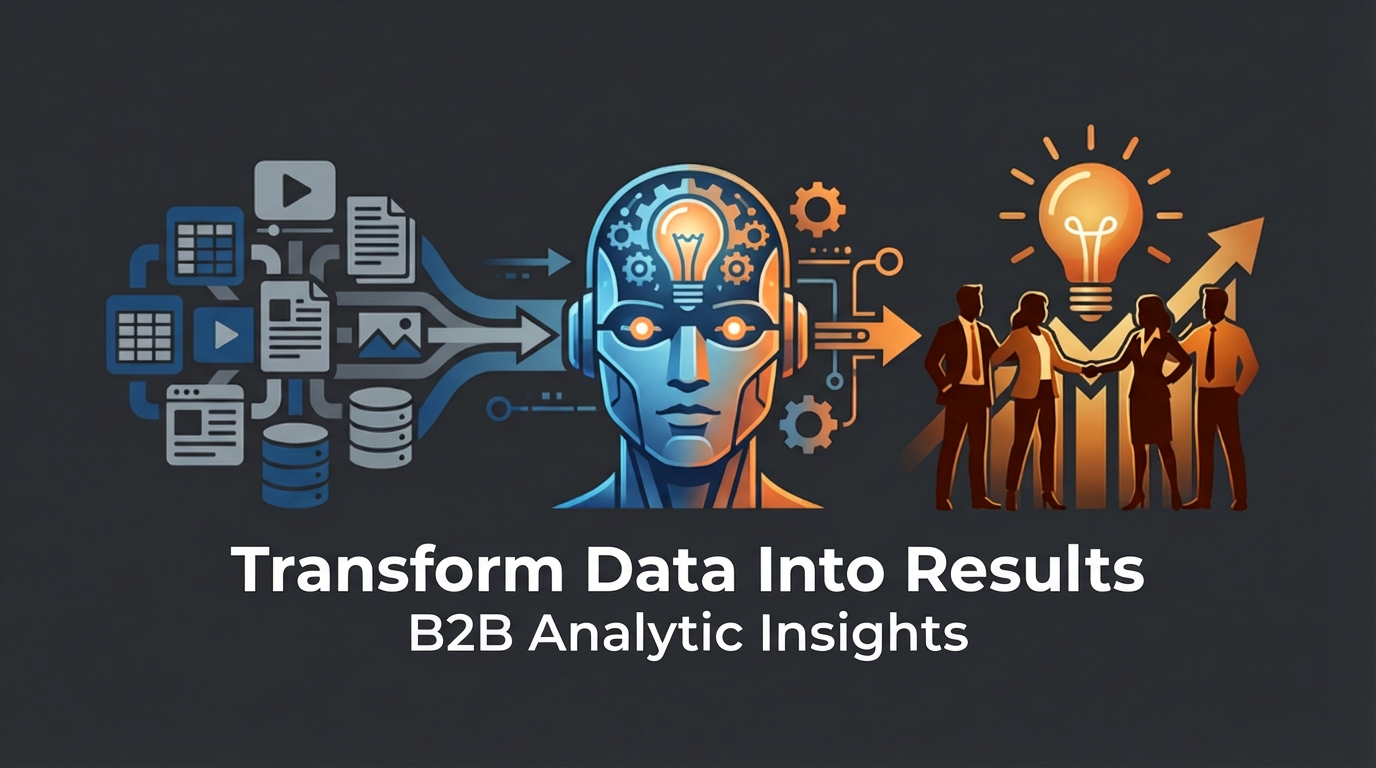

The competitive landscape today is less about who has the most data, and more about who can transform that data into actionable intelligence at speed. For too long, we’ve treated analytics as a departmental function, a collection of tools and reports. But the game has changed. The emergence of sophisticated AI capabilities, particularly generative AI, signals a profound shift. We are no longer talking about incremental improvements; we are discussing an analytics transformation that is a strategic imperative for survival and growth. Building an AI-First Analytics Organization isn’t just a buzzword; it’s the North Star for any enterprise aiming to thrive in this data-saturated, AI-augmented world. We need to move beyond simply doing analytics to being an analytics-driven entity, where AI is the engine driving data-driven decision-making at scale.
The Shifting Sands of Business Intelligence
For decades, the promise of data has been a constant hum in business corridors. We’ve invested heavily in data warehousing, business intelligence platforms, and the people to operate them. Yet, how many organizations can confidently claim that their analytics truly drive strategic advantage, rather than simply reporting on past events? The reality, often, is that we’ve been swimming in an ocean of data with leaky buckets. Our previous analytics frameworks, while valuable, often led to siloed insights and a slow time-to-insight, particularly in navigating complex B2B scenarios like credit risk assessment or optimizing enterprise operations. The typical approach was to gather data, analyze it, and then present findings, a process that could take weeks or even months. Imagine trying to outmaneuver competitors by looking backward through a rearview mirror; that’s been the limitation of many traditional analytics models. Today, the imperative is to harness AI to not only understand the present but to predict and influence the future, integrating this foresight directly into our operational workflows. We’ve seen some glimpses of this in early AI adoption, with 65% of organizations having already deployed Generative AI, a significant indicator of this shift.
The foundational challenge for many has been the inability to scale these efforts. Pilot projects, while useful for demonstrating potential, rarely translate into enterprise-wide strategic adoption. Health systems, for instance, are now aiming to elevate AI from pilots to enterprise-wide strategy by 2026, aligning it with their growth, transformation, and performance goals. This involves a phased rollout, moving from point solutions to comprehensive AI command centers, requiring significant executive sponsorship and the development of robust AI roadmaps. This isn’t just about technology; it’s about a fundamental reorientation of how we think about and operationalize data and intelligence.
Establishing an AI-Ready Foundation
Before we can truly become AI-first, we must ensure our underlying data infrastructure is robust, governed, and optimized for AI consumption. This is not a trivial undertaking. Data leaders today are prioritizing the standardization of definitions, operationalizing governance, and strengthening foundations to build for widespread adoption. Think of your data as the soil in which you’ll plant your AI seeds. If the soil is full of rocks, weeds, and lacks proper nutrients, even the most advanced seeds won’t flourish. An AI-ready foundation means unified, governed data estates where data is discoverable, trusted, and accessible.
This involves a critical look at our data architecture. Are we still operating with disparate data lakes and warehouses that create data silos? The move towards a unified governed data estate is paramount. This isn’t just about consolidating data; it’s about establishing control and ensuring data quality and lineage. The ability to track data from its source through all transformations, especially when feeding sophisticated AI models, is no longer a nice-to-have, but a necessity for governance and auditability. This is particularly crucial in B2B financial analysis, where regulatory compliance and risk mitigation demand pristine data integrity.
Furthermore, the democratization of data and analytics, fueled by no-code AI platforms, necessitates this strong foundation. With an estimated 50% rise in no-code AI platforms for non-technical analytics adoption, we are empowering more users. However, without a governed data estate, this empowerment can quickly lead to chaos and unreliable insights. Ensuring AI agents are also subject to end-to-end lineage and governance is the next frontier, moving beyond traditional data governance to AI governance.
Operationalizing AI for Business Impact
The true test of an AI-first analytics organization lies in its ability to operationalize AI for tangible business impact. This means moving beyond theoretical models and integrating AI directly into workflows, decision-making processes, and product development. The emphasis is shifting from isolated projects to value portfolios, measuring success not just by technical achievement but by demonstrable business outcomes. This requires a clear prioritization roadmap, aligning AI initiatives with business impact and complexity.
For example, in credit risk assessment for B2B clients, an AI-first approach would involve real-time predictive models that assess risk based on a multitude of dynamic factors, from financial statements and market trends to transaction histories and behavioral patterns. This moves beyond static credit scoring to a continuous, dynamic risk management system. The time-to-insight here is dramatically reduced, enabling lenders to make faster, more informed decisions and potentially unlock new market segments previously deemed too risky.
In enterprise operations, AI can optimize supply chains, predict equipment failures, and personalize customer interactions. We are seeing 2026 as an inflection point for prescriptive analytics, where AI not only predicts what will happen but prescribes the optimal course of action. Metrics like innovation velocity, the speed at which new AI-driven capabilities are brought to market, become critical indicators of success. This is where the integration of AI with other technologies like blockchain, as highlighted in guidance for AI-first strategies, can create even more powerful, transparent, and secure operational frameworks. The goal is to embed intelligence so deeply that it becomes an invisible, yet indispensable, part of daily operations.
Cultivating an AI-Augmented Workforce
An AI-first analytics organization is not solely about technology; it’s about people. The rise of AI, especially Generative AI, is transforming the nature of work. We are seeing an increasing reliance on these tools, with 84% of leaders using GenAI weekly and 45% daily as of 2025. This signals a shift towards an AI-augmented workforce, where human expertise is amplified, not replaced, by intelligent systems. Our analytics teams need to evolve from data wranglers to AI orchestrators, translators, and ethical guardians.
This requires a significant investment in upskilling and reskilling. The focus should be on developing a workforce that can effectively collaborate with AI tools, interpret AI-generated insights, and understand the ethical implications of their deployment. This means fostering a culture of continuous learning and experimentation. Imagine an orchestra where the conductor (the human analyst) guides a symphony of AI instruments (various AI models and tools) to create a harmonious and impactful piece of music. The conductor doesn’t play every instrument, but understands how they work together to achieve the desired outcome.
Furthermore, the shift towards “decision-first analytics,” where AI enhances human judgment rather than supplanting it, is critical. This means designing AI systems that present insights and recommendations in a way that supports human decision-making, allowing for critical evaluation and contextualization. The challenge here is not just technical implementation but also organizational change management, ensuring that the workforce embraces these new ways of working and sees AI as an enabler, not a threat.
Navigating the Challenges and Future-Proofing Your Strategy
Building an AI-first analytics organization is not without its hurdles. We need to acknowledge and address these challenges head-on to avoid falling into the trap of overpromising and underdelivering. The hype around AI can sometimes obscure the practical realities of implementation.
One of the most significant challenges is ethical AI and responsible data usage, especially in sensitive areas like credit risk. Ensuring fairness, transparency, and accountability in AI models is paramount to maintaining trust with customers and stakeholders. We must also grapple with data privacy, transforming privacy from a compliance burden into a competitive advantage.
Another challenge is the sheer complexity and pace of technological evolution. The landscape of AI tools and techniques is constantly shifting. Health systems, for example, aren’t just looking at immediate AI deployment; they’re building board-level discussions and AI roadmaps that account for transformation and long-term performance goals. This requires an agile approach, characterized by adaptability and sustainability. As highlighted in the concept of “Beyond AI Imperatives,” AI-first strategies need to be guided by innovation charters and align with broader organizational adaptability goals.
Furthermore, the integration of AI agents with other emergent technologies like blockchain presents both opportunities and challenges. This requires a strategic vision that looks beyond isolated AI deployments to a holistic, interconnected technological ecosystem. The focus must remain on delivering business value. The shift from data hoarding to business value is a guiding principle here, ensuring that every investment in analytics and AI drives measurable improvements in areas like financial performance, operational efficiency, and customer satisfaction. The ultimate goal is to future-proof the organization by embedding a culture of continuous learning and adaptation, ensuring that our analytics capabilities evolve in lockstep with the rapidly changing business and technological environment. By proactively addressing these challenges and adopting a forward-thinking strategy, organizations can indeed build a truly AI-first analytics capability that drives sustainable competitive advantage.
In conclusion, the journey to establishing an AI-first analytics organization is a fundamental business transformation. It demands a strategic reorientation, underpinned by a robust, AI-ready data foundation and a commitment to operationalizing AI for tangible business impact. It requires cultivating an AI-augmented workforce capable of leveraging these powerful tools ethically and effectively. By embracing these principles, acknowledging the inherent challenges, and maintaining a relentless focus on driving business value, you can build an organization that not only navigates the complexities of today but is truly poised to lead in the AI-driven future. This is not a sprint; it’s a marathon, requiring vision, investment, and a commitment to organizational change. The time for tentative steps is over; the imperative is to build an AI-first future, now.