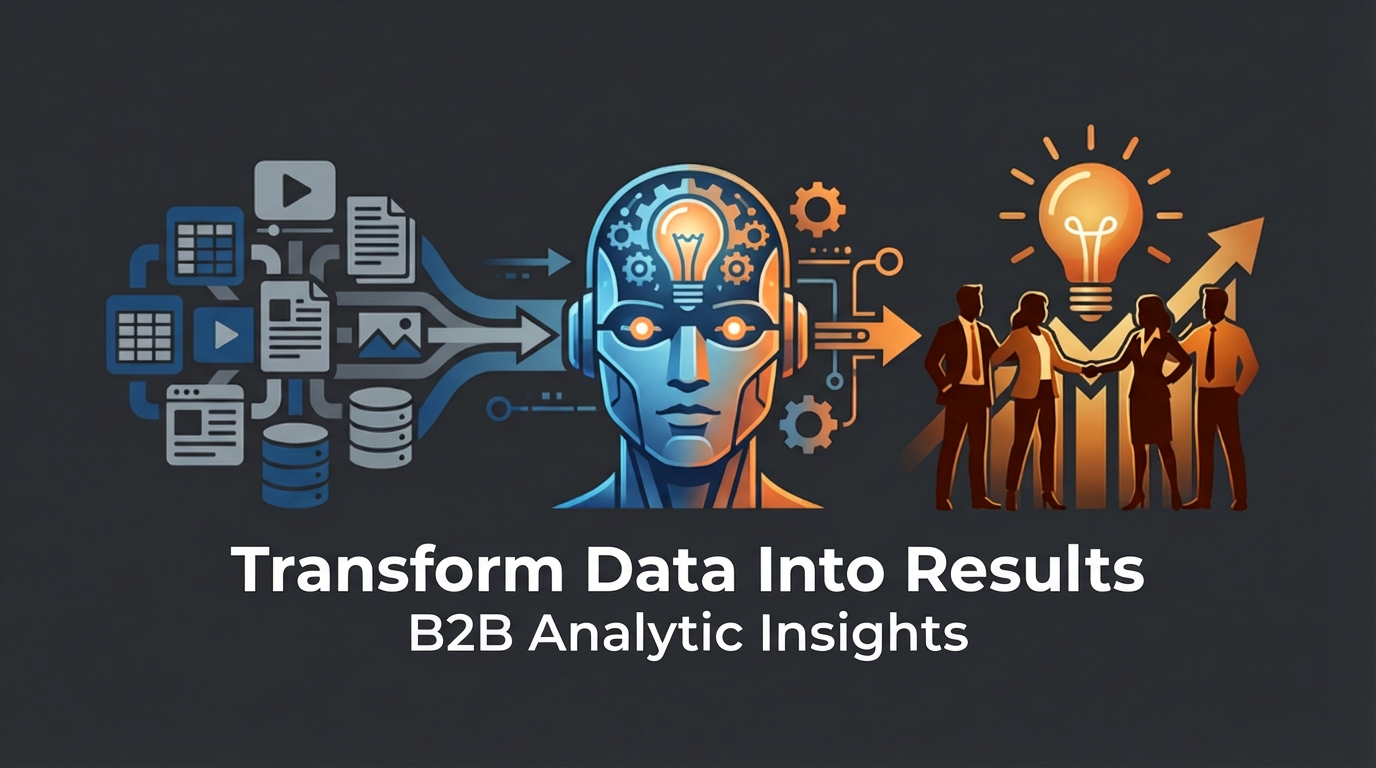

The landscape of enterprise operations is undergoing a profound shift, driven by the escalating volume and velocity of data. We’re witnessing the slow, unceremonious “death of manual analysis,” a paradigm where human analysts painstakingly sift through data, build reports, and derive insights through repetitive, often error-prone processes. This isn’t a hyperbolic statement; it’s an observable trend, a necessary evolution to maintain competitive advantage in an increasingly data-rich world. The question facing every C-suite, every analytics leader, and every practitioner is not if this transformation will occur, but how and how quickly your organization will adapt. Delay costs. It costs in missed opportunities, in inefficient resource allocation, and ultimately, in market share.
The Inevitable Sunset of Manual Analytical Labor
For decades, the standard operating procedure for many critical business functions, particularly in areas like credit risk scoring, financial planning, and supply chain optimization, involved highly skilled individuals performing repetitive data aggregation, manipulation, and interpretation. This reliance on human bandwidth created inherent limitations.
The Bottlenecks of Human Processing
Consider a medium-sized financial institution assessing credit risk for a portfolio of small businesses. Previously, an analyst would manually gather financial statements, parse unstructured data from market reports, and apply a set of predefined rules to determine a risk score. This process is inherently slow. The time-to-insight for a single customer could be days, sometimes even weeks, leaving the institution vulnerable to market shifts or rapid changes in a borrower’s financial health. Furthermore, human bias, however unintentional, can creep into these assessments, leading to inconsistencies and suboptimal decision-making. The sheer volume of transactions in enterprise operations, from invoice processing to inventory management, simply exceeds human capacity for sustained, error-free manual analysis.
The Scale Illusion: More Analysts, More Problems
The traditional solution to increasing data volumes was to hire more analysts. However, this only scales linearly, and often, with diminishing returns. More analysts mean more coordination, more potential for disparate methodologies, and a higher overhead. It’s like trying to bail out a sinking ship with thimbles; the problem outpaces the solution. The fundamental challenge isn’t simply about having enough hands on deck; it’s about the cognitive load and consistency across thousands or millions of data points. This is where AI steps in, not as a replacement for human intelligence, but as an amplifier and accelerator.
In exploring the transformative impact of AI on analytics, a related article titled “The Future of Data Interpretation: How AI is Redefining Insights” delves into the ways artificial intelligence is reshaping the landscape of data analysis and decision-making. This piece complements the discussion in “The Death of Manual Analysis: AI’s Role in Analytics Automation” by highlighting the shift from traditional methods to automated processes that enhance accuracy and efficiency. For more insights, you can visit the article [here](https://b2banalyticinsights.com/contact/).
AI as the Catalyst for Analytics Transformation
Artificial intelligence is not a panacea, nor is it a magical black box. Rather, it represents a suite of powerful tools that, when strategically applied, can fundamentally redefine how organizations extract value from data. This is an analytics transformation, not merely an upgrade.
From Retrospective to Real-Time: Accelerating Time-to-Insight
One of the most profound impacts of AI in analytics is its ability to shrink the time-to-insight dramatically. Predictive models, powered by machine learning algorithms, ingest vast datasets – transactional data, customer interactions, market trends – and identify patterns that would be invisible to the human eye. In supply chain management, for example, AI-driven platforms can predict demand fluctuations, identify potential disruptions, and recommend optimal inventory levels in near real-time. This active, forward-looking capability contrasts sharply with the traditional retrospective analysis that often explained what happened rather than predicting what will happen. The shift is from rearview mirror driving to predictive navigation.
Empowering Precision: The Rise of Decision Intelligence
AI-powered decision intelligence platforms are moving beyond mere reporting. They are integrating predictive models directly into operational workflows. For a credit risk team, this means AI can instantly analyze hundreds of data points, including non-traditional sources like social sentiment or satellite imagery (for large-scale assets), to generate a highly accurate risk score within seconds. This allows for automated, consistent, and granular decisions, freeing human experts to focus on complex, high-discretion cases. This is not about removing the human element entirely; it’s about elevating human expertise by offloading the repetitive, deterministic tasks to machines. The objective is to achieve a level of granular insight and decision velocity that is simply unattainable through manual methods.
Operationalizing Generative AI for Enterprise Impact
The recent advancements in Generative AI represent a significant leap, moving well beyond experimental use cases into practical, impactful enterprise solutions. By 2026, over 80% of organizations are projected to adopt GenAI for complex processes, illustrating a clear move from novelty to necessity.
Automating Complex Workflows with GenAI
Generative AI excels at understanding context and generating nuanced outputs, making it ideal for automating workflows that previously demanded significant human interpretation. Consider the processing of unstructured documents in a large enterprise – legal contracts, customer feedback, project specifications. GenAI can not only parse these documents, extracting key entities and summarizing critical information, but also generate draft responses, identify discrepancies, or even propose corrective actions. This functionality significantly reduces the manual effort involved in legal review, customer service, or proposal generation. In essence, GenAI acts as an intelligent assistant, handling the cognitive heavy lifting of information synthesis and content creation, allowing human experts to refine and strategize.
The “Copilot” for Strategic Functions: Marketing & Beyond
In marketing, GenAI is transforming campaign orchestration and personalization. AI models can act as a “copilot,” generating highly targeted ad copy, email content, and social media posts tailored to individual customer segments, all while adhering to brand guidelines. This hyper-personalization, driven by continuous optimization and fueled by real-time customer data, allows for significantly higher engagement and conversion rates than generic campaigns. Furthermore, it integrates with privacy-focused consent mechanisms, ensuring ethical and compliant deployment. This isn’t just about speed; it’s about achieving a level of customization and relevance that would be impossible for human teams to manage at scale.
The Era of Super Agents and Autonomous Workflows
Beyond specific task automation, the emerging concept of “agentic AI” promises to revolutionize enterprise operations by orchestrating complex, multi-step processes autonomously. This is a significant evolution from simple task automation.
Agentic AI: Orchestrating Complex Enterprise Operations
Imagine an AI system that can autonomously manage a new product launch, from market analysis and competitive intelligence gathering to collaborating with design teams, coordinating with supply chain logistics, and even drafting marketing copy. This is the promise of agentic AI. These “super agents” are not merely executing predefined scripts; they are capable of understanding overarching goals, breaking them down into sub-tasks, interacting with various tools and systems (e.g., pulling data from a CRM, initiating actions in an ERP, generating reports in a BI tool), and adapting their strategy based on real-time feedback. This enables true machine automation, especially in areas like fraud detection where systems can autonomously investigate suspicious patterns across multiple data sources and flag high-risk transactions for human review, dramatically reducing false positives and improving detection rates.
Physical AI and the Industrial Frontier
The impact of AI automation extends beyond software and data centers. In manufacturing, physical AI and IoT integration are becoming critical. By 2028, 80% of manufacturing leaders anticipate integrating physical AI for monitoring, maintenance, and algorithmic decision-making. This reflects a recognition that human operators simply “can’t keep up” with the complexity and speed required for optimal performance in modern industrial settings. AI-powered robots not only perform repetitive tasks with precision but also learn and adapt, predict equipment failures before they occur through predictive maintenance algorithms, and optimize production lines dynamically. This translates directly to higher operational efficiency, reduced downtime, and improved product quality – all critical metrics for top-line and bottom-line growth.
In exploring the transformative impact of AI on analytics, it is essential to consider how organizations are leveraging data to drive meaningful actions. A related article discusses this phenomenon in depth, highlighting the power of analytics in turning raw data into actionable insights. For more information, you can read about it in this insightful piece on the power of analytics. This connection underscores the shift from manual analysis to automated processes, emphasizing the crucial role AI plays in enhancing decision-making capabilities.
Navigating the Human Element: Opportunities and Challenges
While the technological capabilities of AI are undeniable, the transition to an automated analytics environment is not solely a technical endeavor. It is fundamentally an organizational and cultural shift.
Reskilling and Upskilling the Workforce
The “death of manual analysis” does not spell the death of the analyst. Instead, it necessitates a transformation of their role. Analysts will increasingly become data strategists, AI model trainers and validators, and interpreters of AI-generated insights. The challenge lies in reskilling the existing workforce. This requires investment in training programs that bridge the gap between traditional analytical skills and the new competencies demanded by AI-driven analytics. Organizations must foster a culture of continuous learning and adapt to new roles that emphasize critical thinking, ethical AI deployment, and strategic oversight. The focus shifts from data manipulation to deeper problem-solving and business impact.
Data Governance and Ethical AI Deployment
The proliferation of AI systems brings with it critical considerations around data governance and ethical deployment. As AI makes more autonomous decisions, especially in sensitive areas like credit underwriting or personalized marketing, ensuring fairness, transparency, and accountability becomes paramount. Robust data pipelines, clear data lineage, and explainable AI (XAI) models are no longer optional but essential. Organizations must establish clear ethical guidelines, audit mechanisms, and build diverse teams to scrutinize algorithms for bias. This is not just a regulatory compliance issue; it’s a matter of maintaining customer trust and brand reputation.
Strategic Recommendations for Analytics Leadership
The transition to an AI-driven analytics paradigm is not a sprint; it’s a marathon that demands strategic vision and consistent execution. Here are actionable recommendations for C-suite executives and analytics leaders.
1. Define Your Analytics Transformation Roadmap (ROI-Focused)
Start with the business problem, not the technology. Identify critical pain points in your enterprise operations – high credit risk defaults, inefficient inventory turnover, slow time-to-market. Quantify the current cost of these problems. Then, map how AI can provide a measurable reduction in these costs or a measurable increase in revenue. Focus on quick wins that demonstrate tangible ROI to build momentum and secure further investment. For example, deploying an AI-powered fraud detection system that reduces false positives by 30% and fraud losses by 15% offers a clear and compelling business case.
2. Invest in a Robust Data Foundation (Implementation Focused)
AI is only as good as the data it consumes. Prioritize establishing a solid data infrastructure: clean, well-governed, integrated data lakes or warehouses. Implement robust data quality initiatives and ensure seamless data ingestion from all relevant enterprise systems. This foundational work, though often unglamorous, is non-negotiable for successful AI deployment. Without high-quality data, your advanced AI models will essentially be building castles on sand.
3. Cultivate a Hybrid Workforce (Organizational Change Focused)
Recognize that successful AI implementation demands a blend of technological expertise and deep domain knowledge. Foster collaboration between data scientists, engineers, business analysts, and operational leaders. Invest in continuous learning programs – not just for technical staff, but for business users who will interact with and rely on AI-generated insights. The goal is to elevate human capabilities, not replace them. Your analytics practitioners need to understand the nuances of the AI models they deploy, and your business leaders need to understand the implications of trusting those models.
4. Prioritize Explainability and Trust (Ethical Deployment Focused)
As you scale AI, especially in regulated industries or customer-facing applications, prioritize explainable AI. Ensure your models can articulate how they arrived at a particular decision. Implement clear governance frameworks, regular audits, and establish cross-functional ethics committees to oversee AI deployment. Building trust in AI, both internally and externally, is paramount for its long-term success and adoption. This is particularly crucial for credit risk models, where the ‘why’ behind a credit decision can have significant real-world implications for individuals and businesses alike.
The end of manual analysis is not an abstraction; it is a current reality. The power of AI to automate, accelerate, and augment human analytical capabilities is fundamentally reshaping how organizations operate. Those who embrace this transformation strategically – understanding both its immense opportunities and its inherent challenges – will not merely survive but thrive in the data-driven economy of tomorrow. This isn’t about replacing humans with machines; it’s about empowering humans with intelligence, at scale, and at speed.