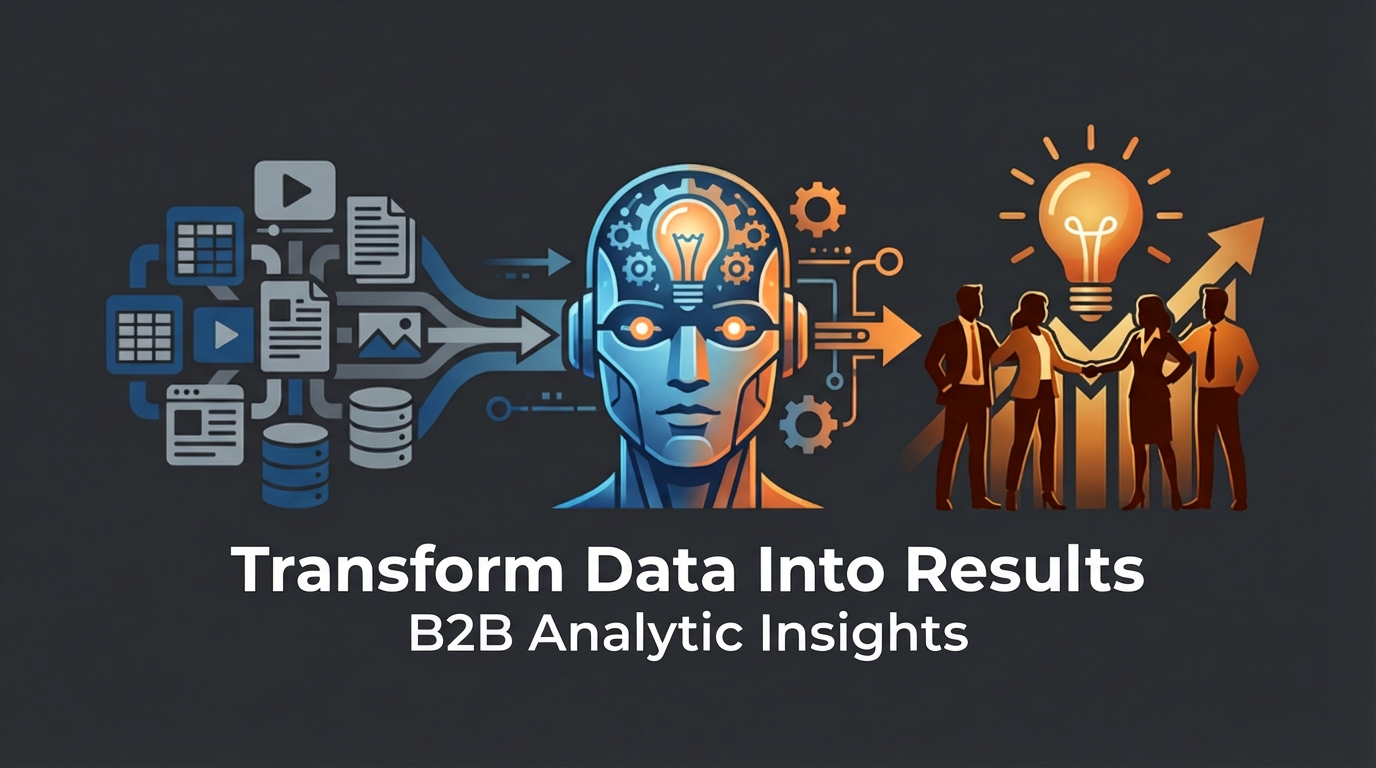

Today’s financial institutions are grappling with an unprecedented surge in data complexity and velocity. The pressure to not only comply with stringent regulations like Basel IV and CCAR but also to deliver on the promise of personalized customer experiences and optimize risk management, all while battling razor-thin margins and increasingly sophisticated cyber threats, is immense. This is the crucible in which our current analytics stack often finds itself. For too long, we’ve been burdened by fragmented systems, a legacy of siloed data, and tools that, while once cutting-edge, now act as anchors rather than accelerators. The promise of data-driven decision making often remains just that – a promise, deferred by the sheer effort required to wrangle our data. The time-to-insight can stretch into weeks, if not months, turning strategic opportunities into forgotten whispers.
This is not merely an IT problem; it is a fundamental challenge to our analytics transformation journey. The question isn’t if we need to evolve, but how and where emerging technologies, particularly Artificial Intelligence (AI), can be strategically integrated to fundamentally rebuild our data architecture for the future. While the allure of AI is undeniable, its successful integration hinges on a deliberate and foundational reimagining of the very platforms that house and process our most valuable asset: data.
The financial services industry has long been a data-rich environment. From transaction logs and credit scores to customer interaction histories and market feeds, the sheer volume and variety are staggering. Yet, the architecture supporting this data has often evolved organically, leading to what can best be described as a digital patchwork quilt. Monolithic data warehouses, separate data lakes, and disparate analytics tools, each managed by different teams with varying priorities, create a labyrinth that hinders agility and fosters inconsistency.
This fragmentation directly impacts our ability to achieve true data-driven decision making. Imagine trying to build a skyscraper on a foundation of sand. That’s often what we’re asking our advanced analytics and AI models to do. The lack of unified governance, unreliable data lineage, and manual data preparation processes mean that even the most sophisticated algorithms can be fed flawed input, leading to unreliable outputs. This isn’t just inconvenient; in credit risk, it can lead to billions in potential losses, or in fraud detection, missed opportunities to protect our customers and our balance sheets. We’ve seen, for example, that organizations that struggle with data quality often report significantly higher operational costs and a diminished capacity to innovate. A recent study indicated that companies with mature data governance programs experience an average of 1.5x greater ROI on their analytics investments. The imperative is clear: our existing infrastructure must evolve to support the demands of modern AI, not hinder them.
The Data Ingestion Bottleneck
The initial step of bringing data into our systems is often the first point of failure. Batch processing, slow ETL (Extract, Transform, Load) pipelines, and lack of real-time capabilities mean that by the time crucial market data or customer behavioral signals reach our analytics teams, they are already stale. For credit risk assessment, real-time fraud detection, or dynamic pricing strategies, this delay is unacceptable.
The Siloed Data Landscape
Data is often locked away in departmental silos – separate customer databases, risk engines, marketing platforms, each with its own set of rules and access controls. This prevents a holistic view of the customer or the business, which is essential for sophisticated predictive modeling and personalized customer journeys. For credit operations, understanding a customer’s full relationship with the bank, across all product lines, is vital for accurate risk assessment.
The Governance Gap
With data scattered across various platforms, maintaining consistent data quality, ensuring privacy compliance (e.g., GDPR, CCPA), and enforcing security protocols becomes an Herculean task. A lack of unified governance is a direct impediment to building trust in our data, a prerequisite for any AI initiative. We’ve seen instances where data privacy breaches, stemming from inadequate governance, have resulted in multi-million dollar fines and irreparable reputational damage.
In exploring the integration of AI within modern data architecture, a related article that delves deeper into the evolving landscape of analytics is “The Future of Data Management: Embracing AI and Automation.” This piece discusses how organizations can leverage AI technologies to enhance their data management processes and improve decision-making capabilities. For more insights, you can read the article here: The Future of Data Management: Embracing AI and Automation.
AI as a Catalyst: Reimagining the Analytics Stack Components
The advent of AI, particularly generative AI and advanced machine learning, is not just another tool to bolt onto our existing infrastructure; it’s a fundamental catalyst for rethinking the entire analytics stack. In 2026, the modern data stack, powered by AI, will be characterized by a modular, cloud-native, and interconnected ecosystem. This isn’t about replacing everything overnight, but about strategically evolving each component to embrace AI’s capabilities and ensure data-driven decision making is achievable, scalable, and trustworthy.
Ingestion: The Pulse of Real-Time Intelligence
The future of data ingestion is real-time. This means moving away from rigid batch processing towards event-driven architectures that capture data as it’s generated. Streaming platforms like Apache Kafka or cloud-native services become the arteries, feeding data continuously into our systems. This is critical for fraud detection, algorithmic trading, and real-time customer service chatbots that require immediate access to the latest information. For example, integrating real-time transaction data with AI-powered anomaly detection can reduce fraudulent transactions by an estimated 15-20% within the first year.
Storage and Transformation: Flexibility, Cost-Efficiency, and Openness
The monolithic data warehouse and the sometimes unwieldy data lake are giving way to more flexible, cost-effective, and open storage solutions. Cloud-native data platforms, leveraging open table formats like Delta Lake and Apache Iceberg, are becoming the cornerstone. These formats offer ACID transactions, schema evolution, and time travel capabilities, providing both the reliability of a data warehouse and the flexibility of a data lake. Technologies like Databricks are championing this, with many organizations reporting cost reductions of up to 30% in their data infrastructure by adopting these modern approaches. This unification also allows for more efficient data preparation for AI/ML pipelines, significantly improving time-to-insight.
Governance: The AI’s Moral Compass
In an AI-driven world, robust governance is not an afterthought; it’s the bedrock. This involves unified metadata management, data lineage tracking, data cataloging, and automated compliance checks. Active metadata, which learns and adapts, becomes crucial for coordinating AI agents, ensuring model fairness, and mitigating bias. This proactive approach to governance is not just about compliance; it’s about building trust in the data and the AI models that use it. For instance, a well-governed data catalog can reduce the time data scientists spend searching for and understanding data by up to 50%, directly impacting project delivery speed.
Orchestration and Pipelines: Empowering Self-Service and ML Operations
Modern data architectures must enable seamless orchestration of data pipelines, from ingestion to transformation and model deployment. Kubernetes and cloud-native services provide the flexibility to scale these operations dynamically. This is where the power of self-service analytics truly emerges. Data practitioners can access curated, governed datasets and leverage pre-built ML pipelines, accelerating data-driven decision making across the organization. The ability to automate ML operations (MLOps) is crucial for managing the lifecycle of AI models, from training and validation to deployment and monitoring, ensuring their continued performance and accuracy.
The Rise of Modular and Composable Architectures

The era of the monolithic, all-in-one analytics platform is rapidly fading. In its place, modern data architecture for AI is embracing a composable, modular approach. This means leveraging best-of-breed tools, each optimized for a specific function – be it data ingestion, transformation, AI model training, or visualization – and connecting them through robust APIs. This architectural shift offers unparalleled agility.
The API-Centric Ecosystem
Think of your analytics stack not as a single, massive machine, but as a collection of highly specialized tools, each performing its function perfectly. APIs act as the standardized connectors, allowing these tools to communicate and exchange data seamlessly. This modularity allows organizations to rapidly adopt new technologies and swap out components as AI capabilities evolve, without having to re-architect the entire system. For instance, if a new, more efficient natural language processing (NLP) library emerges, a composable architecture allows you to integrate it with minimal disruption. This agility is invaluable in the fast-moving AI landscape, ensuring your analytics transformation stays ahead of the curve.
Best-of-Breed for Purpose
Instead of compromising with a single vendor’s broad but often shallow offerings, a modular approach allows you to select the absolute best tool for each specific task. This might mean a specialized streaming ingestion tool, a powerful cloud-native data lakehouse like Databricks for storage and transformation, a cutting-edge AI platform for model development, and a user-friendly BI tool for visualization. This strategic selection ensures optimal performance and efficiency at every stage of the data lifecycle. The ROI here is clear: specialized tools often outperform generalized ones, leading to better insights and reduced operational overhead.
Future-Proofing Your Investments
The rapid pace of AI innovation means that any technology you invest in today could be outdated in a few years. A modular architecture acts as an insurance policy against this technological obsolescence. By design, it’s easier to replace a single module than to rip and replace an entire monolithic system. This flexibility not only saves costs but also ensures that your organization can continuously leverage the latest advancements in AI and analytics.
AI and the Data Mesh: Decentralization and Agility

The traditional centralized data architecture, while familiar, often struggles to keep pace with the increasing demands for data access and domain-specific analytics. The data mesh architectural paradigm offers a compelling alternative, decentralizing data ownership and responsibility to domain-oriented teams. AI plays a crucial role in enabling and scaling this decentralized model, particularly when combined with AI-driven streaming analytics.
Domain-Oriented Data Products
In a data mesh, data ownership resides with the business domains that generate and best understand it. These domains are responsible for creating, serving, and governing “data products” – discoverable, addressable, trustworthy, and self-describing datasets packaged for consumption. AI can help automate the creation of these data products, ensuring consistency and quality. For example, the marketing team can own and serve a customer 360 data product, while the risk team manages a credit portfolio data product.
AI-Powered Streaming Analytics at the Edge
Industries like manufacturing, logistics, and IoT are increasingly relying on real-time insights derived from data at the “edge” – sensor data, machine logs, and operational signals. AI-driven streaming analytics platforms are essential here for immediate anomaly detection, predictive maintenance, and operational optimization. This allows for immediate action to prevent equipment failure or to adjust production lines in real-time, directly impacting operational efficiency and reducing downtime. Embracing AI in streaming analytics within a data mesh can lead to a significant reduction in response times for critical operational events, often measured in seconds rather than hours.
Decentralized Scaling and Trust
The data mesh, empowered by AI, allows for decentralized scaling of data initiatives. Each domain can independently develop and manage its data products and analytics capabilities, reducing bottlenecks at a central IT team. AI also plays a vital role in ensuring trust and consistency across these decentralized data products, through automated quality checks, bias detection, and robust metadata management. This distributed agility is key to achieving faster time-to-insight across a large, complex organization.
In the evolving landscape of data management, understanding how AI integrates into modern data architecture is crucial. A related article that delves deeper into this topic is available at B2B Analytic Insights, where you can explore various insights on optimizing analytics stacks and leveraging artificial intelligence effectively. This resource complements the discussion on reimagining analytics by providing practical examples and strategies for businesses looking to enhance their data capabilities.
The Human Element: Bridging Technology and Strategy
| Component | Traditional Role | AI Integration | Impact on Analytics Stack | Example Metrics |
|---|---|---|---|---|
| Data Ingestion | Collect raw data from various sources | Automated anomaly detection and data quality checks | Improves data reliability and reduces manual monitoring | Data freshness latency, error rate reduction (%) |
| Data Storage | Store structured and unstructured data | Intelligent indexing and compression using AI algorithms | Optimizes storage costs and query performance | Storage utilization efficiency (%), query speed improvement (%) |
| Data Processing | Transform and prepare data for analysis | Automated feature engineering and data transformation | Accelerates data preparation and enhances feature quality | Processing time reduction (%), feature relevance score |
| Analytics & BI | Generate reports and dashboards | AI-driven insights, natural language querying, predictive analytics | Enables proactive decision-making and democratizes data access | Insight generation speed, user adoption rate (%) |
| Data Governance | Ensure compliance and data security | Automated policy enforcement and risk detection | Enhances compliance and reduces governance overhead | Compliance incident reduction (%), policy violation detection rate |
It’s easy to get lost in the technical intricacies of AI and data architecture. However, the ultimate success of any analytics transformation hinges not on technology alone, but on the people and processes that leverage it. For AI to truly drive data-driven decision making at the C-suite level, we must bridge the gap between technical sophistication and strategic business objectives.
Cultivating Data Literacy and AI Fluency
The most advanced AI models and the most elegant data architectures are useless if the business leaders who need to make decisions based on them don’t understand the outputs or the underlying data. Investing in data literacy programs and AI fluency initiatives across all levels of the organization is paramount. This means translating complex analytical insights into clear, actionable business recommendations that resonate with C-suite executives focused on ROI.
The Role of the Analytics Leader as Translator
Analytics leaders serve as the crucial bridge. Their role extends beyond managing technology and data scientists; they must be adept at translating complex AI capabilities into tangible business value. They need to understand the strategic priorities of the C-suite – be it reducing credit risk by a target percentage, increasing customer retention by a specific figure, or optimizing operational efficiency to save millions – and then architect the data and AI solutions to achieve those goals. A clear articulation of the ROI, supported by tangible metrics, is essential for securing ongoing investment and buy-in.
Organizational Change Management for AI Adoption
Implementing new data architecture and AI capabilities is as much an organizational change management challenge as it is a technological one. This involves fostering a culture that embraces experimentation, learning from failures, and continuously adapting. The shift towards self-service analytics and decentralized data ownership requires clear communication, robust training, and a defined framework for collaboration. This is where frameworks that emphasize organizational change, like ADKAR, can be invaluable. Recognizing that AI requires both cutting-edge technology and skilled, empowered human expertise is the key to unlocking its full potential.
In the evolving landscape of data architecture, understanding how AI integrates into the analytics stack is crucial for organizations aiming to leverage their data effectively. A related article that delves into this transformation is available at The Power of Analytics: Transforming Data into Meaningful Actions, which explores how businesses can harness analytics to drive actionable insights and improve decision-making processes. This connection highlights the importance of a modern data architecture that not only incorporates AI but also emphasizes the practical application of analytics in achieving strategic goals.
Strategic Recommendations for Your Analytics Transformation
The journey to reimagine your analytics stack for the AI era requires deliberate, strategic action. It’s not a sprint; it’s a marathon that demands foresight, agility, and a commitment to building a truly data-driven organization.
1. Embrace a Modular and Cloud-Native Foundation: Prioritize migrating your data infrastructure to cloud-native platforms that support open table formats like Delta Lake. This will provide the agility, scalability, and cost-efficiency needed for AI workloads, potentially cutting infrastructure costs by up to 30%. Focus on APIs to connect best-of-breed tools, enabling you to adapt quickly as AI evolves.
2. Champion Unified Governance and Active Metadata: Implement a robust, unified governance framework with active metadata capabilities. This is the cornerstone of trust in your data and AI models, essential for risk management and compliance. A well-governed data catalog can reduce data discovery time for practitioners by up to 50%.
3. Accelerate Towards Real-Time and Streaming Analytics: Invest in real-time data ingestion and streaming analytics capabilities. This is non-negotiable for critical functions like fraud detection and risk anomaly identification, where immediate insights can prevent significant financial losses.
4. Foster Data Literacy and AI Fluency Across the Enterprise: Invest in training programs that elevate data literacy and AI fluency from the C-suite to the operational teams. Empower your analytics leaders to effectively translate technical capabilities into strategic business value, clearly articulating the ROI of AI initiatives.
5. Strategically Scale with Data Mesh Principles: Explore a data mesh architecture to decentralize data ownership and accelerate data product development. This, coupled with AI-driven streaming analytics, will enable greater agility and domain-specific innovation, particularly in data-intensive operational environments.
The future of analytics is here, and AI is its engine. By strategically reimagining our data architecture, we can unlock unprecedented levels of data-driven decision making, dramatically improve time-to-insight, and drive true analytics transformation. The opportunity to lead in credit risk, financial analysis, and enterprise operations is within reach, but it requires a foundational shift, grounded in reality, powered by intelligence, and guided by purpose.