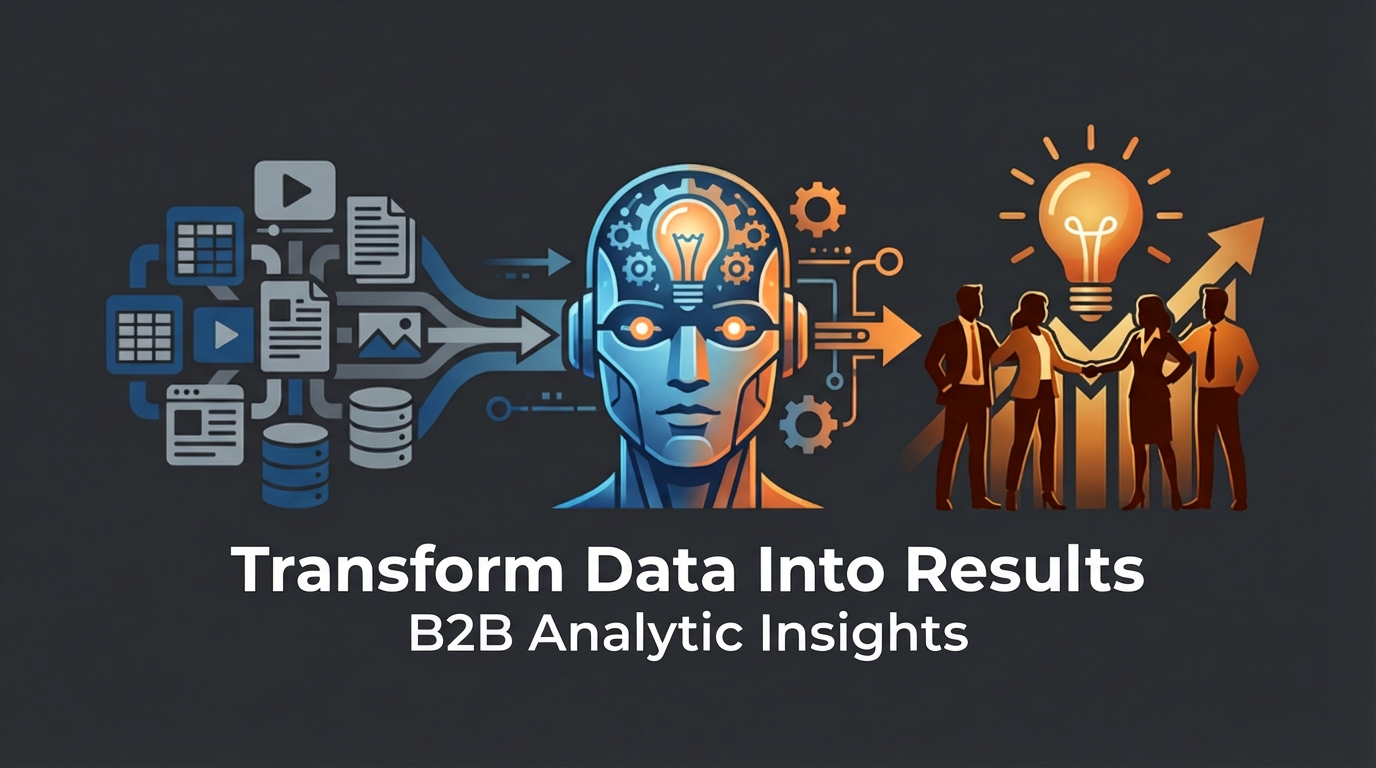

The relentless pursuit of competitive advantage in today’s dynamic B2B landscape demands a fundamental shift in how organizations leverage information. For decades, businesses have relied on the dependable compass of hindsight, meticulously analyzing past performance to understand what happened. Yet, this approach, while foundational, is akin to navigating a storm by looking at the wake behind the ship. The true challenge – and the ultimate prize – lies in anticipating the waves ahead. This is where AI-powered predictive analytics at scale becomes not just an advantage, but a necessity for survival and growth. We are not talking about incremental improvements; we are talking about an analytics transformation that redefines how businesses operate, how decisions are made, and how value is created.
Businesses today operate in an environment characterized by increasing complexity and volatility. The traditional methods of financial analysis, credit risk assessment, and operational management, while robust, often lag behind the rapid pace of change. We’ve all seen the scenarios: a sudden downturn in a key market, an unexpected increase in customer churn, or a critical disruption in the supply chain. These are not anomalies; they are increasingly the norm. Historically, our response to such events has been reactive. We’ve analyzed the damage, understood the causes in retrospect, and then implemented measures to try and prevent recurrence. This cycle of incident, analysis, and correction consumes valuable resources and often means we are always playing catch-up.
Consider the realm of credit risk. Traditional models analyze historical payment data, leverage current financial statements, and apply statistical scoring. This is valuable, but it provides a snapshot of risk at a point in time. It doesn’t inherently forecast the likelihood of a borrower experiencing financial distress in the future, especially in light of emerging economic headwinds or sector-specific challenges. The impact of this reactive posture can be substantial. Late recognition of increasing credit risk can lead to significant write-offs, impacting profitability and potentially jeopardizing the financial stability of the lender. Similarly, enterprise operations are often managed based on historical demand patterns and lead times. When unforeseen supply chain disruptions occur, as we’ve witnessed globally, the ensuing delays and increased costs can cripple production and erode customer satisfaction.
The core problem is that hindsight, by definition, is backward-looking. It provides context but lacks proactivity. In a business environment where the future is increasingly uncertain, relying solely on past events is like trying to steer a race car by looking only in the rearview mirror. The consequences of such a limited perspective range from missed revenue opportunities and increased operational inefficiencies to escalating financial losses and a compromised competitive position.
The Strategic Blind Spot of Reactive Analysis
For too long, the prevailing approach to critical business functions like Financial Planning & Analysis (FP&A), Customer Experience (CX), and revenue operations has been rooted in a reactive framework. FP&A teams, tasked with forecasting and budgeting, often engage in time-consuming manual processes of data aggregation and analysis. This is akin to meticulously piecing together a jigsaw puzzle after the picture has already faded. The insights derived are valuable but inherently historical. The ability to pivot and adjust financial strategies in real-time, in response to nascent signals of revenue risk or burgeoning opportunities, is severely hampered. Such fragmentation in financial planning leads to a disconnect between strategic goals and operational execution, creating significant opportunities for volatility to take hold. We are, in essence, building our financial ships on sands of past performance, ill-equipped for the shifting tides of the future.
Similarly, in Customer Experience (CX), the traditional approach often involves analyzing customer feedback after dissatisfaction has occurred. Surveys are deployed post-interaction, complaint logs are reviewed after the fact, and churn analysis is performed on customers who have already departed. This is reactive damage control. While it provides lessons learned, it does little to prevent the initial disgruntlement or stem the outflow of valuable customer relationships. The cost of acquiring a new customer is significantly higher than retaining an existing one, making proactive customer retention a critical imperative. The inability to anticipate customer attrition before it happens represents a substantial, often hidden, revenue leakage.
Revenue operations, encompassing sales and marketing efforts, have also been hampered by this reactive paradigm. The “Pareto Principle of Pipeline” highlights that rapid response to inbound leads is crucial, yet many organizations struggle with timely follow-up. Leads that are not nurtured within minutes or hours often go cold, significantly reducing their qualification probability. This lost potential is a continuous drain on marketing spend and sales team productivity. It’s like having a fertile field but only planting seeds weeks after they’ve been harvested. We are leaving significant revenue on the table, not due to a lack of effort, but due to an inability to act with the speed and foresight that the current market demands.
In exploring the transformative potential of AI in business, the article “From Hindsight to Foresight: AI-Powered Predictive Analytics at Scale” highlights the importance of leveraging data for strategic decision-making. For further insights into the impact of analytics on business growth and innovation, you may find the article on B2B Analytical Insights particularly valuable. It delves into various methodologies and case studies that illustrate how organizations can harness data effectively. You can read more about it here: B2B Analytical Insights.
The Dawn of Predictive Intelligence: Enabling Proactive Decision-Making
The advent of AI-powered predictive analytics offers a profound solution to these challenges, enabling a paradigm shift from hindsight to foresight. At its core, this transformation is about harnessing the power of advanced algorithms to analyze vast datasets, identify complex patterns, and forecast future outcomes with a degree of accuracy previously unattainable. This is not about replacing human judgment, but about augmenting it with intelligent insights that allow for more informed, proactive, and ultimately, more profitable decisions. The ability to process exponential volumes of both structured and unstructured data, recognizing nonlinear relationships that traditional models miss, is a game-changer. We are moving from data as a record of the past to data as a predictor of the future.
Revolutionizing Financial Planning & Analysis (FP&A)
The impact of AI on FP&A is transformative. Instead of relying on historical data and periodic budget cycles, AI enables continuous, predictive decision-making. Imagine an FP&A team that can, in real-time, identify nascent revenue risks stemming from shifts in customer behavior or market sentiment. Predictive models can flag potential dips in sales for specific product lines or regions, allowing for proactive adjustments to marketing spend, inventory management, or even sales team incentives. This is about moving from annual budgeting to agile financial forecasting. The ability to anticipate revenue shortfalls before they impact the bottom line, and likewise, to spot emerging revenue opportunities with greater clarity, allows organizations to proactively reallocate resources and adjust strategic priorities. This continuous feedback loop ensures that financial plans are not static documents but living, breathing strategies that adapt to the evolving economic landscape, an approach that demonstrably reduces financial volatility.
Elevating Customer Experience (CX) Through Proactive Intervention
Predictive analytics offers a powerful mechanism to optimize Customer Experience (CX) by shifting from reactive reporting to proactive intervention. Instead of waiting for customer complaints or churn warnings, AI models can analyze a multitude of customer touchpoints – purchase history, website interactions, support ticket frequency, sentiment expressed in communications – to identify customers exhibiting early signs of dissatisfaction. These early warning signals allow organizations to intervene before a customer decides to leave. This could involve personalized offers, proactive outreach from customer success managers, or tailored support solutions. The difference is profound: instead of dealing with disgruntled customers and lost revenue, businesses can engage in proactive relationship management, fostering loyalty and increasing customer lifetime value. This proactive approach has repeatedly shown to not only prevent churn but also to identify opportunities for upselling and cross-selling by understanding customer needs before they are explicitly articulated.
Accelerating Revenue Operations with Intelligent Automation
In the competitive B2B sales arena, responsiveness is paramount. Predictive AI in revenue operations allows organizations to implement a truly intelligent sales process. By analyzing lead engagement patterns and prospect behavior, AI can prioritize high-potential leads and automate timely follow-ups. The “Pareto Principle of Pipeline” is a stark reminder: response times under 5 minutes have been shown to increase qualification rates by an astonishing 21x. Predictive analytics can empower sales teams by identifying which leads are most likely to convert, allowing them to focus their efforts where they will yield the greatest ROI. This also extends to forecasting sales performance with greater accuracy, enabling better resource allocation and pipeline management. The acceleration of revenue operations through predictive insights translates directly into a potential doubling of lead generation ROI, moving beyond the inefficiencies of reactive lead nurturing.
Operationalizing Predictive Analytics at Scale: Bridging the Gap

The realization of AI-powered predictive analytics at scale is not merely a matter of deploying sophisticated algorithms; it requires a concerted effort to operationalize these capabilities across the enterprise. This involves a strategic approach to data management, model integration, and the fostering of a data-driven culture. The journey from hindsight to foresight is a transformation that touches every facet of an organization. It requires more than just technology; it demands a strategic framework that recognizes the symbiotic relationship between advanced analytics and human expertise.
Unifying Data: The Foundation of Foresight
The bedrock of any successful predictive analytics initiative is a unified and robust data infrastructure. Organizations often struggle with data silos, where crucial information resides in disparate systems, inaccessible for comprehensive analysis. To achieve true foresight, it is imperative to break down these silos and create a single source of truth. This involves integrating data from CRM systems, ERP platforms, marketing automation tools, customer support logs, and any other relevant enterprise systems. Furthermore, enriching this internal data with relevant third-party data – market intelligence, economic indicators, demographic information – can provide invaluable context and enhance the predictive power of models. This unassumed effort in data unification and enrichment is not merely a technical undertaking; it is a strategic prerequisite for unlocking the full potential of predictive analytics.
Embedding Insights into Workflows: From Insight to Action
Predictive insights are only valuable if they are integrated into existing business workflows and actionable by the individuals who need them. Simply generating a report with a prediction is insufficient. The true power lies in embedding these predictive outputs directly into the tools and processes that employees use daily. For sales teams, this might mean predictive lead scoring appearing directly in their CRM. For FP&A, it could be real-time alerts about potential budget deviations or revenue risks integrated into their planning dashboards. For customer success managers, it might be proactive alerts about at-risk customers appearing in their customer management platform. This seamless integration ensures that data-driven decision-making becomes an intrinsic part of day-to-day operations, rather than an isolated analytical exercise. The speed of this transition from insight to action, or “time-to-insight,” is a critical determinant of its business impact.
Cultivating a Data-Driven Culture: The Human Element
Technology alone cannot drive an analytics transformation. Fostering a truly data-driven culture is paramount. This involves empowering employees at all levels with the understanding and confidence to leverage predictive insights. It requires ongoing training, clear communication about the value of analytics, and leadership buy-in that champions data-informed decision-making. Resistance to change is natural, and it’s crucial to address concerns and highlight how AI-powered analytics can augment, not replace, human expertise. The goal is to democratize data literacy and build an organizational mindset where curiosity and data exploration are encouraged, and where past experiences are viewed through the lens of future potential. This cultural shift is often the most challenging, but also the most rewarding aspect of an analytics transformation.
Measuring Success: The Shift from Complexity to Outcomes

As organizations embrace AI-powered predictive analytics, the metrics for success must evolve. The focus is shifting from the sophistication of the models themselves – the complex algorithms, the impressive R-squared values – to the tangible business outcomes they deliver. This is a crucial distinction. While technical accuracy is important, the ultimate measure of value lies in the real-world impact on the business. We are witnessing a fundamental reorientation where success is no longer defined by the elegance of the predictive model but by the measurable improvements it drives in the organization’s performance and resilience.
Quantifying Business Value: Beyond Model Accuracy
The true ROI of predictive analytics is realized when it translates into concrete business improvements. This means measuring reductions in financial volatility, enabling more accurate forecasting, and quantifying the costs avoided through proactive risk mitigation. For instance, in credit risk, success metrics might include a reduction in delinquency rates or a decrease in charge-off percentages. In revenue operations, it could be an increase in conversion rates, a reduction in sales cycle length, or a higher customer acquisition cost effectiveness. The key is to move beyond abstract model performance indicators and focus on metrics that directly impact the P&L and strategic objectives.
The Metrics That Matter: Real-World Impact
Specific metrics provide a clear picture of the value generated. For FP&A, this includes improved forecast accuracy, leading to better resource allocation and reduced budget variances. For CX, success is measured by increased customer retention rates, higher net promoter scores (NPS), and a reduction in customer complaints. In enterprise operations, metrics could include optimized inventory levels, reduced supply chain disruption costs, and improved operational efficiency. The overarching theme is the ability to avoid negative outcomes and capitalize on emerging opportunities. For example, a predictive model that identifies potential equipment failure in a manufacturing plant before it occurs can prevent costly downtime and lost production. This is where the true power of predictive analytics is unleashed – turning potential problems into managed events and unforeseen opportunities into realized gains.
Governance and Continuous Improvement: Ensuring Long-Term Value
Effective governance is essential to ensure that AI-powered predictive analytics initiatives remain aligned with business objectives and ethical standards. This includes establishing clear guidelines for data usage, model development, and deployment. Critically, the process of analytics transformation is not a one-time event; it is an ongoing journey of continuous improvement. Models need to be monitored, retrained, and updated as new data becomes available and business conditions evolve. This iterative approach ensures that predictive capabilities remain relevant and effective over time, consistently driving value and enabling the organization to maintain its competitive edge. The focus on outcomes, coupled with robust governance and a commitment to continuous improvement, solidifies the long-term strategic value of predictive analytics.
In exploring the transformative potential of AI in business, a related article discusses the importance of leveraging data for strategic decision-making. This piece highlights how organizations can harness predictive analytics to not only improve operational efficiency but also to anticipate market trends and customer needs. For more insights on this topic, you can check out the article on B2B Analytic Insights, which provides valuable information on the integration of advanced analytics in various industries.
Navigating the Future: Strategic Recommendations
| Metric | Description | Value | Unit | Notes |
|---|---|---|---|---|
| Data Volume Processed | Amount of data ingested for predictive analytics | 10 | Petabytes | Monthly data processed at scale |
| Prediction Accuracy | Average accuracy of AI models in forecasting outcomes | 92 | Percent | Measured on validation datasets |
| Model Training Time | Time taken to train predictive models | 4 | Hours | For large-scale datasets |
| Real-time Prediction Latency | Time delay between data input and prediction output | 150 | Milliseconds | Critical for real-time decision making |
| Number of Models Deployed | Total AI models running in production | 50 | Count | Covering various business domains |
| Cost Efficiency Improvement | Reduction in operational costs due to AI insights | 30 | Percent | Compared to traditional analytics |
| Data Sources Integrated | Number of distinct data sources feeding the analytics platform | 15 | Count | Includes structured and unstructured data |
| Forecast Horizon | Time span for which predictions are made | 12 | Months | Long-term forecasting capability |
The journey from hindsight to foresight, powered by AI, is not without its complexities. However, the potential rewards – enhanced profitability, improved customer loyalty, and greater operational resilience – are immense. For C-suite executives, the imperative is clear: embrace this transformation as a strategic priority. Analytics leaders must focus on building the necessary infrastructure, fostering the right talent, and championing the organizational change required. Practitioners should dive deep into understanding the practical application of these technologies, focusing on how they can solve real-world business problems.
My recommendation is to approach this evolution with a balanced perspective. Recognize that AI is a powerful tool, not a silver bullet. Success hinges on the intelligent integration of technology with human expertise, a meticulous approach to data, and a clear focus on demonstrable business outcomes.
Here are my strategic recommendations:
- Prioritize Data Unification and Enrichment: Invest in building a robust, unified data foundation. This is the irreducible prerequisite for any effective predictive analytics initiative. Explore third-party data partnerships to contextualize and enrich your internal datasets.
- Focus on Business Outcomes, Not Just Technology: Define success not by the complexity of your AI models, but by the measurable business improvements they deliver. Align analytics initiatives directly with key performance indicators (KPIs) such as revenue growth, cost reduction, risk mitigation, and customer retention.
- Embed Predictive Insights into Workflows: Ensure that actionable insights are seamlessly integrated into the daily tools and processes of your teams. The goal is to make data-driven decision-making an intuitive part of every employee’s role, accelerating your “time-to-insight” from days or weeks to minutes.
- Cultivate a Data-Literate, Data-Driven Culture: Invest in training and development to empower your workforce. Foster an environment where data exploration is encouraged, and where human judgment is augmented, not replaced, by AI. Leadership must champion this cultural shift.
- Adopt a Governance Framework for Ethical and Effective AI: Establish clear policies for data privacy, model explainability, and algorithmic fairness. Ensure that your AI initiatives are not only effective but also responsible and aligned with ethical standards.
The transition to AI-powered predictive analytics at scale is a strategic imperative for businesses seeking to thrive in an increasingly unpredictable world. By moving beyond the limitations of hindsight and embracing the power of foresight, organizations can unlock new levels of performance, resilience, and competitive advantage. The future is not something to be passively observed; it is something to be intelligently anticipated and proactively shaped.