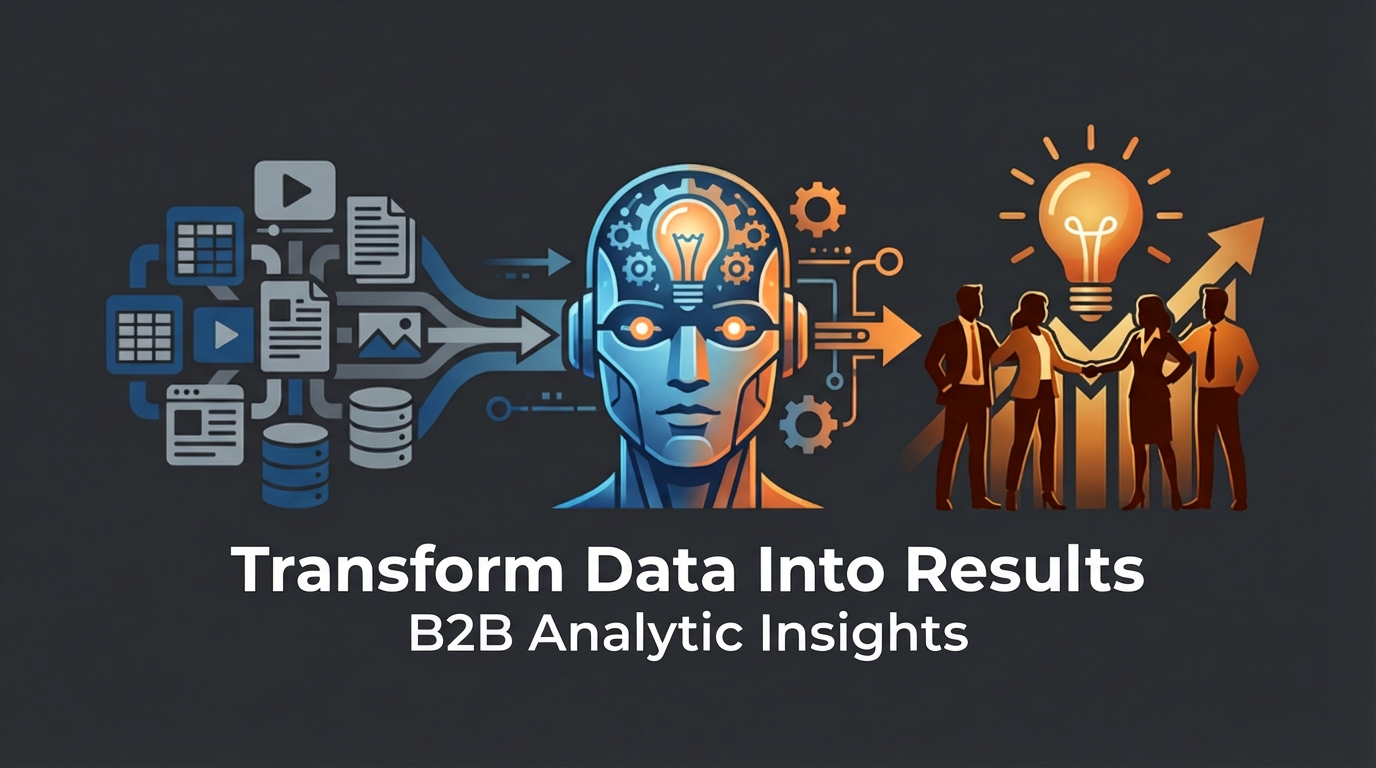

Let’s talk about a problem that keeps many of you, particularly in the B2B space, awake at night: fragmented data. You have critical information scattered across disparate systems – ERP, CRM, financial Ledgers, operational telemetry. This isn’t just an inconvenience; it’s a significant impediment to agility and competitive advantage. Imagine trying to manage credit risk when your transaction data is in one system, customer payment history in another, and market sentiment in yet a third. Or optimizing enterprise operations when procurement data lives in an isolated silo, completely disconnected from manufacturing output and inventory levels. This lack of a unified perspective costs organizations millions in missed opportunities, inefficient processes, and delayed decision-making. We’re talking about tangible impacts on your bottom line.
The Pervasive Challenge of Data Silos
You’ve seen it. Data silos are not new. They emerge from departmental independence, M&A activities, legacy systems, and often, a lack of cohesive data strategy. In the B2B landscape, where complex operations and interconnected processes are the norm, these silos become particularly debilitating. Consider a financial institution struggling to identify early warning signs of default due to customer interaction data residing in a CRM, financial transactions in a core banking system, and trade confirmations in an entirely different platform. The potential for proactive intervention is severely hampered. Similarly, in manufacturing, disjointed data across production, supply chain, and quality control systems can lead to critical delays, increased waste, and an inability to adapt to market shifts. The cost of reconciliation, manual data transfers, and the sheer time-to-insight for strategic decisions can be staggering. We’ve seen instances where the aggregation and cleansing of data for a single board report consumed weeks, rather than hours. This is an unsustainable model in today’s fast-paced environment.
The answer to this fragmentation lies in the strategic implementation of unified analytics platforms. This isn’t merely about consolidating databases; it’s about creating a single, authoritative layer where data from diverse sources can be ingested, harmonized, and analyzed comprehensively. This approach transforms data from a liability into a strategic asset. By 2026, we are already seeing a significant shift. A Demand Gen Report survey indicates that 50% of companies are now leveraging a single source of truth for their sales and marketing data, a clear departure from siloed operations. This isn’t just about efficiency; it’s about achieving strategic alignment and a holistic understanding of customer journeys and market performance. For us in the B2B sector, this extends to every facet of the enterprise – from financial performance and operational efficiency to supply chain resilience and customer acquisition. The goal is to move beyond disparate dashboards to a singular operational view, enabling data-driven decision-making at every level. The strategic value is undeniable: faster insight, reduced operational risk, and the agility to respond decisively to market changes.
Defining Unified Analytics Platforms
A unified analytics platform, at its core, is an integrated environment designed to centralize and manage data from various sources, making it accessible and analyzable across an organization. Fundamentally, it serves as an enterprise data backbone, connecting previously disconnected data islands. This involves sophisticated data ingestion capabilities, robust data warehousing or data lake infrastructure, powerful analytical engines, and user-friendly visualization tools. The platform establishes a single source of truth, minimizing data discrepancies and fostering trust in the insights generated. The emphasis here is on ‘unified’ – not just in terms of technical integration, but in providing a consistent, enterprise-wide lens through which to view and interpret information.
Key Components of Unification
Achieving true unification requires several critical components. First, robust data connectors capable of integrating with a diverse ecosystem of legacy systems, cloud applications, and external data sources. Second, a powerful data processing layer for cleansing, transforming, and enriching raw data. Third, a scalable data storage layer, often a data lake for raw and semi-structured data, complemented by data warehouses for structured, curated datasets. Fourth, sophisticated analytical tools, including business intelligence dashboards, reporting suites, and advanced analytics capabilities. Finally, and crucially, strong data governance and security frameworks to ensure data quality, compliance, and controlled access. This comprehensive architecture creates the foundation for advanced analytics.
In exploring the transformative impact of AI on unified analytics platforms, it’s essential to consider the broader context of data integration and management. A related article that delves into the significance of breaking down data silos and enhancing organizational efficiency can be found at B2B Analytic Insights. This resource provides valuable insights into how businesses can leverage advanced analytics to foster collaboration and drive informed decision-making across various departments.
AI’s Transformative Role in Breaking Down Silos
This brings us to the exciting and pragmatic role of Artificial Intelligence. AI is not just an add-on; it’s an accelerator and an enabler in the journey towards unified analytics. While unified platforms provide the foundation, AI provides the intelligence to automate, accelerate, and deepen insights derived from that unified data. The key here is not to view AI as magic, but as a sophisticated tool that dramatically enhances our ability to extract value from complex, integrated datasets.
Automated Data Discovery and Mapping
One of the most significant challenges in breaking down silos is understanding where relevant data resides and how different datasets relate. AI agents are emerging as a powerful antidote to this. Imagine AI agents instantly performing cross-channel data discovery and mapping, automatically identifying related entities and attributes across your ERP, CRM, and financial systems. The Improvado Guide (2026) highlights that these AI agents facilitate instant cross-channel insights and automate data discovery and mapping to proactively prevent the formation of new silos. This means less manual effort in data cataloging, faster onboarding of new data sources, and a more accurate understanding of your entire data landscape. For credit risk analysis, this could mean automatically linking customer demographics from marketing with transaction patterns from core banking, providing a richer profile without manual intervention.
Semantic Layers and Converged Platforms
The sheer volume of unstructured data – emails, call transcripts, legal documents – presents a formidable challenge. IBM Trends (2026) notes that enterprises lack unified access to 90% of unstructured data due to silos. This is where AI’s ability to create “semantic layers” becomes critical. These layers use natural language processing (NLP) to understand the meaning and context of unstructured data, allowing it to be integrated and analyzed alongside structured datasets. This means that customer feedback from support logs, market commentary from news feeds, or contractual clauses can be analyzed in conjunction with structured sales figures or financial reports. Furthermore, the emergence of “converged platforms” for AI-scale analytics and agentic automation provides a single environment where both structured and unstructured data can be processed and analyzed by AI, eliminating the need for separate tools and processes that often perpetuate silos.
Predictive Analytics on Unified Datasets
Once data is unified, AI truly shines in its ability to extract predictive insights. With a comprehensive view of operations, customer behavior, and financial trends, AI models can forecast with much greater accuracy. Softengine on Manufacturing (2026) emphasizes how unified cloud ERP platforms, bolstered by AI, break silos to provide predictive insights, trend detection, and risk reduction in fast-paced operations. For example, AI can predict credit defaults by analyzing not just payment history, but also customer engagement, macroeconomic indicators, and even sentiment analysis from social media, all on a unified data canvas. In enterprise operations, AI can predict equipment failures by integrating sensor data with maintenance logs and usage patterns, leading to proactive interventions and reduced downtime. This move from reactive reporting to proactive prediction is where true competitive advantage is forged.
Implementation Challenges and Organizational Transformation

While the benefits are clear, the path to unified analytics with AI is not without its hurdles. This isn’t just about buying new software; it’s an organizational shift. The challenges are as much cultural and structural as they are technical.
Data Governance and Quality
At the heart of any successful analytics transformation is robust data governance and unwavering commitment to data quality. Without it, unifying data simply means unifying bad data. The maxim “garbage in, garbage out” has never been more relevant. This involves establishing clear data ownership, defining data standards, and implementing processes for data cleansing and validation. In healthcare, as an example, AI automates data intake, cleanup, and routing, working alongside FHIR/HL7 standards to eliminate silos created by manual transfers and duplicates (2026). This holistic approach, combining technology with standardized practices, is crucial for maintaining a reliable single source of truth. Without quality, trust in the analytics diminishes, and adoption stalls—a critical failure point for any data-driven initiative.
Enterprise Adoption and Skill Gaps
Technology alone cannot deliver. Enterprise adoption requires a cultural shift towards data literacy and data-driven decision-making across all levels. This often means addressing existing skill gaps within the organization. Investing in training for business users on how to interpret and act on analytics, and for data professionals on advanced AI and machine learning techniques, is paramount. The journey to a truly data-driven enterprise is an ongoing professional development program. Without widespread adoption and the necessary skills, even the most sophisticated unified analytics platforms will gather digital dust.
Scalability and Hybrid Environments
Modern enterprises operate in complex, hybrid IT environments, blending on-premise legacy systems with multiple cloud providers. Unified analytics platforms must be architecturally designed for scalability and seamless integration across these diverse environments. EDB CTO (March 1, 2026) highlights the importance of AI-ready platforms, edge-resilient systems, and data fabrics to address fragmented silos for secure, efficient data sharing, particularly in public sector and naval operations where data security and performance at the edge are critical. This means embracing technologies like data fabrics, which provide a unified view of distributed data without requiring physical centralization, thereby simplifying data access and governance in complex landscapes. It’s about connectivity without compromise.
Measuring Success: ROI and Business Impact

For leadership, the ultimate question is always about return on investment. How do we quantify the benefits of this analytics transformation? It’s not enough to say “better insights”; we need specific metrics.
Quantifiable Improvements
The success of a unified analytics platform, powered by AI, needs to be measured by tangible business outcomes. For financial institutions, this could mean a reduction in credit risk losses by X% due to AI-driven early warning systems, or a Y% increase in operational efficiency through predictive maintenance models in manufacturing. For enterprise operations, it could be a Z% reduction in supply chain disruptions by leveraging predictive analytics on integrated supplier, logistics, and inventory data. We need to look at time-to-insight – reducing the time it takes to go from raw data to actionable recommendations by a significant margin, potentially from weeks to days or even hours. These are the metrics that resonate with the C-suite.
Enhanced Decision-Making Agility
Beyond direct financial benefits, there’s the critical aspect of enhanced decision-making agility. When your leadership team has a unified, real-time view of the business, they can respond faster and more effectively to market changes, competitive threats, and emerging opportunities. This means faster product development cycles, more targeted marketing campaigns, and more robust risk management strategies. The ability to pivot quickly, backed by solid data, translates directly into sustained competitive advantage. This agility is a strategic differentiator, moving from reactive responses to proactive strategic maneuvers.
In the quest to enhance data accessibility and improve decision-making processes, the article on Breaking Data Silos: AI’s Role in Unified Analytics Platforms highlights the transformative impact of artificial intelligence in creating cohesive analytics environments. By leveraging AI, organizations can seamlessly integrate disparate data sources, enabling a more comprehensive view of their operations. This approach not only streamlines workflows but also empowers teams to derive actionable insights from their data, ultimately driving better business outcomes.
Strategic Recommendations for Your Analytics Transformation
| Metric | Description | Impact of AI on Unified Analytics Platforms |
|---|---|---|
| Data Integration Time | Time taken to consolidate data from multiple sources | Reduced by up to 60% through AI-driven automated data mapping and cleansing |
| Data Accessibility | Percentage of organizational data accessible for analysis | Increased from 40% to 85% by breaking down silos with AI-powered connectors |
| Data Quality Improvement | Accuracy and consistency of data across platforms | Enhanced by 30% using AI algorithms for anomaly detection and correction |
| Decision-Making Speed | Time from data collection to actionable insights | Accelerated by 50% due to AI-enabled real-time analytics |
| User Adoption Rate | Percentage of employees actively using unified analytics tools | Grew by 40% with AI-driven personalized dashboards and recommendations |
| Cost Savings | Reduction in operational costs related to data management | Improved efficiency leading to 25% cost savings through AI automation |
So, what should you, as leaders and practitioners, do? This isn’t a nebulous concept; it demands concrete action.
Develop a Comprehensive Data Strategy with AI at its Core
Your journey begins with a clearly defined data strategy. This strategy must explicitly acknowledge the pervasive nature of data silos and articulate a vision for a unified analytics platform with AI embedded from the outset. Don’t relegate AI to an afterthought or an experimental project; integrate it into your core data architecture and governance frameworks. Understand that this is not a short-term project but a continuous evolution. Your strategy should outline a phased approach, identifying critical business problems that can be addressed early on to demonstrate quick wins and build momentum.
Invest in People, Process, and Technology
This isn’t just a technology play. It’s a tri-pillar approach. Invest in building data literacy across your organization and upskilling your analytics teams in AI and machine learning. Establish robust data governance processes to ensure data quality, security, and ethical use. And, of course, select and implement the right unified analytics platform, ensuring it’s “AI-ready” and capable of scaling with your enterprise’s complex needs. Remember, a unified platform without skilled analysts to leverage it, or without sound governance, is merely a very expensive data repository. The human element, coupled with robust processes, completes the picture.
Embrace Incremental Wins and Executive Sponsorship
The scale of an analytics transformation can seem daunting. Approach it with an iterative mindset. Identify high-impact, high-visibility use cases where unified analytics and AI can deliver measurable value quickly. These “quick wins” build internal champions and demonstrate tangible ROI, securing continued executive sponsorship. This sponsorship is non-negotiable. Without active support from the C-suite, resource allocation and cross-departmental collaboration, which are essential for breaking down entrenched silos, will falter. Show them the numbers, show them the impact, and they will fully back your strategic journey towards a truly data-driven enterprise.