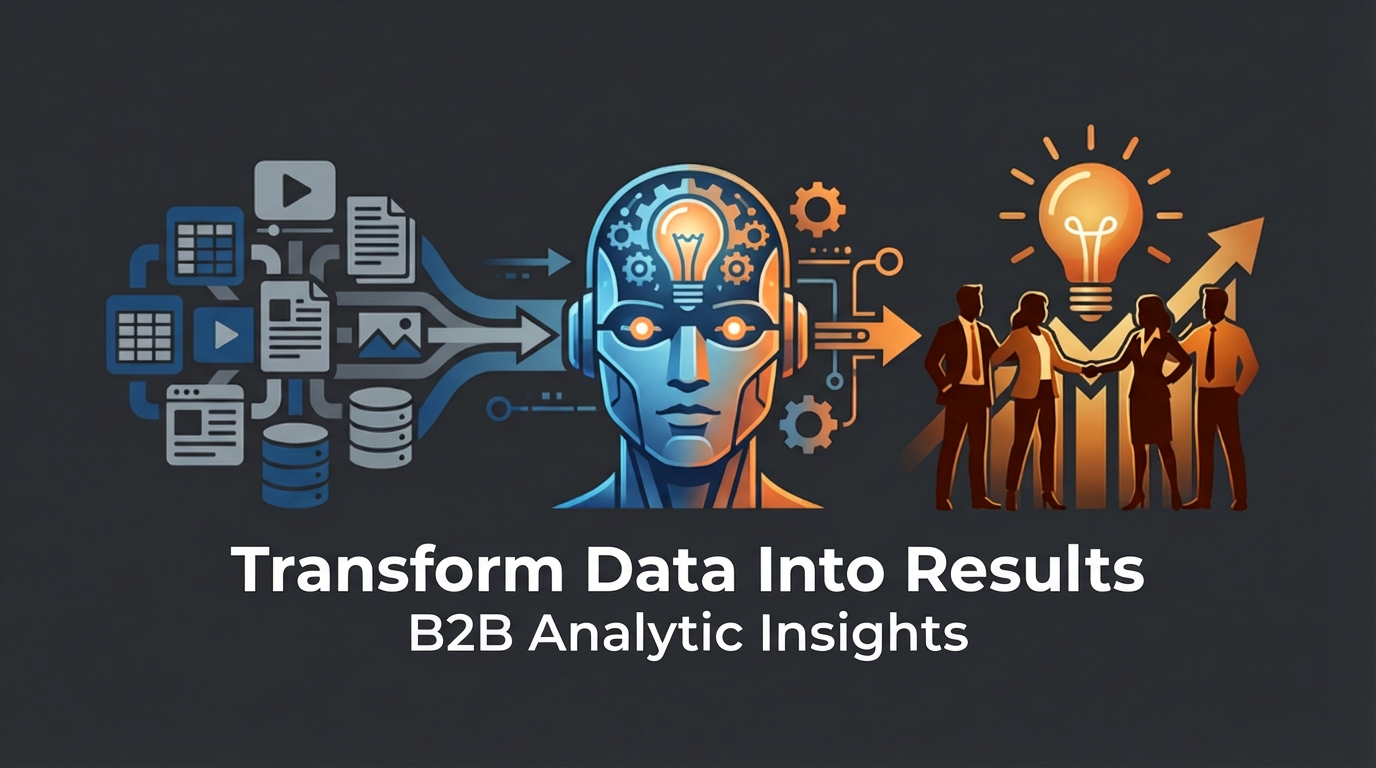

The C-suite is clamoring for it. Analytics leaders are tasked with delivering it. And practitioners are wrestling with the complexities of it. I’m talking about Artificial Intelligence in analytics, and the persistent question that hangs in the air: what’s the real return on investment? After 25 years navigating the labyrinth of enterprise data, I can tell you this much: hype is cheap, but verifiable ROI is the currency that truly matters. We’ve moved beyond the nascent stages of AI adoption. The conversation has shifted from “can it do this?” to “what tangible business value can it unlock, and how do we prove it?” For too long, many organizations have chased the latest tech trend without a clear line of sight to financial impact or operational improvement. This needs to stop. We need to ground our AI analytics initiatives in concrete business problems and measure their success against metrics that resonate with the bottom line.
The term “AI analytics” itself can be a nebulous catch-all. It encompasses everything from sophisticated machine learning models for predictive maintenance to generative AI assisting in market research. But before we can even begin to quantify ROI, we must clearly define what we are measuring and why. This isn’t a purely academic exercise; it’s a strategic imperative for any organization seeking to harness the power of sophisticated analytics without falling prey to costly misapplications or unfulfilled promises.
Establishing Baselines: The Foundational Element
The single most critical step in any ROI calculation is establishing a clear, quantifiable baseline. You cannot measure improvement if you don’t know where you’re starting from. This means meticulously documenting current performance metrics before any AI solution is deployed. For example, in credit risk assessment, what is the current default rate for a specific segment of borrowers? What is the average time it takes to process a loan application? In enterprise operations, what is the current cost per transaction for a key business process? Without these granular, data-backed baselines, any reported uplift from AI will be, at best, speculative and, at worst, misleading.
Operational Metrics: The Everyday Engine
Within operations, this could involve metrics like:
- Cycle Time: The duration it takes to complete a specific business process from initiation to completion. For instance, in supply chain logistics, this might be the time from order placement to delivery.
- Cost per Transaction/Case: The direct cost associated with processing a single unit of work, such as a customer service inquiry or an insurance claim.
- Resource Utilization: The efficiency with which resources – human and automated – are being employed.
Strategic Metrics: The Long-Term Vision
On a more strategic level, consider:
- Time-to-Market: The speed at which new products or services can be brought to customers. This is particularly relevant for generative AI applications in content creation or R&D.
- Innovation Impact: The ability of AI to unlock new revenue streams or competitive advantages that were previously unattainable. This is often harder to quantify directly but can be assessed through frameworks that look at market share shifts or the development of new intellectual property.
Without this rigorous baseline establishment, any subsequent claims of AI-driven success will lack the necessary credibility. We are not selling snake oil; we are driving genuine business transformation.
In the quest to understand the financial impact of AI analytics, it is essential to explore various metrics that can effectively quantify return on investment (ROI). A related article that delves deeper into this topic is “Unlocking the Value of AI: Key Performance Indicators for Success,” which provides insights into the critical performance indicators that organizations should focus on to measure the success of their AI initiatives. For more information, you can read the article here: Unlocking the Value of AI: Key Performance Indicators for Success.
Quantifying Efficiency Gains: The Low-Hanging Fruit
Let’s start with the most immediate and often easiest-to-measure aspects of AI analytics ROI: efficiency gains. This is precisely where many organizations find their initial successes, and understandably so. Improving how we do things, faster and cheaper, directly impacts the bottom line. This layer of AI ROI is about optimizing existing processes and reducing operational friction.
Productivity Enhancements: Doing More With Less
Productivity improvements are a cornerstone of AI ROI. This isn’t just about abstract notions of “speeding things up.” It’s about tangible reductions in manual effort and the reallocation of human capital to higher-value activities. Generative AI, for example, has shown significant promise here. Reports suggest developer output can see a 20-40% boost through AI-assisted coding, debugging, and documentation. This translates directly into reduced development cycles and lower labor costs.
Labor Hours Saved: The Direct Calculation
The most straightforward metric here is the direct reduction in labor hours for specific tasks. If an AI-powered cognitive automation solution can process customer inquiries in 10% of the time a human agent previously took, and this accounts for 30% of an agent’s workload, you can calculate the saved hours and multiply by the average hourly wage. This is not revolutionary thinking, but it’s fundamental to demonstrating early wins.
Cost Per Transaction Reduction: The Operational Efficiency Deep Dive
For transactional processes, the impact is stark. If an AI-driven fraud detection system significantly reduces the number of manual reviews required, the cost per transaction for those reviews plummets. Similarly, in financial analysis, AI can automate the extraction and initial analysis of vast datasets, reducing the time and cost associated with manual data preparation. We’re talking about a direct, measurable reduction in operational expenditure.
Time-to-Insight Acceleration: Sharpening the Strategic Edge
The speed at which we can derive actionable insights from our data is a critical competitive differentiator. AI analytics dramatically accelerates this time-to-insight. Consider the impact on financial forecasting. Traditional methods might involve days or weeks of complex spreadsheet manipulation and statistical modeling. Advanced AI models can process real-time data streams, identify patterns, and generate forecasts within minutes or hours, allowing for quicker adjustments to strategy and resource allocation.
Faster Decision Cycles: The Business Agility Factor
The entire business operates on cycles of decision-making. If your analytics capabilities can halve the time it takes to understand market shifts, customer behavior changes, or operational bottlenecks, you can respond more effectively. This agility directly impacts revenue opportunities and risk mitigation. In a rapidly evolving market, being the first to recognize and act on a trend can be the difference between market leadership and obsolescence.
Generating New Revenue Streams: The Growth Engine
While efficiency is crucial, the true game-changer for AI analytics ROI lies in its ability to unlock new revenue opportunities. This is where we move beyond merely optimizing existing processes and begin to leverage AI to create new value propositions and to more effectively monetize existing customer bases. This requires a more sophisticated understanding of customer behavior and market dynamics.
Incremental Revenue Lift: Targeted Strategies
AI excels at identifying nuanced customer segments and predicting their behavior. This allows for highly targeted marketing campaigns, personalized product recommendations, and dynamic pricing strategies. The return here is the incremental revenue generated specifically from these AI-driven initiatives, directly attributable to the AI’s ability to understand and influence customer purchasing decisions. For example, analyzing transaction data and browsing history can help identify customers most likely to respond to a specific upsell or cross-sell offer, leading to a quantifiable increase in average order value or customer lifetime value.
Conversion Rate Optimization: Pushing the Boundaries
AI can continuously analyze customer journeys, identify points of friction, and suggest real-time optimizations to improve conversion rates. This could manifest as personalized website content, tailored email campaigns, or optimized product placements. The ROI is the measurable lift in conversion rates across various touchpoints, directly translating into increased sales. We’re not just talking about minor percentage point gains; in some industries, AI-driven optimization has led to double-digit improvements in conversion metrics.
Customer Lifetime Value (CLV) Enhancement: Building Lasting Relationships
Beyond single transactions, AI can be instrumental in fostering long-term customer loyalty. By understanding individual customer needs, predicting churn risk, and proactively engaging customers with personalized offers and support, AI can significantly increase CLV. This often involves predictive models that identify at-risk customers and trigger retention efforts, as well as personalized loyalty programs and product development based on aggregated customer insights.
Market Differentiation and Competitive Advantage: The Strategic Play
AI analytics provides a powerful mechanism for market differentiation. Organizations that effectively leverage AI to understand their customers better, innovate faster, and operate more efficiently will inevitably gain a competitive edge. While harder to quantify directly as a single metric, this differentiation can be seen in increased market share, premium pricing power, and enhanced brand perception. The underlying AI capabilities become a strategic asset that competitors find difficult to replicate.
Mitigating Risk and Ensuring Compliance: The Shield
In the complex world of B2B operations, risk management and compliance are not optional; they are existential concerns. AI analytics offers a powerful set of tools to identify, predict, and mitigate a wide array of risks, from financial fraud to operational disruptions, and to ensure adherence to ever-evolving regulatory landscapes. The ROI here is often expressed as the avoidance of significant financial losses and reputational damage.
Fraud Detection and Prevention: Safeguarding Assets
Financial institutions and e-commerce businesses stand to gain immensely from AI-powered fraud detection. Machine learning models can analyze vast datasets in real-time, identifying anomalous patterns that are indicative of fraudulent activity far more effectively than traditional rule-based systems. The ROI is quantifiable in terms of reduced fraud losses. For instance, implementing an AI-powered fraud detection system can lead to a reduction in fraud chargebacks by X% and a decrease in false positives by Y%, freeing up resources previously dedicated to manual investigations.
Reduction in Fraudulent Transactions: The Direct Financial Impact
The most direct measure of success here is the percentage reduction in fraudulent transactions or the monetary value of prevented fraud. This requires careful tracking of both attempted and successful fraudulent activities before and after AI implementation.
False Positive Reduction: Optimizing Operational Resources
Conversely, a well-tuned AI system will also reduce the number of legitimate transactions flagged as suspicious. This reduction in false positives means fewer customer inconveniences and less operational overhead spent on unnecessary manual reviews, contributing to overall efficiency gains.
Risk Prediction and Early Warning Systems: Proactive Defense
Beyond fraud, AI can predict a multitude of other risks. In manufacturing, predictive maintenance models can anticipate equipment failures, preventing costly downtime. In supply chain management, AI can identify potential disruptions due to geopolitical events, natural disasters, or supplier issues. The ROI is in the avoided costs of unplanned downtime, expedited shipping, or supply chain breakdowns.
Operational Downtime Reduction: The Cost of Inaction
By predicting and preventing equipment failures or other operational disruptions, AI directly contributes to reduced downtime. This is quantifiable by comparing the cost of unplanned downtime before and after AI implementation.
Supply Chain Resilience Improvement: Minimizing Disruptions
AI can help build more resilient supply chains by identifying vulnerabilities and providing early warnings of potential disruptions. The ROI is measured in the avoidance of lost sales or increased costs associated with rerouting or sourcing alternative materials due to unforeseen events.
Compliance Monitoring and Reporting: Navigating the Regulatory Maze
The regulatory landscape is constantly shifting, and ensuring compliance can be a significant operational burden. AI can automate the monitoring of transactions, communications, and processes to identify potential compliance breaches. This reduces the risk of fines and penalties.
Reduction in Compliance Incidents: Avoiding Penalties
The ultimate ROI here is the reduction in costly compliance violations, fines, and penalties. This requires careful tracking of compliance-related incidents before and after AI implementation.
Streamlining Regulatory Reporting: Operational Efficiency
AI can also automate aspects of regulatory reporting, reducing the manual effort and improving the accuracy of submissions. This contributes to operational efficiency and reduces the risk of errors that could lead to regulatory scrutiny.
In the quest to understand the true value of AI analytics, it is essential to explore various metrics that can effectively quantify return on investment. A related article that delves into this topic is about how analytics can transform data into meaningful actions, highlighting the importance of actionable insights in driving business success. You can read more about this transformation in the article here. By examining these connections, organizations can better align their AI initiatives with strategic goals and ensure they are measuring what truly matters.
The Human Element: Augmentation, Not Replacement
| Metrics | Description |
|---|---|
| Customer Acquisition Cost (CAC) | The cost of acquiring a new customer through AI analytics efforts. |
| Customer Lifetime Value (CLV) | The predicted net profit attributed to the entire future relationship with a customer. |
| Churn Rate | The percentage of customers who stop using a product or service within a given time period. |
| Conversion Rate | The percentage of visitors to a website who take a desired action. |
| Return on Investment (ROI) | A measure of the profitability of AI analytics investments. |
A frequent and understandable concern surrounding AI is its impact on the workforce. While AI analytics promises significant advancements, it’s crucial to approach this transformation with a clear understanding that AI is, for the vast majority of complex business challenges, an augmentation tool, not a wholesale replacement for human expertise. The true ROI is realized when AI empowers our people, not when it displaces them without strategic redeployment.
Augmenting Expertise: Empowering Decision-Makers
AI excels at pattern recognition, data processing, and prediction. Humans excel at critical thinking, strategic judgment, empathy, and complex problem-solving that requires contextual understanding beyond data. When these capabilities are combined, the outcome is far superior to either working in isolation. In financial analysis, AI can identify anomalies and trends, but it’s the experienced analyst who can interpret those signals within the broader economic and geopolitical context, and then formulate a nuanced recommendation.
Enhanced Analyst Capabilities: Doing More, More Effectively
Analytics practitioners equipped with AI tools can perform more sophisticated analyses, explore more hypotheses, and deliver insights faster. This augmentation leads to higher quality decisions and a more efficient use of their valuable time.
Empowering Business Users: Democratizing Data Insights
AI can also democratize data access and insights. For example, natural language processing (NLP) interfaces allow business users with limited technical expertise to query data and receive understandable answers, enabling more widespread data-driven decision making across the organization without needing to rely solely on dedicated analytics teams.
Organizational Change Management: The Critical Enabler
Technology alone does not drive transformation; people and processes do. The successful integration of AI analytics hinges on robust organizational change management. This involves training, clear communication of benefits, addressing anxieties, and redesigning workflows to effectively incorporate AI tools. Without this, even the most sophisticated AI solution will languish, underutilized and failing to deliver its promised ROI.
Skill Development and Upskilling Programs: Future-Proofing the Workforce
Investing in training programs to upskill existing employees in AI literacy, data science fundamentals, and the use of AI-powered tools is paramount. This ensures that your workforce can effectively leverage AI and adapt to evolving roles.
Redesigning Workflows for Human-AI Collaboration: Maximizing Synergy
It is essential to re-evaluate and redesign existing workflows to optimize the partnership between human analysts and AI systems. This ensures that AI is deployed in areas where it provides the most leverage, and that humans are focused on high-value tasks requiring their unique cognitive abilities.
Measuring Long-Term Impact and Innovation: The True Transformation
While short-term efficiency and revenue gains are important for demonstrating initial value, the most profound ROI of AI analytics lies in its capacity to drive long-term innovation and fundamentally transform how a business operates. This is where we move beyond incremental improvements and look at the strategic, game-altering impacts.
Fostering a Culture of Analytics Transformation: Sustainable Growth
True analytics transformation is not solely about implementing new tools; it’s about weaving analytics into the fabric of the organization. It’s about creating a culture where data-driven decision making is the norm, where experimentation is encouraged, and where insights are actively sought and acted upon. AI is a powerful catalyst for this transformation, but it requires a strategic and holistic approach.
Maturation of Analytics Capabilities: From Reactive to Proactive
Organizations that successfully integrate AI analytics mature from a reactive stance (responding to problems as they arise) to a proactive one (anticipating challenges and opportunities). This shift, fueled by AI’s predictive power, leads to sustained competitive advantage.
Enhanced Innovation Cycles: Driving Future Growth
AI can significantly accelerate innovation by rapidly analyzing market trends, customer feedback, and R&D data to identify new product opportunities or service enhancements. By reducing the time and cost associated with the early stages of innovation, AI enables organizations to bring novel solutions to market faster and more frequently.
Strategic Decision Support: Intelligence at the Forefront
AI can elevate strategic decision-making from an art to a science. By providing sophisticated scenario planning, predictive modeling of market responses, and a deeper understanding of complex interdependencies, AI empowers leadership to make more informed, robust, and future-proof strategic choices. This can include everything from optimizing long-term investment strategies to identifying emerging market threats and opportunities.
Value Exposure and Identification: Uncovering Hidden Opportunities
AI can help identify and quantify previously unrecognized value opportunities within the business, whether it’s untapped market segments, inefficient resource allocation, or potential for new business models. This “value exposure” is a critical component of long-term ROI, often realized through strategic foresight.
Competitive Analysis and Market Response: Staying Ahead of the Curve
AI can continuously monitor competitive landscapes, analyze competitor strategies, and predict market responses to technological shifts or product launches. This intelligence allows organizations to position themselves more effectively and remain agile in dynamic markets. This is not about simply reacting to competitors, but about proactively shaping market dynamics.
Recognizing the Limits: Realistic Expectations
It’s vital to acknowledge that AI is not a silver bullet. The “41% now confidently prove AI ROI” statistic, down from 49%, serves as a stark reminder that success is not guaranteed. Many organizations report no significant revenue or cost gains from AI. High implementation costs, data quality issues, and a lack of clear business objectives can derail even the most promising AI initiatives. We must avoid euphoric language and recognize that achieving a positive ROI requires careful planning, realistic expectations, and a sustained commitment to both technological advancement and organizational adaptation. The pursuit of AI analytics ROI is a marathon, not a sprint. It requires continuous measurement, iteration, and a relentless focus on delivering tangible business value. The organizations that will truly thrive will be those that move beyond the hype and embrace a pragmatic, metrics-driven approach to harnessing the transformative power of AI.