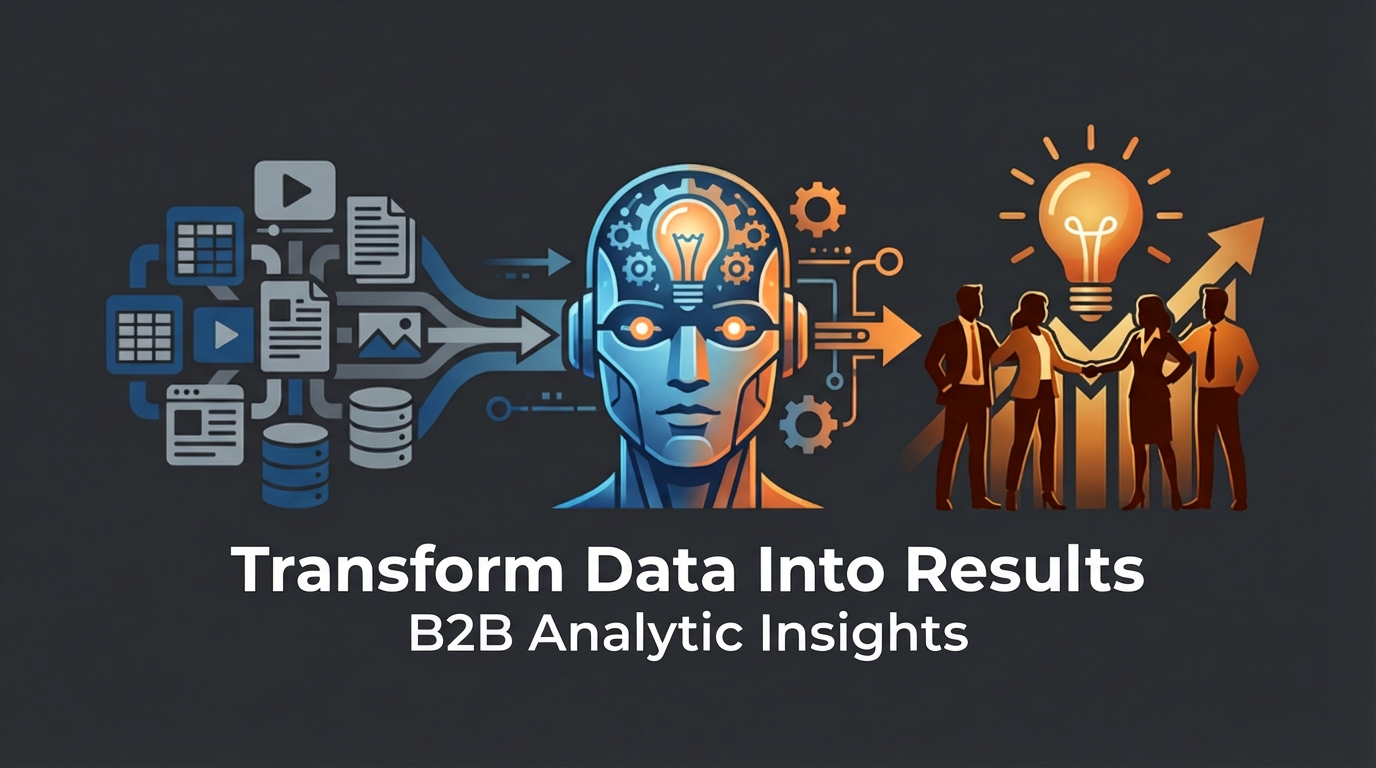

The landscape of business operations is undergoing a profound transformation, driven by the relentless advancement of AI analytics. We’re not merely discussing incremental improvements; we’re witnessing a paradigm shift in how organizations uncover, capture, and predict revenue. For too long, revenue generation has been a reactive, often fragmented process, reliant on historical data and anecdotal evidence. Today, the imperative is clear: embrace intelligent systems that dissect complex data signals, empower preemptive action, and translate insights directly into bottom-line growth.
Navigating the complexities of credit risk, optimizing financial analysis, and streamlining enterprise operations demand precision. Predictive AI isn’t just a buzzword; it’s the engine driving direct growth, offering a demonstrable 138% ROI on lead generation and generating 75% conversion lifts. This isn’t theoretical; it’s a strategic imperative for any B2B entity striving for competitive advantage.
The Evolution of Revenue Intelligence: From Data Silos to Unified Platforms
The journey to true revenue intelligence began with isolated data points. CRMs held customer information, ERPs managed finances, and sales enablement tools lived in their own ecosystems. The challenge was stitching these together in a meaningful way.
Merging Capabilities for Enhanced Strategic Oversight
Gartner’s 2025 Magic Quadrant for Revenue Action Orchestration (RAO) signifies a critical inflection point. It explicitly merges revenue intelligence, sales engagement, and sales force automation into integrated, AI-driven platforms. This isn’t just about convenience; it’s about breaking down silos that previously hindered comprehensive strategic oversight. The impact is undeniable: companies leveraging these integrated platforms report a remarkable 1.7x revenue growth and a 1.6x improvement in EBIT margins. This consolidation provides a holistic view of the customer journey, from initial outreach to deal closure, enabling a level of strategic insight previously unattainable. For C-suite executives, this translates to predictable, scalable revenue engines; for analytics leaders, it means a unified data foundation.
The Financial Imperative: A Market Surging Towards Smarter Decisions
The financial trajectory of the revenue AI market is testament to its growing importance. Valued at $8.8 billion in 2025, it’s projected to skyrocket to $63.5 billion by 2032, boasting a staggering 32.6% Compound Annual Growth Rate (CAGR). This isn’t speculation; it’s a direct response to the demand for outcome-based pricing models and robust decision traces, all aimed at achieving higher margins. Organizations are no longer content with “good enough” analytics; they require systems that can demonstrate direct, measurable impact on their P&L, offering a clear ROI perspective for every dollar invested.
In the realm of Revenue Intelligence, understanding how AI analytics can drive direct business growth is crucial for organizations looking to leverage their data effectively. A related article that delves deeper into this topic is titled “The Power of Analytics: Transforming Data into Meaningful Actions.” This piece explores how businesses can harness analytics to make informed decisions and enhance their operational efficiency. For more insights, you can read the article here: The Power of Analytics: Transforming Data into Meaningful Actions.
AI Agents: The Next Frontier in Revenue Operations
The evolution of AI in revenue operations is moving beyond simple dashboards and static reports. We are transitioning from reactive decision-making to proactive, autonomous execution.
Shifting from Copilots to Autonomous Execution
Historically, AI served as a “copilot,” assisting human analysts and sales professionals. The 2026 trends indicate a decisive shift towards AI agents dominating revenue operations. These agents are designed for autonomous execution in critical areas like pipeline monitoring and forecasting. Consider the implications: an AI agent could dynamically reallocate sales resources based on real-time deal health, or autonomously identify and prioritize at-risk accounts, freeing human teams for higher-value strategic interactions. Teams leveraging AI in this manner generate 77% more revenue per representative. The strategic foresight is clear: 50% of GenAI enterprises are expected to deploy such agents by 2027. This isn’t about replacing human expertise, but augmenting it with unparalleled speed and analytical power.
Overcoming Data Readiness and Scaling Challenges
While the promise of agentic AI is compelling, adoption isn’t without its hurdles. Only 23% of organizations currently possess the capabilities to scale agentic AI effectively. A significant barrier, cited by 48% of enterprises, is the lack of AI-ready data. This underscores a crucial point in analytics transformation: technology alone is insufficient. Robust data governance, data quality initiatives, and a strategic data architecture are prerequisites for unlocking the true potential of AI. The “dashboard utilization crisis” further emphasizes the shift towards more intuitive, agent-driven interfaces that provide actionable intelligence proactively, rather than requiring users to hunt for insights. Integrating these agents effectively demands a careful blend of technical implementation and organizational change management.
Practical Applications: Core AI-Powered Revenue Intelligence Platforms
The market is already populated with robust platforms demonstrating tangible gains in revenue performance. These aren’t speculative tools; they are proven engines for direct business growth.
Enhancing Sales Performance and Forecast Accuracy
Platforms like Gong, Clari, Chorus.ai, Jiminny, and Salesloft are not just recording conversations; they are analyzing them at scale, identifying patterns, and providing actionable insights. The results are compelling: reported 10-20% boosts in win rates, a substantial 15% reduction in sales cycle lengths, and a remarkable 40%+ improvement in forecast accuracy. This is particularly critical in B2B, where long sales cycles and high-value deals necessitate precision. For credit risk analysis, these tools can identify early warning signals of customer churn or declining financial health within sales interactions. For enterprise operations, they provide a feedback loop, informing product development, marketing strategy, and resource allocation based on actual customer dialogue and deal outcomes. This enables continuous improvement, aligning sales execution with broader strategic objectives.
Real-time Decisioning and Dynamic Resource Allocation
The ability of predictive AI to drive direct growth is exemplified by its impact on real-time decisioning. Imagine a scenario where a financial services firm can dynamically adjust credit limits based on instantaneous risk scores during a customer interaction, or a manufacturing enterprise can reallocate production priorities based on real-time sales pipeline shifts. This isn’t future-gazing; it’s happening now. Predictive analytics delivers robust ROI, with a 40% improvement in quota accuracy, illustrating how dynamic resource allocation can optimize human capital and operational expenditure. For analytics leaders, this translates to empowering sales and operations teams with timely, data-backed insights, moving beyond historical reporting to anticipatory action.
Strategic Impact: AI’s Broader Influence on Business Operations
The influence of AI extends far beyond sales metrics; it fundamentally reshapes how businesses operate, identifying efficiencies and unlocking new avenues for growth.
Boosting Revenue, Cutting Costs, and Elevating Productivity
The NVIDIA 2026 AI Report succinctly captures the multifaceted impact of AI: it boosts revenue, cuts costs, and significantly raises productivity across industries. This triad of benefits is the holy grail for any C-suite executive. Specifically, 42% of organizations prioritize workflow optimization through AI, with financial services demonstrating the strongest ROI. In credit risk, AI-driven automation of repetitive tasks, such as initial credit assessments or fraud detection, frees up analysts to focus on complex cases. Within financial analysis, AI can automate variance analysis and trend identification, providing higher-velocity insights. For enterprise operations, from supply chain optimization to customer service, AI drives efficiencies previously unimaginable. Analytics transformation here means embedding AI not just in specific tools, but across the entire operational fabric.
The Interplay of Technology and Human Expertise
It is critical to acknowledge that analytics transformation, particularly with AI, is not merely a technological deployment. It necessitates a symbiotic relationship between cutting-edge AI platforms and the irreplaceable human expertise within an organization. While AI can process vast datasets and identify intricate patterns, human intelligence provides the contextual understanding, ethical oversight, and strategic judgment required to translate these insights into effective business strategies. The challenge is in fostering an organizational culture that embraces data-driven decision making, where practitioners are skilled in interpreting AI outputs, and leaders are adept at leveraging these insights for strategic advantage. This requires continuous training, a commitment to data literacy, and a willingness to adapt existing processes.
In the ever-evolving landscape of business, understanding the nuances of customer behavior is crucial for driving growth. A related article on this topic can be found at B2B Analytic Insights, where the focus is on how AI analytics can transform revenue intelligence strategies. By leveraging advanced data analysis, companies can gain valuable insights that lead to more informed decision-making and ultimately enhance their bottom line.
Recommendations for a Data-Driven Future
To fully harness the power of revenue intelligence, organizations must adopt a strategic, phased approach, focusing on tangible outcomes and fostering an analytics-first culture.
First, prioritize data readiness. Before deploying advanced AI agents, ensure your data infrastructure is robust, data quality is high, and governance frameworks are established. This foundational work is non-negotiable for achieving reliable AI outputs and building trust in the insights generated.
Second, invest in integrated RAO platforms. Consolidating revenue intelligence, sales engagement, and sales force automation eliminates data silos and provides a single source of truth for revenue performance. This integration is paramount for holistic strategic oversight and maximizing the 1.7x revenue growth reported by early adopters.
Third, empower, don’t replace, your human capital. While AI agents will automate routine tasks, the strategic interpretation of insights and complex problem-solving remains firmly in the human domain. Focus on upskilling your teams to become proficient in leveraging AI tools, fostering a culture of continuous learning and data literacy. The time-to-insight for your analytics and sales teams will dramatically shrink, moving from retrospective reporting to proactive intervention.
Finally, adopt an outcome-based ROI framework. Measure the impact of your revenue intelligence investments not just on activity metrics, but on direct business outcomes: increased win rates, shorter sales cycles, improved forecast accuracy, and ultimately, higher EBIT margins. This focus ensures accountability and drives continuous optimization across your analytics transformation journey. The future of direct business growth is inextricably linked to intelligent revenue operations, and the time to act is now.