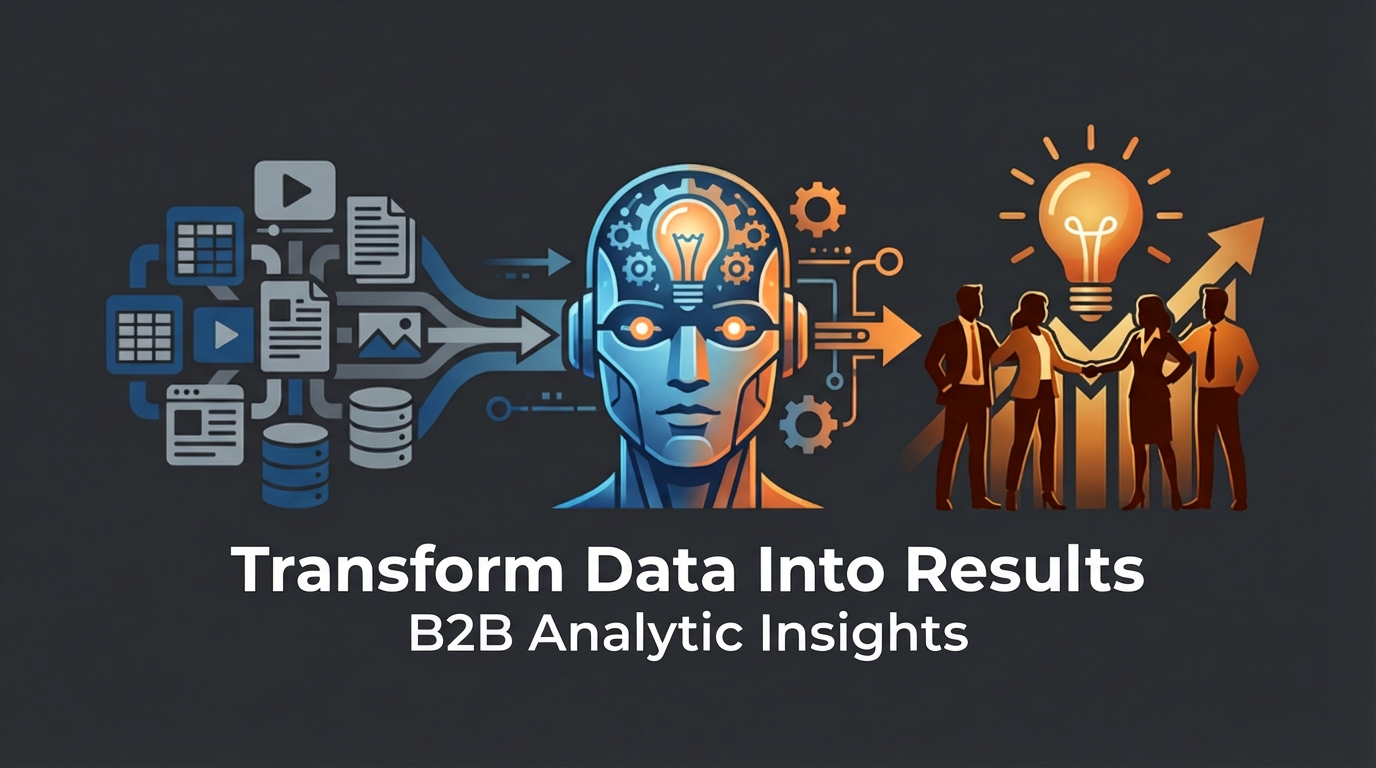

The persistent challenge for enterprise analytics teams has always been demonstrating tangible value beyond operational reporting. For decades, we’ve wrestled with the perception of being a necessary expense, a “cost center” meticulously tracking past performance without directly impacting the bottom line. But that narrative is profoundly shifting. Today, with the maturation of AI, advanced data platforms, and a growing recognition of data’s strategic power, analytics teams are unequivocally moving from cost centers to undeniable profit drivers. This isn’t theoretical; it’s an operational reality we’re seeing unfold across credit risk, financial analysis, and enterprise operations, supported by concrete metrics and strategic shifts.
The Imperative for Analytics Transformation
Consider the typical business problems: financial institutions struggling with escalating credit risk in volatile markets, enterprise operations grappling with inefficient supply chains, or sales organizations failing to accurately forecast revenue. Traditional business intelligence, while foundational, often offers insights after the fact. The C-suite now demands proactive intelligence, not just retrospection. They need systems that predict, recommend, and automate, directly impacting revenue growth and operational efficiency.
For years, we’ve collected vast amounts of data, meticulously cleaned it, and presented it in dashboards. The investment in data warehousing, ETL processes, and reporting tools has been substantial. Yet, the leap from descriptive analytics to prescriptive action has often been a chasm. This is where AI, properly applied, acts as the bridge. It elevates the analytics function from merely understanding “what happened” to dictating “what will happen” and, critically, “what we should do about it.” This analytics transformation isn’t an option; it’s a strategic necessity to maintain competitive advantage.
In exploring the transformative impact of AI on analytics teams, a related article that delves deeper into the evolving landscape of business intelligence is available at B2B Analytic Insights. This resource provides valuable insights into how organizations can leverage advanced analytics to not only enhance operational efficiency but also drive profitability, aligning well with the themes discussed in “From Cost Center to Profit Driver: AI’s Transformation of Analytics Teams.”
Elevating Data Quality and Proactive Mindsets: The Foundation of Profitability
Before AI can unlock profit, the underlying data ecosystem must be robust. This isn’t new advice, but the stakes are higher than ever. Garbage in, garbage out, amplified by the scale of AI. The dbt Labs blog recently highlighted this, emphasizing that data and analytics teams must cultivate proactive mindsets and obsess over data quality. This isn’t just about cleaning data; it’s about embedding quality assurance at every stage of the data lifecycle.
From Reactive Data Cleaning to Proactive Data Governance
Historically, data quality was often a reactive exercise, fixing issues as they arose. Today, it’s a proactive, architectural imperative. Implementing robust data governance frameworks, including code reviews for data pipelines and leveraging tools like the dbt Semantic Layer, ensures data consistency and reliability. For a credit risk team, this means meticulous validation of customer payment histories, demographic data, and transaction patterns. Errors here don’t just lead to bad reports; they lead to faulty risk models, resulting in either excessive provisioning or, worse, unforeseen loan defaults. We’ve seen instances where a 5% improvement in data quality in customer segmentation for a retail financial product led to a 15% reduction in marketing spend for the same conversion rates, directly impacting the bottom line. This isn’t just about “clean data”; it’s about reducing operational drag and maximizing AI’s effectiveness.
Cultivating a Proactive, Value-Oriented Analytics Culture
The mindset shift is equally crucial. Analytics professionals must move beyond fulfilling ad-hoc requests to actively identifying business problems that can be solved with data. This requires a deeper understanding of business operations, not just data schemas. For example, in enterprise operations, an analyst shouldn’t just report on inventory levels; they should be asking: “Can we predict demand fluctuations more accurately to optimize logistics and reduce carrying costs?” This proactive engagement, fueled by a genuine desire to drive value, converts analytics from a departmental overhead into a strategic partner. Organizations like Bilt Rewards and ClickUp are demonstrating this by empowering their data teams to not just analyze, but to influence product and operational strategy.
AI-Driven Efficiency and Predictive Power: Operationalizing Insights
The real power of AI lies in its ability to process vast quantities of data, identify complex patterns, and generate actionable insights at a speed and scale impossible for human analysts alone. This translates directly into efficiency gains and superior predictive capabilities across the enterprise.
Automating Routine Analytics and Reporting
One of the immediate benefits of AI is the automation of mundane, repetitive analytical tasks. Report generation, anomaly detection in financial transactions, and even initial data exploration can be significantly streamlined using AI-powered tools. This frees up seasoned analysts to focus on higher-value activities: model building, strategic business partnering, and interpreting nuanced results. For an accounts payable department, an AI system identifying invoice discrepancies and flagging potential fraud saves thousands of hours annually. A large financial institution implemented an AI-driven reconcilation system that reduced manual effort by 40% and improved accuracy by 8%, translating to millions in operational savings year over year. The “time-to-insight” for critical operational metrics shrinks from days to hours, allowing for much more agile decision-making.
Unleashing Predictive Analytics for Strategic Advantage
Beyond efficiency, predictive analytics is where AI truly shines as a profit driver. In credit risk, AI models can assess loan applications with a granularity previously unimaginable, incorporating hundreds of variables to predict default probabilities more accurately. This leads to reduced bad debt write-offs and more precisely priced loan products. A major regional bank, after implementing an AI-powered credit scoring model, saw a 10% decrease in loan default rates among new customers within the first year, directly impacting their profitability.
In enterprise operations, predictive maintenance, fueled by IoT data and AI, transforms reactive repair into proactive intervention. Manufacturers using AI to predict equipment failure before it occurs can reduce unplanned downtime by 20-30%, resulting in significant cost savings and improved production throughput. MEXC News highlights this evolution: IT and analytics teams are becoming profit engines by deploying these very AI-driven insight streams.
AI as a Revenue Stream & Innovation Engine: Beyond Cost Savings
While efficiency and risk mitigation are crucial, AI’s greatest potential lies in its ability to directly generate new revenue streams and foster innovation. This is where analytics transitions from supporting operations to actively shaping future business models.
Personalization and Targeted Offerings
In consumer-facing financial services, AI-driven personalization is a proven revenue generator. By analyzing customer behavior, transaction history, and preferences, AI can recommend highly relevant products and services, leading to increased cross-sell and upsell opportunities. For example, a banking institution using AI to segment customers and personalize product recommendations saw a 12% uplift in new product adoption rates within six months. This isn’t just about marketing; it’s about intelligently anticipating customer needs and delivering value proactively. Channel Futures notes that personalization, powered by AI, is a key driver for turning enterprise applications into profit centers.
Fueling Product and Service Innovation
The insights gleaned from advanced analytics and AI can directly inform the development of new products and services. By identifying unmet customer needs or emerging market trends through deep data analysis, analytics teams can provide the strategic intelligence necessary for innovation. Gartner’s prediction that 60% of CIOs will be measured on innovation by 2025 underscores this shift. An analytics team identifying a significant cluster of customers struggling with short-term liquidity, for instance, could inform the creation of a new micro-loan product designed to address that specific need, opening up new revenue avenues.
In the evolving landscape of business analytics, the article “From Cost Center to Profit Driver: AI’s Transformation of Analytics Teams” highlights how artificial intelligence is reshaping the role of analytics teams. For those interested in further exploring the impact of AI on business strategies, a related article can be found at B2B Analytic Insights, which delves into innovative approaches that organizations are adopting to leverage data for competitive advantage. This connection underscores the growing importance of analytics as a strategic asset in driving profitability.
Orchestrating AI for Enterprise-Wide Impact: The Role of Leadership
Implementing AI for profit generation isn’t just a technical exercise; it’s a comprehensive organizational transformation. It requires strategic orchestration, strong leadership, and a clear understanding of opportunities and challenges. PwC’s 2026 AI Predictions emphasize the need for “agentic workflows” and “orchestration” for AI to truly drive “surging growth.” This means integrating AI across functions, not just in isolated pockets.
Bridging the Gap: Data Orchestration and Business Integration
The “YouTube Episode” discussing AI cutting hype for GTM revenue impact highlights the importance of data orchestration. AI models are only as good as the data they consume, and that data often resides in disparate systems. Building robust data pipelines and integration layers is paramount. Furthermore, integrating AI-driven insights directly into business workflows – be it CRM systems for sales teams, ERPs for operations, or core banking systems for financial analysis – ensures adoption and impact. A predictive sales forecasting model is useless if sales teams don’t trust it or can’t easily access its recommendations within their daily tools.
Cultivating an AI-Ready Workforce and Culture
The most sophisticated AI models are ineffective without human expertise to guide their development, interpret their outputs, and act on their insights. This requires upskilling current analytics professionals in machine learning, data science, and AI ethics. It also means fostering a culture of data literacy and AI adoption across the organization. The challenge isn’t just technical; it’s cultural. Front-line employees need to understand how AI supports their work, not replaces it. Organizations that prioritize internal training and cross-functional collaboration are far more likely to see successful AI implementations.
Strategic Recommendations for C-Suite and Analytics Leaders
The trajectory is clear: AI is repositioning analytics teams from perceived overhead to strategic assets directly contributing to the bottom line. For organizations that are serious about this transformation, here are actionable recommendations:
For the C-suite (ROI Focus):
- Prioritize Use Cases with Clear ROI: Don’t chase every shiny AI object. Focus initially on high-impact areas in credit risk, operational efficiency (e.g., supply chain optimization), or customer lifetime value where quantifiable returns are achievable within 12-18 months. Start with projects that deliver quick wins to build momentum and demonstrate value.
- Invest in Data Foundation and Governance: Recognize that AI’s effectiveness is predicated on high-quality, well-governed data. Allocate appropriate budget and resources to data platforms, data quality initiatives, and robust data governance frameworks. This isn’t a pre-AI step; it’s an ongoing, critical investment.
- Empower Your Analytics Leadership: Give analytics leaders a seat at the strategic table. Their expertise is crucial for identifying viable AI opportunities, articulating technical needs, and driving the organizational change required for adoption. Measure them not just on dashboards produced, but on business outcomes influenced.
For Analytics Leaders (Implementation Focus):
- Build a Hybrid Team: Develop a team that blends traditional analytics skills with data science, machine learning engineering, and AI ethics expertise. Prioritize continuous learning and professional development.
- Architect for Scalability and Integration: Design data pipelines, AI models, and deployment strategies with enterprise-wide scalability and seamless integration into existing business systems in mind. Leverage modern data stack components and MLOps practices.
- Champion Data Literacy and AI Adoption: Actively educate business users on the capabilities and limitations of AI. Foster a collaborative environment where business problems are framed as data problems, and AI is seen as an enabler, not a threat. Your success hinges on the adoption of your insights.
The journey from cost center to profit driver is not magic; it’s a strategic, methodical application of AI and advanced analytics to core business challenges. It demands foresight, disciplined execution, and a unwavering commitment to leveraging data for tangible, measurable business value. The future of enterprise analytics isn’t just about reporting the past; it’s about actively shaping the future.