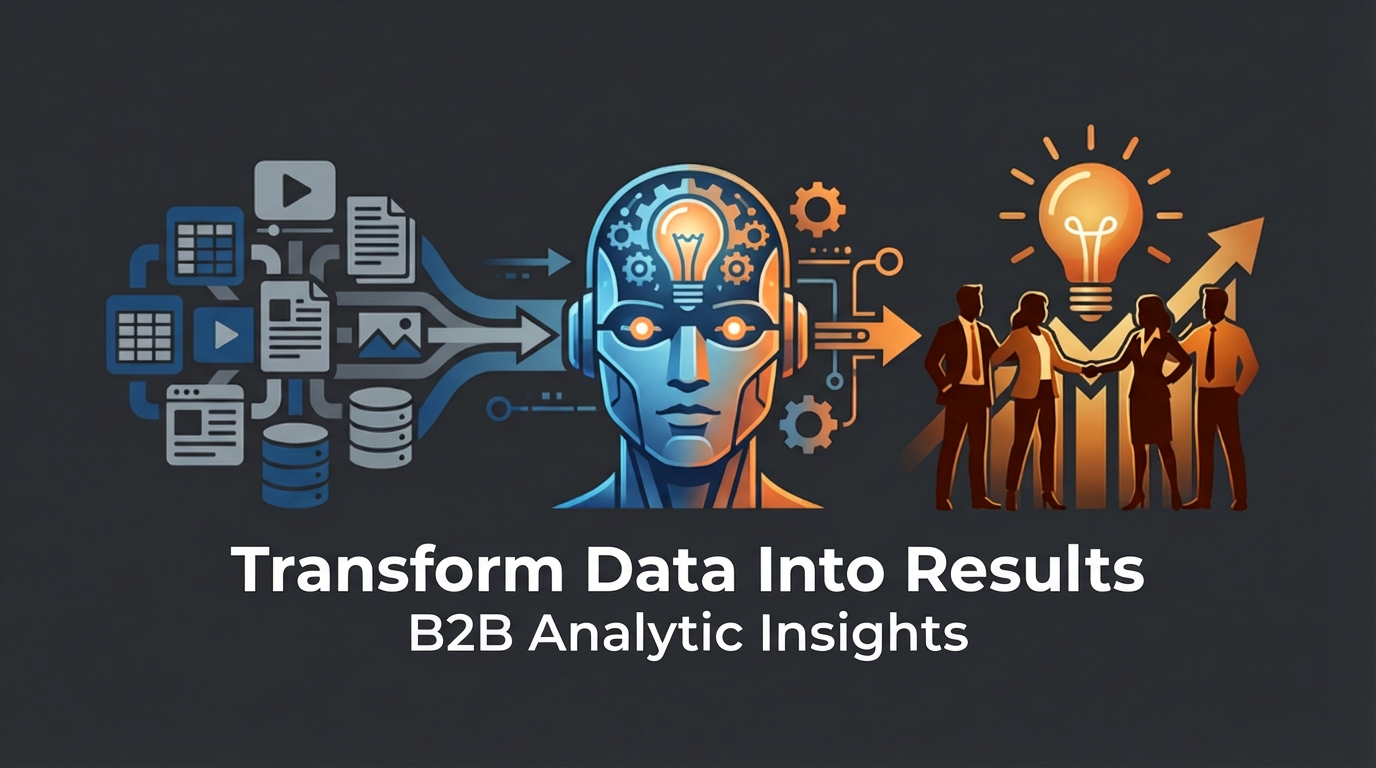

Payment behavior is a goldmine. It’s more than just numbers. It’s a story. Most of us have seen this story play out for decades. We watch thousands of commercial entities. We see patterns emerge. We understand the nuances. This isn’t academic theory. This is real work. This is about making sound decisions. Decisions that protect our organizations. Decisions that drive growth.
We often approach data with a singular focus. We look for a specific answer. We want to know if a payment will clear. We want to assess a counterparty’s risk. This is essential. It is also just the starting point. Trade data, particularly payment behavior, offers a deeper intelligence. It reveals more than mere solvency. It speaks to operational health. It points to market trends. It foreshadows broader economic shifts.
As finance and credit professionals, we are entrusted with significant responsibility. We manage risk. We allocate capital. Our intuition, honed over decades, is invaluable. But intuition needs to be informed. It needs to be validated. It needs to be amplified by robust data. This is where trade data intelligence becomes critical. We must move beyond simple transaction recording. We must extract meaningful insights. We must transform these insights into actionable intelligence.
The Foundation: Understanding Descriptive Payment Signals
Descriptive analytics are where we begin. They paint a picture of what has happened. For payment behavior, this means looking at transaction volumes. It means examining payment timings. It means categorizing payment types. This is the bedrock of our understanding.
Basic Transactional Overview
We review past payments. We see the flow of funds. We note the frequency of payments. We observe the typical amounts. This is not just bookkeeping. This is the first layer of intel. It tells us about the business’s normal rhythm. It establishes a baseline. Deviations from this baseline are our first clues.
Payment Method Analysis
Different payment methods carry different implications. Checks signal a certain level of formality. Wire transfers indicate urgency or larger sums. Electronic payments suggest modernity and efficiency. Observing trends in payment methods can signal changes in a company’s operational sophistication. It can also reflect evolving industry norms.
Frequency and Volume Patterns
Consistent payment schedules are a sign of stability. Irregular payments raise a flag. Sudden spikes or drops in volume require investigation. These patterns are not random. They are often linked to underlying business conditions. They can be precursors to larger issues or indicators of unexpected success.
Diagnostic Insights: Why Did This Happen?
Moving from description to diagnosis involves asking “why.” Why did a payment arrive late? Why was a payment amount different? Diagnostic analytics help us uncover the root causes. This requires digging deeper. It involves connecting payment behavior to operational realities. Supply chain intelligence plays a crucial role here.
Identifying Payment Anomalies
An anomaly is a deviation from the norm. A late payment is an anomaly. A significantly larger or smaller payment than usual is an anomaly. Our job is to not just spot these anomalies. We must understand their context. Is this a one-off event? Or is it part of a larger trend?
Correlating Payments with Operational Events
We need to link payment behavior to business events. Did a late payment coincide with a major supply chain disruption? Did an increased payment volume correspond with a new large contract? This correlation provides crucial context. It moves us from “what” to “why.”
Historical Performance Benchmarking
We compare a company’s current payment behavior against its own past performance. We also benchmark against similar companies. This helps us identify relative strengths and weaknesses. A company consistently paying sooner than its peers might be operationally superior. Or it might be operating with less working capital. This requires careful interpretation.
Predictive Analytics: What Will Likely Happen?
This is where we begin to look forward. Predictive analytics use historical data to forecast future outcomes. For payment behavior, this means assessing the likelihood of future late payments or defaults. This is where AI-driven analytics shine.
Forecasting Future Payment Timeliness
We can build models that predict when future payments are likely to be made. These models consider numerous factors. They look at historical trends. They factor in economic indicators. They incorporate insights from other data sources. The goal is to anticipate potential cash flow issues before they become critical.
Credit Risk Scoring Evolution
Traditional credit scoring relies on financial statements and bureau data. Payment behavior offers a dynamic, real-time layer. We can enhance existing credit scores. We can create new, more responsive scores. These scores reflect actual performance, not just reported performance. Thousands of commercial entities contribute to this evolving dataset.
Early Warning Systems for Deterioration
By analyzing subtle shifts in payment patterns, we can detect early signs of financial distress. A gradual increase in payment times. A minor shift towards more restrictive payment terms. These are not headline-grabbing events. But they are critical signals. They allow for proactive intervention.
Prescriptive Analytics: What Should We Do?
Prescriptive analytics go a step further. They don’t just predict what will happen. They recommend actions to take. This is decision intelligence in its purest form. It transforms data into strategy.
Optimizing Payment Terms and Strategies
Based on predictive insights, we can dynamically adjust our payment terms. For some customers, we might offer more favorable terms. For others, we might need to tighten them. This is not a one-size-fits-all approach. It is data-driven and individualized. This optimizes our own cash flow and risk exposure.
Proactive Risk Mitigation Strategies
If a counterparty shows signs of increasing risk, we can take pre-emptive action. This might involve requesting more frequent updates. It might mean adjusting credit limits. It could involve seeking additional collateral. These are not reactive measures. They are informed, strategic decisions.
Enhancing Cash Flow Management
By understanding future payment flows with greater accuracy, we can optimize our own treasury operations. We can forecast our own inflows and outflows with more confidence. This allows for better investment decisions and more efficient working capital management.
Integrating Trade Data with Supply Chain Intelligence
Payment behavior is intricately linked to the health of the supply chain. A disruption in one part of the chain will ripple through to payment performance. Integrating these two streams of intelligence is powerful.
Linking Payment Delays to Supply Chain Bottlenecks
A prolonged delay in a supplier’s payment might indicate a cash flow problem. This cash flow problem could stem from their own supplier issues. Or it could be due to a logistics breakdown. Understanding this connection allows us to anticipate broader impacts.
Assessing Counterparty Resilience
By observing consistent, on-time payments, even during challenging economic periods, we glean insights into a counterparty’s operational resilience and financial strength. They are navigating the storm effectively. This informs our long-term relationships.
Supply Chain Network Health Monitoring
Aggregated payment data across a network can reveal systemic issues. If multiple suppliers in a specific region or industry begin to show payment delays, it signals a broader problem. This intelligence allows for strategic adjustments to our sourcing.
AI-Driven Analytics: Unlocking Deeper Insights
AI amplifies our ability to extract value from trade data. It can process vast amounts of information and identify complex relationships that humans might miss.
Pattern Recognition at Scale
AI excels at identifying subtle, recurring patterns in large datasets. It can detect early indicators of distress long before they become obvious. This is crucial when dealing with thousands of commercial entities.
Real-time Risk Assessment
AI allows for continuous monitoring and real-time risk assessment. As new payment data flows in, the models update. This provides an always current view of counterparty risk.
Predictive Modeling Enhancement
Machine learning algorithms can continuously learn and refine predictive models. They adapt to changing economic conditions and business behaviors. This makes our forecasts more accurate over time.
Decision Automation and Augmentation
AI can automate certain routine credit decisions. For more complex situations, it can provide recommendations to human decision-makers. This assists us in making faster, more informed choices.
The Future: Beyond Transactional Data
Our journey with trade data intelligence is ongoing. We are moving beyond simply recording transactions. We are extracting actionable insights. We are transforming data into competitive advantage.
Dynamic Credit Decisioning
The future involves dynamic credit decisioning. Decisions made not once, but reviewed and adjusted continuously. Based on real-time payment behavior. This is a paradigm shift. It demands sophisticated analytics.
Proactive Customer Engagement
Understanding a customer’s payment trajectory allows for proactive engagement. We can offer support before issues arise. We can discuss solutions. This builds stronger, more resilient relationships.
Strategic Sourcing and Partnership
Payment intelligence informs our strategic sourcing decisions. We can identify reliable partners. We can de-risk our supply chains. This is about building a more robust business.
The wealth of information within payment behavior is immense. It offers a unique lens into the financial health and operational capabilities of the commercial entities we interact with. For decades, we have observed these patterns. Now, with advanced analytics and AI, we can unlock their full potential. This is not about abstract theory. It is about practical, actionable intelligence. It is about making better decisions today. And preparing for the challenges and opportunities of tomorrow. We lead with experience. We collaborate with data. This is how we build resilient and successful organizations.