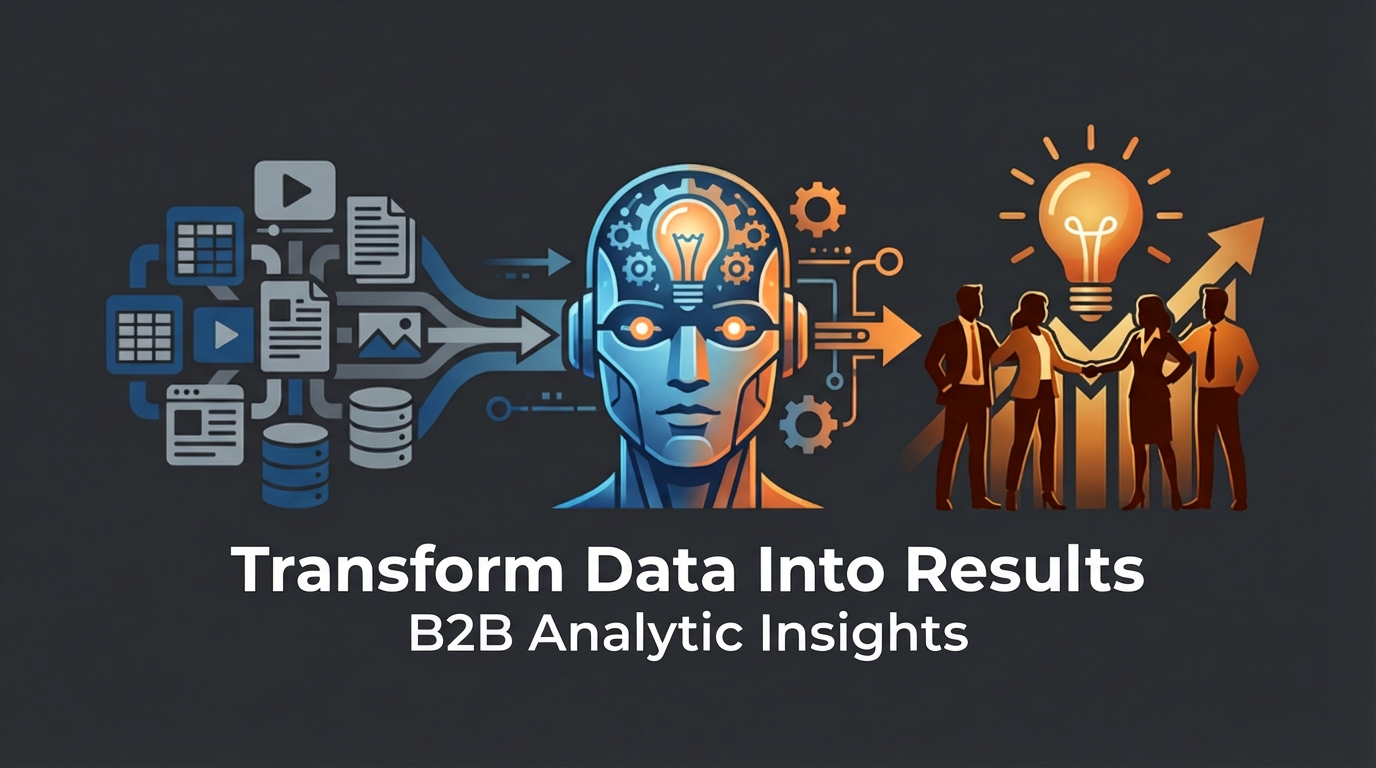

The relentless pursuit of competitive advantage and operational efficiency, particularly within the complex landscapes of credit risk management, financial analysis, and enterprise operations, demands a strategic approach to leveraging data. For decades, we’ve spoken of analytics as a tool; now, with the advent of advanced AI capabilities, we are witnessing an evolution from mere data-driven decision making to something far more profound. My 25+ years at the forefront of analytics have taught me that the true power lies not in the technology itself, but in its strategic integration along the analytics value chain. Where, precisely, does AI unlock maximum business impact, transforming raw data into actionable intelligence that drives tangible outcomes?
The landscape of enterprise operations is being reshaped by an urgent need to move beyond reactive analysis to proactive, predictive intelligence. Companies that have embraced this shift are not just seeing incremental improvements; they are fundamentally altering their operational paradigms. As demonstrated by the Dec 2025 AI ROI Study, a substantial 82% of companies report positive AI ROI, with an impressive 37% experiencing significant or transformational impact. This isn’t about abstract theoretical gains; it’s about concrete improvements like the reported 8 hours per week saved by employees, freeing them for higher-value strategic work. Moreover, the emerging trend of agentic AI, now present in 14% of use cases, signals a future where AI doesn’t just provide insights, but actively executes tasks, further amplifying efficiency. This surge in success is underpinned by a cultural and operational readiness to embrace AI, a readiness that is far from universal but is a hallmark of high-performing organizations.
The Foundation: Data Quality and Governance
Before we even contemplate AI’s transformative potential, we must address the bedrock upon which all analytics, especially AI-driven initiatives, are built: data quality and robust governance. This isn’t merely a technical prerequisite; it’s a strategic imperative. Without clean, consistent, and accessible data, any AI model, no matter how sophisticated, will generate flawed outputs, leading to poor decisions and wasted investment.
Ensuring Data Integrity for AI
The Dec 2025 AI ROI Study highlights that AI’s impact is directly proportional to the quality of the data it consumes. Companies that have invested in establishing clear data ownership, implementing automated data validation processes, and developing comprehensive data catalogs are far more likely to achieve positive ROI. For instance, financial institutions leveraging AI for credit risk assessment often find that the most significant gains come not from the advanced algorithms themselves, but from the meticulous cleansing and standardization of historical loan performance data. This ensures that the AI can accurately identify patterns and predict defaults, rather than being misled by erroneous entries or inconsistencies.
Governance as an Enabler, Not a Bottleneck
Effective data governance, often perceived as bureaucratic overhead, is, in reality, an accelerator of the analytics transformation. It provides the guardrails necessary for responsible AI deployment, ensuring compliance with regulations and safeguarding against bias. In the realm of financial analysis, for example, robust governance frameworks are critical for maintaining the integrity of financial reporting and ensuring that AI-powered forecasting models adhere to industry standards and internal policies. This builds trust in the insights generated, a crucial factor for C-suite adoption.
In exploring the profound impact of AI on business operations, a related article titled “The Power of Analytics: Transforming Data into Meaningful Actions” delves into how organizations can leverage analytics to drive decision-making and enhance performance. This article complements the insights presented in “The Analytics Value Chain: Where AI Creates Maximum Business Impact” by emphasizing the importance of actionable data in achieving strategic goals. For further reading, you can access the article here: The Power of Analytics: Transforming Data into Meaningful Actions.
From Analytics to Intelligence: Embedding AI in Core Workflows
The true paradigm shift occurs when AI transcends its role as a standalone analytical tool and becomes deeply embedded within an organization’s core operational workflows. This isn’t about generating reports; it’s about empowering systems and individuals with intelligent capabilities that proactively inform and even automate decisions. As highlighted by Mar 2026 TechLinos Article, AI is actively shifting operations from mere ‘analytics’ to true ‘intelligence,’ embedding itself into the very fabric of business processes for enhanced predictive accuracy, risk mitigation, and ultimately, greater financial stability. This is where the time-to-insight dramatically shrinks, and the window for strategic intervention widens.
Operationalizing Predictive Capabilities
Consider the domain of enterprise operations. AI excels at identifying subtle anomalies and predicting future states with a degree of accuracy previously unattainable. In supply chain management, for example, AI can predict equipment failures or disruptions long before they impact production schedules. This allows for proactive maintenance or the rerouting of goods, preventing costly downtime and ensuring continuity. The AI Supply Chain Market Projection anticipates robust growth, reaching $50.41 billion by 2032, fueled by the demonstrable value AI brings to optimizing these complex operational networks through embedded analytics.
Agentic AI: The Next Frontier of Workflow Automation
The increasing adoption of agentic AI, as noted in the Dec 2025 AI ROI Study, represents a significant leap forward. Instead of AI simply flagging an issue, agentic AI can be tasked with initiating a response. For a credit risk manager, this might mean an AI agent automatically requesting further documentation for a borderline loan application or flagging a suspicious transaction for immediate review. This automation of action directly translates into faster response times and reduced manual intervention, directly impacting efficiency and risk mitigation efforts.
Optimizing Risk Management with AI-Powered Foresight
In financial services, and indeed across many industries, accurate risk assessment is paramount. AI’s ability to analyze vast datasets, identify complex patterns, and forecast future outcomes makes it an indispensable tool for modern risk management strategies. The move from historical analysis to predictive modeling fundamentally alters how organizations approach credit risk, market volatility, and operational vulnerabilities.
Predictive Credit Risk Modeling
The days of purely rule-based or historical regression models for credit risk are rapidly becoming obsolete. AI, particularly machine learning algorithms, can ingest a far wider array of data – including transactional behavior, social media sentiment (where ethically permissible and compliant), and economic indicators – to build more nuanced and dynamic credit risk profiles. This enables lenders to approve more creditworthy individuals and businesses while effectively identifying and mitigating potential defaults, leading to a direct improvement in the bottom line. The AI ROI Study underscores that when applied to these critical areas, AI is not just providing incremental gains but is enabling entirely new capabilities.
Fraud Detection and Prevention
Fraudulent activities represent a significant financial drain for any enterprise. AI’s capacity for real-time anomaly detection is invaluable in identifying fraudulent transactions as they occur, rather than after the fact. This significantly reduces financial losses and protects the organization’s reputation. For instance, in payment processing, AI models can analyze transaction patterns, device fingerprints, and location data to flag suspicious activities with high accuracy, often preventing fraudulent transactions before they are completed. This proactive stance is a key differentiator in today’s competitive landscape.
Enhancing Financial Analysis and Strategic Planning
Beyond risk, AI is revolutionizing the depth and breadth of financial analysis, moving from periodic reporting to continuous, intelligent insights that inform strategic decision-making. The ability to model complex financial scenarios, forecast with greater accuracy, and uncover hidden financial opportunities is transforming the role of finance departments from historical recorders to strategic partners.
Dynamic Financial Forecasting and Scenario Planning
Traditional financial forecasting often relies on static assumptions and periodic updates. AI-powered forecasting models, however, can continuously learn from real-time data, adapt to changing market conditions, and generate more dynamic and accurate predictions. This enables organizations to perform sophisticated scenario planning, understanding the potential financial implications of various courses of action and preparing for unforeseen events. This capability is crucial for long-term strategic planning and capital allocation decisions.
Uncovering Hidden Revenue Opportunities
As the ERP Today publication highlights, AI elevates planners to the role of strategists by enabling them to derive actionable insights from data – essentially, creating powerful “analytics stories.” This is particularly true in identifying revenue opportunities. By analyzing customer behavior, market trends, and sales performance data, AI can pinpoint untapped markets, identify cross-selling or up-selling opportunities, and even suggest optimal pricing strategies. The Impact Analytics 2026 Updates, noting expansions in retail decision intelligence, exemplify this trend, showcasing how AI is directly driving revenue growth and competitive advantage in crucial sectors.
In exploring the transformative potential of AI in business, a related article that delves deeper into the practical applications of data analytics can be found at B2B Analytic Insights. This resource provides valuable insights into how organizations can leverage data-driven strategies to enhance decision-making and drive growth, complementing the concepts presented in The Analytics Value Chain: Where AI Creates Maximum Business Impact. By understanding these interconnected themes, businesses can better harness the power of analytics to achieve their objectives.
The Human Element in the AI-Driven Analytics Value Chain
It is a critical misconception to believe that AI replaces human expertise. Instead, AI acts as a powerful augmentation tool, amplifying the capabilities of skilled professionals. The McKinsey Global AI Survey 2025 emphasizes that high-performing organizations, those achieving substantial ROI, do so by focusing on workflow redesign, innovation, and scaling – all of which require human direction and strategic oversight. The most impactful AI solutions are those that seamlessly integrate with and empower human decision-makers.
Bridging the Gap: Technical Expertise and Business Acumen
The analytics transformation requires individuals who can bridge the gap between highly technical AI models and practical business strategy. This means data scientists who understand financial metrics and credit risk principles, and business leaders who can articulate clear business problems that AI can solve. The Dec 2025 AI ROI Study found that organizations leveraging AI for new capabilities, not just for time savings, are the ones achieving transformational results. This indicates a strategic deployment of AI, driven by human insight.
Fostering a Culture of Continuous Learning and Adaptation
AI technology is evolving at an unprecedented pace, and so too must the organizations that deploy it. Building a culture that embraces continuous learning, experimentation, and adaptation is crucial for maximizing the long-term value of AI. This involves investing in training for employees at all levels, encouraging cross-functional collaboration, and establishing agile frameworks for AI deployment and iteration. The success of AI is not solely dependent on the algorithms chosen but on the organizational willingness to evolve.
From my vantage point, the path to realizing the full potential of AI lies in a strategic, deliberate approach to the analytics value chain. It’s about more than just implementing new software; it’s about a fundamental recalibration of how we collect, govern, analyze, and act upon data.
Here’s what I recommend:
- Prioritize Data Foundation: Conduct a thorough audit of your existing data infrastructure, focusing on quality, accessibility, and governance. Invest in cleansing and standardizing critical datasets, especially for areas like credit risk and financial reporting. This is non-negotiable for achieving any meaningful AI ROI.
- Embed AI Strategically: Identify core business workflows where AI can move beyond analysis to actual intelligence. Focus on areas with clear potential for predictive accuracy, risk mitigation, and operational efficiency gains. The AI Supply Chain Market Projection indicates significant upside in operations, and similar opportunities exist across finance and risk.
- Empower Your People: Invest in upskilling your workforce to foster a data-literate culture that can collaborate with and leverage AI effectively. Focus on developing individuals who can translate complex AI outputs into actionable business strategies, bridging the technical and business divide.
- Measure and Iterate: Establish clear KPIs for AI initiatives, focusing on tangible business outcomes such as reduced risk exposure, improved operational cycle times (e.g., the 30% acceleration mentioned for digital assistants in supply chains), and increased revenue. Continuously monitor performance and iterate on AI models and their integration into workflows.
- Embrace Agentic AI with Caution: As agentic AI matures, explore its potential for automating routine tasks and accelerating decision-making. However, ensure robust human oversight and clear ethical guidelines are in place before full deployment, understanding that 14% of current use cases already involve this advanced capability.
By focusing on these strategic imperatives, organizations can move beyond incremental improvements and truly harness AI to drive transformative business impact, ensuring data-driven decision making becomes the engine of sustained competitive advantage.