
Early Warning Signals Are Only Valuable If You Act on Them
In finance and credit, our work demands precision. Our decisions carry weight. We navigate complexity daily. For decades, I have seen credit risk evolve across thousands of commercial entities. We’ve all witnessed cycles, shifts, and the relentless march of new information. One truth endures: insights are not outcomes. Raw data is not a decision. Early warning signals, by their nature, promise foresight. But that promise is hollow without action.
The Illusion of Foresight
We invest heavily in sophisticated systems. We build models with rigorous intent. We capture vast amounts of credit risk and supply chain intelligence. Our goal: to detect issues before they erupt. We surface early warning signals. These signals offer a glimpse into potential trouble. They highlight deteriorating payment trends, supply chain fragility, or macroeconomic headwinds.
Signals Are Just Data Points
A signal alone provides information. It challenges the conventional wisdom that information only has value when it prescribes action. A signal can possess inherent value, simply by informing our understanding. But in our domain, that intellectual value only translates to tangible results when it prompts a response. Sitting on a signal changes nothing. It offers no protection against impending loss.
The Cost of Inaction
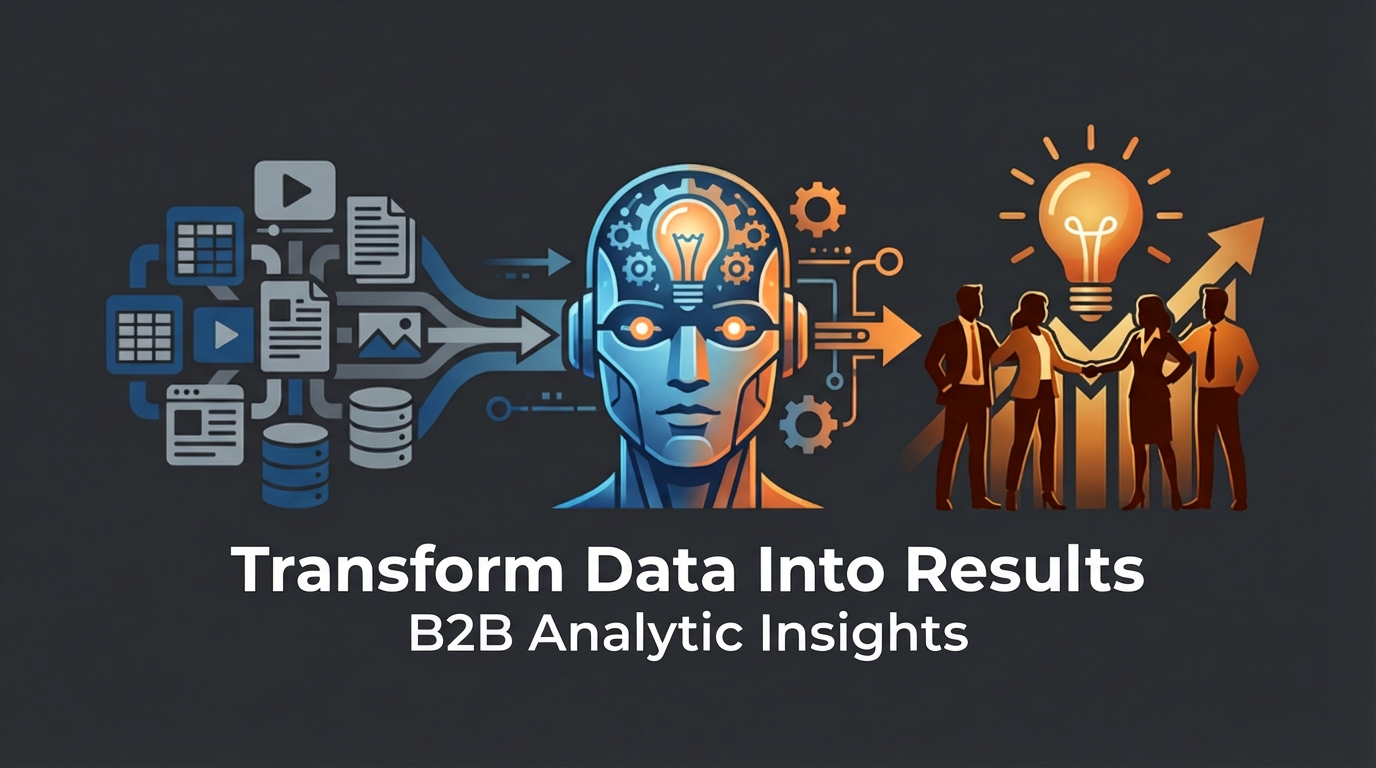
Ignoring signals comes with a steep price. Potential defaults escalate. Supply chain disruptions cascade. Reputational damage accumulates. We’ve seen these scenarios play out too many times. Delayed responses amplify the initial problem. They convert a manageable risk into a full-blown crisis. That’s why our mandate is clear: transform data into results.
Moving Beyond Diagnostic to Prescriptive
Our journey with data often begins with descriptive analytics. We look at what happened. We aggregate past performance. We identify patterns. This forms our baseline understanding. Then we move to diagnostic analytics. We ask why things happened. We drill down into causal factors. This deepens our insight.
Predictive Capabilities Inform, Not Guarantee
Predictive analytics takes us a step further. We forecast what might happen. We use historical data and current trends to estimate future outcomes. This is where early warning signals truly shine. They offer a probability, a likelihood, of future events. A financial institution might predict a higher default rate for a specific segment. A credit professional might foresee liquidity issues for a key supplier. These predictions are invaluable. They inform our decision space.
Prescriptive Action is the Goal
However, prediction alone is insufficient. The true power lies in prescriptive analytics. This answers the question: what should we do about it? It recommends specific actions to achieve desired outcomes or mitigate identified risks. An early warning signal predicting a supplier’s financial distress must lead to a prescriptive plan. Should we diversify our supply base? Should we secure alternative contracts? Should we offer targeted financial support? These are actionable questions.
Building an Action-Oriented Framework
Developing an effective early warning system is not just about technology. It’s about process and culture. We must embed accountability. We must design governance structures that mandate response. This shifts us from reactive to preventive risk management.
Clear Ownership and Accountability
Who owns the signal? Who is responsible for evaluating it? Who makes the decision to act or not act? These roles must be unambiguous. When a system flags a potential issue with a borrower, a designated credit officer must receive the alert. This officer becomes the point of accountability. They must investigate. They must report findings. They must recommend a course of action. Without clear lines of ownership, signals get lost in the noise.
Defined Triage and Response Protocols
Not all signals carry the same weight. Some are critical, demanding immediate action. Others require further monitoring. We need clear protocols for triage. How do we categorize signals? What is the escalation path for high-priority alerts? What response options are available? For instance, a minor deviation in payment behavior might trigger a watch list designation. A significant decline in revenue or key financial ratios might trigger a detailed credit review and potential covenant adjustments. These protocols create efficiency. They ensure consistency.
Integrated Workflows
Early warning signals cannot live in a silo. They must integrate into our operational workflows. A signal identifying supply chain vulnerability must directly inform procurement strategies. A signal indicating financial deterioration within a portfolio company must trigger a review within the lending team. This integration ensures that the information moves from insight to execution seamlessly. Our systems must talk to each other. Our teams must collaborate.
The Role of Decision Intelligence
Decision intelligence bridges the gap between raw data and impactful outcomes. It combines decision science, data science, and social science principles. It isn’t just about collecting more data. It’s about extracting meaning. It’s about structuring decisions.
Data Informs, Insight Guides
We collect vast quantities of data. Transactional data, market data, public records. This data is the raw material. Our experience, our decades of navigating economic currents, transforms this data into insight. We identify the anomalies. We spot the trends. We see the connections others miss. An early warning signal might show a sudden drop in a borrower’s operational cash flow. Our insight tells us if this drop is seasonal, cyclical, or indicative of deeper structural problems. That insight guides our interpretation of the data.
The Human Element in Action
While AI-driven analytics accelerates our ability to process and identify signals, the human element remains paramount. Our experience allows for nuanced interpretation. We understand context. We assess qualitative factors that algorithms sometimes miss. An AI might flag a payment delay from a long-standing, otherwise stable customer. Our understanding of that customer’s unique business cycle might lead us to interpret that delay differently than a purely algorithmic assessment. We apply judgment. We weigh the variables. This blend of intelligence is powerful.
AI-Driven Analytics: Augmenting, Not Replacing
AI-driven analytics enhances our capabilities. It processes thousands of data points at speeds humans cannot match. It uncovers hidden correlations. It identifies subtle shifts that portend larger changes. This is invaluable in spotting early warning signals. But these tools augment our decision-making. They do not replace it. They provide precise, data-backed insights. We then apply our wisdom, our experience, to those insights. We translate them into actionable strategies.
Measuring the Impact of Action
The value of early warning signals is ultimately measured by their impact. Did acting on a signal prevent a loss? Did it preserve a relationship? Did it optimize a process? We must track these outcomes.
Quantifiable Results
We need metrics not just for signal detection, but for signal response. How many potential defaults were mitigated due to early intervention? What was the financial impact of preventing a supply chain failure? These quantifiable results demonstrate the return on our investment in early warning systems. They prove the value of acting. Regulators now demand banks demonstrate that their early warning insights drive real action and measurable results. This shift reinforces the imperative to act.
Continuous Improvement
Our systems and processes are not static. We must continuously refine them. We learn from every signal, every action, every outcome. Was a signal missed? Why? Was an action effective? Could it have been better? This iterative approach ensures our early warning capabilities evolve. We analyze discrepancies. We adjust our models. We refine our protocols. This is central to maintaining an effective risk management framework.
Acting on early warning signals is not an option; it’s a fundamental requirement. Our collective decades of experience across thousands of commercial entities have shown this time and again. Signals provide the map, but only action takes us to our destination. Let us build systems, processes, and cultures where insight unfailingly leads to decisive action.