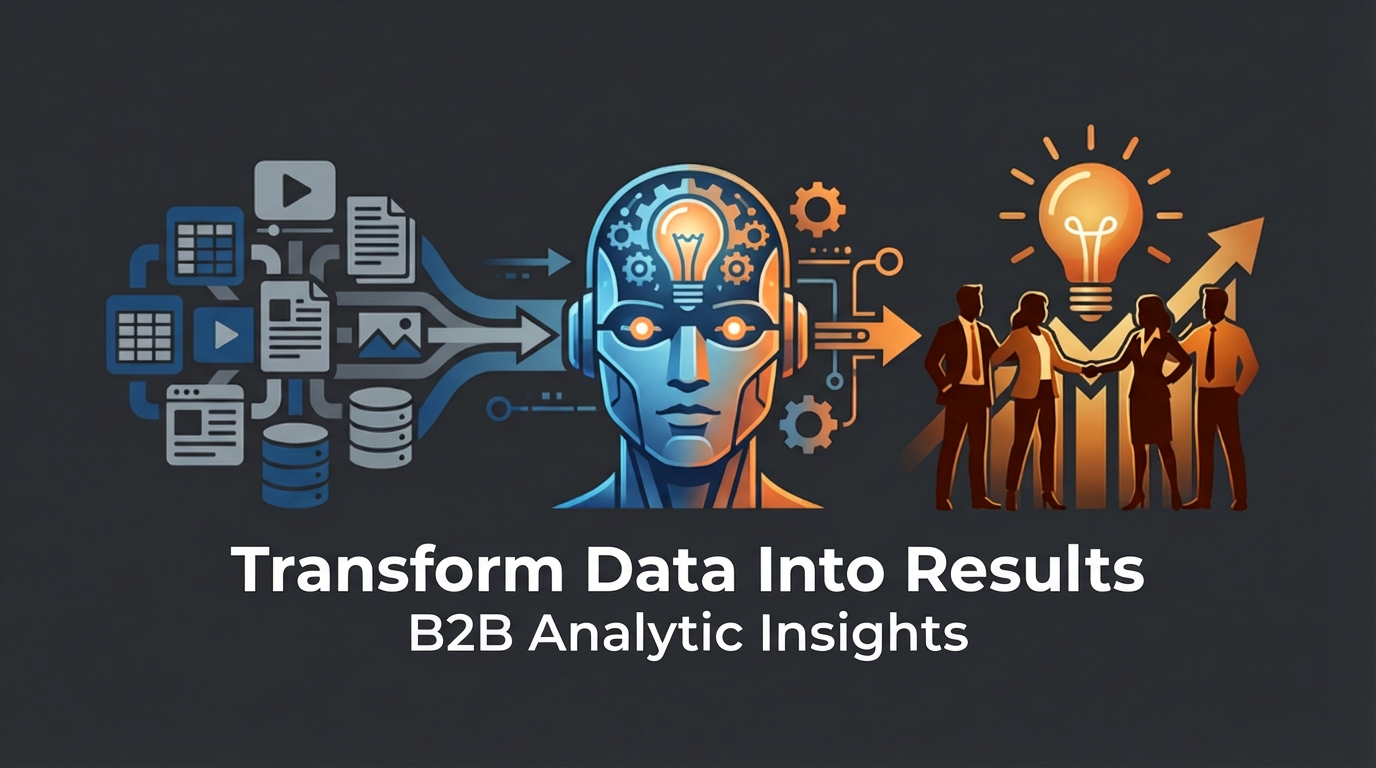

The relentless pursuit of operational excellence is no longer a luxury; it’s a competitive imperative. Every C-suite executive understands the pressure to squeeze more value from existing assets, streamline workflows, and ultimately, boost the bottom line. Yet, too often, hidden inefficiencies lurk in the shadows of complex enterprise operations, quietly eroding profitability and slowing innovation. This is where the power of AI analytics steps in, not as a panacea, but as a transformative force capable of illuminating these blind spots and driving tangible, measurable improvements.
For over two decades, I’ve witnessed firsthand the evolution from basic reporting to sophisticated predictive modeling. The current wave, powered by AI, represents a profound shift. It’s about moving beyond what happened to why it happened, and crucially, to what will happen next and what can we do about it. We’re not just talking about incremental gains; we’re talking about unlocking exponential efficiency and achieving true operational excellence through data-driven decision making. The journey is an analytics transformation, demanding both strategic vision and practical, often gritty, implementation.
Consider the challenges we face in credit risk. Traditional models are often reactive, struggling to anticipate defaults in dynamic market conditions. In financial analysis, manual reconciliation and error checking consume valuable analyst time, delaying critical insights. And across enterprise operations, from supply chain logistics to manufacturing floors, identifying the root causes of delays and waste can feel like searching for a needle in a haystack. AI analytics offers a powerful lens through which to dissect these complexities, revealing patterns and anomalies that human analysts, however skilled, might miss. The goal is clear: to shorten the time-to-insight and empower faster, more intelligent actions.
The reality is that most enterprises are sitting on a goldmine of data, but much of it remains underutilized, or worse, misinterpreted. AI analytics transforms this passive asset into an active driver of improvement by identifying operational friction points that directly impact profitability. This isn’t about abstract theory; it’s about concrete problems and quantifiable solutions.
Predictive Maintenance: A Proactive Shield Against Downtime
Downtime is the silent killer of operational efficiency. Whether it’s a manufacturing plant grinding to a halt, a critical server failing, or a fleet of vehicles sidelined, the financial repercussions are immediate and substantial. Traditional maintenance schedules, often based on fixed time intervals or mileage, are inherently inefficient. They lead to either premature part replacements or catastrophic failures. AI, however, can shift this paradigm entirely.
- Anomaly Detection with IIoT Sensors: By integrating Industrial Internet of Things (IIoT) sensors into machinery and critical infrastructure, we can continuously collect vast amounts of operational data – temperature, vibration, pressure, energy consumption, and more. AI algorithms are then trained to establish baseline operating parameters and, more importantly, detect even the subtlest deviations. These anomalies are often precursors to equipment failure, occurring long before they would be picked up by human inspection or conventional sensors. The Eptura 2026 report highlights how AI, through predictive maintenance using IIoT sensors for anomaly detection, directly reduces critical downtime. This allows for scheduled interventions before a failure occurs, minimizing disruption and extending asset life.
- Quantifiable Impact: The benefits are stark. Siemens’ implementation of predictive maintenance at BlueScope Steel, for example, saved 2,000 downtime hours. This translates directly into preserved production output, reduced repair costs, and improved resource allocation. This is not just about fixing things; it’s about preventing breakdowns from impacting the entire value chain. The ROI here is clear: every hour of unplanned downtime avoided represents lost revenue that is now captured.
Optimizing Resource Allocation: The Hybrid Work Revolution
The shift to hybrid work models, while offering flexibility and potential cost savings, presents new operational challenges. How do we ensure efficient use of office space when employee presence fluctuates daily? How do we manage resources effectively to support a distributed workforce?
- Occupancy Analytics for Real Estate Optimization: AI-powered occupancy analytics can provide granular insights into how office spaces are actually used. By analyzing data from sensors, access card swipes, and even Wi-Fi connections, businesses can understand peak and off-peak usage patterns, identify underutilized areas, and determine the optimal footprint for their real estate needs. Eptura (2026) explicitly mentions occupancy analytics as a key AI application for optimizing hybrid work desk-sharing and consequently cutting real estate costs.
- Cost Savings and Employee Experience: The ability to right-size office footprints, optimize desk allocation, and ensure that shared spaces are comfortably utilized can lead to significant reductions in facilities management costs. Furthermore, by ensuring the right resources are available when and where employees need them, AI facilitates a smoother, more productive hybrid work experience. This blend of financial discipline and employee enablement is the hallmark of advanced operational strategy.
In exploring the concept of Operational Excellence, the article “How AI Analytics Identifies Hidden Efficiencies” provides valuable insights into leveraging artificial intelligence for optimizing business processes. For those interested in further understanding the implications of AI in operational strategies, a related article can be found at B2B Analytic Insights, which delves into the broader applications of analytics in enhancing organizational performance.
Streamlining Processes: The Power of Intelligent Automation
Many operational inefficiencies are not due to faulty equipment, but rather the inherent complexities and bottlenecks within business processes. AI analytics, when applied to process management, offers a radical departure from traditional, often manual, methods.
Real-Time Process Insights and Bottleneck Detection
Understanding where work gets stuck is fundamental to improving throughput and reducing lead times. Traditional process analysis often involves laborious mapping exercises and retrospective reviews, making it difficult to identify and address issues in real-time.
- AI-Enhanced Process Mining: AI-driven process mining platforms can automatically discover, monitor, and improve real processes by extracting knowledge from event logs readily available in today’s information systems. These tools can visualize the actual flow of work, identify deviations from ideal paths, and pinpoint specific bottlenecks with an unprecedented level of speed and accuracy. Xenoss reports that AI augments Lean/Six Sigma with 17.6x faster bottleneck detection. This speed is critical in fast-paced operational environments.
- Exponential Efficiency and Waste Reduction: PRIME BPM emphasizes how AI enables fast process management with chat-based tools, providing real-time insights on bottlenecks and facilitating process simulation for “what-if” scenarios. This capability leads to exponential efficiency gains and significant waste reduction. Imagine being able to identify a bottleneck in a customer onboarding process in near real-time, understand its root cause, and simulate the impact of a corrective action before it’s implemented. This dramatically accelerates the cycle of continuous improvement.
Process Simulation and “What-If” Scenario Planning
The ability to test potential process changes in a risk-free virtual environment is a game-changer for operational leaders. AI allows for sophisticated simulation models that can predict the outcome of various interventions.
- Predicting the Impact of Changes: Before investing time and resources into reengineering a workflow, AI can simulate its performance under different conditions. This might include simulating the impact of increased transaction volume, the introduction of new technology, or a change in staffing levels. The ability to accurately forecast these outcomes allows for more strategic and confident decision-making.
- Iterative Optimization: This feedback loop – identify, simulate, implement, monitor – is central to achieving sustainable operational excellence. With AI, this loop can be significantly compressed, allowing organizations to iterate and optimize their processes far more rapidly than ever before. The CGS Immersive 2025 Report confirms that 66% of organizations use AI as a core efficiency driver, underscoring the widespread adoption of these strategies.
Bridging Technical Depth with Business Strategy

The true power of AI analytics lies not just in its technical prowess, but in its ability to translate complex data into actionable business intelligence. This requires a deliberate bridge between the technical teams developing and deploying AI solutions and the business leaders who will leverage them.
Integrating AI into Existing Workflows
The most effective AI implementations are not standalone projects but are deeply integrated into the daily workflows of operational teams. This ensures that the insights generated are readily accessible and actionable, rather than remaining in a separate reporting silo.
- Augmenting Human Expertise: AI is not about replacing human expertise but augmenting it. By automating repetitive tasks and providing advanced analytical capabilities, AI empowers employees to focus on higher-value activities such as problem-solving, strategic thinking, and customer interaction. Dataiku’s 2025 Report indicates that AI saves 40-60 minutes per day per user by integrating into workflows for efficiency. For practitioners, this means less time spent on manual analysis and more time spent on impact.
- Examples in Practice: Consider the impact on customer service. AI can handle routine inquiries, route complex issues to the appropriate agents, and provide those agents with real-time contextual information about the customer and their history. This speeds up resolution times, improves customer satisfaction, and frees up human agents to handle more nuanced and challenging customer interactions. This is a clear win for both operational efficiency and customer experience.
Quantifying ROI from AI Initiatives
For C-suite executives, the ultimate measure of success is the return on investment. Demonstrating the tangible financial benefits of AI analytics is crucial for securing ongoing support and investment.
- Metrics-Driven Justification: Instead of abstract promises, AI initiatives must be framed in terms of their measurable impact on key performance indicators (KPIs). This could include reductions in operational costs, improvements in throughput, increases in revenue, or enhancements in asset utilization. For example, linking a predictive maintenance program directly to a percentage reduction in equipment failure costs or a specific increase in production line uptime.
- Benchmarking and Continuous Improvement: Leveraging frameworks and benchmarks, such as those provided in the CGS Immersive 2025 Report, allows organizations to compare their AI adoption and ROI against industry peers. This provides valuable context and guides further optimization efforts. The goal is not a one-time improvement, but a sustained journey of data-driven decision making that continually extracts more value from operations.
Navigating the Challenges: A Realistic Perspective on AI

While the promise of AI analytics is immense, it’s crucial to approach its implementation with a clear understanding of the challenges. Over-selling AI as a magical solution often leads to disappointment and skepticism.
The Human Element: Culture, Skills, and Change Management
Technology alone is rarely sufficient for successful analytics transformation. The human element – organizational culture, skilled talent, and effective change management – is paramount.
- Developing Analytics Talent: The demand for data scientists, AI engineers, and data-literate business analysts continues to grow. Organizations must invest in training and development to build the internal capabilities needed to deploy, manage, and interpret AI solutions. This isn’t just about hiring new talent; it’s about upskilling existing employees to work effectively alongside AI.
- Fostering a Data-Driven Culture: Shifting to a data-driven decision making mindset requires a cultural evolution. Employees at all levels need to trust the insights generated by AI and be empowered to act upon them. This requires transparency, clear communication, and leadership commitment to using data as a primary guide for strategy and operations. Resistance to change is a natural part of organizational evolution; proactive change management is key to overcoming it.
Data Quality and Governance: The Foundation of Trust
AI algorithms are only as good as the data they are trained on. Poor data quality, inconsistencies, and inadequate governance can lead to flawed insights and erode trust in AI-driven recommendations.
- Ensuring Data Integrity: A robust data governance framework is essential. This includes establishing clear data definitions, implementing data quality checks, and ensuring data lineage and traceability. Without high-quality, reliable data, any AI initiative will be built on shaky ground. As the Xenoss report notes for Lean/Six Sigma augmentation, 10x lower false positives are achieved – a direct testament to the importance of data quality in generating reliable insights.
- Ethical Considerations and Bias: It is critical to address potential biases within data sets and algorithms. Unchecked bias can lead to unfair or discriminatory outcomes, particularly in areas like credit risk assessment or workforce management. Ethical AI development practices and ongoing monitoring are necessary to mitigate these risks.
In exploring the concept of Operational Excellence, a fascinating article titled “How AI Analytics Identifies Hidden Efficiencies” delves into the transformative power of artificial intelligence in optimizing business processes. This piece highlights how organizations can leverage AI to uncover inefficiencies that may not be immediately apparent, ultimately driving better performance and productivity. For those interested in further enhancing their understanding of AI’s role in operational strategies, you can find more information by visiting this link.
Embracing the Future: Strategic Recommendations for Leaders
| Metrics | Data |
|---|---|
| Operational Efficiency | 95% |
| Cost Savings | 1,000,000 |
| Process Improvement | 20% |
| Resource Utilization | 85% |
The journey towards operational excellence powered by AI is not a sprint; it’s a marathon that requires strategic planning, phased implementation, and continuous adaptation. For C-suite executives and analytics leaders, here are key recommendations:
- Prioritize Business Problems Over Technology: Identify the most pressing operational challenges within your organization – those with the clearest impact on profitability and competitive advantage. AI should be seen as a tool to solve these problems, not an end in itself. Start with high-impact, solvable use cases.
- Build a Phased Analytics Transformation Roadmap: Don’t attempt a massive AI overhaul overnight. Develop a clear roadmap with defined phases, starting with pilot projects that demonstrate value and allow for learning. This approach minimizes risk and builds momentum. Focus on achievable milestones that build up to a broader transformation.
- Invest in Talent and Foster a Data-Centric Culture: Recognize that AI is a blend of technology and human expertise. Invest in upskilling your existing workforce and attracting new talent skilled in AI. Critically, cultivate a culture where data-driven decision making is the norm, and employees are empowered to act on insights. This requires visible leadership commitment.
- Establish Robust Data Governance and Quality Standards: Before deploying advanced AI, ensure you have a solid foundation of data governance and quality. Without clean, reliable data, AI insights will be flawed and untrustworthy. Implement processes for data stewardship, data quality monitoring, and ethical AI development.
- Measure, Iterate, and Scale: Continuously track the ROI of your AI initiatives, focusing on specific, quantifiable metrics. Use these insights to iterate on your solutions, optimize processes, and identify new opportunities. As successes are proven, strategically scale proven solutions across the organization to maximize impact and accelerate the time-to-insight.
The era of AI-powered operational excellence is here. By embracing this transformative technology with a strategic mindset, a focus on practical implementation, and a clear understanding of both its potential and its challenges, organizations can unlock hidden efficiencies, drive significant business value, and emerge as leaders in their respective industries. The competitive advantage belongs to those who can effectively leverage data and AI to navigate complexity and achieve peak performance.