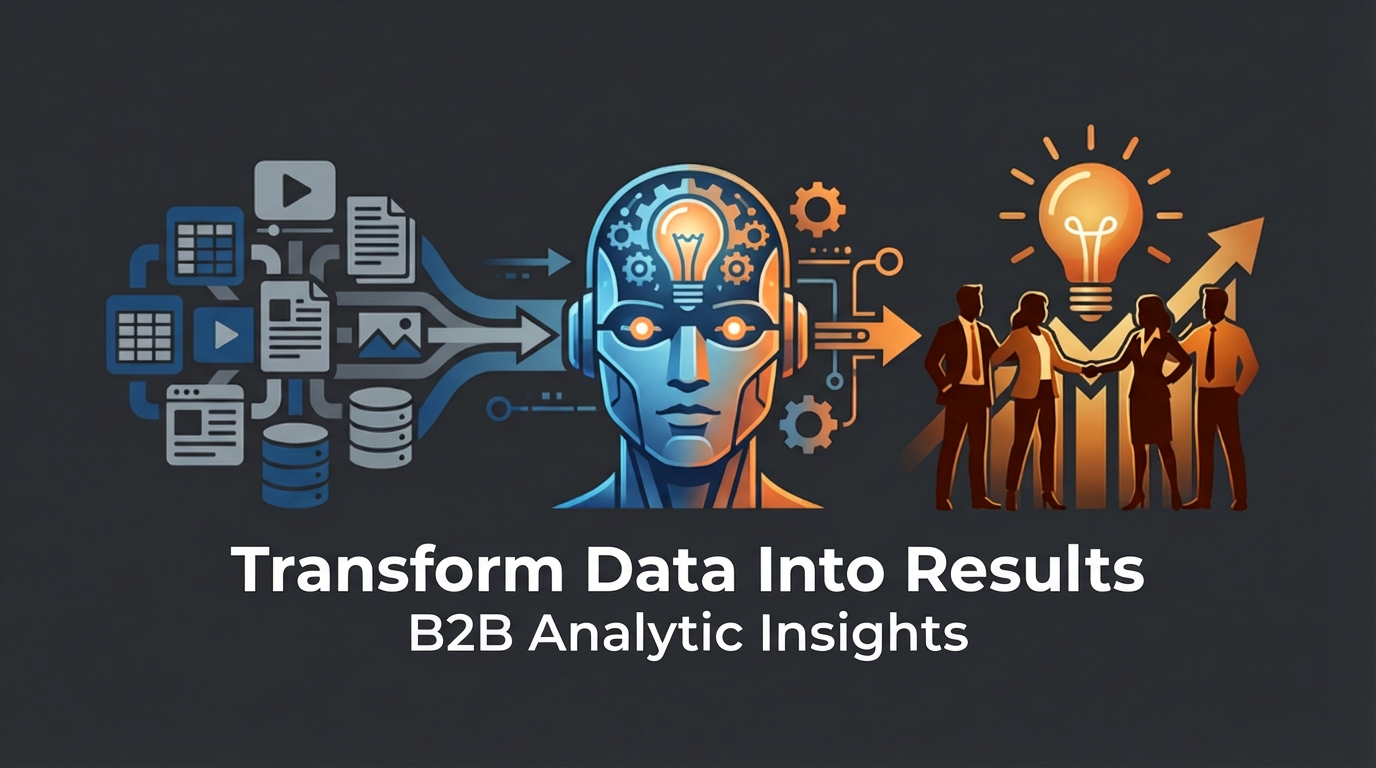

The relentless pressure to optimize credit risk, sharpen financial analysis, and streamline enterprise operations isn’t a new challenge. For decades, businesses have grappled with the inherent complexity of navigating markets, managing portfolios, and ensuring operational efficiency. The promise of unlocking deeper insights from the ever-growing ocean of data has always been tantalizing, but the path to truly transforming how we make decisions has been more arduous than many anticipated. We’ve seen countless initiatives launched with fanfare, only to falter on the rocks of practical implementation. The question isn’t if we need better analytics; it’s how fundamentally we execute the technical groundwork to make data-driven decision-making not just a possibility, but a consistent, powerful engine for competitive advantage. This isn’t about shiny new toys; it’s about architecting robust, scalable, and intelligent systems that deliver tangible ROI, from the C-suite’s strategic view down to the practitioner’s daily tasks.
The journey to a truly data-driven enterprise begins with a robust technical architecture. This isn’t merely about selecting the right tools; it’s about designing a system that is agile, scalable, and future-proof. We’re no longer talking about static data warehouses; we’re talking about dynamic, responsive ecosystems that can ingest, process, and analyze data in near real-time, feeding insights directly into operational workflows. The speed at which businesses operate today demands an equally rapid analytical response. This shift requires a fundamental rethink of how we approach data infrastructure, moving away from monolithic, on-premises solutions towards more flexible and intelligent cloud-native environments.
The Cloud-Native Imperative
The adoption of cloud-native development and deployment models is no longer optional; it’s a strategic necessity for any organization serious about analytics transformation. The 2026 Cloud-Native Developer Survey clearly indicates a surge in the adoption of platform engineering tools designed to automate workflows, streamline application delivery, and enhance security. This isn’t just about lift-and-shift; it’s about leveraging the inherent scalability, flexibility, and resilience of cloud platforms to build analytics solutions that can adapt to rapidly changing business needs. For credit risk teams, this means the ability to spin up new models or scale existing ones to handle sudden market shifts without months of procurement and provisioning. Financial analysis departments can leverage serverless architectures to process massive datasets for forecasting with unprecedented speed. Enterprise operations can deploy microservices for real-time anomaly detection in supply chains, preventing disruptions before they impact the bottom line. The ability to deploy and scale computing resources dynamically is the bedrock upon which advanced analytics are built.
Embracing Kubernetes and Containerization
The ubiquity of containerization, spearheaded by Kubernetes, has become a de facto standard for managing modern applications, including sophisticated analytics platforms. Kubernetes provides the orchestration necessary to manage complex, distributed systems, making them more resilient and easier to scale. For analytics leaders, this means the ability to deploy and manage diverse analytical workloads – from batch data processing to real-time streaming analysis – with a consistent operational model. The challenge, however, lies in Securing AI Agents on Kubernetes. Recent discussions highlight the critical importance of establishing clear trust boundaries, managing secrets effectively, and implementing robust observability to ensure the integrity and security of AI workloads running on these platforms. Without this meticulous attention to security, the very agents designed to enhance operations could inadvertently introduce vulnerabilities.
The Rise of Platform Engineering for Analytics
Platform engineering is emerging as a critical discipline in accelerating analytics transformation. By abstracting away much of the underlying infrastructure complexity, platform engineering teams enable data scientists and analysts to focus on building models and extracting insights, rather than wrestling with infrastructure issues. This is where tools for workflow automation, app delivery, and security become paramount, as highlighted by the 2026 Cloud-Native Developer Survey. For an enterprise operations leader, an effective platform engineering approach means faster deployment of fraud detection systems or predictive maintenance models, directly impacting operational efficiency and cost savings. This focus on automation reduces the manual toil associated with data pipeline management and model deployment, significantly improving the overall time-to-insight.
From Black Box to Blueprint: Transparency in Analytical Outputs
A significant hurdle in the widespread adoption of advanced analytics, particularly AI, has been the perception of “black box” systems. The inability for business stakeholders to understand why a certain decision was recommended has bred skepticism and hampered trust. The recent emphasis on the “end of black box AI” with blueprints for transparent decision-making systems is a crucial development. This shift is essential for regulated industries like finance, where explainability is not just desirable but legally mandated.
Explainable AI (XAI) as a Core Component
Integrating Explainable AI (XAI) techniques into analytical models is no longer a niche concern; it’s becoming a fundamental requirement for operationalizing AI in business contexts. For credit risk departments, understanding the factors driving a loan denial or approval is critical for customer service and regulatory compliance. Financial analysts need to comprehend the rationale behind algorithmic forecasts to build confidence and make informed adjustments. Operational teams must be able to trace the anomaly detected by an AI system back to its root causes to implement effective corrective actions. This focus on transparency fosters greater trust and allows for more nuanced data-driven decision making.
Building Trust Through Auditable Processes
The technical implementation must bake in auditability by design. This means ensuring that data lineage is meticulously tracked, model versions are managed and documented, and the decision-making process can be reconstructed. For C-suite executives, this translates to tangible reassurance during audits and a clear understanding of the inherent risks and benefits associated with AI-driven recommendations. This is not a secondary consideration; it’s a core tenet of responsible analytics deployment that directly impacts enterprise risk management.
For those interested in delving deeper into the nuances of Technical Implementation, a related article that provides valuable insights is available at B2B Analytic Insights. This resource offers a comprehensive overview of best practices and strategies that can enhance the effectiveness of technical projects, making it an essential read for professionals looking to optimize their implementation processes.
Orchestrating Intelligence: Agentic AI and Autonomous Operations
The evolution of AI is moving towards more autonomous and agentic capabilities. These systems are designed to perform complex tasks with minimal human intervention, promising significant leaps in efficiency and innovation. However, their implementation requires careful consideration of the underlying infrastructure and deployment strategies. The potential for agentic AI to redefine operational efficiency is immense, offering new paradigms for automating business processes.
Agentic AI Demands a New Deployment Paradigm
The emergence of agentic AI, capable of performing tasks autonomously, necessitates a shift in our deployment strategies. The 2026 Cloud-Native Developer Survey also points to the growing importance of agentic QA systems, like SmartBear’s BearQ, for autonomous app integrity testing. This reflects a broader trend in the industry: as AI agents become more sophisticated, the need for similarly advanced, automated systems to manage and validate them grows. This includes the requirement for local CI/CD pipelines to support the rapid iteration and deployment of code generated or modified by AI agents.
Local CI/CD for Agentic Innovation
For organizations developing and deploying AI agents, a robust local CI/CD infrastructure is no longer a luxury but a necessity. This allows for rapid testing, integration, and deployment of AI-generated code, fostering a culture of continuous innovation. Think of a credit scoring model enhanced by an AI agent that continuously learns from new data. Without local CI/CD, integrating these updates would be a slow, manual process, hindering the model’s ability to stay current. Agentic AI is here, and it demands that our technical plumbing keeps pace.
Unifying Modalities with Advanced Hardware
The ability of AI systems to process and understand multiple forms of data – text, images, audio, and more – is a critical step towards true intelligence. NVIDIA’s development of solutions like the NVIDIA Nemotron 3 Nano Omni for unified multimodal AI inference demonstrates the progress in enabling systems to handle diverse data streams seamlessly. This is particularly relevant for enterprise operations where data often comes in various formats. For example, a manufacturing plant might use visual inspection of equipment (images), sensor readings (numerical data), and audio logs of machinery noise. Unifying these modalities allows for more comprehensive predictive maintenance and anomaly detection, leading to significant operational improvements and cost avoidance. This isn’t incremental; it’s transformative.
The Role of Local Inference
While cloud-based AI offers immense scalability, there are compelling strategic and operational reasons to prioritize local inference, especially for time-sensitive applications and sensitive data. Ubuntu’s plans to integrate AI features emphasizing local inference highlight this growing trend. For credit risk analysis, processing sensitive financial data locally can enhance security and reduce latency, allowing for more immediate decision-making. In enterprise operations, real-time anomaly detection on sensitive production lines might be better handled by on-premises AI processing to prevent immediate issues without the overhead of cloud communication.
Enhancing Security and Privacy
Local inference can provide a significant boost to data security and privacy. By keeping sensitive data within the organization’s network perimeter, the risk of data breaches during transit or at the cloud provider level is minimized. This is particularly critical for financial institutions and any business handling personally identifiable information or proprietary operational data. The ability to conduct sophisticated AI analysis without transmitting raw data externally is a powerful differentiator.
Reducing Latency for Real-Time Applications
For applications demanding near-instantaneous responses, local inference offers a clear advantage. Think of algorithmic trading systems that need to react to market fluctuations in milliseconds, or industrial control systems that require immediate feedback to prevent equipment damage. The latency introduced by sending data to the cloud, processing it, and receiving a response can be prohibitive. Local inference minimizes this latency, enabling more responsive and effective real-time decision-making.
Data Pipelines as the Arteries of Insight

The most sophisticated algorithms and AI models are only as good as the data they consume. Building and maintaining robust, efficient, and reliable data pipelines is the lifeblood of any successful analytics transformation. This is where the rubber meets the road for technical implementation, connecting raw data to actionable intelligence.
Designing for Scalability and Resilience
The pipelines that feed your analytics systems must be designed to handle ever-increasing data volumes and to withstand failures without losing critical information. This requires a deep understanding of data engineering principles and the judicious use of modern data processing technologies. The goal is to ensure that analytical outputs are consistently reliable and available when needed.
Leveraging Stream Processing for Real-Time Analytics
In today’s fast-paced business environment, waiting for batch processing to derive insights is often too slow. Stream processing technologies allow organizations to analyze data as it is generated, enabling real-time decision-making. For credit risk, this could mean detecting fraudulent transactions the moment they occur. For financial analysis, it might involve real-time portfolio monitoring and risk adjustment. Enterprise operations can benefit immensely from real-time sensor data analysis for immediate issue identification and resolution.
Data Quality Management: The Unsung Hero
Data quality is not a secondary concern; it’s a foundational pillar. Dirty data leads to flawed insights, which in turn lead to poor decisions. Implementing rigorous data validation, cleansing, and governance processes is essential for ensuring the integrity of analytical outputs. This requires investing in the right tools and processes, and fostering a culture where data quality is everyone’s responsibility. We’ve seen projects stall and critical insights missed simply due to the poor quality of the underlying data. This is a fundamental technical implementation challenge that cannot be overlooked.
Orchestration and Workflow Automation
Managing complex data pipelines often involves orchestrating a series of steps, transformations, and analytical processes. Effective workflow automation tools are crucial for ensuring that these pipelines run reliably and efficiently. This includes scheduling, monitoring, and error handling. The focus on platform engineering tools for workflow automation in the 2026 Cloud-Native Developer Survey underscores the industry’s recognition of this critical need.
Implementing Robust Monitoring and Alerting
Understanding the health and performance of your data pipelines is paramount. Implementing comprehensive monitoring and alerting systems allows technical teams to proactively identify and address issues before they impact downstream analytics. This includes tracking processing times, error rates, and data throughput. For C-suite executives, this means confidence that the systems generating their insights are stable and reliable.
Version Control for Data and Models
Just as code needs version control, so too do the data pipelines and the analytical models they feed. This is crucial for reproducibility, debugging, and rollback capabilities. Ensuring that you can revert to a previous, stable version of a pipeline or model in the event of unforeseen issues significantly reduces operational risk. This meticulous approach to managing analytical assets is a hallmark of mature technical implementation.
Empowering Practitioners: Tools and Methodologies for Success

Ultimately, the success of any analytics transformation hinges on the effectiveness of the individuals who build, maintain, and utilize these systems. Providing practitioners with the right tools, training, and methodologies is critical to unlocking their full potential. This involves not only providing powerful technologies but also fostering an environment where innovation and continuous learning are encouraged.
The Evolution of Development Environments
The tools that data scientists, engineers, and analysts use are continuously evolving. The release of integrated development environments like Google Android Studio Panda 4 alongside modern UI frameworks like Jetpack Compose 1.11 (as of April 2026) demonstrates the ongoing innovation in developer tooling. While these specific examples are geared towards application development, the principles they embody – increased productivity, enhanced developer experience, and better integration of complex features – are directly applicable to the analytics domain.
Rationalizing the Analytics Toolchain
Organizations often find themselves with a sprawling and inconsistent array of analytics tools. This fragmentation can lead to inefficiencies, training overhead, and challenges in integrating different components. A strategic approach to rationalizing the analytics toolchain, choosing tools that integrate well and offer broad capabilities, is essential for empowering practitioners. This might involve standardizing on a particular cloud provider’s analytics suite or selecting a flexible open-source ecosystem that meets diverse needs.
Fostering Collaboration and Knowledge Sharing
Creating a collaborative environment where practitioners can easily share code, insights, and best practices is crucial. This can be facilitated through platforms for code repositories, internal wikis, and regular knowledge-sharing sessions. For example, credit risk modelers can learn from financial analysts’ experiences with time-series forecasting techniques, leading to cross-pollination of ideas and more robust solutions across the organization.
Beyond Technology: The Human Element
It’s crucial to acknowledge that technical implementation is only one part of the equation. While powerful technology is necessary, it is not sufficient. The human expertise of data scientists, engineers, and business analysts remains indispensable. Their understanding of business context, domain knowledge, and critical thinking are what truly drive valuable insights from the data.
The Importance of Domain Expertise
A technically brilliant model that doesn’t understand the nuances of credit risk or the intricacies of financial markets is ultimately of limited value. Investing in training and ensuring that technical teams have deep domain knowledge is paramount. This allows them to ask the right questions, interpret results accurately, and build solutions that are truly aligned with business objectives.
Cultivating a Culture of Continuous Learning
The pace of technological change in analytics and AI is relentless. To stay at the forefront, organizations must foster a culture of continuous learning among their technical staff. This means providing opportunities for training, attending conferences, and encouraging experimentation with new tools and techniques. This proactive approach ensures that the organization remains agile and can adapt to emerging opportunities and challenges.
In the realm of technical implementation, understanding how to effectively leverage data analytics is crucial for driving meaningful actions within an organization. A related article that delves into this topic is titled “The Power of Analytics: Transforming Data into Meaningful Actions,” which explores various strategies and tools that can enhance decision-making processes. You can read more about these insights by visiting the article here. By integrating such analytics into your technical implementation plans, you can ensure that your projects yield valuable outcomes.
Strategic Recommendations for C-Suites and Analytics Leaders
| Metrics | Value |
|---|---|
| Code Coverage | 85% |
| Defect Density | 0.05 |
| Technical Debt | 12 days |
| Code Review Efficiency | 90% |
The path to a truly data-driven enterprise is a strategic imperative, and its technical implementation is the bedrock upon which success is built. My experience over the past 25 years has shown me that organizations that excel in this area don’t just implement technology; they architect for transformation.
For the C-suite, the focus must be on ROI and strategic alignment.
- Prioritize Business Outcomes: Define clear business problems – e.g., reducing credit default rates by X%, increasing operational efficiency in supply chain by Y%, improving portfolio forecasting accuracy by Z% – and ensure your analytics investments are directly tied to achieving these measurable objectives.
- Champion Analytics Transformation: Understand that this is not just an IT initiative, but a fundamental shift in how the organization operates. Foster a culture that embraces data-driven decision making and empowers teams to leverage insights.
- Invest Wisely in Talent and Technology: Recognize that world-class analytics requires both cutting-edge technology and, crucially, skilled individuals. Allocate sufficient budget for both, ensuring the technical foundation is sound and the human expertise is cultivated. The operational cost savings from optimized credit risk models or streamlined enterprise operations will consistently justify this investment.
For analytics leaders, the mandate is to bridge strategy and execution.
- Adopt a Cloud-Native, Agile Architecture: Leverage Kubernetes, microservices, and serverless computing to build flexible, scalable, and resilient analytics platforms. This enables faster deployment and iteration, crucial for improving time-to-insight.
- Embrace Transparency and Explainability: Implement XAI techniques and ensure auditability in your analytical systems. This is critical for building trust, meeting regulatory requirements, and ensuring responsible AI deployment, particularly in financial services.
- Build Robust Data Pipelines and Infrastructure: Focus on data quality, scalability, and resilience in your data ingestion and processing layers. These are the arteries of insight; their health is non-negotiable.
- Empower Your Teams: Provide practitioners with the right tools, training, and a collaborative environment. Invest in platform engineering to automate workflows and reduce technical debt, allowing them to focus on high-value analytical work.
The transformation of analytics is an ongoing journey, not a destination. It demands a clear vision, a robust technical implementation, and a commitment to continuous improvement. By focusing on these critical pillars, organizations can move beyond incremental gains and achieve truly transformative impact, unlocking unprecedented levels of efficiency, accuracy, and competitive advantage.