
The agricultural sector, a bedrock of our global economy, stands at a precipice. Faced with escalating demand, climate volatility, and mounting operational costs, traditional farming methods are no longer sustainable. We’re talking about food security, massive enterprise operational inefficiencies, and significant financial risks for producers and their lenders. This isn’t just about optimizing a single field; it’s about fundamentally reshaping how we approach agricultural productivity, profitability, and precision. We need to move beyond reacting to problems after they manifest and instead, proactively manage every square inch of our nation’s farmlands.
Enter Agriculture Intelligence, specifically crop analytics powered by computer vision. This isn’t theoretical hype; it’s a strategic imperative. For over 25 years, I’ve seen organizations grapple with data, trying to extract value. In agriculture, the stakes are undeniably higher. We’re talking about billions of dollars in potential losses or gains, driven by factors as granular as an individual plant’s health. The current market valuation of agricultural computer vision at a robust $432 million in 2023, with a projected surge to over $2 billion by 2033, underscores not just a trend, but a profound market transformation in progress.
Revolutionizing Field Operations: The Computer Vision Imperative
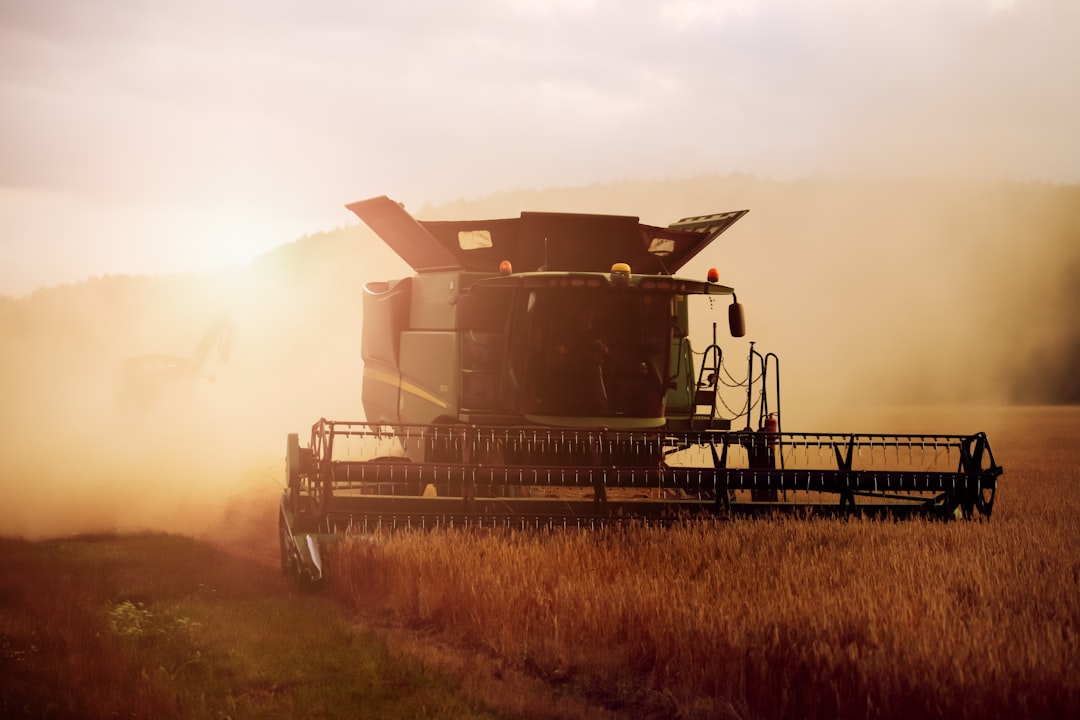
The core challenge in agriculture has always been visibility. How do you monitor thousands of acres with the same diligence as a single backyard garden? Historically, the answer involved boots on the ground, subjective assessments, and a significant time lag. This is where computer vision acts as a force multiplier, giving us unprecedented granularity and speed. Think about it: a single combine traversing a field can now be a real-time data collection engine, not just a harvester.
Real-time Crop Health and Stress Detection
For financial institutions funding agricultural ventures, understanding crop health is paramount for credit risk assessment. For the growers themselves, it’s about maximizing yield and minimizing input waste. Computer vision steps in to provide objective, continuous monitoring.
We’re seeing new computer-vision systems for specialty crops – combining IoT, AI, and recursive image segmentation – that track plant growth in controlled environments. Imagine the power of this applied to large-scale operations. It means precisely targeting deficiencies and diseases before they become widespread epidemics. The financial impact here is clear: fewer crop losses, more predictable yields, and ultimately, a more stable revenue stream for farmers and a lower risk profile for lenders. This shifts the credit risk model from reactive claim processing to proactive, data-driven mitigation.
Precision Pest and Disease Management
The war against pests and diseases is never-ending. But what if we could detect the first signs of an infestation or infection at the leaf level, rather than waiting until it impacts a whole section of the field? Computer vision, often integrated with drone technology or autonomous ground vehicles, can scan fields, identify anomalies, and even classify specific pathogens or insect species. This enables hyper-localized intervention, dramatically reducing the need for broad-spectrum pesticide application.
This isn’t just about environmental stewardship; it’s significant financial leverage. Reduced chemical costs, healthier produce, and compliance with increasingly stringent regulations. For an enterprise operations executive, the efficiency gains in resource allocation and the reduction in potential supply chain disruptions are immense. It translates directly to a healthier bottom line.
For those interested in the intersection of technology and farming, a related article that delves into the advancements in agricultural analytics is available at B2B Analytic Insights. This resource explores how innovative tools and methodologies are transforming crop management and enhancing decision-making processes for farmers, making it a valuable read for anyone looking to understand the impact of data-driven insights in agriculture.
Streamlining the Workflow: Enhancing Efficiency and Reducing Risk
The promise of analytics transformation isn’t just about better data; it’s about embedding intelligence into every operational facet. The integration of computer vision solutions into daily farm operations presents a seismic shift, optimizing critical processes and bolstering decision-making across the entire agricultural value chain.
Automated Yield Estimation and Quality Control
Yield estimation has historically been an educated guess, heavily dependent on human experience and field sampling. Computer vision provides an empirical, scalable alternative. By analyzing images from drones or fixed cameras, AI algorithms can count plants, assess fruit density, and even predict harvest volume with remarkable accuracy. This level of precision allows for optimized logistics, more accurate market forecasting, and better inventory management.
Consider the recent highlight of harvest intelligence systems using computer vision on combine equipment. This technology measures grain loss in real time, enabling operators to make immediate adjustments without stopping field activity. This isn’t a marginal improvement; it’s a fundamental enhancement to operational efficiency, slashing waste and boosting profitability per acre. For C-suite executives, this translates to tangible ROI through reduced waste and optimized throughput. Furthermore, the development of smartphone-based AI grain-quality tools promises to revolutionize post-harvest assessment, allowing for rapid, objective evaluation of soybean samples in under 20 seconds. This is critical for driving fair pricing and maintaining quality standards throughout the supply chain.
Real-time Monitoring and Adjustments
The beauty of computer vision is its capacity for continuous, autonomous monitoring. Imagine sensors and cameras deployed across a vineyard, constantly assessing vine health, grape ripeness, and potential stressors. This continuous feedback loop dramatically reduces the time-to-insight. Instead of waiting for weekly field visits, farmers receive instant alerts, enabling proactive adjustments to irrigation, fertilization, or pest control measures. This agile response mechanism prevents small issues from escalating into major crop losses. It’s moving from a reactive to a predictive operational model, a paradigm shift for enterprise leadership.
The Analytics Transformation Journey: Challenges and Opportunities
Adopting sophisticated computer vision technologies isn’t simply about purchasing new equipment; it’s an organizational and cultural overhaul. This analytics transformation requires strategic foresight, careful implementation, and a recognition that technology must augment, not replace, human expertise.
In the ever-evolving field of agriculture, the integration of technology is transforming traditional practices into more efficient and data-driven approaches. A related article discusses the impact of machine learning on crop yield predictions, showcasing how advanced algorithms can analyze vast datasets to provide farmers with actionable insights. For those interested in exploring this topic further, you can read more about it in the article on B2B Analytic Insights, which highlights the significance of data analytics in modern farming techniques.
Data Acquisition and Infrastructure
The success of any computer vision system hinges on high-quality data. We need robust infrastructure – reliable connectivity in often remote areas, data storage solutions capable of handling petabytes of image data, and processing power for complex AI models. This can be a significant upfront investment, particularly for smaller farms. However, the rapidly declining cost of IoT sensors and cloud computing is democratizing access to these capabilities. The opportunity lies in developing scalable, affordable solutions that integrate seamlessly into existing farm management systems.
Bridging the Gap: From Data to Decision
A common pitfall in analytics projects is having plenty of data but lacking actionable insights. This is where the human element, the domain expertise of farmers and agronomists, is irreplaceable. Computer vision can identify patterns, but understanding why those patterns are emerging and what remedial action is most effective still requires human judgment. The analytics leader’s role is to build systems that present insights clearly, concisely, and in a way that empowers users to make rapid, informed decisions. It’s not AI making the decision; it’s AI providing the intelligence for humans to make superior decisions.
The Training Data Conundrum
One of the historical hurdles for deep learning applications has been the immense need for labeled training data. Manually annotating thousands of images of healthy versus diseased plants, or classifying crop varieties, is incredibly labor-intensive and costly. However, significant progress is being made. Recent research has shown machine learning tools capable of distinguishing flowering from non-flowering grasses while cutting human-annotated data requirements by one to two orders of magnitude. This reduction in the data burden is a game-changer, making computer vision solutions more accessible and faster to deploy, particularly for diverse crop types or niche applications.
Strategic Recommendations: Cultivating a Data-Driven Future
To truly harness the power of computer vision in agriculture, a strategic, multi-faceted approach is required. It’s about more than just technology; it’s about people, process, and sustained investment in intelligence.
Invest in Scalable Infrastructure
For any B2B agricultural enterprise, the foundational step is to invest in scalable data acquisition and processing infrastructure. This means robust IoT sensor networks, high-speed field connectivity (even satellite where necessary), and cloud-based platforms for data storage and AI model deployment. Prioritize solutions that are modular and interoperable, allowing for future integration of new technologies. This isn’t an optional expense; it’s an enablement cost for future growth and competitive advantage.
Foster Cross-Functional Collaboration
Break down silos between IT, agronomy, operations, and finance. Implement cross-functional teams that can translate technical computer vision output into actionable agricultural intelligence, quantify its financial impact, and integrate it into operational workflows. The analytics leader must be the linchpin, ensuring that technical capabilities align directly with strategic business objectives. This means developing a culture of data literacy from the field to the boardroom.
Prioritize Applied Research and Development
Focus on practical, implementable solutions that address immediate business problems. Leverage university partnerships and specialized AI agricultural startups to accelerate R&D efforts. This includes ongoing research into reducing training data needs, improving model robustness in varied environmental conditions, and adapting models for specific regional crop varieties. The market momentum, with deep learning progressing rapidly in areas like disease diagnosis, yield estimation, and automatic harvest, underscores the immediate opportunity to invest in these advanced techniques.
Develop an Analytics Talent Pipeline
Finally, and crucially, invest in your people. Upskill your existing workforce in data literacy and agricultural analytics. Recruit data scientists and AI engineers with a passion for agriculture. Remember, technology is merely a tool; human ingenuity and expertise are what drive true innovation and generate sustainable value. The future of agriculture isn’t just about growing crops; it’s about cultivating intelligence. This convergence of cutting-edge technology and deep domain expertise will be the differentiator for those who lead the next agricultural revolution.