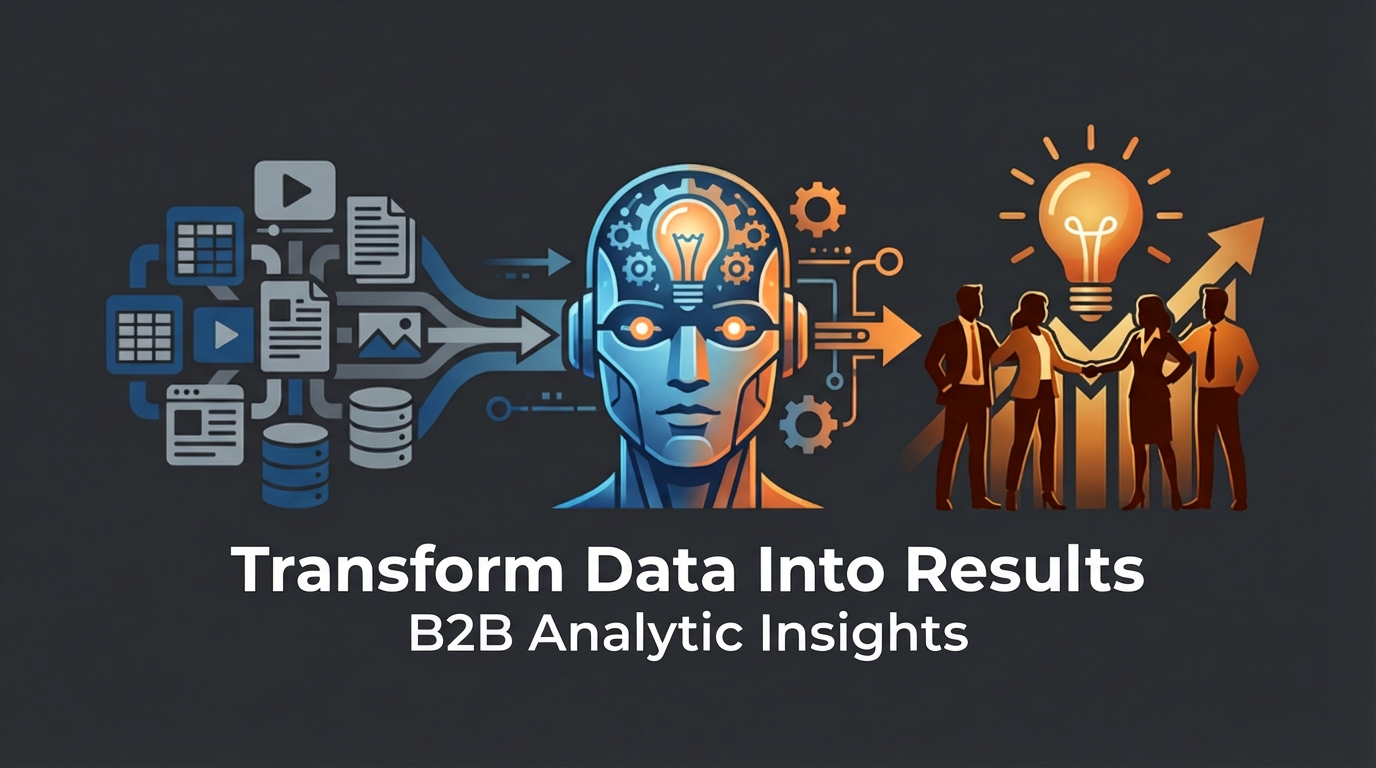

In today’s fiercely competitive B2B landscape, the difference between market leadership and obsolescence often boils down to the velocity and precision of decision-making. We’re talking about tangible impacts: optimizing credit risk models to reduce default rates by 15%, streamlining enterprise operations to cut overheads by 10%, or refining financial analysis to identify new revenue streams worth millions. Yet, achieving this level of data-driven sophistication has historically been bottlenecked by a critical, and increasingly scarce, resource: the highly specialized data scientist. For years, the rallying cry has been “analytics transformation,” but the practical implementation has been a slog, constrained by talent gaps and the sheer complexity of advanced analytical tools.
The challenge is palpable across industries. A commercial lender, for instance, needs to rapidly assess the creditworthiness of thousands of small and medium-sized enterprises (SMEs). Traditional methods are slow and prone to human bias. An enterprise operations executive grapples with supply chain inefficiencies, where granular data exists but extracting actionable insights requires sophisticated modeling. Financial analysts are drowning in market data, struggling to identify subtle trends that could unlock significant competitive advantage. The promise of data, in these scenarios, is enormous, but the bridge from raw information to strategic action often remains unbuilt, or at best, only partially constructed by a small, elite team. This is where the concept of the citizen data scientist emerges not as a mere buzzword, but as a pragmatic solution to democratize analytics and accelerate time-to-insight.
Empowering Business Users with AI-Driven Analytics
The notion of a “citizen data scientist” isn’t about replacing highly trained data professionals; it’s about augmenting and amplifying their impact by empowering domain experts to leverage analytical capabilities that were once exclusive. This isn’t a pipe dream; it’s being made viable by significant advancements in AI, particularly in the realm of automated machine learning (AutoML) and user-friendly analytical platforms. Forrester notes that AutoML abstracts many of the hardest parts of the data science lifecycle, effectively lowering the barrier for non-specialists. This means business analysts, operations managers, and finance professionals who understand the nuances of their data and the questions that need answering can now build, test, and deploy sophisticated analytical models with minimal technical heavy lifting.
Consider a credit risk analyst. Traditionally, developing a new credit scoring model involved extensive data cleaning, feature engineering, model selection, hyperparameter tuning – a process requiring deep statistical knowledge and programming skills. With AI-assisted tools, this analyst can upload historical loan data, define the target variable (e.g., loan default), and let the platform automatically explore various algorithms, optimize parameters, and even explain model outputs in business terms. This dramatically reduces the time-to-insight from months to weeks, sometimes even days, allowing for more agile responses to market shifts or regulatory changes. The power of low-code/no-code analytics tools is a major enabler here. As Smarten highlights, AI-assisted BI platforms let ordinary employees use analytics in day-to-day decisions without formal data science training, transforming them into proactive data consumers and, crucially, data creators.
The Role of AutoML in Democratizing Modeling
AutoML is perhaps the most significant technological leap enabling the citizen data scientist. It’s a suite of techniques designed to automate various stages of the machine learning pipeline, from data preparation and feature engineering to algorithm selection and model deployment. For a credit risk team, this means less time spent on the mundane, repetitive tasks of model development and more time interpreting results and strategizing. The AI can automatically identify relevant features from a sprawling dataset of borrower demographics, financial statements, and payment histories. It can then test dozens of machine learning algorithms – logistic regression, random forests, gradient boosting – to find the one that best predicts loan defaults, all while optimizing for accuracy and interpretability.
Crucially, AutoML doesn’t just build models; it often provides explanations for model predictions, a critical requirement for regulatory compliance in financial services. For example, if a loan application is rejected, the system can articulate the key factors contributing to that decision, such as a high debt-to-income ratio or a history of late payments. This bridges the gap between technical complexity and business understanding, fostering trust and enabling informed action.
Workflow Automation for Enhanced Efficiency
Beyond model building, AI also streamlines the entire analytical workflow. Consider an enterprise operations scenario involving predictive maintenance. Previously, an engineer might manually pull sensor data, analyze it in a spreadsheet, and then perhaps consult with a data scientist for more advanced anomaly detection. With AI-driven workflow automation, data ingestion from IoT sensors can be automated, fed directly into a pre-configured predictive model (developed with AutoML), and alerts can be triggered automatically when a machine component shows signs of impending failure. This proactive approach minimizes downtime, reduces maintenance costs, and extends asset lifecycles, translating directly to improved operational efficiency and cost savings. These automated workflows reduce reliance on specialized IT support, giving business users greater autonomy and agility.
In exploring the role of Citizen Data Scientists and how AI empowers non-technical individuals to engage in analytics, a related article that delves deeper into the practical applications of AI in business decision-making can be found at B2B Analytic Insights. This resource provides valuable insights into how organizations can leverage AI tools to democratize data access and enhance analytical capabilities across various departments.
Addressing the Talent Gap and Scaling Analytics

The escalating demand for data-driven insights far outstrips the supply of traditional data scientists. Organizations are increasingly recruiting citizen data scientists to fill these talent gaps. Techzine reports that CIOs are turning to employees with strong domain knowledge and analytical aptitude, but without formal data science training, to address shortages in trained data professionals. This strategy not only expands analytical capacity but also embeds data-driven decision-making directly within business units, where the problems and opportunities are most acutely understood.
The strategic imperative here is clear: to scale analytics across the enterprise, we must empower a broader base of employees. This isn’t just about providing tools; it’s about fostering a culture of data literacy and providing structured training. Secure Code Warrior’s “Citizen AI” cybersecurity training, for instance, exemplifies how organizations are building AI-ready skills across business functions, emphasizing responsible use and ethical considerations. This proactive investment in human capital is as critical as the technological infrastructure itself.
Building an Accessible Analytics Infrastructure
For citizen data scientists to truly thrive, the underlying infrastructure must be highly accessible. The same Techzine reporting emphasizes that organizations with accessible infrastructure can employ more citizen data scientists, and researchers advise focusing on accessibility when expanding AI use. This means providing user-friendly interfaces, robust data governance frameworks, and clear pathways for data access. Imagine a financial analyst needing to combine customer transaction data with external market indicators. An accessible infrastructure would allow them to securely access these disparate data sources, blend them using intuitive tools, and then apply predictive models without navigating complex APIs or requesting IT intervention for every step.
Accessibility also means robust data catalogs and metadata management. Citizen data scientists need to understand what data is available, where it comes from, and what it means. This transparency builds confidence and ensures that models are built on accurate and relevant information. Without it, even the most intuitive AI tools will fall short, as users will struggle to find and prepare the right data.
Bridging the Technical-Business Divide
The citizen data scientist acts as a crucial bridge between highly technical data science teams and business operations. They can translate complex business problems into analytical questions and, conversely, interpret sophisticated model outputs in a way that resonates with business stakeholders. This capability is invaluable in B2B contexts where nuanced understanding of customer behavior, market dynamics, and operational intricacies is paramount.
For example, a product manager with deep knowledge of customer segments can use AI-powered analytics to identify product features most likely to reduce churn, providing direct input to development teams. This direct feedback loop, powered by data, accelerates product innovation and enhances customer satisfaction, leading to measurable improvements in retention rates and lifetime value.
Governance, Risk, and the Human Element

While the rise of the citizen data scientist offers immense opportunities, it’s crucial to acknowledge the challenges, particularly around governance and risk management. Datatron’s coverage rightly emphasizes that citizen data scientists can help, but they are not a replacement for true data scientists, especially when model governance matters. The distinction is critical: citizen data scientists empower rapid experimentation and broad analytical application, but complex, high-stakes models—like those dictating enterprise-wide credit limits or critical infrastructure maintenance—still require the deep statistical rigor and specialized expertise of a professional data scientist.
This isn’t about limiting access; it’s about establishing clear guardrails. Organizations must implement robust model validation processes, version control, and clear ownership structures for models developed by citizen data scientists. This ensures that models are performing as expected, are free from bias, and comply with all relevant regulations.
In the evolving landscape of data analytics, the concept of Citizen Data Scientists is gaining traction as AI technologies empower individuals without technical backgrounds to derive meaningful insights from data. This shift not only democratizes data analysis but also enhances decision-making across various sectors. For those interested in exploring this topic further, a related article can be found at B2B Analytic Insights, which delves into how AI is transforming the analytics landscape for non-technical users.
Ensuring Model Reliability and Compliance
In sectors like financial services, model risk management (MRM) is a regulatory imperative. Every model, regardless of who built it, must undergo stringent validation. For citizen-developed models, this might involve a streamlined validation process by a central data science team, focusing on ensuring data quality, model stability, and ethical considerations. The goal is not to stifle innovation but to ensure that the models powering critical business decisions are sound and trustworthy. Tools that offer automated model monitoring and explainability features are essential here, providing transparency into model behavior and flagging potential issues before they cause significant business impact.
For example, a citizen-built model predicting customer churn for a subscription service might be perfectly acceptable for internal product development decisions. However, if that model were to be used to automatically deny services or alter pricing for certain customer segments, it would require a much higher level of scrutiny and professional data scientist oversight to ensure fairness and prevent unintended discrimination.
The Indispensable Role of Professional Data Scientists
Professional data scientists remain the architects of the advanced analytical ecosystem. They build and maintain the foundational platforms, develop complex algorithms for novel problems, establish best practices for data governance, and provide expert oversight for citizen data science initiatives. Their role evolves from being sole model builders to becoming enablers, educators, and guardians of analytical integrity. They are critical for tackling unstructured data challenges, designing cutting-edge deep learning solutions, and ensuring the ethical deployment of AI across the enterprise.
Think of it as an orchestral arrangement. Citizen data scientists play vital instruments, contributing significantly to the overall melody, while professional data scientists act as the conductors, ensuring harmony, guiding the ensemble, and stepping in for the most complex solos.
Fostering a Data-Driven Culture and Strategic Recommendations
Ultimately, the success of citizen data science hinges on a deliberate organizational strategy that integrates technology with human expertise and cultural transformation. It’s not just about deploying a new tool; it’s about embedding data-driven decision-making into the very DNA of the enterprise. This requires executive sponsorship, cross-functional collaboration, and continuous investment in both technology and people.
The journey to becoming a truly data-driven organization, particularly in the B2B context, is iterative. It involves starting with well-defined problems, demonstrating tangible ROI, and then gradually expanding capabilities and responsibilities.
Strategic Recommendations for Implementation
For C-suite executives focused on ROI, the recommendation is clear: Invest in accessible AI-powered analytics platforms that empower your domain experts. Start with use cases where citizen data scientists can deliver immediate, measurable value – perhaps in optimizing specific marketing campaigns, improving supply chain forecasting, or enhancing customer service operations. Quantify the impact: “Our new AI-driven credit model, partially developed by our credit analysts, reduced delinquency rates by 8% in Q2, saving us $X million.”
For analytics leaders responsible for implementation, focus on building a robust enablement framework. This includes curating a library of approved datasets, providing structured training programs (like “Citizen AI” initiatives), establishing a clear governance model for citizen-developed models, and creating a community of practice where citizen data scientists can share knowledge and best practices. Your goal is to move from a reactive, bottlenecked data science team to a proactive, empowered analytical ecosystem.
For practitioners, embrace the opportunity. Leverage these new tools to solve business problems you understand intimately. Don’t be afraid to experiment, but always validate your findings and seek guidance from your professional data science colleagues. Focus on the business impact of your analysis, and articulate your insights in a way that drives action. Your deep domain knowledge, combined with these powerful new AI capabilities, positions you to deliver unprecedented value.
The future of B2B analytics is collaborative. It’s a future where AI empowers every domain expert to unlock insights, where traditional data scientists focus on strategic innovation, and where the synergy between human intelligence and artificial intelligence drives unparalleled competitive advantage and accelerates time-to-insight for critical business problems. The opportunity to transform enterprise operations, refine financial analysis, and optimize credit risk with a broadly engaged, analytically capable workforce is not just possible; it’s imperative.