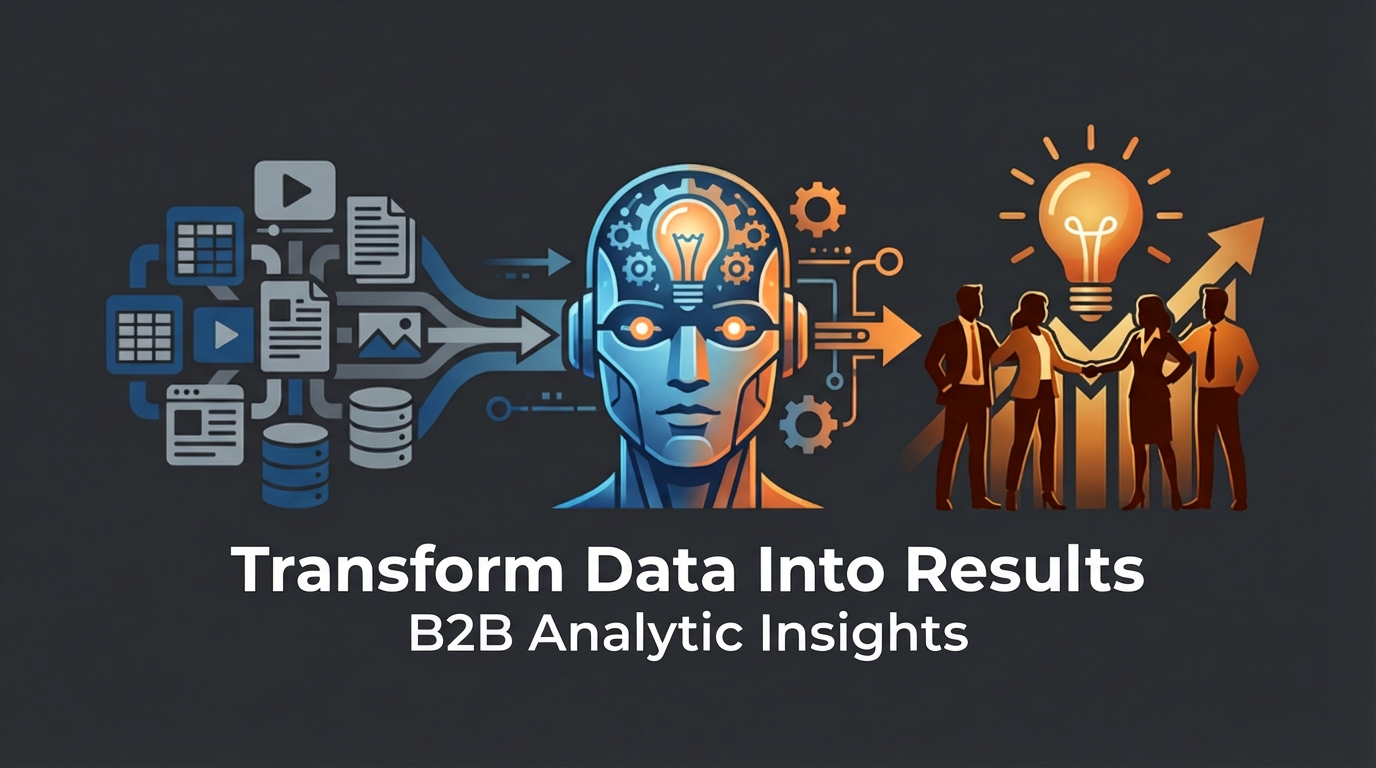

In today’s digital age, businesses have access to vast amounts of data. However, simply having data is not enough. To truly harness its power, businesses must convert this data into intelligence. Converting data to intelligence involves analyzing and interpreting the data to extract valuable insights that can drive informed decision-making and business growth. In this article, we will explore the importance of converting data to intelligence and discuss various techniques and strategies that businesses can use to unlock the full potential of their data.
Key Takeaways
- Converting data to intelligence is crucial for business growth and success.
- Deterministic analytics plays a key role in converting data into actionable insights.
- Uncovering hidden capabilities of data stores can lead to valuable insights.
- Transforming raw data into actionable insights requires a combination of art and science.
- Converting data to intelligence can provide numerous benefits for business growth and decision making.
Understanding the Importance of Converting Data to Intelligence
Data conversion refers to the process of transforming raw data into a more meaningful and usable format. It involves cleaning, organizing, and analyzing the data to extract valuable insights. Converting data to intelligence is crucial for businesses as it allows them to make informed decisions based on accurate and relevant information.
By converting data to intelligence, businesses can gain a deeper understanding of their customers, market trends, and internal operations. This knowledge can help them identify opportunities for growth, optimize their processes, and stay ahead of their competitors. Without converting data to intelligence, businesses may be making decisions based on incomplete or inaccurate information, which can lead to costly mistakes.
The Role of Deterministic Analytics in Data Conversion
Deterministic analytics is a branch of analytics that focuses on finding cause-and-effect relationships in data. It involves using mathematical models and algorithms to analyze historical data and predict future outcomes with a high degree of certainty. Deterministic analytics plays a crucial role in data conversion by providing businesses with actionable insights based on accurate predictions.
By applying deterministic analytics techniques to their data, businesses can uncover hidden patterns and trends that may not be immediately apparent. For example, they can identify which factors have the greatest impact on customer satisfaction or which marketing campaigns are most effective in driving sales. Armed with this knowledge, businesses can make more informed decisions and allocate their resources more effectively.
How to Uncover Hidden Capabilities of Your Data Stores
To uncover the hidden capabilities of their data stores, businesses need to take a systematic approach. The first step is to conduct a thorough assessment of their data stores to understand what data is available and how it is structured. This involves identifying the different types of data, such as customer data, sales data, or operational data, and determining where it is stored and how it is organized.
Once businesses have a clear understanding of their data stores, they can start exploring the potential capabilities that lie within. This can involve conducting data mining and analysis to identify patterns, correlations, and trends in the data. Businesses can also leverage advanced analytics techniques, such as machine learning or natural language processing, to extract valuable insights from unstructured data sources like social media or customer feedback.
By uncovering the hidden capabilities of their data stores, businesses can gain a competitive advantage. For example, they may discover that certain customer segments have a higher propensity to purchase their products or that certain marketing channels are more effective in reaching their target audience. Armed with this knowledge, businesses can tailor their strategies and tactics to maximize their chances of success.
The Art of Transforming Raw Data into Actionable Insights
Transforming raw data into actionable insights requires a combination of technical skills and business acumen. The first step is to clean and preprocess the raw data to ensure its accuracy and consistency. This involves removing duplicates, correcting errors, and standardizing formats. Once the data is clean, businesses can start analyzing it to extract meaningful insights.
There are various techniques that businesses can use to transform raw data into actionable insights. These include descriptive analytics, which involves summarizing and visualizing the data to identify patterns and trends; diagnostic analytics, which involves analyzing the data to understand why certain events occurred; and prescriptive analytics, which involves using the insights gained from the analysis to make recommendations or predictions.
For example, a retail business may analyze its sales data to identify which products are the most popular and which are underperforming. Armed with this information, they can make informed decisions about their inventory management, pricing strategies, and marketing campaigns. By transforming raw data into actionable insights, businesses can optimize their operations and drive better results.
The Benefits of Converting Data to Intelligence for Business Growth

Converting data to intelligence offers numerous benefits for business growth. Firstly, it allows businesses to make more informed decisions based on accurate and relevant information. This can help them identify new market opportunities, optimize their processes, and allocate their resources more effectively. By making data-driven decisions, businesses can minimize risks and maximize their chances of success.
Secondly, converting data to intelligence enables businesses to gain a deeper understanding of their customers. By analyzing customer data, businesses can identify their preferences, behaviors, and needs. This knowledge can help them tailor their products, services, and marketing strategies to better meet customer expectations. By delivering a personalized and seamless customer experience, businesses can build stronger relationships with their customers and drive loyalty.
Lastly, converting data to intelligence allows businesses to stay ahead of their competitors. By analyzing market trends and monitoring competitor activities, businesses can identify emerging threats and opportunities. This knowledge can help them adapt their strategies and tactics to maintain a competitive edge. By leveraging data conversion techniques, businesses can gain a deeper understanding of the market dynamics and make proactive decisions that give them a competitive advantage.
Techniques for Enabling Data-Driven Decision Making
Enabling data-driven decision making involves creating a culture that values and leverages data in the decision-making process. There are several techniques that businesses can use to enable data-driven decision making:
1. Establish clear goals and objectives: Businesses should clearly define their goals and objectives and align them with their data analysis efforts. This ensures that the analysis is focused on answering specific questions or solving specific problems.
2. Invest in data infrastructure: Businesses should invest in the necessary infrastructure and tools to collect, store, and analyze data effectively. This may involve implementing a data management system, hiring data analysts or data scientists, or partnering with external vendors.
3. Foster a data-driven culture: Businesses should foster a culture that values and promotes data-driven decision making. This involves educating employees about the importance of data, providing training on data analysis techniques, and encouraging the use of data in decision making.
4. Communicate the value of data: Businesses should communicate the value of data and its impact on decision making. This can be done through regular updates, presentations, or reports that highlight the insights gained from data analysis.
By enabling data-driven decision making, businesses can ensure that their decisions are based on accurate and relevant information. This can lead to better outcomes, improved efficiency, and increased competitiveness.
The Role of Predictive Analytics in Data Conversion
Predictive analytics is a branch of analytics that uses historical data to make predictions about future events or outcomes. It involves applying statistical models and algorithms to analyze patterns and trends in the data and make forecasts with a certain degree of accuracy. Predictive analytics plays a crucial role in data conversion by providing businesses with insights into future trends and behaviors.
By leveraging predictive analytics techniques, businesses can anticipate customer needs, identify potential risks or opportunities, and optimize their operations. For example, a manufacturing business may use predictive analytics to forecast demand for its products and adjust its production schedule accordingly. By accurately predicting demand, the business can minimize inventory costs and ensure timely delivery to customers.
Predictive analytics can also help businesses identify patterns or anomalies in their data that may not be immediately apparent. For example, a financial institution may use predictive analytics to detect fraudulent transactions by analyzing historical transaction data and identifying patterns associated with fraudulent activity. By proactively identifying potential fraud, the institution can minimize losses and protect its customers.
The Importance of Data Visualization in Converting Data to Intelligence
Data visualization is the process of presenting data in a visual format, such as charts, graphs, or maps. It plays a crucial role in converting data to intelligence by making complex information more accessible and understandable. Data visualization allows businesses to identify patterns, trends, and relationships in the data that may not be immediately apparent in raw form.
By visualizing data, businesses can gain insights into their operations, customer behavior, and market trends. For example, a retail business may use a heat map to visualize customer foot traffic in its stores and identify areas of high or low activity. This information can help the business optimize its store layout, staffing levels, and marketing strategies.
Data visualization also enables businesses to communicate their findings effectively to stakeholders. By presenting data in a visual format, businesses can convey complex information in a clear and concise manner. This can help stakeholders understand the insights gained from data analysis and make informed decisions based on this information.
Strategies for Leveraging Big Data to Drive Business Success
Big data refers to large and complex datasets that cannot be easily managed or analyzed using traditional data processing techniques. Leveraging big data involves using advanced analytics techniques and technologies to extract valuable insights from these datasets. By harnessing the power of big data, businesses can drive innovation, improve efficiency, and gain a competitive advantage.
There are several strategies that businesses can use to leverage big data for success:
1. Invest in data infrastructure: Businesses should invest in the necessary infrastructure and technologies to collect, store, and analyze big data effectively. This may involve implementing a distributed computing system, such as Hadoop or Spark, or partnering with cloud service providers.
2. Use advanced analytics techniques: Businesses should leverage advanced analytics techniques, such as machine learning or natural language processing, to analyze big data and extract valuable insights. These techniques can help identify patterns, trends, or anomalies in the data that may not be immediately apparent.
3. Embrace real-time analytics: Businesses should embrace real-time analytics to gain immediate insights from big data. This involves analyzing data as it is generated or collected, rather than waiting for batch processing. Real-time analytics allows businesses to make timely decisions and respond quickly to changing market conditions.
4. Ensure data privacy and security: Businesses should prioritize data privacy and security when leveraging big data. This involves implementing robust security measures, such as encryption or access controls, to protect sensitive information. It also involves complying with relevant data protection regulations, such as GDPR or CCPA.
By leveraging big data, businesses can gain a deeper understanding of their customers, optimize their operations, and drive innovation. However, it is important for businesses to have a clear strategy and the necessary resources in place to effectively manage and analyze big data.
Overcoming Challenges in Converting Data to Intelligence: Best Practices and Tips
Converting data to intelligence is not without its challenges. Businesses may face various obstacles along the way, such as data quality issues, lack of expertise, or resistance to change. However, there are several best practices and tips that businesses can follow to overcome these challenges:
1. Ensure data quality: Businesses should prioritize data quality by implementing robust data governance processes. This involves establishing data standards, conducting regular data audits, and investing in data cleansing or validation tools.
2. Invest in talent: Businesses should invest in talent by hiring skilled data analysts or data scientists. These professionals can help businesses analyze and interpret their data effectively and extract valuable insights.
3. Foster a culture of collaboration: Businesses should foster a culture of collaboration between different departments or teams. This can help break down silos and encourage the sharing of data and insights across the organization.
4. Start small and iterate: Businesses should start small and iterate when converting data to intelligence. Rather than trying to tackle all their data at once, businesses should focus on a specific problem or question and gradually expand their analysis efforts.
5. Communicate the value of data: Businesses should communicate the value of data and its impact on decision making. This can help overcome resistance to change and encourage employees to embrace data-driven decision making.
By following these best practices and tips, businesses can overcome the challenges in converting data to intelligence and maximize the value of their data.
Converting data to intelligence is crucial for businesses in today’s digital age. By analyzing and interpreting their data, businesses can gain valuable insights that can drive informed decision-making and business growth. From uncovering hidden capabilities of data stores to leveraging big data for success, there are various techniques and strategies that businesses can use to unlock the full potential of their data.
It is important for businesses to invest in the necessary infrastructure, talent, and technologies to effectively manage and analyze their data. By fostering a culture that values and leverages data, businesses can enable data-driven decision making and gain a competitive advantage. Converting data to intelligence is not without its challenges, but by following best practices and tips, businesses can overcome these obstacles and harness the power of their data for success.