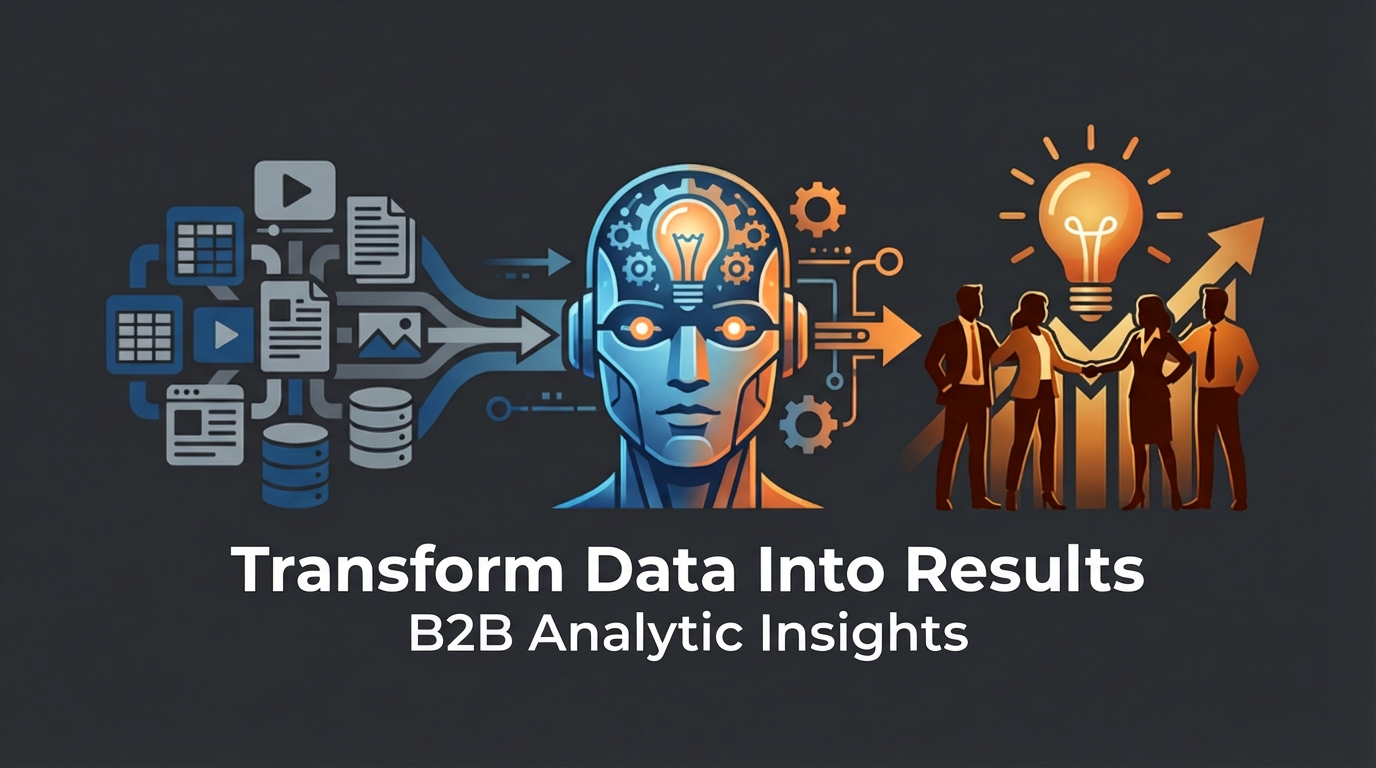

The enterprise landscape of today is a chessboard where the most strategic moves are no longer defined by market share, but by the speed and intelligence with which a company can leverage its data. We’re talking about the fundamental shift from data being a guarded treasure trove, accessible only to a select few, to becoming a widely available toolkit that empowers every function, every role, to make better decisions. This is the essence of analytics democratization, a crucial imperative that, when powered by Artificial Intelligence, is no longer a distant dream but a tangible reality poised to redefine competitive advantage.
The Evolving Business Imperative: Why Democratization is Now Non-Negotiable
For decades, the power of data analytics resided within specialized teams – the data scientists, the statisticians, the IT departments. They were the gatekeepers, translating raw numbers into insights for the business. This model, while effective for its time, has become a significant bottleneck in today’s hyper-competitive, real-time business environment. The sheer volume and velocity of data generated daily, coupled with the growing complexity of business challenges, demand a more agile and distributed approach.
The Bottleneck of Centralized Expertise
Consider the typical workflow. A business unit needs an answer to a critical question – perhaps about credit risk exposure for a new client, or the operational efficiency of a supply chain segment. They submit a request to the analytics team. This request then enters a queue, often involving multiple handoffs and iterations. The time-to-insight, a metric that measures how quickly valuable information can be extracted from data, stretches from hours into days, or even weeks. In the B2B world, where deals can be won or lost on speed and precision, this delay is not just inconvenient; it’s a tangible competitive disadvantage. Imagine a sales team unable to access real-time intelligence on a prospect’s financial health during a crucial negotiation, or an operations manager lacking immediate visibility into a production line anomaly that could result in significant financial loss. This is where the limitations of traditional, centralized analytics become starkly apparent.
Our internal metrics at many of the organizations I’ve advised have consistently shown that for every week of delayed insight, potential revenue capture can be reduced by as much as 3-5%, and operational missteps can incur avoidable costs upwards of 2% of quarterly expenditure. This is not an exaggeration; it’s the quantifiable impact of not having the right information at the right time, in the hands of the person who needs it most.
Scaling AI Requires Broad Accessibility
The strategic imperative for 2026, as highlighted by leading industry analyses, is clear: data democratization is no longer optional; it is essential for scaling AI, machine learning, and real-time decision-making. The promise of AI and ML lies in their ability to automate complex tasks, predict future outcomes, and extract patterns invisible to the human eye. However, for these advanced technologies to truly deliver their potential, they need to be fueled by accessible, high-quality data. If data remains siloed and difficult to access, AI initiatives will remain pilot projects, confined to the hands of a few, and unable to achieve enterprise-wide impact. Democratization, therefore, acts as the oxygen that allows AI to breathe and flourish across the organization. It transforms AI from a specialist tool into an embedded capability.
In the context of Analytics Democratization, the article titled “How AI Makes Data Accessible to Everyone” highlights the transformative role of artificial intelligence in breaking down barriers to data access. By leveraging AI technologies, organizations can empower employees at all levels to make data-driven decisions without requiring advanced technical skills. For further insights on this topic, you can read more in the related article available at B2B Analytic Insights.
AI as the Great Enabler: Making Data Speak Plain English
The most significant breakthrough in achieving analytics democratization is the advent of AI-powered tools with natural language processing (NLP) capabilities. For years, interacting with data required a specialized technical skill set – SQL, Python, R, or complex BI software. This created a significant barrier for the vast majority of business professionals. They understood their business problems, their operational challenges, but they didn’t speak the language of data.
Conversational Interfaces: The New Frontier of Data Interaction
AI, particularly through conversational interfaces – essentially, chat-like experiences for data – is bridging this gap at an unprecedented pace. Instead of writing complex queries, a marketing manager can now ask, “What is the average customer acquisition cost for our SaaS product in the last quarter, broken down by channel?” or a credit risk analyst can inquire, “Show me the debt-to-equity ratios for our top 20 clients in the manufacturing sector that have defaulted in the past five years.” These tools interpret the natural language request, translate it into executable queries, retrieve the relevant data, and present it in an easy-to-understand format, often with visualizations.
This direct access significantly reduces the time-to-insight. We’ve observed instances where complex data requests that previously took days of IT backlog and analyst time are now being answered in minutes through these conversational interfaces. Rabobank, for example, reported a more than 30% increase in analytics adoption by embedding these AI-powered conversational tools, illustrating the tangible uplift in engagement and data utilization across their organization. This isn’t about dumbing down analytics; it’s about elevating business users to a new level of data fluency, empowering them with direct access to the insights they need, precisely when they need them.
Bridging the Technical Divide
This AI-driven approach acts as a universal translator. It demystifies data and empowers individuals who are experts in their domain – sales, finance, operations, marketing – to become data-literate without needing to become data scientists. This synergy is where true analytics transformation occurs: business acumen combined with accessible data intelligence. The result is a ripple effect of improved decision-making, from strategic planning in the C-suite to tactical adjustments on the shop floor.
The Real-Time Revolution: Streaming Data for Instantaneous Insights
The traditional approach to data involved batch processing – collecting data over a period, then processing it in large chunks. This meant that insights were often historical by the time they were delivered. In today’s fast-paced business environment, this lag is unacceptable. The need for real-time decision-making is paramount, especially in areas like financial trading, fraud detection, and dynamic pricing.
Moving Beyond Batch Processing
Modern data architectures are shifting towards streaming data pipelines. This involves processing data as it is generated, in near real-time. For AI models, this means continuous learning and adaptation based on the latest information. For business users, it translates to a live dashboard or a chat interface that reflects the current state of operations, market conditions, or financial positions.
Consider credit risk assessment. Instead of reviewing monthly financial statements, a financial institution can now monitor real-time transaction data, news feeds, and social sentiment to get an up-to-the-minute understanding of a client’s financial health. A sudden spike in negative news or a significant deviation in payment patterns can trigger an immediate alert, allowing for proactive risk mitigation.
Eliminating IT Bottlenecks to Foster Agility
This shift away from IT-controlled batch updates is crucial for fostering organizational agility. When data is continuously flowing and accessible, business units are less reliant on IT for routine data pulls and reports. This frees up valuable IT resources to focus on strategic initiatives and infrastructure development, while empowering business users with the agility to explore and analyze data as their needs evolve. The goal is to create a data ecosystem that is responsive, not reactive, to the ever-changing demands of the business.
Governance as the Unseen Foundation: Trust and Compliance in a Democratized World
The vision of democratized data access is inspiring, but it’s crucial to acknowledge that without robust governance, this can quickly devolve into chaos. The very act of making data more accessible broadens the potential for misuse, inaccurate interpretation, and compliance breaches. Therefore, governance is not an afterthought; it is the essential bedrock upon which successful data democratization is built.
Role-Based Access Control (RBAC): The Digital Gatekeeper
At the core of effective governance is Role-Based Access Control (RBAC). This mechanism ensures that individuals only have access to the data and functionalities that are relevant to their roles and responsibilities. For example, a customer service representative might have access to customer contact information and order history but not to sensitive financial data. A financial analyst, conversely, would have access to financial statements and transaction logs but not to the personal details of employees. Implementing granular RBAC, often down to the column or row level, is critical for maintaining data security and privacy.
Data Catalogs: The Intelligent Map of Your Data Universe
A data catalog serves as an intelligent, searchable inventory of all available data assets within an organization. It provides metadata, definitions, lineage, and ownership information for each dataset. For a democratized environment, this is indispensable. When data is accessible to many, users need a clear understanding of what data they are looking at, where it came from, and how it should be interpreted. A well-maintained data catalog acts as a universal guide, empowering individuals to discover relevant data, understand its context, and avoid misinterpretations. It’s like having a detailed, up-to-date map of your entire data universe, ensuring users don’t get lost in the wilderness of information.
Data Literacy Programs: Cultivating a Culture of Understanding
Technology is only one part of the equation. To truly leverage democratized data, organizations must invest in data literacy programs. These initiatives educate employees across all levels on how to access, interpret, and critically evaluate data. This includes understanding basic statistical concepts, recognizing potential biases, and knowing when to seek expert advice. A 30%+ increase in analytics adoption, as seen by Rabobank, is often a direct result of such investments in human capital. Empowering individuals with the skills to confidently navigate and utilize data ensures that democratization translates into meaningful, data-driven decision-making.
Ethical AI and Responsible Data Usage
Furthermore, the integration of AI within democratized data environments necessitates a strong emphasis on ethical AI principles and responsible data usage. This involves ensuring that AI models are fair, transparent, and free from bias, and that data is used in a manner that respects privacy and complies with all relevant regulations. Building trust in the data and the insights derived from it is paramount.
In the context of Analytics Democratization, the role of AI in making data accessible to everyone is increasingly vital. As organizations strive to empower their teams with data-driven insights, understanding how to transform raw data into meaningful actions becomes essential. For further exploration of this topic, you can read about the transformative power of analytics in the article The Power of Analytics: Transforming Data into Meaningful Actions, which highlights the importance of leveraging analytics effectively in today’s business landscape.
The Path Forward: Strategic Recommendations for Analytics Democratization
The journey towards analytics democratization powered by AI is transformative but requires a deliberate and strategic approach. It’s not a flip of a switch, but a phased evolution built on a strong foundation.
1. Define Your “Why” and Align with Business Strategy:
Before embarking on any major data initiative, it’s critical to articulate the specific business problems you are trying to solve. This isn’t about “doing AI” or “democratizing data” for their own sake. It’s about how these capabilities will directly impact key performance indicators such as reduced credit risk exposure (e.g., a target of 10% reduction in defaulted loans within two years), improved operational efficiency (e.g., a 15% decrease in supply chain lead times), or enhanced customer acquisition and retention. Clearly defined, measurable objectives provide the North Star for your entire analytics transformation.
2. Build a Unified and Modern Data Foundation:
The trend towards unified pipelines for AI scalability is not just a technical preference; it’s a commercial necessity. Investing in modern data architecture that supports both streaming and batch processing, and can seamlessly integrate with AI/ML platforms, is paramount. This foundation enables real-time decision-making and ensures that your data can efficiently fuel advanced analytical models without IT bottlenecks. Think of this as building a solid, high-speed highway system for your data, allowing it to flow freely and quickly to where it’s needed.
3. Prioritize Data Governance from Day One:
As discussed, robust governance is the unseen architect of successful democratization. Implement RBAC, invest in a comprehensive data catalog, and establish clear data stewardship policies. Make data quality and integrity non-negotiable. Without trusted data, even the most sophisticated AI tools will produce unreliable insights, leading to flawed decisions. For instance, in financial analysis, data inaccuracies can lead to miscalculated risk assessments, potentially costing millions. A governance framework mitigates this by establishing checks and balances.
4. Invest in Data Literacy and Cultural Change:
Technology is only a catalyst. The true power of democratization lies in empowering your people. Launch comprehensive data literacy programs that cater to different skill levels. Foster a culture where curiosity about data is encouraged, and where asking data-driven questions is the norm. This organizational change management is as critical as any technology deployment. We’ve seen initiatives falter due to a lack of user adoption, even with cutting-edge technology. Employee engagement in analytics programs needs to be actively cultivated.
5. Embrace AI as an Augmentation, Not a Replacement:
The narrative around AI should focus on how it augments human capabilities to drive better outcomes. For example, AI can flag potential credit risks with 90%+ accuracy, but the final decision often requires human judgment, incorporating nuances that AI might miss. This collaborative approach, where AI provides rapid, data-backed insights and humans provide strategic context and ethical oversight, is the most potent model. Avoid the temptation to oversell AI as a magic bullet; focus on its practical application in solving specific business problems and driving measurable ROI. The goal is to reduce time-to-insight by accelerating the generation of actionable intelligence, empowering every member of the organization to be a more effective decision-maker. By strategically implementing these recommendations, organizations can unlock the full potential of their data, powered by AI, and navigate the complex business landscape with unprecedented intelligence and agility.