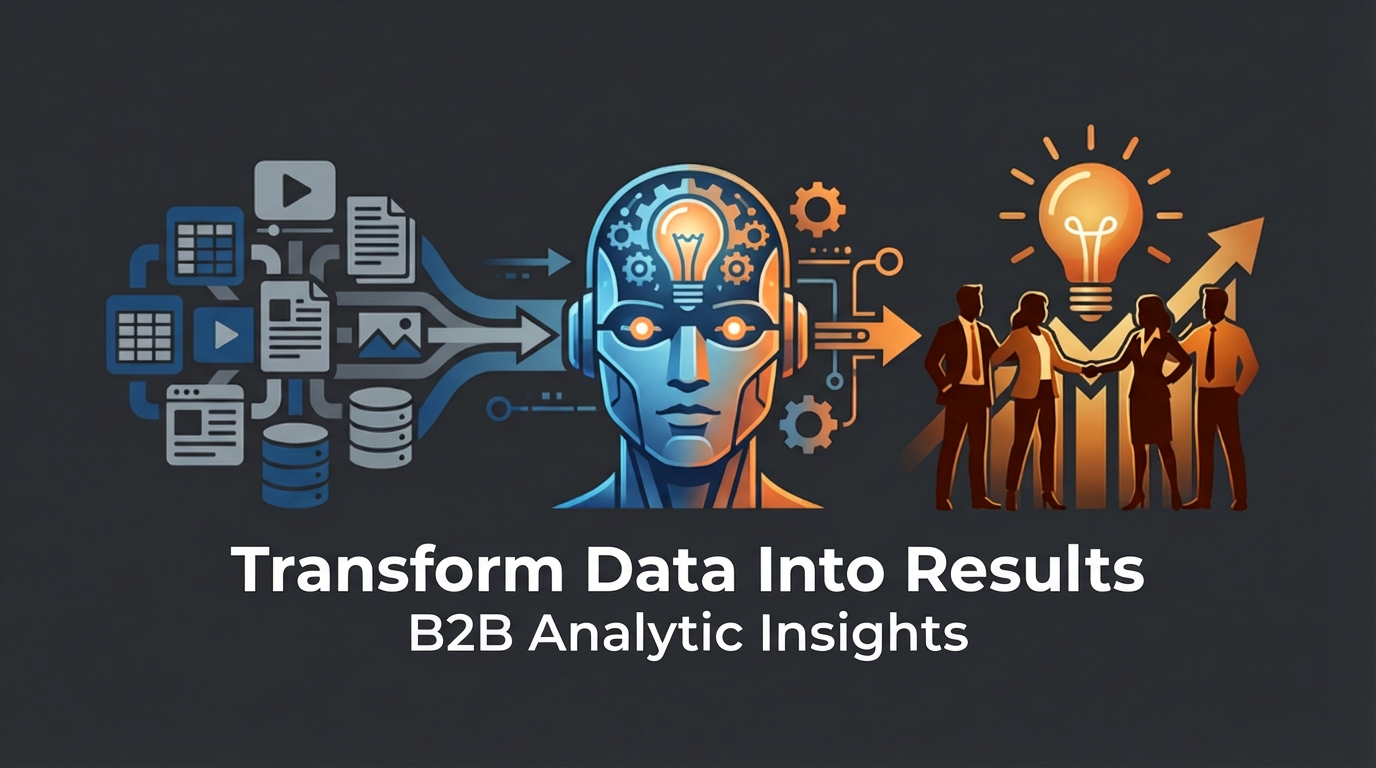

The bedrock of sound financial strategy, robust credit risk assessment, and efficient enterprise operations is an unwavering commitment to data integrity. Without it, even the most sophisticated analytical models devolve into guesswork, leading to flawed decisions, missed opportunities, and ultimately, a significant drain on the bottom line. For decades, we’ve relied on manual checks, laborious reconciliation processes, and the inherent fallibility of human attention to detail. The sheer volume, velocity, and variety of data in today’s B2B landscape have rendered these traditional methods increasingly inadequate. This is where the advent of automated data validation, powered by Artificial Intelligence, is not just an evolution, but a fundamental revolution.
The Escalating Cost of Dirty Data: A C-Suite Concern
We’ve all seen it. The quarterly financial report that’s off by a few million because of a misplaced decimal in a sales figure from a subsidiary. The credit risk model that flags a solvent client as high-risk due to inconsistent address data across different systems. The supply chain disruption that could have been predicted, but wasn’t, because inventory counts were wildly inaccurate. These aren’t hypothetical scenarios; they are the daily reality for many organizations. The cost of poor data quality is staggering, manifesting in:
- Reduced ROI on Analytics Investments: You invest millions in advanced analytics platforms, machine learning algorithms, and top-tier talent, only to have the output undermined by unreliable input. Studies consistently show that organizations lose billions annually due to data quality issues. For instance, a Gartner study estimated the average organizational cost of poor data quality at $15 million per year. This directly impacts your ability to achieve the promised ROI from your analytics transformation.
- Inaccurate Financial Forecasting and Planning: Imagine basing critical strategic decisions – M&A, capital allocation, market entry – on faulty financial projections. This leads to misallocated resources, missed growth targets, and potential financial distress.
- Elevated Credit Risk Exposure: In financial services and B2B lending, inaccurate customer data can lead to extending credit to unreliable borrowers or declining opportunities with creditworthy clients. This directly impacts portfolio health and profitability. We’re talking about millions, sometimes billions, in potential write-offs or lost revenue.
- Operational Inefficiencies and Lost Productivity: When operational teams spend 20-30% of their time cleaning and correcting data, that’s 20-30% of their time not spent on value-generating activities. This drags down productivity and delays critical business processes, impacting everything from order fulfillment to customer service.
The imperative is clear: we need to move beyond reactive data fixes to proactive, intelligent data assurance. This is the promise of AI-powered automated data validation.
For too long, data validation has been synonymous with a static set of rules – “Is this field a number?” “Is this date in the correct format?” While these checks are foundational, they are insufficient for the dynamic and complex data environments of today. AI injects a level of intelligence and adaptability that transforms data validation from a burdensome chore into a strategic advantage.
Machine Learning for Sophisticated Anomaly Detection
The true power of AI in data validation lies in its ability to learn and adapt. Machine learning models can go far beyond predefined rules to identify subtle, context-dependent anomalies that human analysts might miss.
Pattern Recognition and Behavioral Analysis
- AI can learn the typical patterns within your data. For example, in credit risk, it can identify unusual transaction volumes or sequences for a particular client, even if individual data points appear valid in isolation. Think about a sudden surge in small, recurring transactions from a customer who typically engages in large, infrequent purchases. This might be a legitimate new behavior, or it could be indicative of fraudulent activity. ML models can flag these deviations for review, significantly improving time-to-insight for risk mitigation.
- In enterprise operations, AI can analyze operational metrics to detect deviations from expected performance. If a key machine in a manufacturing plant consistently reports nominal output levels, but the AI detects a subtle, persistent vibration pattern that deviates from its normal operational signature, it can predict a potential failure before it occurs. This proactive maintenance saves millions in downtime and repair costs.
Fuzzy Matching and Deduplication at Scale
- Duplicate records are a persistent headache. Manually identifying and merging duplicates across disparate systems is a Herculean task. AI-powered fuzzy matching uses sophisticated algorithms to identify records that are likely the same, even with minor variations in spelling, abbreviations, or formatting. This is critical for B2B customer relationship management (CRM) and financial reconciliation, ensuring a single, accurate view of a customer or a transaction. Imagine the impact on sales pipeline accuracy if every interaction with a prospect is attributed to a single, unified record.
Predictive Validation for Data Entry
- AI can also be used to predict and prevent data entry errors before they even occur. By analyzing historical data and user input patterns, AI can flag potential mistakes in real-time, prompting the user for confirmation or offering suggestions. This shifts validation upstream, reducing the burden on downstream analytics teams and improving the quality of data captured at the source.
Real-Time Error Detection and Correction: The Speed of Business
In today’s fast-paced B2B environment, waiting days or weeks for data validation reports is a luxury we can no longer afford. The ability to detect and, where possible, correct errors in real-time is paramount for agile data-driven decision making.
Continuous Monitoring Embedded in Pipelines
- Modern AI data quality tools are not standalone solutions; they are integrated directly into analytics pipelines. This means that as data flows through your systems – from ingestion, through transformation, to model training and deployment – it is continuously monitored and validated. This “shift-left” approach to data quality ensures that issues are caught early, preventing them from propagating and corrupting downstream processes.
- For credit risk assessments, this real-time validation means that a loan application can be flagged for data inconsistencies or anomalies as it’s being processed, not after it’s been approved or rejected. This allows for immediate correction, speeding up the approval process for valid applications and preventing potential losses from flawed data.
Automated Correction and Alerting Mechanisms
- In many cases, AI can go beyond detection to actual correction. For instance, if a recognized duplicate record is found, the AI can be configured to automatically merge the records based on predefined confidence scores. For more complex anomalies, the AI can generate intelligent alerts, providing analysts with concise information about the issue and potential solutions, significantly reducing the time-to-insight for data remediation.
- Consider an enterprise operations scenario where a sensor reading deviates significantly from the expected range. An AI system can not only flag this but also, based on historical data and expert rules, attempt to impute a corrected value or alert the maintenance team with specific diagnostic information.
The Emergence of Machine Learning-Based Validation
The evolution of data validation tools is marked by a clear trajectory: from rule-based to ML-driven. This shift is not merely a technological upgrade; it represents a fundamental change in how we ensure data accuracy and reliability.
Moving Beyond Static Rule Sets
- Traditional validation relies on explicitly defined rules. While essential, these rules are often brittle and struggle to keep pace with evolving data landscapes and business requirements. They require constant manual updating and struggle with nuance.
- ML-based validation, on the other hand, learns from the data itself. It identifies subtle relationships, correlations, and deviations that would be impossible to codify manually. This allows for more dynamic and accurate validation that adapts to changing conditions.
Improving Accuracy Over Time
- The beauty of machine learning is its ability to improve with experience. As AI models are exposed to more data and validation outcomes, they become more adept at identifying errors and distinguishing between genuine anomalies and acceptable variations. This continuous learning loop means that your data validation processes become more robust and accurate over time, without constant human intervention. This is crucial for maintaining analytics integrity as your data volumes grow and your analytical models become more complex.
In the realm of data analytics, the importance of maintaining data integrity cannot be overstated, and a related article that delves deeper into this topic is “The Role of Machine Learning in Data Quality Assurance.” This article explores how machine learning techniques can enhance data validation processes, ensuring that analytics remain reliable and accurate. For more insights on this subject, you can visit the article here: The Role of Machine Learning in Data Quality Assurance.
The Auditability Imperative: Trusting the AI-Generated Insight
As we increasingly rely on AI for data validation, the question of trust becomes paramount. How can we be certain that the data we are using is accurate, and how can we prove it to stakeholders, auditors, and regulatory bodies? This is where the focus on analytics verification and auditable systems comes into play.
In the realm of data management, the importance of maintaining analytics integrity cannot be overstated, and a related article that delves deeper into this topic is available for those interested. Automated Data Validation is a key aspect of ensuring that data remains accurate and reliable, and it is fascinating to see how AI technologies are being leveraged for this purpose. For further insights on the implications of these advancements in data analytics, you can explore this resource that discusses the broader impact of AI on data integrity and validation processes.
Source Verification and Provenance Tracking
- A key aspect of modern AI validation is its ability to meticulously track data lineage. This means understanding where data originated, how it has been transformed, and who or what has accessed or modified it. AI systems are being built to automatically document this provenance, providing an immutable audit trail.
- For financial institutions, this is critical for regulatory compliance. Being able to trace every data point back to its original source, and demonstrate how it was validated, is no longer optional. This is about building confidence in the financial statements and risk models that underpin major business decisions.
Automated Documentation for Transparency
- Traditionally, documenting validation processes has been a manual, time-consuming, and often incomplete task. AI-powered validation systems automate this documentation process. They generate comprehensive reports detailing the validation checks performed, the anomalies identified, the corrections made (or not made), and the confidence scores associated with each validation step.
- This automated documentation is essential for time-to-insight not just for the data itself, but for the validation process. It allows analytics leaders and C-suite executives to quickly understand the health of their data and the reliability of the insights derived from it. It also significantly streamlines the audit process, reducing the burden on internal teams and external auditors.
Bridging Technical Concepts to Business Strategy
The technical concept of data provenance might sound abstract to a non-technical executive. However, when framed as “unquestionable proof of data integrity,” it resonates. This means that when our sales forecast suggests a 20% growth, the C-suite can be confident that the underlying data is accurate and has been rigorously validated. This isn’t just about preventing errors; it’s about enabling bold, confident strategic planning.
Navigating the Regulatory Landscape: Compliance and AI Validation
The growing sophistication of AI and its application in critical business functions have naturally attracted regulatory attention. For B2B organizations, particularly in finance and healthcare, regulatory pressure is a significant driver for adopting robust data validation practices. Frameworks like the EU AI Act are setting new standards for transparency, explainability, and auditability of AI systems, and data validation is at their core.
Stronger Compliance Expectations Around Auditability
- Regulators are increasingly demanding clear evidence of how AI models are trained, how they operate, and how their outputs are validated. This is particularly true for AI systems that make decisions impacting individuals or significant financial outcomes.
- Automated data validation, with its emphasis on provenance, auditable trails, and automated documentation, directly addresses these compliance needs. It provides the necessary evidence to demonstrate that AI is being used responsibly and that the data underpinning these systems is reliable.
Ensuring Data Provenance Under Frameworks Like the EU AI Act
- The EU AI Act, for example, places significant emphasis on data governance and the quality of data used for training AI systems. Organizations must be able to demonstrate that the data is relevant, representative, and free from errors that could lead to biased or inaccurate outcomes.
- AI-powered validation tools are instrumental in meeting these requirements. They help ensure that training data is appropriately cleansed and validated, and that ongoing operational data continues to meet stringent quality standards, thereby contributing to the overall compliance posture of the organization. This isn’t just a technical checkbox; it’s a strategic imperative to avoid significant fines and reputational damage.
The Future of Validation: Pre-Deployment Testing and Human-AI Collaboration

The evolution of automated data validation is not static. We are seeing innovations focused on even earlier detection and more effective collaboration between humans and AI. The goal is to create a seamless, intelligent, and trustworthy data ecosystem.
Isolated Validation Environments for AI Model Testing
- Before deploying AI models into live production environments, especially those dealing with sensitive data, organizations need robust testing mechanisms. New tools are emerging that provide isolated validation environments. These environments allow for the testing and validation of AI models and agents without exposing live, sensitive data to potential risks.
- This is crucial for validating credit scoring models or fraud detection algorithms. By simulating real-world scenarios in a secure, sandboxed environment, teams can fine-tune their AI for accuracy and reliability before it impacts live customer interactions or financial transactions. This prevents costly mistakes and builds confidence in the deployed AI.
The ROI of Proactive Validation: Preventing Catastrophic Errors
Consider the cost of a flawed credit risk model being deployed. It could lead to millions in loan defaults. The investment in isolated validation environments, while seemingly an upfront cost, pales in comparison to the potential losses avoided. This is a prime example of how investing in data integrity directly impacts the bottom line.
Accelerating Human Review with AI Assistance
- While AI can automate much of the validation process, human oversight and judgment remain critical, especially for complex or ambiguous situations. The challenge has always been the sheer volume of data, making comprehensive human review impractical.
- Research is actively exploring ways to speed up human review of AI outputs. This includes developing systems that can automatically attach citations directly to source cells or documents. When an AI flags an anomaly, it can also provide direct links to the exact data points or records that triggered the flag. This makes verification significantly faster and more reliable, allowing human experts to focus their attention where it’s most needed.
- This collaborative approach leverages the speed and scale of AI with the critical thinking and domain expertise of humans. It fosters a more efficient and effective analytics transformation.
The Human Element in Analytics Integrity
It’s crucial to recognize that AI is a tool, not a replacement for human expertise. The most effective data validation strategies involve a symbiotic relationship where AI handles the heavy lifting of processing vast datasets and identifying patterns, while human analysts provide the context, interpret the findings, and make the final judgments. This human-in-the-loop approach is essential for maintaining the highest levels of analytics integrity.
Conclusion: Embracing AI for Unassailable Data Integrity
The journey towards truly data-driven decision making is paved with reliable data. For too long, organizations have grappled with the immense challenge of ensuring data quality in an increasingly complex digital landscape. Traditional methods are no longer sufficient.
AI-powered automated data validation offers a transformative solution. It moves us beyond reactive error correction to proactive, intelligent data assurance. By embedding continuous monitoring, leveraging machine learning for sophisticated anomaly detection, ensuring auditable provenance, and facilitating human-AI collaboration, we can finally achieve the level of analytics integrity that strategic decision-making demands.
The benefits are tangible: reduced financial risk, improved operational efficiency, more accurate forecasting, and ultimately, a significantly higher ROI on our analytics investments. This is not about blindly trusting algorithms; it’s about building systems that demonstrably and consistently ensure the quality of the data that fuels our business.
Strategic Recommendations for C-Suite and Analytics Leaders:
- Prioritize Data Quality as a Strategic Imperative: Elevate data quality from an IT concern to a core business strategy. Allocate resources and executive sponsorship to build robust, AI-driven data validation capabilities.
- Invest in Integrated AI Validation Platforms: Move beyond siloed data quality tools. Implement solutions that integrate seamlessly into your existing analytics pipelines, enabling real-time monitoring and validation across the entire data lifecycle.
- Foster a Culture of Data Stewardship: Empower your teams to understand the importance of data integrity. Provide training on AI validation tools and encourage a proactive approach to data quality management.
- Champion Auditable and Transparent Processes: Ensure your AI validation solutions provide clear audit trails and automated documentation. This is crucial for regulatory compliance and building internal confidence in your data.
- Embrace Human-AI Collaboration: Design your validation processes to leverage the strengths of both AI and human expertise. The goal is augmented intelligence, not just automation, to ensure nuanced decision-making and continuous improvement.
By embracing automated data validation powered by AI, organizations can unlock the full potential of their data, driving smarter decisions and securing a more prosperous future. The time-to-insight has never been more critical, and the integrity of that insight hinges on the quality of the data it’s built upon.