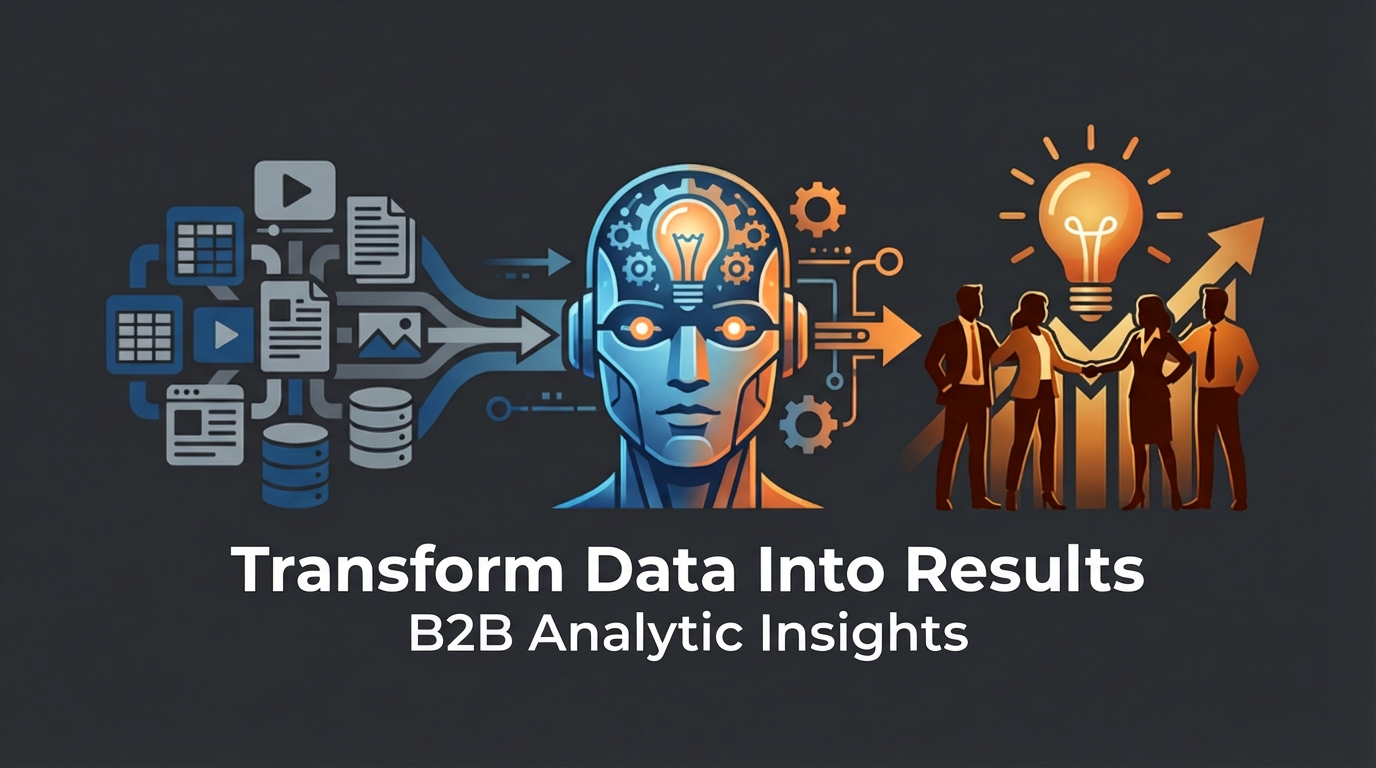

The competitive landscape today doesn’t reward caution; it demands agility. Businesses are wrestling with mounting credit risk, dissecting complex financial analyses, and optimizing labyrinthine enterprise operations. The pressure to not just react, but to proactively anticipate and shape market dynamics, is immense. For decades, we’ve spoken of data-driven decision making, a noble goal. But getting there, truly ingraining it into the fabric of our organizations, has often been a painstaking, iterative process, bottlenecked by a scarcity of specialized talent and lengthy development cycles. We’ve faced the agonizing challenge of extended time-to-insight, where the value of analysis was often diluted by the very act of extracting it. This is where the conversation surrounding AutoML for Analytics becomes not just relevant, but critical. It represents a paradigm shift, a fusion of automation and intelligence designed to accelerate that journey, bridging the gap between raw data and actionable business outcomes.
The promise of AutoML is alluring: democratizing advanced analytics, stripping away the drudgery of repetitive tasks, and empowering a wider range of users to leverage the power of machine learning. It’s not about replacing human expertise entirely – far from it. It’s about augmenting it, about freeing up our most valuable minds to focus on the strategic questions, the nuanced interpretations, and the creative applications of insights. We’re talking about a fundamental analytics transformation, a move from descriptive reporting to predictive and prescriptive capabilities, directly impacting our bottom line through smarter credit risk management, more robust financial planning, and streamlined operational efficiency.
The rapid evolution of AutoML is remarkable. It’s no longer a niche technology confined to academic research or highly specialized data science teams. We’re seeing it embedded directly into mainstream analytics platforms, transforming how organizations approach their analytical challenges. Qlik’s recent enhancements, for instance, are a prime example of this maturation. The inclusion of real-time prediction explanations allows business users to understand why a model is making a particular prediction, fostering trust and enabling more confident action. Auto-generated model dashboards and what-if analysis empower immediate scenario planning, a crucial capability in today’s volatile markets. And the continuous model monitoring and retraining functionalities mean that analytics isn’t a static artifact; it’s a dynamic, evolving engine of business intelligence.
This isn’t just about incremental improvements. The market itself is speaking volumes. The global AutoML market reaching a staggering USD 2.13 billion in 2024 and projected to grow at a bullish 35.4% CAGR underscores the immense demand and confidence in this technology. This growth isn’t artificial; it’s fueled by tangible business benefits. Enterprises are increasingly adopting AutoML across their entire analytics workflows, particularly for predictive analytics. Why? Because it tackles the most time-consuming aspects head-on: automated data preparation, intelligent feature engineering, and the often-tedious process of model selection and hyperparameter tuning. This reduction in development time translates directly into a faster time-to-insight, allowing businesses to react to market shifts, identify fraud patterns, or optimize pricing strategies with unprecedented speed.
The Increasing Ubiquity of AutoML in Business Intelligence Tools
The integration of AutoML into existing BI tools is perhaps the most significant indicator of its mainstream adoption. We’re moving beyond standalone ML platforms to a world where sophisticated analytical capabilities are accessible within the tools business users already use. This democratizes access, making predictive modeling a reality for analysts and even business managers who may not possess deep coding expertise. Think about a credit risk analyst who can now, with a few clicks, leverage an AutoML-powered tool to predict default probabilities for a loan applicant, with the underlying model having been automatically built and validated. This isn’t science fiction; it’s the present reality for many forward-thinking organizations.
The fact that industry analysts like Forrester and Gartner are now including AutoML capabilities as a critical evaluation criterion for ML applications signifies its established importance. It’s no longer a “nice-to-have”; it’s a fundamental component of a modern analytics strategy. When we talk about evaluating a new business intelligence platform, for instance, the presence and sophistication of its AutoML features are now as important as its visualization capabilities or data connectivity options. This shift reflects a recognition that delivering actionable insights at scale requires more than just good dashboards; it demands the ability to automatically generate and deploy predictive models that can inform decisions across the enterprise.
Demystifying Model Explainability and Trust
A significant hurdle in the adoption of any AI or ML technology, including AutoML, has been the “black box” problem. If a model predicts a loan applicant is high-risk, but no one can explain why, the business may hesitate to act. This is precisely where enhancements like Qlik’s real-time prediction explanations are revolutionary. They provide the transparency needed for data-driven decision making. When a model highlights specific factors that contribute to a high-risk prediction – perhaps a combination of debt-to-income ratio, credit history patterns, and economic indicators – it empowers the credit officer to not only make an informed decision but also to articulate that decision with confidence. This builds trust not only in the technology but also in the insights it generates, which is paramount for C-suite buy-in and widespread organizational adoption.
Furthermore, the ability to perform what-if analysis directly within the AutoML framework allows stakeholders to explore different scenarios and understand the potential impact of various interventions. Imagine a financial analyst using this to model the impact of interest rate changes on projected profitability. This proactive, exploratory approach transforms analytics from a retrospective exercise into a powerful forward-looking strategic tool. This is the essence of analytics transformation: moving from understanding what happened to predicting what will happen and influencing it.
In the realm of business intelligence, the integration of AutoML is transforming how organizations approach data analytics, making it more accessible and efficient. For a deeper understanding of this intersection between automation and analytics, you can explore the article on the implications of these advancements in the industry. To learn more, visit this insightful article that discusses the evolving landscape of AutoML and its impact on business decision-making.
Enterprise Adoption: From Prediction to Proactive Operations
The expansion of AutoML into enterprise analytics workflows is not just about accelerating model development; it’s about fundamentally changing how businesses operate. Consider the realm of enterprise operations. Predictive maintenance for manufacturing equipment, demand forecasting for complex supply chains, or even personalized customer service routing – these are all areas where AutoML can yield significant ROI. By automating the creation of predictive models that can anticipate equipment failure, optimize inventory levels, or predict customer churn, organizations can move from reactive problem-solving to proactive optimization.
For example, a manufacturing plant struggling with unexpected downtime can leverage AutoML to build models that analyze sensor data from machinery. These models, automatically generated and tuned, can identify subtle anomalies that precede failures, allowing for scheduled maintenance before a costly breakdown occurs. This directly impacts operational efficiency, reduces missed production targets, and improves OEE (Overall Equipment Effectiveness). The time-to-insight here translates into reduced operational costs and increased throughput. This is direct, measurable impact that resonates with the C-suite.
Bridging the Gap: Empowering Business Teams with ML
One of the most compelling aspects of AutoML’s enterprise adoption is its role in bridging the gap between data science teams and broader business units. Previously, if a marketing team wanted to build a customer segmentation model or a sales team wanted to predict their next best customer, they would likely need to submit a request to a central analytics team, leading to backlogs and delays. With AutoML capabilities embedded within their platforms, these teams can now take a more active role.
This doesn’t mean they are building models from scratch without guidance. Rather, AutoML automates much of the complex technical heavy lifting. The business user provides the data and defines the objective (e.g., “predict which customers are most likely to churn”). The AutoML engine then handles data preparation, feature engineering, algorithm selection, and tuning, presenting the business user with a choice of well-performing models. The business user’s role then shifts to interpreting the results, collaborating with data scientists on the nuances, and driving the strategic application of these insights. This is a profound shift, fostering a more collaborative and agile approach to data-driven decision making.
The ROI of Augmented Analytics: Quantifiable Business Value
Let’s ground this in concrete business value. In credit risk management, a sophisticated AutoML model might reduce the false positive rate on loan applications by 15%, leading to millions in saved write-offs annually for a large financial institution. Or consider financial analysis: AutoML can identify fraud patterns in real-time transactions, preventing losses and protecting the company’s reputation. For enterprise operations, a 5% improvement in demand forecasting accuracy can translate into significant reductions in inventory holding costs and a decrease in stockouts, directly boosting profitability. These are not abstract projections; these are the tangible outcomes that result from effectively leveraging automated analytics.
The speed at which these models can be developed and deployed is particularly valuable. For instance, if new regulatory requirements necessitate a change in credit scoring models, AutoML can significantly shorten the typical development and validation cycle, ensuring compliance and mitigating potential penalties. This agility is a competitive differentiator.
The Ecosystem Momentum: Embedded and Cloud-Native AutoML

The market’s robust growth is further driven by significant ecosystem momentum, particularly evident in embedded and cloud AutoML releases. Analog Devices releasing AutoML for Embedded in July 2025 is a testament to the growing need for on-device intelligence. This means intelligent decision-making can happen closer to the source of data, whether it’s an industrial sensor, a connected car, or a smart home device, without the latency of cloud round-trips. This has profound implications for real-time operational adjustments and autonomous systems. In a B2B context, imagine a construction firm whose heavy machinery, equipped with embedded AutoML, can self-diagnose maintenance needs and optimize performance based on real-time operational data, directly impacting project timelines and costs.
The collaboration between Oracle and NVIDIA in March 2025 to accelerate automated ML workflows on Oracle’s AI infrastructure is another key development. This partnership signifies a trend towards specialized hardware and cloud platforms optimized for AI and ML tasks. For businesses, this means access to more powerful computational resources, enabling them to tackle more complex problems and derive deeper insights faster. This integration of hardware and software is critical for realizing the full potential of analytics transformation at scale, especially for organizations dealing with massive datasets and intricate analytical challenges in areas like risk modeling or complex financial forecasting.
Cloud-Native AutoML: Scalability and Accessibility
Cloud-native AutoML offerings are a game-changer for many organizations. They provide the necessary scalability to handle vast amounts of data and complex model training without requiring substantial on-premises infrastructure investments. For a mid-sized enterprise, this means access to state-of-the-art ML capabilities without the prohibitive upfront costs of acquiring and maintaining powerful hardware. It also simplifies deployment and management, allowing data science teams to focus more on model building and interpretation, and less on infrastructure upkeep.
This accessibility is critical for fostering widespread adoption. When organizations can procure AutoML capabilities as a service, they can experiment, innovate, and iterate much more rapidly. This aligns perfectly with the business imperative of reducing time-to-insight and gaining a competitive edge.
The Synergistic Power: Cloud Infrastructure and AutoML Algorithms
The synergy between advanced cloud infrastructure and cutting-edge AutoML algorithms is a powerful combination. Cloud platforms offer elastic computing power, massive storage, and managed services that are essential for the demanding computational needs of ML. AutoML, in turn, leverages this infrastructure to automate the heavy lifting of model development. This combination allows businesses to:
- Scale Effortlessly: Handle fluctuating data volumes and computational demands without being constrained by physical hardware.
- Accelerate Development: Train and iterate on models in a fraction of the time compared to traditional on-premises methods.
- Reduce Costs: Pay for compute resources as needed, avoiding large capital expenditures.
- Democratize Access: Make advanced ML tools available to a broader range of users within the organization.
This approach is foundational for driving true data-driven decision making across an enterprise, from departmental analytics to large-scale operational optimizations.
Challenges and Opportunities on the AutoML Journey

While the opportunities presented by AutoML are substantial, it’s crucial to acknowledge the challenges. The initial setup and integration of AutoML solutions can still require significant technical expertise, particularly for complex B2B environments with legacy systems and unique data governance requirements. Ensuring data quality and proper data preparation remain paramount; garbage in, garbage out still applies, even with the most advanced automation. Furthermore, understanding the limitations of AutoML is key. It excels at automating the repetitive, well-defined aspects of ML model building but cannot replace the human intuition, domain expertise, and strategic thinking required for framing the right business problems, interpreting complex results in context, and driving organizational change.
The market isn’t overselling AI; it’s acknowledging a powerful tool that, when applied strategically, can unlock significant business value. The critical distinction is that AutoML is a powerful enabler of data-driven decision making, not a magic bullet. It requires a clear understanding of the business objectives, a commitment to data governance, and a willingness to adapt organizational processes. For example, a credit department might find AutoML can generate scores with high accuracy, but the nuanced decision of when to offer a specific loan product, based on a customer relationship manager’s broader insights, still requires human judgment.
The Human Element: Augmenting, Not Replacing, Expertise
The narrative around AI and automation often sparks fear of job displacement. However, in the context of AutoML for analytics, the reality is far more nuanced. Instead of replacing analysts, AutoML augments them. It frees them from the repetitive, time-consuming tasks of data wrangling and model tuning, allowing them to focus on higher-value activities:
- Problem Framing: Identifying the most impactful business questions that AutoML can help answer.
- Data Interpretation: Understanding the nuances of model outputs and how they translate to business impact.
- Strategic Application: Developing strategies and business processes informed by the insights generated.
- Domain Expertise: Applying contextual knowledge that AI models simply cannot possess.
This shift empowers analysts to become true strategic partners to the business, moving from reporting on the past to shaping the future. This is the essence of a successful analytics transformation.
Organizational Change: The Foundation for AutoML Success
Implementing AutoML effectively is not just a technology project; it’s an organizational change initiative. For the technology to deliver its full promise, organizations must be prepared to adapt their processes, skills, and culture. This involves:
- Upskilling the Workforce: Providing training for analysts and business users on how to leverage AutoML tools and interpret their outputs.
- Fostering Collaboration: Encouraging seamless interaction between data scientists, analysts, and business leaders.
- Establishing Data Governance: Ensuring data quality, privacy, and ethical AI practices are paramount.
- Aligning Incentives: Realigning performance metrics to reward the adoption and effective use of data-driven insights.
Without addressing these organizational considerations, even the most advanced AutoML technology will fall short of its potential.
In the evolving landscape of data analytics, the integration of automation technologies is becoming increasingly crucial for businesses looking to enhance their decision-making processes. A related article that delves deeper into this topic is available at B2B Analytic Insights, where you can explore how automated machine learning tools are reshaping the way organizations approach business intelligence. This insightful piece highlights the benefits of leveraging AutoML for analytics, showcasing its potential to streamline workflows and improve data-driven strategies.
Strategic Recommendations for Harnessing AutoML
| Metrics | Data |
|---|---|
| Accuracy | 95% |
| Model Training Time | 2 hours |
| Feature Importance | 0.75 |
| Model Deployment Time | 30 minutes |
To truly harness the power of AutoML for analytics, C-suite executives and analytics leaders must adopt a strategic, phased approach. This isn’t about a wholesale replacement of existing systems but a smart integration that drives tangible ROI.
Firstly, prioritize clearly defined business problems. Don’t implement AutoML for the sake of it. Identify specific areas where predictive capabilities can directly impact revenue, reduce costs, or mitigate risk. Think about credit risk assessment for new customer acquisition, optimizing inventory for supply chain efficiency, or personalizing customer retention campaigns. Quantify the expected return on investment for each initiative.
Secondly, invest in data infrastructure and governance. AutoML is only as good as the data it’s fed. Ensure your data is clean, accessible, and managed according to robust governance policies. This foundation is non-negotiable for reliable data-driven decision making.
Thirdly, focus on augmenting human expertise, not replacing it. Empower your existing analytics teams with AutoML tools to accelerate their work and free them up for higher-value strategic tasks. Foster a culture of continuous learning and collaboration between technical and business stakeholders. This is crucial for true analytics transformation.
Fourthly, evaluate platforms that offer integrated AutoML capabilities. As seen with Qlik and others, the trend is towards embedding these powerful features into existing business intelligence and analytics suites. This reduces integration complexity and promotes wider adoption by bringing advanced analytics to the tools your teams already use, thereby reducing time-to-insight.
Finally, start small, iterate, and scale. Begin with pilot projects in high-impact areas. Measure the results rigorously, capture lessons learned, and then strategically scale the adoption of AutoML across the organization. This pragmatic approach ensures that the adoption of this transformative technology is grounded in real-world value, driving sustained improvement in credit risk management, financial analysis, and enterprise operations. The future of business intelligence is automated, intelligent, and most importantly, actionably insightful.