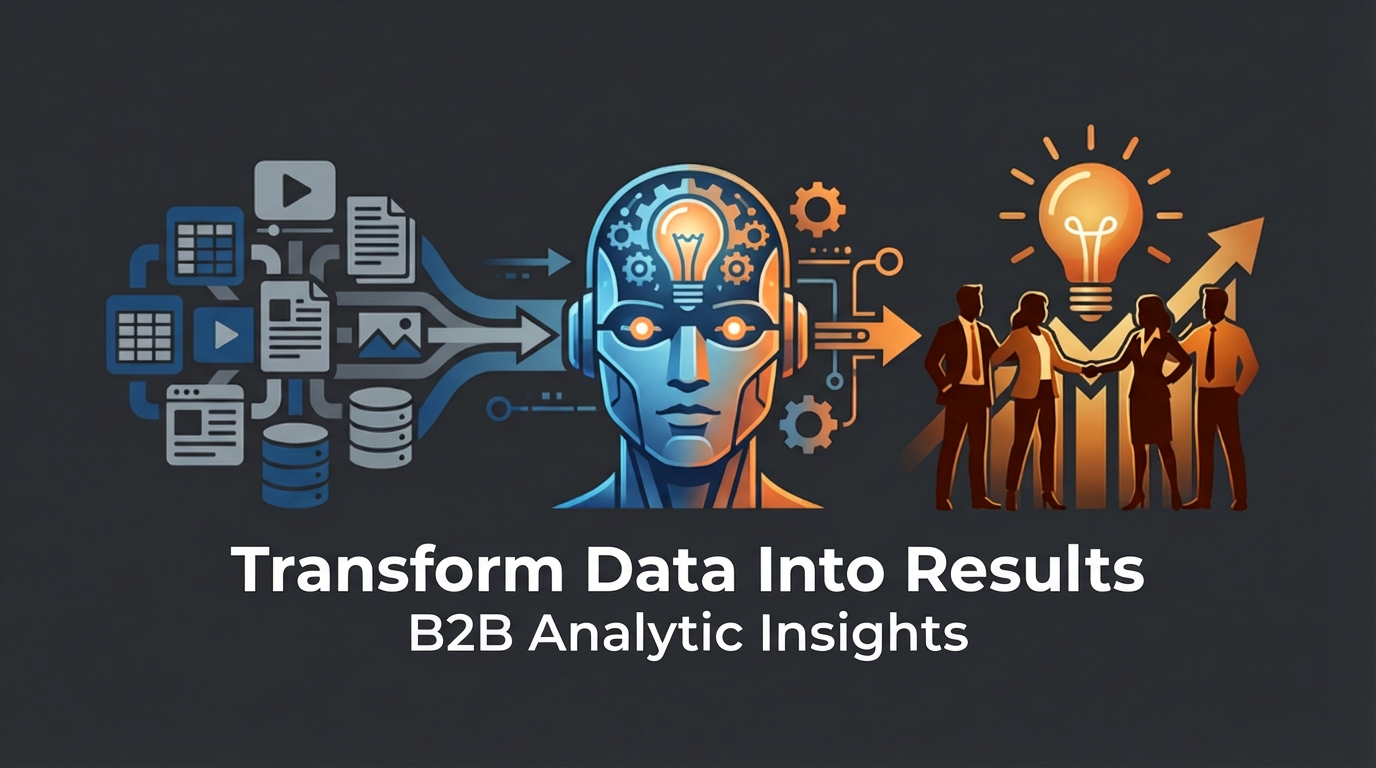

The persistent challenge for any B2B organization, regardless of its sector – be it credit risk management, financial services, or complex enterprise operations – lies not just in acquiring new business, but critically, in retaining the customers it has painstakingly won. The cost of acquiring a new customer far outweighs the cost of retaining an existing one. This fundamental economic truth underscores the imperative of robust customer retention analytics. For too long, this has been a reactive discipline, a desperate scramble to placate a dissatisfied client on the brink of departure. The landscape is shifting. We are now at an inflection point where advanced analytics, powered by AI, is transforming this from a defensive posture into a proactive, strategic advantage. This is the era of churn prediction at scale.
The Evolving Landscape of Customer Retention
Historically, customer retention efforts were largely informed by intuition and post-hoc analysis. We analyzed past churn, identifying patterns that were, by definition, too late to influence. This meant significant resources were often poured into “save” campaigns, which, while sometimes successful, were inherently inefficient and emotionally draining. The metrics were often binary: did they churn or not? The ability to quantify risk and predict future behavior with precision was limited. This reactive approach often amplified customer dissatisfaction, creating a vicious cycle.
Today, the conversation has dramatically evolved. We are moving beyond simple historical analysis to sophisticated predictive modeling. This isn’t about guesswork; it’s about leveraging vast datasets to identify subtle signals, predict future behavior, and intervene before a customer even considers leaving. This is the essence of an analytics transformation in customer retention. The goal is to shift from understanding why customers left, to proactively identifying those likely to leave and understanding the precise levers to pull for their retention.
The High Cost of Customer Attrition
The economic implications of customer churn are stark. For subscription-based businesses, the impact is directly quantifiable in lost recurring revenue. For credit risk departments, a defaulting customer represents a direct financial loss and an amplification of portfolio risk. In enterprise operations, a lost client can mean not only lost revenue but also lost strategic partnerships and reputational damage. Bain & Company research consistently highlights that even a modest 5% improvement in customer retention can lead to profit increases ranging from 25% to an astonishing 95%. This is not an incremental gain; it’s a fundamental uplift in profitability driven by a more strategic approach to customer relationships. For C-suite executives, understanding these numbers is paramount. It translates directly into the bottom line, influencing growth strategies and shareholder value.
The Limitations of Traditional Approaches
Traditional methods of customer retention analysis often relied on rule-based systems or basic segmentation. These approaches struggled with the sheer volume and complexity of modern B2B data. They lacked the nuance to detect early warning signs across diverse customer interactions. For instance, a drop in a customer’s usage of a particular feature within a SaaS platform, or a slight shift in the sentiment of their support communications, might go unnoticed by a human analyst or a simple rule. These granular signals, however, are precisely what advanced AI models can identify and interpret, turning them into actionable insights. The time-to-insight was often too long with traditional methods, meaning any intervention was inherently reactive.
In the realm of customer retention analytics, the article “The Power of Analytics: Transforming Data into Meaningful Actions” offers valuable insights that complement the discussion on churn prediction at scale. By exploring how businesses can leverage data analytics to drive actionable strategies, it highlights the importance of understanding customer behavior and preferences, which is crucial for effective churn management. For a deeper dive into how analytics can enhance customer retention efforts, you can read the article here: The Power of Analytics: Transforming Data into Meaningful Actions.
AI’s Role in Predictive Churn Modeling
The advent of advanced AI and machine learning frameworks has fundamentally redefined our capacity for churn prediction. We are no longer observing patterns after the fact; we are actively forecasting future behavior with remarkable accuracy. This shift has profound implications for how businesses approach customer retention, moving it from a cost center to a strategic growth driver.
Building Sophisticated Predictive Models
Modern churn prediction systems are a testament to the power of integrated machine learning. These aren’t single, monolithic models; they employ comprehensive, multi-model approaches. This often includes sophisticated feature engineering to extract meaningful variables from raw data, techniques like SMOTE oversampling to address imbalanced datasets (where churned customers are typically a minority), and ensemble methods. We’re seeing remarkable performance metrics here: F1-scores as high as 0.84 and AUC-ROC values of 0.918 on typical enterprise datasets. This means the models are not only good at identifying churners but also at distinguishing between those who will churn and those who will not. Furthermore, soft-voting ensembles are crucial for optimizing performance thresholds, allowing us to strike the right balance between precision (minimizing false positives – predicting churn when it won’t happen) and recall (minimizing false negatives – failing to detect actual churn). This is critical for efficient resource allocation.
Identifying Key Predictive Indicators
The core of AI’s impact lies in its ability to detect subtle behavioral signals that were previously invisible or too complex for human analysis to discern. For SaaS platforms, these indicators can include declining engagement frequency, a reduction in purchase value over time, unusual patterns in support ticket submissions, negative sentiment detected through sentiment analysis of customer communications, and stagnation in the adoption of key features. In financial services and credit risk, these might manifest as changes in payment patterns, reduced account activity, or shifts in communication urgency. Using techniques like SHAP (SHapley Additive exPlanations) analysis, we can now identify the most influential features driving churn predictions. Typically, contract type, customer tenure, and the quality of technical support consistently emerge as highly impactful. This goes beyond simple correlation; it highlights causal drivers we can influence.
The Power of Risk Scoring and Segmentation
AI empowers us to move beyond a binary “churn/no-churn” decision. Churn risk scores, typically on a 0-100 scale, provide a granular understanding of individual customer risk profiles. These scores allow for sophisticated segmentation, categorizing customers into distinct groups based on their predicted likelihood of churn within specific timeframes, such as 30, 60, or 90 days. This enables a differential treatment strategy, a hallmark of sophisticated customer lifecycle management. High-risk customers (e.g., score 85+) can receive immediate, personalized outreach from account managers. Moderate-risk customers (e.g., score 45) might be enrolled in automated, yet personalized, re-engagement campaigns focused on specific value propositions or product updates. This data-driven approach ensures that retention resources are deployed precisely where and when they are most effective. This is data-driven decision making in action at its finest.
Real-World Business Impact and ROI
The theoretical elegance of AI-powered churn prediction translates directly into tangible, measurable business outcomes. The impact is not speculative; it is demonstrably improving retention rates and driving profitability across various B2B sectors. The conversation here is about ROI, the language of the C-suite.
Quantifiable Churn Reductions
Subscription-based businesses have been among the earliest and most enthusiastic adopters, reporting significant churn reductions, often in the range of 25-40% within just six months of implementing predictive analytics. This isn’t a minor tweak; it’s a substantial improvement in revenue stability. For e-commerce companies, the impact is seen in enhanced customer lifetime value (CLV), with AI-powered personalized retention campaigns leading to 15-25% increases in CLV. This implies that customers are not only staying longer but are also spending more over their relationship with the business. As previously stated, the economic principle is clear: even minor improvements in retention yield disproportionately large increases in profitability.
Enhancing Customer Lifetime Value Through Proactive Engagement
The true power of AI in churn prediction lies in its early intervention capability. Predictive models can identify customers at risk weeks, and sometimes even months, before they would have actively signaled their intent to depart. This allows for proactive, tailored interventions that are significantly more effective than reactive “save” campaigns. A customer who feels valued and understood, and whose minor issues are addressed before they escalate, is far less likely to churn. This proactive approach not only improves retention rates but also demonstrably reduces marketing costs associated with large-scale, less targeted retention efforts. It allows for a more efficient allocation of marketing and customer success budgets, directly impacting the bottom line. The time-to-insight is now a time-to-action, a critical differentiator.
Strategic Implications for Financial Services and Operations
In the realm of credit risk, accurate churn prediction can translate to better portfolio management, reduced provisioning for bad debt, and more effective cross-selling of financial products. For enterprise operations, it means increased customer satisfaction, stronger partnerships, and a more predictable revenue stream, allowing for better long-term planning and resource allocation. The ability to forecast which clients are likely to expand their business also becomes a strategic advantage, informing sales and account management efforts. This holistic view of the customer lifecycle, powered by analytics, becomes a competitive differentiator.
Implementing AI for Churn Prediction at Scale
The successful adoption of AI for churn prediction is not merely a technological endeavor; it’s an organizational transformation. While the technology is powerful, its effectiveness hinges on its integration into business processes and the ability to foster a data-driven culture.
The Importance of Data Quality and Integration
The foundation of any effective AI model is high-quality, well-integrated data. This means ensuring that data from disparate sources – CRM systems, transaction logs, support interactions, product usage telemetry, and even external market data – are clean, standardized, and accessible. For organizations grappling with legacy systems or data silos, an analytics transformation begins with a robust data strategy. This often involves investing in data warehousing, data lakes, and robust ETL (Extract, Transform, Load) processes. Without a solid data foundation, even the most advanced AI algorithms will struggle to deliver accurate and reliable insights. The sophistication of the models is only as good as the data they are fed.
Building a Data-Driven Culture and Skillsets
Beyond technology, a successful analytics transformation requires a cultural shift. It necessitates fostering a mindset where decisions are informed by data and insights, rather than solely by intuition or past practices. This means equipping teams with the necessary skills, both technical and analytical. It involves training customer success managers on how to interpret churn scores and act on them, training marketing teams on how to leverage predictive insights for personalized campaigns, and empowering analytics leaders to drive strategic initiatives. Recognition that analytics requires both cutting-edge technology and deep human expertise is paramount. This includes addressing any organizational change management challenges that arise from adopting new processes and technologies.
Agile Deployment and Continuous Improvement
Modern AI platforms offer remarkable scalability, supporting deployments from nimble startups to Fortune 500 enterprises. Cloud-based solutions can handle billions of data rows and enable batch or real-time prediction updates, ensuring models remain relevant and accurate. A crucial aspect of successful implementation is embracing agile methodologies for model deployment and refinement. This involves continuous monitoring of model performance, automated data refresh cycles, and regular retraining of models to adapt to evolving customer behaviors and market dynamics. This iterative process ensures that the churn prediction system remains a dynamic, evolving asset, rather than a static implementation. The time-to-insight is not a one-time achievement but an ongoing commitment to data-driven optimization.
In the realm of customer retention analytics, understanding churn prediction at scale has become increasingly vital for businesses aiming to enhance their strategies. A related article that delves deeper into this topic is available on B2B Analytic Insights, where the implications of AI on customer behavior and retention metrics are thoroughly explored. For those interested in learning more about the transformative power of data analytics in this area, the article can be found here. This resource provides valuable insights that complement the discussion on how AI is reshaping the landscape of customer retention.
Overcoming Challenges and Ensuring Responsible AI Use
While the promises of AI in churn prediction are significant, it’s essential to approach adoption with a clear understanding of potential challenges and a commitment to responsible implementation. Not every solution is a panacea, and a measured, strategic approach is key to unlocking true value. The focus must remain on leveraging AI as a tool to enhance human decision-making, not replace it entirely.
Navigating the Complexity of Implementation
The implementation of AI for churn prediction is not a plug-and-play solution. It requires significant investment in technology, data infrastructure, and skilled personnel. Organizations may encounter challenges in integrating AI models with existing business workflows, ensuring data privacy and security, and overcoming resistance to change among staff. A phased implementation approach, starting with pilot programs and clearly defined use cases, can help mitigate these risks. For instance, a credit risk department might pilot its churn prediction model on a specific segment of its loan portfolio before rolling it out enterprise-wide. This allows for learning and adaptation. It’s also important to acknowledge that while AI can predict with high accuracy, it doesn’t inherently understand the why behind every prediction without further investigation.
The Ethical Imperative: Fairness and Transparency
As AI becomes more deeply embedded in business processes, ethical considerations become paramount. This is particularly true in areas like credit risk, where biased algorithms can lead to discriminatory outcomes. Ensuring fairness, transparency, and accountability in AI models is not just good practice; it’s essential for maintaining customer trust and regulatory compliance. Techniques like SHAP analysis contribute to transparency by explaining the drivers of individual predictions. Organizations must proactively audit their models for bias and ensure that AI is used to augment human judgment, providing context and support, rather than making final decisions in isolation, especially in sensitive areas.
AI as an Augmentation, Not a Replacement
It is crucial to frame AI’s impact as an augmentation of human expertise, not a wholesale replacement. The sophisticated insights generated by AI models are most powerful when combined with the experience and judgment of human analysts, account managers, and customer success professionals. For example, a high churn risk score generated by an AI model is a powerful alert, but it is the human who understands the customer’s specific relationship, their business context, and the nuanced approach needed for effective engagement. The goal is to empower individuals with better information, enabling them to make more informed decisions and build stronger customer relationships. This synergy between AI and human intelligence is where the true analytics transformation thrives. We must resist the temptation of tech hype and focus on practical, value-generating applications.
Strategic Recommendations for C-Suite and Analytics Leaders
The journey towards effective churn prediction at scale is a strategic imperative for any B2B organization. It requires foresight, investment, and a commitment to a data-driven future. For C-suite executives and analytics leaders, the path forward involves a clear understanding of the potential and a pragmatic approach to implementation.
Prioritize a Unified Data Strategy
The bedrock of any successful analytics transformation is a robust, unified data strategy. Leaders must champion initiatives that break down data silos, ensure data quality, and create a centralized, accessible data infrastructure. This is not merely an IT project; it is a fundamental business enabler that underpins all advanced analytics capabilities, including churn prediction. Without this, efforts will be fragmented and suboptimal.
Invest in Advanced Analytics Capabilities and Talent
Organizations must proactively invest in both the technology and the human capital required for sophisticated AI and machine learning. This includes adopting scalable cloud platforms for data processing and model deployment, and critically, nurturing or acquiring talent with expertise in data science, machine learning engineering, and advanced analytics. Recognize that this requires a blend of technical prowess and business acumen.
Foster a Culture of Data-Driven Decision Making
The most advanced AI models are rendered ineffective if their insights are not acted upon. C-suite leaders need to actively cultivate a culture where data-driven decision making is the norm. This means empowering teams to leverage predictive insights, providing the necessary training and tools, and establishing clear processes for translating analytical findings into actionable retention strategies. Reward employees who demonstrate proficiency in using data to drive business outcomes.
Implement with a Focus on ROI and Continuous Improvement
When implementing churn prediction solutions, always maintain a sharp focus on measurable ROI. Define clear KPIs – churn reduction percentages, CLV increases, and cost savings – and track them meticulously. Embrace an agile approach to model deployment and refinement, recognizing that the landscape of customer behavior is constantly evolving. Time-to-insight must lead to time-to-action and ongoing optimization. This iterative process ensures sustained value generation and keeps the organization ahead of the curve. By strategically leveraging AI for churn prediction, businesses can move from reactive damage control to proactive, profitable customer retention.