
The ground beneath us shifts. It always has. But today, the pace is faster. The connections are deeper. And the stakes for managing counterparty risk are higher than ever. Traditional reviews, honed for a different era, often fall short. They miss the signals in the noise. They focus on what was, not what is becoming. Our job is to see farther. To understand the interconnectedness. To act with precision. This is about securing our organizations. It’s about informed decisions now.
We’ve all performed them. The annual review. The quarterly check. We look at credit scores. We examine financial statements. We tick boxes. This is necessary. It’s a foundation. But the foundation is cracking under new pressures. Complex financial instruments. Rapid market movements. Global supply chain disruptions. These factors introduce dynamics that a static review simply cannot grasp. We need to move beyond the checklist. We need to incorporate intelligence that reflects the real-time nature of risk.
Concentration Risk: The Hidden Killer
Think about it. We often limit exposure to a single entity. That’s sensible. But what about the concentration within a sector? Or within a specific segment of the supply chain? A review that only looks at direct exposure misses the ripple effects. Imagine a critical supplier to several of our key counterparties. If that supplier falters, the impact cascades. This hidden concentration risk is insidious. It grows in the shadows of our standard reporting. We need diagnostic analytics to uncover these connections. We need to understand the spiderweb, not just individual threads.
Wrong-Way Risk: The Insidious Correlation
This is a term that’s gaining urgency. Wrong-way risk is when a counterparty’s creditworthiness deteriorates precisely when our exposure to them increases. It’s a self-reinforcing loop. Traditional models often assume independence between credit quality and exposure. This is a dangerous assumption in stressed markets. Think of a derivative trade. If the market moves against us, our exposure increases. If the counterparty’s financial health also declines during that same market stress, our problem compounds. This isn’t just a theoretical concern. Market events have shown this repeatedly. We need predictive analytics to identify these correlated risks before they materialize.
Interconnectedness: A Systemic Problem
Our counterparties don’t operate in isolation. They are nodes in a vast network. We need to map this network. We need to understand who relies on whom. The defaults of seemingly distant entities can trigger failures closer to home. The Archegos event was a stark reminder. It wasn’t just about one firm. It was about the complex web of prime brokerage relationships and the speed at which contagion spread. This requires looking at broader market sentiment and systemic indicators. Descriptive analytics can show us snapshots. But we need more. We need to understand the flow of risk through the system.
Beyond Annual Checks: The Need for Real-Time Intelligence
The world doesn’t wait for our calendar. Market shocks can happen overnight. Credit events can unfold in hours. Relying on infrequent reviews is like navigating a storm with yesterday’s weather report. We need to shift our perspective. We need to build systems that provide continuous monitoring. This is not about surveillance. It’s about proactive awareness. It’s about having the data to make informed decisions in the moment.
The Urgency of Daily Reporting
Industry groups have been calling for this for years. Daily counterparty risk reports are no longer a nice-to-have. They are essential. This doesn’t mean drowning in data. It means surfacing critical changes. It means flagging potential issues early. We need tools that can distill complex exposures into actionable insights. Diagnostic analytics help us understand why a flag has been raised. Prescriptive analytics then guide us on what to do about it. This shift allows us to manage risk proactively, not reactively.
The Impact of Recent Market Stress
We’ve seen it. The regional bank failures in 2023. The UK LDI crisis. The pandemic. The war in Ukraine. Each event served as a brutal stress test for our assumptions. We learned that even seemingly safe assets can carry hidden counterparty risk. Corporate treasurers, often accustomed to the stability of money market funds, discovered this reality. The failure of a depositary bank or a shake-up in the short-term funding markets can expose significant risks. These events force us to re-evaluate our definitions of safety and our assessment of counterparty resilience.
Regulatory Scrutiny: A Necessary Evolution
Regulators are not just catching up. They are pushing the industry forward. The April 2024 guidance from the Basel Committee on CCR management is significant. It signals a global trend towards tighter oversight. This isn’t about compliance for its own sake. It’s about acknowledging the systemic importance of sound counterparty risk management. We need to be prepared for increased scrutiny. We need robust processes. And we need data-driven insights to support our risk assessments. This is an opportunity for us to lead by demonstrating best practices.
Enhancing Due Diligence and Collateral Management

The emphasis on enhanced due diligence and collateral management is not new. But the fervor behind it is. These are no longer just back-office functions. They are front-line defense mechanisms. We need to dig deeper than ever before. And we need to be more agile with our collateral.
Deepening Counterparty Checks
What does “deep” mean? It means looking beyond the immediate financials. It means understanding the counterparty’s business model. Their strategic direction. Their operational resilience. We need to assess their own counterparty and funding risks. We need to understand any reliance on specific, potentially fragile supply chains. This requires qualitative analysis supported by quantitative data. It’s a blend of traditional credit analysis with forward-looking intelligence.
Collateral as an Active Tool
Collateral should not be static. It needs to be managed dynamically. This means more frequent valuation. It means understanding the liquidity and marketability of the collateral itself. In times of stress, the value of certain collateral can evaporate. We need clear closeout procedures. And we need to ensure these procedures are tested and understood. The Archegos situation highlighted the critical importance of swift and efficient closeout. It’s not just about holding collateral; it’s about being able to access its value effectively when needed.
Harnessing Intelligence for Better Decisions

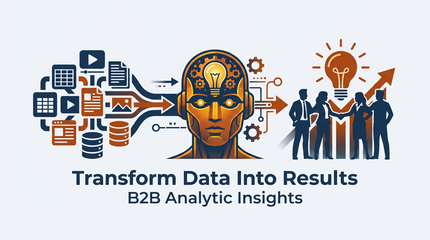
We are awash in data. The challenge is transforming that data into actionable intelligence. This is where modern analytics and a forward-thinking approach become critical. We need to move from simply reporting what happened to predicting what might happen and guiding our actions.
Descriptive Analytics: The Foundation of Understanding
This is our starting point. Who are our counterparties? What is our current exposure? What are the historical trends? Descriptive analytics answer these fundamental questions. They provide the baseline. They paint a picture of our current landscape. This is vital for setting initial limits and understanding our exposures today.
Diagnostic Analytics: Uncovering the “Why”
Once we understand what happened, we need to know why. Why did a particular counterparty’s credit score dip? Why did exposure to a specific sector increase? Diagnostic analytics help us drill down. They identify the root causes. They uncover the hidden concentrations and interdependencies we discussed earlier. This moves us from observation to understanding.
Predictive Analytics: Anticipating Future Risk
This is where we shift from looking back to looking forward. Predictive analytics use historical data and current trends to forecast future outcomes. What is the probability of a counterparty default in the next six months? Will a specific market shock impact our key relationships? This intelligence allows us to anticipate problems before they arise. It informs our strategy and our proactive risk mitigation efforts.
Prescriptive Analytics: Guiding Our Actions
The ultimate goal is to move from prediction to prescription. What is the optimal course of action to mitigate a specific risk? Should we reduce exposure? Increase collateral? Diversify our counterparty base? Prescriptive analytics provide data-driven recommendations. They help us make the best possible decision in a complex and uncertain environment. This is where data truly serves the decision and transforms into tangible results.
AI-Driven Analytics: The Next Frontier in Expertise
| Metrics | Data |
|---|---|
| Counterparty Name | XYZ Corporation |
| Exposure Amount | 10,000,000 |
| Credit Rating | AAA |
| Collateral Type | Corporate Bonds |
| Netting Agreements | Yes |
Artificial intelligence is not a magic wand. But it is a powerful amplifier of our own expertise. AI-driven analytics can process vast amounts of data at speeds far beyond human capacity. They can identify subtle patterns and correlations that might otherwise go unnoticed. We are talking about enhancing our human judgment, not replacing it.
Uncovering Non-Obvious Relationships
AI can ingest diverse data sets. Financial statements, market news, supply chain disruptions, even social media sentiment. It can then identify subtle correlations between these seemingly unrelated factors. This is how we can uncover hidden wrong-way risk or identify emerging systemic vulnerabilities. This goes beyond traditional econometric models.
Real-Time Risk Scoring and Monitoring
Imagine continuously updated risk scores for every counterparty. Scores that adjust in real-time based on market events and new information. This level of dynamic monitoring is becoming achievable with AI. It provides an unprecedented level of awareness. It allows for instant identification of deteriorating creditworthiness or increasing exposure.
Enhancing Decision Intelligence at Scale
Credit and finance professionals are making decisions involving thousands of commercial entities. AI-driven analytics can support this scale. They can flag the most critical areas for review. They can provide detailed insights to inform those reviews. This empowers our teams to focus their valuable time and expertise where it is most needed. It’s about augmenting our decision-making capabilities. It’s about making better, more informed decisions, faster. Our decades of experience are invaluable. AI can help us apply that experience more effectively, in a world that demands constant adaptation and insight. We are leading, but we are also collaborating. This is the path forward.