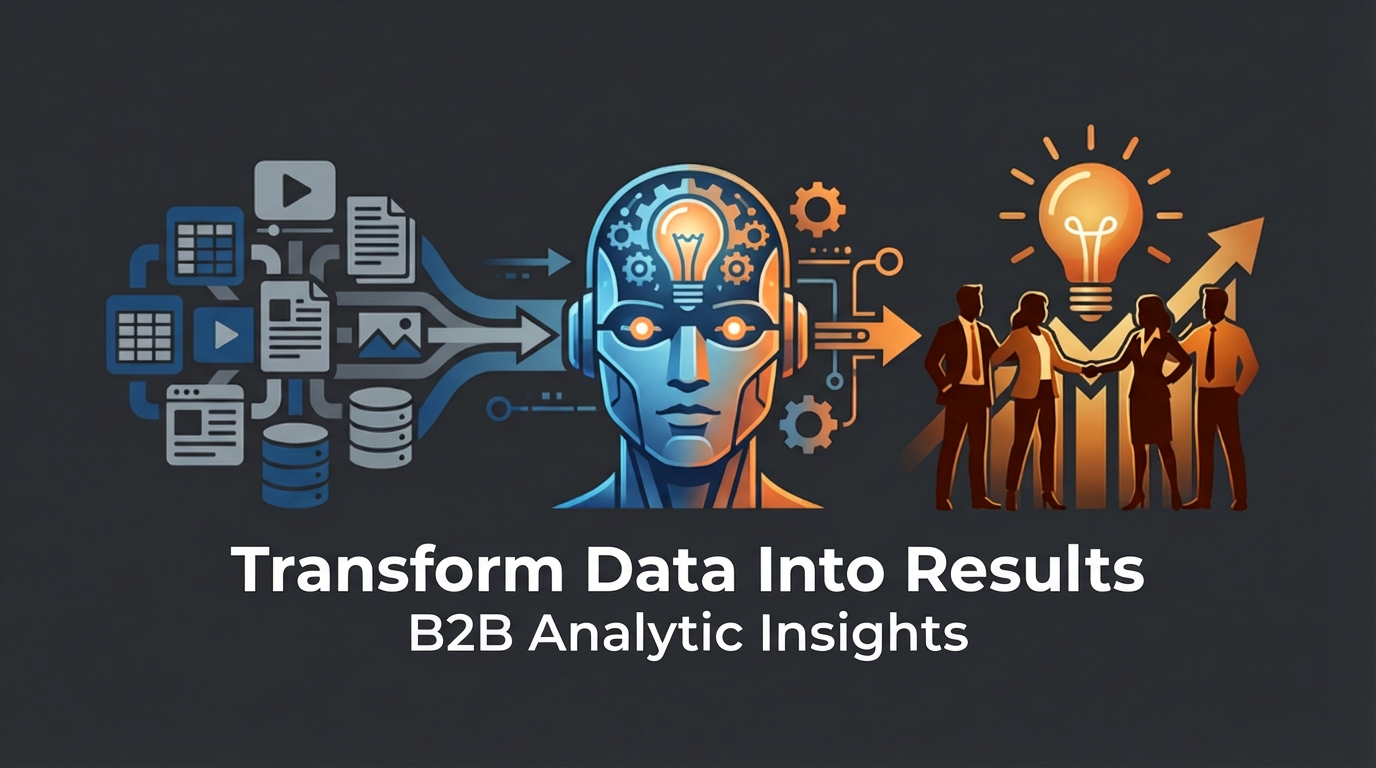
- Strategic Foundation: Effective data analysis begins by defining clear business objectives and integrating disparate raw data sources into a unified, high-quality foundation through rigorous cleaning.
- Exploratory Analysis: Using Exploratory Data Analysis (EDA) techniques, including univariate, bivariate, and multivariate analysis, allows leaders to understand individual variables and uncover complex interdependencies.
- Visualization & Detection: Tools like Tableau and Power BI transform complex patterns and statistical anomalies into intuitive visual stories, making it easier for executives to spot trends and outliers.
- Iterative Decision-Making: The path to actionable insights is a cyclical process of refining hypotheses and validating data, ensuring strategic decisions are grounded in empirical evidence rather than speculation.
Table of Contents
- From Raw Data to Insight: A Step-by-Step Guide 📊
- C-suite Executives: Defining Your Analytical North Star 🧭
- Data Collection and Integration: Building Your Comprehensive Data Foundation 🏗️
- C-suite Executives: Refining Your Data for Precision with Data Cleaning and Preparation 🧼
- C-suite Executives: Initial Data Visibility with Profiling and Summary Statistics 📈
- C-suite Executives: Delving Into Individual Variables with Univariate Analysis 🔍
- Executives: Uncovering Relationships with Bivariate and Multivariate Analysis 🔗
- Executives: Data Visualization for Insights , Telling Your Data’s Story 🎨
- Executives: Identifying Patterns and Anomalies , Unearthing Hidden Truths 🕵️♀️
- The Data-to-Insight Workflow: A Strategic Overview 📈
- C-suite Executives: The Iterative Path to Actionable Insights 🔄
- C-suite Executives: Decoding Data for Strategic Advantage 💡
From Raw Data to Insight: A Step-by-Step Guide 📊
In this outline, I pull together from multiple sources creating an easy-to-follow and practicla outline of the journey of data to outcomes. In today’s dynamic business environment, raw data is abundant, yet its true value often remains untapped without a structured approach. As analytics practitioners, we recognize that transforming this raw information into actionable insights is paramount for C-suite executives and senior leaders aiming for data-driven confidence. This comprehensive guide outlines a robust, step-by-step workflow for converting your raw data into strategic intelligence, empowering you to make informed decisions and drive sustained growth.
As W. Edwards Deming wisely stated, “Without data, you’re just another person with an opinion.” We echo this sentiment, emphasizing that opinions, while valuable, must be grounded in empirical evidence. Our methodology, rooted in extensive data science practices, ensures that your strategic initiatives are backed by verifiable insights, not mere speculation.
Understanding the Purpose of Raw Data: Defining Your Objective 🎯
Before diving into any Exploratory Data Analysis (EDA) or Data Analysis, it is critical to define your objective. What specific business questions are you trying to answer? Clarifying your analysis objective from the outset ensures that your efforts with raw data yield meaningful insights, rather than just a collection of statistics. This foundational step guides all subsequent stages of your data journey.
Data Collection and Integration: Building a Comprehensive View 🌐
The journey from raw data to actionable insights begins with diligent data collection and integration. We often gather data from diverse sources such as internal databases, customer relationship management (CRM) systems, surveys, and external APIs. Combining these disparate datasets into a unified view is essential for comprehensive Business Intelligence. Tools like Excel, Python with Pandas, or R are invaluable for this crucial integration phase.
Data Cleaning and Preparation: Ensuring Data Quality 🧼
Messy data can distort results and lead to flawed strategic decisions. Data Cleaning and preparation are paramount. This involves systematically handling missing values, standardizing data formats, and removing duplicates or incorrect entries. Without this rigorous data validation, any subsequent statistical techniques or Machine Learning Models will produce unreliable outcomes. Anant Awasthi and other data science experts consistently emphasize that clean data is the bedrock of sound analysis.
Data Profiling and Summary Statistics: Initial Data Exploration 📈
Once your data is clean, the next step is Data Profiling and computing Summary Statistics. This involves getting an initial overview of your dataset’s shape, basic statistics (mean, minimum, maximum), and data types. Understanding the data distribution, ranges, and overall data quality is essential before deeper analysis. This phase helps in spotting anomalies and identifying potential areas for further investigation, often leveraging Pandas for efficiency.
Univariate Analysis: Understanding Individual Variables 📊
Univariate Analysis focuses on analyzing individual variables within your dataset. For instance, examining the distribution of customer age or product sales. Using descriptive statistics and visualizations like Histograms generated with Matplotlib or Ggplot2, we can understand the central tendency, spread, and shape of each variable’s distribution. This initial exploration is crucial for building a foundational understanding of your raw data.
Bivariate and Multivariate Analysis: Exploring Relationships 🔗
Beyond individual variables, Bivariate Analysis and Multivariate Analysis explore relationships between variables. For example, investigating the correlation between marketing spend and sales revenue. Scatterplots, heatmaps, and correlation coefficients are powerful tools here. These analyses help uncover hidden data patterns, potential causal links, and inform Feature Engineering for predictive models. This step moves us closer to generating truly strategic intelligence.
Data Visualization for Insights: Making Data Speak 🗣️
Data Visualization is indispensable for transforming complex raw data into understandable insights. Creating visual tools like heatmaps, scatterplots, and interactive dashboards using platforms such as Tableau or Power BI allows us to identify patterns, Outlier Detection, and relationships intuitively. Effective visualization makes Data Storytelling compelling, enabling swift comprehension by C-suite executives and senior leaders.
Identifying Patterns and Anomalies: Uncovering Critical Information 🔍
A key outcome of Exploratory Data Analysis is the identification of hidden data patterns, seasonal trends, and statistical anomalies. These findings are critical for accurate modeling and informed decision-making. Whether it’s an unexpected spike in customer churn or a dip in sales for a specific product line, spotting anomalies provides vital business context. Our rigorous approach ensures no critical insight remains undiscovered in your raw data.
Related Video
EDA using Bivariate and Multivariate Analysis | Day 21 – YouTube
Exploratory Data Analysis (EDA) through Bivariate and Multivariate Analysis examines relationships between two or more variables, …
Watch Video on YouTube →
C-suite Executives: Defining Your Analytical North Star 🧭
Before any data analysis begins, it is critical to define the purpose and objectives. What specific business questions are you trying to answer? Understanding this initial context ensures that your efforts are focused and yield meaningful insights. For instance, if you aim to optimize customer acquisition, your questions might revolve around identifying the most effective marketing channels or understanding customer lifetime value drivers. This foundational step, often overlooked, is crucial for preventing analytical drift and ensuring that the subsequent steps are aligned with your strategic goals.
At B2B Analytic Insights, we consistently advise our partners to clarify these objectives upfront, leveraging tools like Google’s analytics frameworks to structure their initial inquiries. This process ensures that your work with raw data directly contributes to actionable insights. As W. Edwards Deming famously stated, “Without data, you’re just another person with an opinion.”
“The clarity of your initial business question directly correlates with the precision and impact of your derived insights.” , Anant Awasthi
Related Video
17 Most Important Questions Data Analytics For Business Decisions
17 Most Important Questions Data Analytics For Business Decisions | 3rd Semester | MBA | KMBN IT01 #studywithharshit KMBN IT01 Data …
Watch Video on YouTube →
Data Collection and Integration: Building Your Comprehensive Data Foundation 🏗️
The journey from raw data to actionable insights begins with meticulous data collection and integration. Data originates from diverse sources, including internal databases, customer relationship management (CRM) systems, external market reports, surveys, and APIs. The challenge lies in harmonizing these disparate datasets into a unified, comprehensive view. Effective data integration ensures that all relevant pieces of information are available for robust Data Analysis and Business Intelligence initiatives.
C-suite Executives: Unifying Your Data Landscape 🌐
As W. Edwards Deming famously stated, “Without data, you’re just another person with an opinion.” For senior leaders, this means moving beyond anecdotal evidence by building a solid data foundation. We understand that your raw data exists across various platforms. Our approach focuses on seamless integration, preparing your data for subsequent stages of transformation and ensuring a holistic perspective of your business landscape.
From Raw Data to Insight: Strategic Data Sourcing 🎯
Understanding the purpose of raw data is paramount. Before any data collection, clarify what questions you are trying to answer. Are you optimizing customer acquisition, enhancing product development, or mitigating credit risk? Your objectives will dictate your data sources. We help you identify and integrate essential data from platforms like Google Analytics, your internal Excel sheets, and even specialized APIs, ensuring every piece contributes to your analytical North Star.
Data Collection and Integration: Establishing a Unified View 🔗
Data collection and integration form the bedrock of any successful data strategy. Imagine trying to understand customer behavior when purchase history is in one system, and website interactions are in another. Our methodology involves gathering data from diverse sources such as internal databases, customer relationship management (CRM) systems, external market reports, and surveys. We then integrate these datasets into a comprehensive view, using advanced platforms to facilitate effective Data Analysis.
C-suite Executives: Refining Your Data for Precision with Data Cleaning and Preparation 🧼
Raw data, by its very nature, is often messy. It can contain missing values, duplicate records, inconsistent formats, and outright errors. Such imperfections can significantly distort analytical results, leading to flawed conclusions and undermining your actionable insights. At B2B Analytic Insights, we understand that achieving data-driven confidence requires meticulous attention to detail at every stage.
Data Cleaning and Preparation: Ensuring Data Quality for Strategic Decisions
Data Cleaning and preparation involve systematically addressing these issues to ensure the reliability and validity of all subsequent Data Analysis. This critical phase prevents the “garbage in, garbage out” scenario that can plague even the most sophisticated Data Science projects. Investing thoroughly in this stage dramatically improves the accuracy of your Business Intelligence outcomes.
Essential Data Cleaning Techniques for Robust Analysis
Effective Data Cleaning requires a strategic approach. This includes handling missing values through imputation or removal, standardizing data formats (e.g., dates, currencies), and identifying and removing duplicates. Tools like Excel, Python (with libraries such as Pandas), and R are indispensable in this phase, allowing for efficient manipulation and refinement of your raw data.
- Handling Missing Values: Strategies include mean imputation, median imputation, or predictive modeling to fill gaps, or judiciously removing records if data loss is minimal. This ensures your data distribution remains representative.
- Standardizing Data: Ensuring consistent formats for dates, text, and numerical entries across all datasets is crucial for accurate comparisons and aggregations. This is a cornerstone of effective data validation.
- Outlier Detection and Treatment: Identifying and addressing extreme values that could skew statistical techniques, often using advanced Outlier Detection methods. This prevents misleading summary statistics.
- Removing Duplicates: Eliminating redundant entries is vital for data accuracy and integrity, preventing inflated counts or skewed averages in your data patterns.
Data Profiling and Summary Statistics: Understanding Your Data’s DNA
Before deep diving into Exploratory Data Analysis (EDA), it is critical to perform Data Profiling. This involves getting an overview of your dataset’s shape, basic summary statistics (mean, min, max), and information on data types and completeness. Understanding data distribution, ranges, and initial data quality helps in clarifying what questions you are trying to answer, a principle emphasized by quality pioneers like W. Edwards Deming. This foundational step guides your subsequent Data Analysis, ensuring you focus on meaningful actionable insights within the appropriate business context.
C-suite Executives: Initial Data Visibility with Profiling and Summary Statistics 📈
Once your data undergoes rigorous Data Cleaning and Preparation, the next critical phase is to gain immediate visibility through Data Profiling and generating Summary Statistics. This initial deep dive is essential for any C-suite executive or senior leader aiming for true data-driven confidence.
This process involves understanding the dataset’s fundamental shape, key statistical techniques like mean, median, mode, minimum, maximum, and standard deviation. Furthermore, it clarifies data types and distributions, laying the groundwork for more advanced Data Analysis. We leverage powerful tools like Python with its Pandas library for rapid generation of these Summary Statistics, providing immediate insights into central tendency and data distribution.
Exploratory Data Analysis (EDA): Uncovering Initial Data Patterns 🔍
Exploratory Data Analysis (EDA) is paramount here, offering a preliminary yet comprehensive look at your Raw Data’s characteristics before deeper analysis. This phase is crucial for spotting anomalies, understanding intrinsic Data Patterns, and assessing overall data quality. It helps in forming initial hypotheses and guiding subsequent analytical steps, ensuring your Actionable Insights are built on a solid foundation.
This early visibility is a cornerstone for strategic decision-making. By leveraging tools such as Tableau or Power BI for visualization, alongside Matplotlib or Ggplot2 in R, we can transform complex data distribution into intuitive Data Visualization. This allows for quicker identification of outlier detection and potential issues, providing a clear path forward for your Business Intelligence initiatives.
C-suite Executives: Delving Into Individual Variables with Univariate Analysis 🔍
Following comprehensive Data Cleaning and Preparation, and initial Data Profiling, the next strategic step is Univariate Analysis. This critical phase focuses on examining individual variables within your dataset in isolation. It’s about understanding the core characteristics and Data Distribution of each component before exploring more complex relationships. For senior leaders, this provides a foundational understanding, spotting anomalies and ensuring data quality.
Utilizing descriptive statistics and Data Visualization tools like Matplotlib or Ggplot2, we can reveal crucial Data Patterns. For instance, analyzing customer age distribution with a histogram can highlight dominant age groups, while product sales figures can pinpoint top-performing items. Histograms are particularly effective for visualizing the frequency distribution of numerical data, enabling the identification of skewness or multiple peaks, which are vital for Outlier Detection.
This process is a fundamental aspect of Exploratory Data Analysis (EDA), a methodology championed by figures like W. Edwards Deming for building a comprehensive understanding. By gaining a clear picture of individual data patterns, you set the stage for more complex analyses, ensuring that your subsequent Machine Learning Models and Feature Engineering efforts are built on robust, well-understood data. This deep dive into each variable is essential for generating truly Actionable Insights and driving strategic decision-making.
Executives: Uncovering Relationships with Bivariate and Multivariate Analysis 🔗
Following a robust Univariate Analysis, the next strategic phase in your Data Analysis journey is to explore the relationships between variables. This stage is crucial for senior leaders seeking deeper, more Actionable Insights from their Raw Data.
Bivariate Analysis: Examining Paired Relationships 📊
Bivariate Analysis meticulously examines the relationship between two specific variables. For instance, you might investigate the correlation between your marketing spend and subsequent sales revenue, offering a direct insight into campaign effectiveness. We often employ scatterplots, leveraging tools like Matplotlib and Ggplot2, to visualize these connections and spot immediate Data Patterns.
Understanding these paired relationships is a foundational step in Exploratory Data Analysis (EDA). It allows for early Hypothesis Generation, guiding further investigation into potential causal links or strong dependencies within your business context.
Multivariate Analysis: Deeper Interdependencies for Strategic Decisions 📈
To gain a truly comprehensive view, we progress to Multivariate Analysis, which investigates the complex interdependencies among three or more variables. Imagine analyzing how customer demographics, specific product features, and dynamic pricing strategies collectively impact purchase decisions. This provides a far richer understanding than isolated analyses.
This advanced Statistical Technique is vital for uncovering subtle Data Patterns and interconnections that are not apparent when variables are viewed in isolation. Correlation coefficients are instrumental here, quantifying both the strength and direction of these intricate relationships, moving beyond simple observations to data-backed conclusions.
This stage is critical for identifying dependencies, understanding potential causality, and generating sophisticated hypotheses that can inform Predictive Analysis or the development of advanced Machine Learning Models. Leveraging platforms such as Python with Pandas, or R, allows us to conduct these complex analyses efficiently, transforming Raw Data into strategic Business Intelligence.
Executives: Data Visualization for Insights , Telling Your Data’s Story 🎨
Data Visualization transcends mere chart creation; it’s about transforming complex data patterns into intuitive, easily digestible visual narratives. At B2B Analytic Insights, we leverage tools like Tableau and Power BI to craft compelling visual stories from your Raw Data.
Uncovering Relationships with Visual Tools 🔗
Effective visualizations, such as heatmaps, histograms, scatterplots, and dynamic dashboards, are powerful for identifying patterns and spotting anomalies. These visual aids help senior leaders understand relationships that would remain hidden in raw numerical tables, bridging the gap between Statistical Techniques and practical Business Intelligence. This is a crucial step in Exploratory Data Analysis (EDA).
Driving Decision-Making Through Data Storytelling 📈
Our approach emphasizes Data Storytelling, ensuring that your visualizations clearly communicate key findings to stakeholders. This facilitates quicker comprehension and more confident decision-making, converting Raw Data into Actionable Insights. Leaders like W. Edwards Deming have long championed the power of understanding data through clear communication.
Executives: Identifying Patterns and Anomalies , Unearthing Hidden Truths 🕵️♀️
Exploratory Data Analysis (EDA) is instrumental in identifying Data Patterns, seasonal trends, outliers, and Statistical Anomalies within your datasets. These insights are critical for accurate modeling and robust decision-making. At B2B Analytic Insights, we understand that proactive identification is a cornerstone of effective Data Science.
Spotting Anomalies: Beyond the Obvious
Consider an unexpected spike in website traffic. This might indicate a successful marketing campaign or a potential bot attack, requiring further investigation. Outlier Detection techniques, often leveraging Python libraries like Pandas, are employed to pinpoint unusual data points. These could signify errors or unique events that significantly impact your Raw Data analysis.
Refining Hypotheses and Models with Data Patterns
Understanding these Data Patterns helps in refining hypotheses, informing Feature Engineering, and building more resilient Machine Learning Models. This comprehensive Data Analysis ensures that no critical piece of information is overlooked, providing Actionable Insights for your Business Intelligence strategy. W. Edwards Deming’s principles remind us that “Without data, you’re just another person with an opinion.”
The Data-to-Insight Workflow: A Strategic Overview 📈
At B2B Analytic Insights, our strategic workflow is designed to transform your raw data into actionable insights with precision and efficiency. This systematic approach ensures that every step, from initial data collection to final interpretation, contributes directly to your strategic goals. We believe, much like W. Edwards Deming, that “Without data, you’re just another person with an opinion.”
C-Suite: Defining Your Objective for Focused Analysis 🎯
Before any data analysis begins, the most crucial step is to define your objective. This involves clarifying specific business questions and aligning them with key stakeholders. For instance, are you aiming to reduce customer churn or optimize supply chain efficiency? A clear objective ensures focused analysis and guarantees that the outcomes are directly relevant to your strategic imperatives. This initial stage is often supported by tools like Google for research and internal project management platforms.
Executives: Data Collection and Integration for a Comprehensive View 🌐
Effective data science relies on comprehensive and integrated datasets. This stage involves gathering raw data from diverse sources, including APIs, internal databases, and customer surveys. By integrating these disparate datasets, you achieve a holistic view, effectively reducing data silos within your organization. Tools such as SQL, various API connectors, and robust ETL (Extract, Transform, Load) tools are indispensable here, ensuring all relevant information is accessible for subsequent Exploratory Data Analysis (EDA).
Leaders: Data Cleaning and Preparation for Uncompromised Quality ✅
Messy data can severely distort results, making data cleaning and preparation paramount. This critical phase involves handling missing values, standardizing formats, and removing duplicates to ensure data quality. Without rigorous data validation, any subsequent statistical techniques or Machine Learning Models would yield unreliable actionable insights. Our experts frequently leverage Python Data Analysis libraries like Pandas, along with R and Excel, to meticulously prepare your data for analysis.
Managers: Data Profiling & Summary Statistics , Unveiling Data’s Core 📊
Understanding your data’s intrinsic characteristics is vital. Data profiling and generating summary statistics provide an initial overview of your dataset’s shape, including measures of central tendency (mean, median) and dispersion (min, max). This stage offers immediate visibility into your data distribution and helps identify potential data quality issues early on. Tools like Python (Pandas), R, and Excel are instrumental in this foundational step, setting the stage for deeper Exploratory Data Analysis.
Decision-Makers: Univariate Analysis for Individual Variable Understanding 📉
To gain insights into individual variables, Univariate Analysis is essential. This involves examining one variable at a time, often using descriptive statistics and visualizations such as histograms. By understanding the characteristics and data distribution of each single variable, be it sales figures or customer demographics, you build a solid foundation for more complex analyses. Python (with libraries like Matplotlib) and R (with Ggplot2) are powerful platforms for this type of analysis.
Strategists: Bivariate & Multivariate Analysis , Discovering Relationships 🔗
Moving beyond individual variables, Bivariate Analysis and Multivariate Analysis explore the relationships between two or more variables. This is where data patterns truly emerge, allowing you to uncover correlations, dependencies, and potential causal links. For example, you might analyze the relationship between marketing spend and sales revenue. Identifying these connections is crucial for feature engineering in Machine Learning Models and for generating impactful hypotheses. We utilize Python (Matplotlib, Seaborn) and R (Ggplot2) to illuminate these complex interdependencies.
Executives: Data Visualization for Intuitive Understanding and Communication 🎨
Data visualization transforms complex data into easily digestible formats, making it accessible for all stakeholders. Creating compelling charts, graphs, and interactive dashboards allows for intuitive understanding and effective communication of data patterns, outlier detection, and trends. Visual tools are indispensable for spotting anomalies that might otherwise go unnoticed. Platforms like Tableau, Power BI, and Python libraries such as Matplotlib and Seaborn enable powerful data storytelling, ensuring your insights resonate across the organization.
C-Suite: Interpreting and Acting on Insights for Strategic Decisions 🚀
The final, yet most critical, stage is to interpret the derived insights within your specific business context and translate them into actionable strategies. This is where raw data truly becomes a strategic asset, driving informed business decisions and fostering data-driven confidence. Developing clear recommendations, backed by robust Exploratory Data Analysis, ensures that your organization can proactively address challenges and capitalize on opportunities. Our solutions empower you to move from analysis to tangible outcomes, utilizing tools like PowerPoint, Canva, and internal reporting platforms to present your findings persuasively.
Our systematic workflow ensures a seamless transition from raw data to actionable insights. This table summarizes the critical stages and their strategic importance:
| Stage | Key Activities | Strategic Benefit | Primary Tools |
|---|---|---|---|
| 1. Define Objective | Clarify business questions, align with stakeholders. | Ensures focused analysis, relevant outcomes. | Google, internal project management tools |
| 2. Data Collection & Integration | Gather from diverse sources (APIs, databases, surveys). | Comprehensive data view, reduces silos. | SQL, API connectors, ETL tools |
| 3. Data Cleaning & Preparation | Handle missing values, standardize formats, remove duplicates. | Ensures data quality, prevents skewed results. | Python (Pandas), R, Excel |
| 4. Data Profiling & Summary Statistics | Generate basic stats (mean, median, min, max), understand data distribution. | Initial data visibility, identifies data quality issues. | Python (Pandas), R, Excel |
| 5. Univariate Analysis | Analyze individual variables, use histograms. | Understand single variable characteristics. | Python (Matplotlib), R (Ggplot2) |
| 6. Bivariate & Multivariate Analysis | Explore relationships between two or more variables. | Uncover correlations, dependencies. | Python (Matplotlib, Seaborn), R (Ggplot2) |
| 7. Data Visualization | Create charts, graphs, dashboards for data patterns. | Intuitive understanding, effective communication. | Tableau, Power BI, Python (Matplotlib, Seaborn) |
| 8. Interpret & Act | Derive actionable insights, recommend strategies. | Translates data into business decisions. | PowerPoint, Canva, internal reporting platforms |
C-suite Executives: The Iterative Path to Actionable Insights 🔄
The journey from raw data to actionable insights is inherently iterative, demanding continuous refinement and exploration. At B2B Analytic Insights, we emphasize this cyclical process, ensuring your organization moves beyond mere data observation to strategic application. This approach involves constant iterative questioning, hypothesis generation, and meticulous trend spotting.
Unlocking Value: Defining Your Raw Data’s Purpose
Before diving into any data analysis, it’s critical to understand the purpose of your raw data. What specific business questions are you trying to answer? We guide you in clarifying these objectives, ensuring that every step of your Exploratory Data Analysis (EDA) aligns with your strategic goals and drives meaningful insights.
Mastering Data Collection and Integration
Effective data analysis begins with robust data collection and integration. Our experts assist you in gathering data from diverse sources, whether it’s internal databases, external APIs, or market surveys. Combining these disparate datasets into a cohesive view is paramount for comprehensive analysis and generating a complete picture of your operational landscape.
Data Cleaning and Preparation: The Foundation of Reliable Insights
Messy data can severely distort your results. Missing values, duplicates, and inconsistent formats are common challenges. We implement systematic data cleaning processes, including handling missing values, standardizing data formats, and removing duplicates, to ensure your raw data is pristine and reliable for subsequent analysis. This stage is crucial for any successful data science initiative.
Data Profiling and Summary Statistics: Your Initial Data Overview
Gaining an early overview of your dataset is essential. We help you understand your data’s shape, basic summary statistics such as mean, minimum, and maximum values, and overall data quality. This initial data profiling, often leveraging tools like Pandas in Python, helps you grasp data distributions, ranges, and potential issues before deeper statistical techniques are applied.
Univariate Analysis: Deconstructing Individual Variables
Analyzing individual variables, known as univariate analysis, is a foundational step. Whether examining customer demographics or product sales figures, we use descriptive statistics and visualizations like histograms to understand each variable’s data distribution. This helps in spotting anomalies and understanding the central tendency of your data.
Bivariate and Multivariate Analysis: Uncovering Relationships
Moving beyond individual variables, we explore relationships between different data points. Using scatterplots and correlation coefficients, we help you uncover trends and dependencies between variables, such as the correlation between marketing spend and sales revenue. For more complex scenarios, multivariate analysis provides even deeper insights into interconnected factors.
Leveraging Data Visualization for Intuitive Insights
Data visualization is key to transforming complex data patterns into intuitive insights. We utilize powerful tools like Tableau and Power BI, alongside Python libraries such as Matplotlib, to create compelling visuals. Heatmaps, histograms, and scatterplots reveal hidden data patterns, outliers, and relationships, making your data accessible and actionable for decision-makers.
Identifying Patterns and Anomalies: The Core of EDA
Exploratory Data Analysis (EDA) excels at revealing hidden patterns, seasonal trends, and critical outliers or anomalies within your raw data. Our methodologies ensure that your organization can identify these crucial elements, which are vital for accurate predictive analysis, machine learning models, and informed strategic decision-making. We help you spot these data patterns with precision.
Data Validation and Storytelling: Ensuring Robustness and Impact
As you uncover new data patterns or statistical anomalies, new questions will inevitably arise, prompting further exploration and refinement. This cyclical process, often involving data validation of findings, ensures your insights are robust and continually evolving. Effective communication of insights, often through compelling data storytelling using tools like PowerPoint or Canva, is the final, equally crucial step. Our role at B2B Analytic Insights is to partner with you through this entire workflow, ensuring your organization not only understands its data but also leverages it to achieve tangible business outcomes.
C-suite Executives: Decoding Data for Strategic Advantage 💡
At B2B Analytic Insights, we understand that C-suite executives and senior leaders require clarity and precision when navigating the complex world of data. This section addresses common inquiries, providing foundational knowledge essential for transforming raw data into actionable insights.
What is Exploratory Data Analysis (EDA)? 🔍
Exploratory Data Analysis (EDA) is the indispensable first step in any robust Data Science initiative. It employs statistical techniques and graphical representations to uncover patterns, spot anomalies, and understand a dataset’s key features. Our objective with EDA is to investigate data without prior assumptions, identify trends, detect abnormalities, assess data quality, and generate hypotheses for further research. This process is fundamental for preparing your data for sophisticated Machine Learning Models and ensuring your strategic decisions are built on solid ground.
Why is Data Cleaning so important for Business Intelligence? 🧹
Data Cleaning is not merely a technical step; it is vital for maintaining the integrity of your Business Intelligence. Raw data often contains errors, missing values, duplicates, and inconsistencies that can significantly distort analytical results and lead to inaccurate conclusions. As W. Edwards Deming famously stated, “Without data, you’re just another person with an opinion.” Systematic cleaning, including handling missing data, standardizing formats, and removing duplicates, ensures your data is accurate, reliable, and suitable for meaningful analysis. This process enhances the integrity of your Data Validation and underpins credible Predictive Analysis.
What tools are commonly used for Data Visualization? 📈
For effective Data Visualization, several powerful tools are widely used across industries. Tableau and Power BI are industry leaders for creating interactive dashboards and reports, providing executives with intuitive access to complex Data Storytelling. For programming-based visualizations, Python libraries like Matplotlib and Seaborn, along with R‘s Ggplot2, offer extensive customization and flexibility. Even Excel remains a valuable tool for simpler visualizations and quick data exploration, especially for initial Summary Statistics.
How do you identify Data Patterns and Statistical Anomalies? 🚨
Identifying Data Patterns and Statistical Anomalies primarily involves Exploratory Data Analysis (EDA) techniques. This includes statistical techniques like examining Summary Statistics, checking Data Distribution with histograms, and using scatterplots for Correlation Coefficients. Data Visualization plays a key role, allowing analysts to visually spot trends, seasonal fluctuations, and outliers. Advanced methods like Outlier Detection algorithms can also be employed to pinpoint unusual data points that deviate significantly from the norm, ensuring your strategic decisions are not skewed by misleading information.
What is the difference between Univariate, Bivariate, and Multivariate Analysis? 🌐
Univariate Analysis examines individual variables to understand their characteristics and Data Distribution, providing a baseline understanding of each data point. Bivariate Analysis explores the relationship between two variables, often using Correlation Coefficients and scatterplots to uncover direct dependencies. Multivariate Analysis, the most complex, investigates the relationships among three or more variables simultaneously. This holistic view of interdependencies and complex data patterns is critical for advanced Machine Learning Models and sophisticated Predictive Analysis, offering a more complete Business Context.
Understanding the Purpose of Raw Data: A Strategic Imperative 🎯
Before any significant Data Analysis, C-suite executives must clearly define the analysis objective. This means asking critical questions such as, “What specific business questions are we trying to answer?” or “What strategic decisions will this data inform?” Without a clear purpose, raw data remains merely information, not a strategic asset. At B2B Analytic Insights, we guide you in establishing these objectives, ensuring that every step of the data journey, from collection to Actionable Insights, is aligned with your overarching business goals. This proactive approach prevents resource waste and focuses efforts on generating truly valuable intelligence.
Data Collection and Integration: Building a Comprehensive View 🏗️
Effective Data Collection and integration are paramount for forming a comprehensive view of your operational landscape. Data originates from diverse sources, including internal databases, customer surveys, transactional systems, and external APIs. The challenge lies in combining these disparate datasets into a unified, coherent structure. Our approach at B2B Analytic Insights emphasizes robust integration frameworks that ensure data consistency and accessibility. This foundational step is critical for subsequent Exploratory Data Analysis (EDA) and ultimately, for deriving Actionable Insights that drive strategic growth. We help you navigate this complexity to build a single source of truth.
Data Cleaning and Preparation: Ensuring Data Integrity for Insights 🛡️
Messy Raw Data is a significant impediment to accurate analysis, often containing missing values, duplicates, or incorrect formats that can severely distort results. As Anant Awasthi of Google emphasizes, “Data cleaning is not a one-time activity, but an ongoing process.” Systematic Data Cleaning and preparation are thus crucial. This involves meticulous handling of missing values, standardizing data formats, and removing duplicates. At B2B Analytic Insights, we implement rigorous Data Profiling and Data Validation techniques to ensure your data is accurate, reliable, and primed for meaningful Data Analysis. This meticulous process enhances the integrity of your Business Intelligence and forms the bedrock for confident decision-making.
Data Profiling and Summary Statistics: Gaining Initial Clarity 📊
Before diving into deep analysis, it is essential to gain an initial overview of your dataset through Data Profiling and Summary Statistics. This involves understanding the dataset’s shape, basic statistical measures such as mean, minimum, and maximum values, and employing functions like Pandas’ `.info()` and `.describe()` in Python Data Analysis. These steps provide crucial insights into data distributions, value ranges, and overall data quality. This preliminary exploration helps identify potential issues early in the Data Analysis workflow, guiding subsequent Data Cleaning efforts and informing the direction of your Exploratory Data Analysis (EDA). It sets the stage for accurate Hypothesis Generation.
Univariate Analysis: Understanding Individual Variables 👤
Univariate Analysis serves as a fundamental step in understanding the characteristics of individual variables within your dataset. This involves analyzing each variable in isolation, such as examining customer age ranges or product sales figures. We leverage descriptive statistics like measures of Central Tendency (mean, median, mode) and dispersion (standard deviation, variance), alongside visualizations like histograms and box plots. These tools help to identify the Data Distribution, detect Outliers, and gain a foundational understanding of each data point’s behavior. This clarity is crucial before exploring more complex relationships, ensuring a solid base for all subsequent Data Analysis.
Bivariate and Multivariate Analysis: Uncovering Complex Relationships 🔗
To move beyond individual variable understanding, Bivariate Analysis and Multivariate Analysis are essential. Bivariate analysis explores the relationships between two variables, such as the correlation between marketing spend and sales revenue, often visualized through scatterplots and quantified by Correlation Coefficients. Building on this, Multivariate Analysis investigates the relationships among three or more variables simultaneously, providing a holistic view of interdependencies. This advanced approach is critical for identifying complex Data Patterns, understanding confounding factors, and extracting deeper Actionable Insights that inform strategic decisions. Such analyses are vital for robust Feature Engineering in Machine Learning Models and effective Predictive Analytics.
Data Visualization for Insights: Transforming Data into Understanding 🖼️
Data Visualization is the bridge between raw data and human understanding, enabling C-suite executives to quickly grasp complex information. We emphasize creating intuitive visual tools like heatmaps, histograms, and scatterplots to identify Data Patterns, outliers, and relationships. Tools like Tableau, Power BI, and even presentations developed in PowerPoint or Canva, facilitate intuitive understanding and compelling Data Storytelling. At B2B Analytic Insights, we transform your data into a narrative that highlights key findings and supports data-driven decision-making, ensuring that insights are not just found, but clearly communicated across your organization.
Identifying Patterns and Anomalies: Precision in Data Analysis 🎯
Identifying Patterns and Anomalies is a critical outcome of thorough Exploratory Data Analysis (EDA). This process reveals hidden trends, seasonal fluctuations, and unexpected outliers that are crucial for accurate modeling and informed decision-making. Whether it’s a sudden spike in customer complaints or an unusual dip in sales, pinpointing these deviations provides early warnings and opportunities for intervention. Our expertise at B2B Analytic Insights involves leveraging advanced Statistical Techniques and Outlier Detection algorithms to ensure no critical insight is missed. This precision allows your organization to react proactively to market shifts and operational challenges, optimizing performance and mitigating risk.