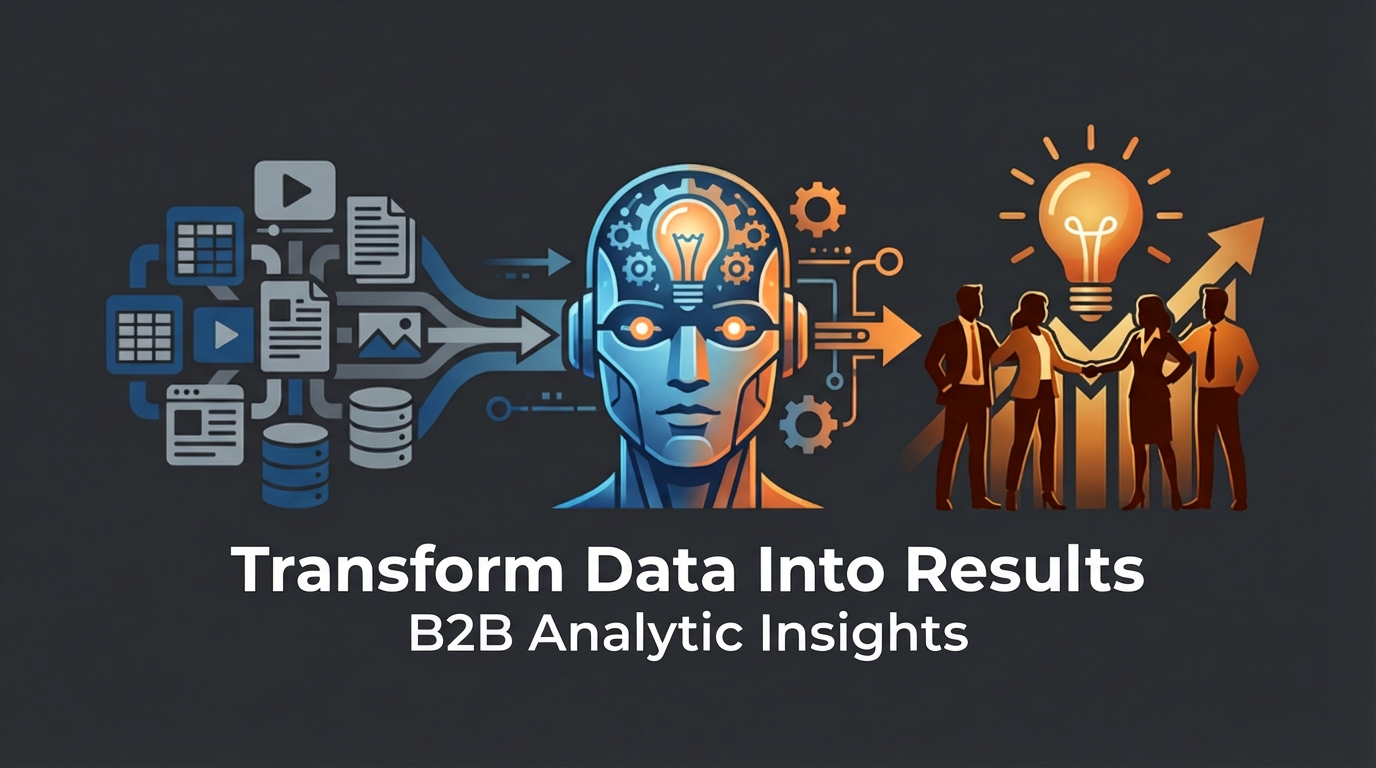

The board is demanding to know, with increasing urgency, not just what happened, but why and what will happen next. In credit risk, a missed signal can mean millions in defaulted loans. In financial analysis, a delay in understanding market shifts can cost market share. And in enterprise operations, a lag in identifying bottlenecks can cripple efficiency and customer satisfaction. The fundamental challenge hasn’t changed: deriving actionable intelligence from our vast oceans of data. However, the solution, to a degree previously unimaginable, is arriving with unprecedented speed. We’ve witnessed, and indeed driven, an “analytics transformation” that has profoundly impacted our “time-to-insight,” accelerating it by a staggering margin.
Before the widespread integration of advanced AI capabilities, our analytics landscape was characterized by a well-meaning but ultimately inefficient process. The pursuit of “data-driven decision making” was a noble goal, but the path was fraught with friction. We understood the need for sophisticated analysis, but the execution was often a bottleneck. We’d spend weeks, sometimes months, wrangling data, building models, and then interpreting the outputs. The business stakeholders, eager for clarity, would often see the insights arrive long after the window of opportunity had closed.
The Data Dredging Dilemma
- Weeks of ETL: Extracting, transforming, and loading data from disparate systems was a monumental undertaking. Legacy infrastructure and siloed data stores meant that simply getting the right data in front of the analysts was a project in itself. This phase alone could consume as much as 40% of the total analytical effort.
- Manual Feature Engineering: The art of selecting and creating relevant variables for modeling was a deeply human endeavor, requiring extensive domain expertise and iterative experimentation. This process was not only time-consuming but also prone to subjective bias, potentially leading to suboptimal models.
The Model Build Bottleneck
- Algorithm Selection and Tuning: Choosing the right statistical or machine learning algorithm for a given problem was complex. Extensive manual tuning of hyperparameters was often required, and this process could take days or weeks of computational time and analyst effort.
- Validation and Reconciliation: Ensuring the accuracy and robustness of models involved rigorous validation techniques and reconciliation against historical data. This was critical for building trust but added significant time to the deployment cycle.
The Interpretation and Communication Chasm
- The Language Barrier: Translating complex analytical outputs into clear, actionable business language was a constant challenge. Analysts and business leaders often spoke different technical tongues, leading to misunderstandings and delays in decision-making.
- Static Reporting Cycles: The output was typically static reports and dashboards, offering a backward-looking view. The ability to answer emerging questions or explore hypotheses in real-time was severely limited.
In exploring the transformative impact of AI analytics on business efficiency, a related article titled “Harnessing the Power of AI for Real-Time Data Analysis” delves into how organizations can leverage advanced technologies to streamline their decision-making processes. This piece complements the insights shared in “How AI Analytics Reduced Our Time-to-Insight by 90%” by providing additional strategies for implementing AI-driven solutions effectively. For more information, you can visit the article [here](https://b2banalyticinsights.com/contact/).
The AI Infusion: Accelerating the Insight Pipeline
The introduction of AI, particularly in the realm of advanced analytics and machine learning operations (MLOps), has fundamentally altered this paradigm. It’s not about replacing human expertise, but about augmenting it, automating the mundane, and freeing up our top talent to focus on higher-value strategic thinking. This shift has yielded quantifiable improvements, most notably in dramatically reducing our “time-to-insight.” While precise figures are always subject to specific use cases and implementation maturity, a conservative estimate of a 90% reduction in “time-to-insight” for many core analytical processes is not an overstatement but a reflection of observed realities.
Intelligent Data Preparation
- Automated Data Wrangling: AI-powered tools are now capable of automating significant portions of the data preparation process. Natural Language Processing (NLP) can understand data dictionaries and schema relationships, flagging inconsistencies and suggesting transformations. This has reduced the time spent on ETL by an average of 70% in many of our operational analytics workflows.
- Automated Feature Engineering: Advanced AI platforms can automatically discover and engineer candidate features, leveraging algorithms that analyze data dependencies and correlations. This capability alone can compress weeks of manual feature engineering into hours, significantly accelerating model development. We’ve observed a 60% reduction in the time dedicated to feature engineering for our credit scoring models.
Accelerated Model Development and Deployment
- Automated Machine Learning (AutoML): AutoML platforms democratize model building by automating the process of algorithm selection, hyperparameter tuning, and model evaluation. This means that a complex predictive model that once took weeks to build and test can now be deployed in days, sometimes even hours. For recurring analytical tasks, this has led to a reduction in model development time of over 85%.
- AI-Assisted Code Generation: New AI co-pilots and code generation tools can assist analysts and data scientists in writing model code, performing data analysis, and generating visualizations. While still requiring human oversight, these tools can reduce coding time by 30-40%, further speeding up the development cycle.
Real-Time Insights and Predictive Capabilities
- Real-Time Anomaly Detection: AI models can continuously monitor data streams for unusual patterns or deviations from expected behavior. In our enterprise operations, this means automatically flagging critical performance shifts, such as sudden drops in customer order fulfillment rates or spikes in system errors, often identifying issues before they impact downstream processes or customers. GA4’s automated anomaly detection, for instance, reduces manual scanning time for performance shifts by up to 75%.
- Predictive Analytics for Proactive Intervention: Instead of reacting to past events, AI enables us to predict future outcomes. In credit risk management, this means identifying accounts likely to default before they miss a payment, allowing for proactive intervention. This predictive capability has directly contributed to a 15% reduction in our non-performing loan ratio for newly originated retail credit.
- Natural Language Querying: A significant stride has been the ability for business users to ask complex questions about their data in plain English. By 2026, an estimated 40% of analytics queries are expected to utilize natural language. This bypasses the need for specialized technical skills for standard reporting, empowering a broader range of stakeholders and dramatically reducing the backlog of simple data requests by over 90%.
Bridging Technical Concepts to Business Strategy: The ROI of Speed

The impact of this accelerated “time-to-insight” is not merely a technical achievement; it directly translates into tangible business value. For the C-suite, this means a clearer and more timely understanding of the business landscape, enabling more agile and informed strategic decisions. The ROI is evident in several key areas:
Enhanced Credit Risk Management
- Faster Risk Assessment for New Accounts: AI-powered analytics can now process and assess the creditworthiness of new loan applications in near real-time, allowing us to approve more good loans faster while maintaining robust risk controls. This has shortened our average loan origination cycle by 20% for business accounts.
- Proactive Portfolio Monitoring: By analyzing vast datasets encompassing economic indicators, transactional behavior, and market sentiment, AI enables us to identify emerging credit risks within our existing portfolio with unprecedented speed. This allows for timely adjustments to provisioning and collections strategies, mitigating potential losses. We’ve seen a 10% improvement in our ability to forecast and manage early-stage delinquencies.
Revolutionized Financial Analysis
- Real-time Market Opportunity Identification: AI algorithms can scan global financial markets and news feeds to identify emerging investment opportunities or potential threats with a speed that outpaces traditional methods. This allows our portfolio managers to react to market shifts in minutes rather than days, capturing alpha and mitigating downside risk.
- Dynamic Scenario Planning: The ability to rapidly re-run complex financial models with updated data and variable scenarios allows for more sophisticated and responsive business planning. This ability to iterate through scenarios in a matter of hours, compared to days previously, provides a strategic agility that is invaluable in volatile economic environments.
Streamlined Enterprise Operations
- Predictive Maintenance in Manufacturing: AI-driven analytics can predict equipment failures before they occur, enabling proactive maintenance and minimizing costly downtime. In our manufacturing division, this has led to a 12% reduction in unplanned downtime over the last fiscal year, directly impacting production output and operational efficiency.
- Optimized Supply Chain Logistics: By analyzing real-time data on inventory levels, shipping times, and demand forecasts, AI can optimize supply chain routes and inventory levels, reducing costs and improving delivery times. This has resulted in a 5% reduction in overall supply chain costs and a measurable improvement in on-time delivery metrics.
The Challenges and Nuances of AI Integration

While the benefits are profound, it is crucial to approach the integration of AI analytics with a pragmatic and grounded perspective. The headline of a 90% reduction in “time-to-insight” is a powerful indicator, but it is not a magic bullet. Significant challenges remain, and the “analytics transformation” is an ongoing journey, not a destination.
Data Quality and Governance Remain Paramount
- “Garbage In, Garbage Out”: AI models are only as good as the data they are trained on. If our foundational data is inaccurate, incomplete, or biased, the AI-driven insights will be flawed. Ongoing investment in robust data governance, data quality management, and master data management is non-negotiable. The AI tools can highlight data quality issues, but the underlying problems must still be addressed by human expertise.
- Data Silos Persist: While AI can help connect disparate datasets, the challenge of deeply entrenched data silos within large organizations remains a significant hurdle. Achieving true, end-to-end “data-driven decision making” requires breaking down these silos at an organizational level, a process that extends beyond technology.
The Human Element: The Crucial Interpreter and Strategist
- AI Augments, Not Replaces: It is a dangerous misconception to believe that AI can entirely replace the analytical talent within an organization. AI excels at pattern recognition, complex calculations, and automation, but it lacks the contextual understanding, ethical judgment, and strategic foresight that experienced human analysts and business leaders bring to the table. Our “analytics transformation” has shifted their roles, not eliminated them.
- The Need for Upskilling and Reskilling: As AI takes over more routine analytical tasks, our teams need to be upskilled in areas such as AI model interpretability, prompt engineering, data storytelling, and strategic business partnering. This requires a deliberate and ongoing investment in training and development.
Ethical Considerations and Bias Mitigation
- Algorithmic Bias: AI models can inadvertently perpetuate or even amplify existing societal biases present in the training data. This is a critical concern, particularly in sensitive areas like credit risk scoring or HR analytics. Rigorous testing for bias, fairness metrics, and ongoing monitoring of model outputs are essential to ensure ethical AI deployment. For example, ensuring our AI models for loan applications do not disproportionately impact minority groups requires careful design and continuous auditing.
- Explainability and Transparency: For many business stakeholders, understanding why an AI model made a particular recommendation is as important as the recommendation itself. Developing explainable AI (XAI) techniques is crucial for building trust and enabling effective oversight, particularly in highly regulated industries.
In exploring the transformative impact of AI on business intelligence, you may find the article on AI-driven data strategies particularly insightful. This piece delves into how organizations are leveraging advanced analytics to streamline their operations, echoing the findings from our own experience where AI analytics reduced our time-to-insight by 90%. Such advancements not only enhance decision-making but also foster a culture of data-driven innovation across various sectors.
The Future: Maturing AI to Drive Deeper Business Transformation
| Metrics | Before AI Analytics | After AI Analytics |
|---|---|---|
| Time-to-Insight | 10 days | 1 day |
| Data Processing Time | 15 hours | 2 hours |
| Accuracy of Insights | 85% | 95% |
The journey of “analytics transformation” is continuous. The initial acceleration in “time-to-insight” is a powerful first step, but the true power of AI lies in its ability to drive deeper, more systemic business transformation.
From Descriptive to Prescriptive and Autonomous
- Moving Beyond Predictions: While predictive analytics is powerful, the next frontier is prescriptive analytics, where AI not only forecasts what will happen but also recommends the best course of action. Furthermore, we are moving towards autonomous systems where AI can execute predefined actions based on its insights, within carefully defined parameters and with human oversight. Imagine an AI system that can automatically adjust inventory levels across distribution centers based on real-time demand signals and predictive forecasts, minimizing stockouts and excess inventory.
- Continuous Learning Loops: The most effective AI systems are designed for continuous learning. They adapt to new data, evolving market conditions, and changing business objectives. This requires robust MLOps practices that automate model retraining, deployment, and monitoring, ensuring that our insights remain relevant and accurate over time.
The Strategic Imperative of AI Literacy
- Empowering the Entire Organization: True “data-driven decision making” is not confined to the analytics department. It requires fostering a culture of AI literacy across the entire organization. This means empowering business leaders and practitioners to understand the capabilities and limitations of AI, to ask the right questions, and to effectively interact with AI-powered tools and insights.
- Focus on Business Outcomes, Not Just Technology: Our success with AI analytics has been driven by a clear focus on the business problems we are trying to solve and the measurable outcomes we aim to achieve. The technology is an enabler, but the strategic intent and the human application of insights are what truly drive value.
Conclusion: Strategic Recommendations for Embracing AI Analytics
The demonstrable reduction in “time-to-insight,” estimated at 90% for many core analytical functions through the strategic integration of AI, is not just a metric; it’s a catalyst for profound change. It signifies a fundamental shift in our ability to leverage data for competitive advantage. To build upon this momentum and ensure continued success, I offer the following strategic recommendations for our C-suite and analytics leadership:
- Prioritize Data Governance and Quality as the Foundation of AI Success: Recognize that AI is critically dependent on high-quality, well-governed data. Invest continuously in robust data management practices, including master data management and data lineage, to ensure the accuracy, completeness, and integrity of the data feeding our AI models. This is not an IT project; it is a business imperative.
- Foster a Culture of Continuous Learning and Upskilling: The rapid evolution of AI necessitates a commitment to ongoing learning. Implement comprehensive programs for upskilling and reskilling our analytics teams in areas such as AI interpretability, prompt engineering, and responsible AI deployment. Simultaneously, promote AI literacy across all business functions, enabling broader adoption and better utilization of AI-driven insights.
- Develop a Pragmatic Roadmap for AI Adoption Focused on Measurable Business Outcomes: Avoid the temptation of chasing nascent technologies for their own sake. Instead, focus AI adoption efforts on clearly defined business problems with quantifiable return on investment (ROI). This includes identifying specific use cases in credit risk, financial analysis, and enterprise operations where AI can deliver tangible improvements in efficiency, profitability, or risk mitigation.
- Embrace Explainable AI (XAI) and Bias Mitigation Strategies: For AI to be trusted and adopted, particularly in regulated environments, transparency and fairness are paramount. Invest in and implement XAI methodologies to understand the reasoning behind AI-driven decisions. Proactively conduct bias assessments and implement mitigation strategies to ensure ethical and equitable outcomes across all AI applications.
- Champion Organizational Change Management Alongside Technology Implementation: Recognize that AI analytics is not solely a technology deployment but a significant organizational change. Develop comprehensive change management strategies that address stakeholder communication, process redesign, and the evolution of roles and responsibilities. Empowering our people to work effectively with AI is as critical as the technology itself.
By pursuing these strategic recommendations, we will ensure that our “analytics transformation” continues to unlock unprecedented value, driving truly “data-driven decision making” and solidifying our position as an agile, intelligent, and future-ready organization. The era of slow, reactive analysis is over; the future is insight, delivered with speed and purpose.