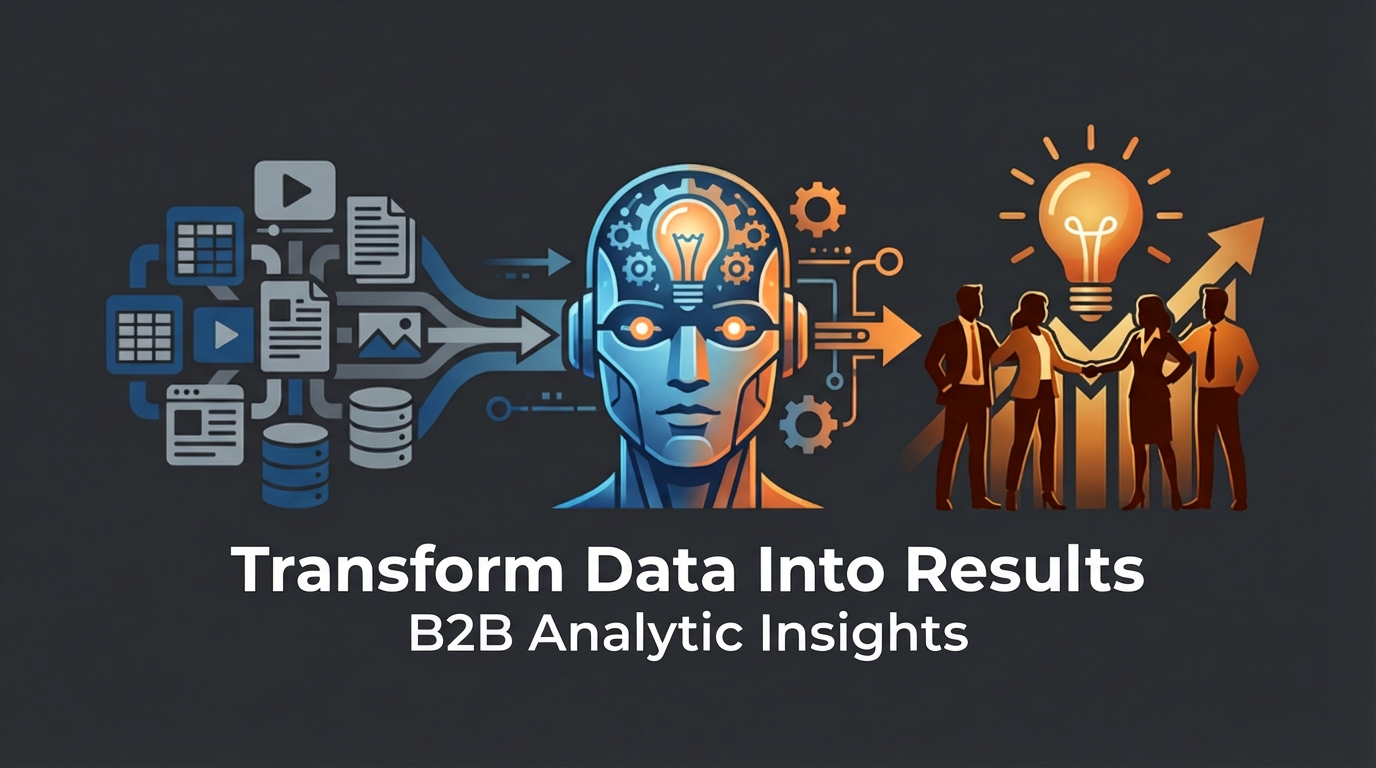

The landscape of enterprise operations is being fundamentally reshaped by AI, demanding a new breed of leadership. We’re not just talking about incremental improvements; this is an analytics transformation that, if navigated correctly, offers unprecedented opportunities for competitive advantage. But it’s also fraught with challenges, requiring a sophisticated understanding of both technical capabilities and organizational dynamics. In sectors like credit risk assessment, financial analysis, and enterprise operations, the stakes are exceptionally high. The question for executives isn’t if AI will impact their business, but how they will lead its integration to drive tangible, measurable outcomes.
The Imperative for Integrated AI Leadership
For too long, AI initiatives have often been siloed, treated as a technical exercise rather than a strategic imperative. This fragmented approach limits impact and hinders organizational learning. What we’re witnessing now is a clear trend towards formalizing AI leadership at the highest levels, integrating it deeply within the enterprise structure. The recent moves by industry titans like JPMorgan, Meta, and Premier, Inc. are not isolated incidents; they represent a fundamental shift in how organizations are approaching artificial intelligence. JPMorgan, for example, is resetting its AI leadership with Scot Baldry, their CTO and CD&A head, now spearheading the bank’s overall AI program and strategy after Teresa Heitsenrether’s retirement. This isn’t just a personnel change; it signifies an embrace of a more unified, strategically aligned AI vision. Similarly, Meta’s elevation of Alex Schultz to its first Chief Data Officer, with responsibility for global AI analytics, alongside his continued oversight of infrastructure analytics, demonstrates a clear organizational commitment to embedding AI at the core of data strategy.
Elevating AI to the C-Suite
The creation of new C-level roles specifically dedicated to AI and analytics underscores a recognition that these capabilities are now central to business strategy. Premier, Inc. appointing Florian Quarré as Chief AI and Analytics Officer, tasked with leading enterprise AI, data, analytics, and technology strategy as part of an “AI-first” push, is a perfect example. This isn’t about having a “head of AI” buried several layers deep in IT; it’s about making AI a peer to other critical functions like finance, operations, and marketing. FactSet further expanded its AI leadership by appointing Kate Stepp as Chief AI Officer alongside Bob Stolte as CTO, explicitly linking AI innovation with technology modernization. This strategic pairing ensures that AI isn’t just developed in a vacuum but is directly integrated into the core technology architecture, ready for scaled deployment. Lloyds Banking Group and other large enterprises are continuing to formalize AI leadership roles, with recent reports of new directors and chiefs overseeing AI, data, and advanced analytics. This isn’t merely a naming convention; it’s about accountability, strategic vision, and the power to allocate resources effectively. The trend is undeniable: a 2026 benchmark survey found that 70% of chief data and analytics officers say they are primarily responsible for AI strategy and operating model, and 70% view the CDO role as successful and established. This tells us that the initial skepticism surrounding these roles has largely dissipated; they are now considered essential and effective.
Strategic Alignment and Operating Models
The integration of AI leadership into the C-suite directly facilitates strategic alignment. When the individual responsible for AI strategy sits at the executive table, they can directly translate business objectives into AI initiatives and vice-versa. This minimizes the risk of developing solutions in search of a problem. Consider the implications for credit risk. A sophisticated AI model that can predict loan defaults with 15% higher accuracy than traditional methods, leading to a 5% reduction in bad debt write-offs, is invaluable. But that impact is only realized if the AI leader has the authority to influence lending policies, integrate models into core banking systems, and train frontline staff. This requires an operating model that supports cross-functional collaboration and decision-making informed by AI insights. The leader’s role is to ensure that the technical capabilities are not just impressive in isolation but translate directly into quantifiable business value, impacting KPIs like risk-adjusted returns and operational efficiency.
In the realm of AI analytics, understanding the nuances of leadership is crucial for executives aiming to harness the full potential of data-driven decision-making. A related article that delves deeper into this subject is available at B2B Analytic Insights, where insights on the intersection of leadership and analytics are explored, providing valuable guidance for executives navigating this rapidly evolving landscape.
Bridging Technical Depth with Business Acumen
The most effective AI leaders possess a rare combination: deep technical understanding of AI/ML concepts and architectures, coupled with an acute grasp of business strategy and operational realities. They don’t need to write the code themselves, but they must understand its implications. This isn’t about speaking in buzzwords; it’s about translating technical feasibility into economic opportunity and operational improvement.
Translating AI Capabilities into Business Value
One of the biggest challenges in analytics transformation is the “last mile” problem – how to effectively move from a proof-of-concept to scaled deployment that delivers measurable ROI. An AI leader must be able to articulate the value proposition of a neural network or a gradient boosting model in terms of increased revenue, reduced costs, or mitigated risk. For instance, in enterprise operations, an AI-powered predictive maintenance system that reduces unplanned downtime by 20% across a fleet of manufacturing assets can translate into millions in annual savings. The AI leader identifies this opportunity, champions the project, and then works with engineering and operations to ensure its successful implementation, monitoring the uptime metrics directly. This requires a business case with clear metrics: a 20% reduction in downtime, leading to a 10% increase in production capacity, yielding an additional $5M in revenue per quarter.
Navigating Data Governance and Ethical AI
Beyond the technicalities, a critical aspect of leadership in AI analytics involves establishing robust data governance frameworks and ensuring ethical AI practices. This isn’t just regulatory compliance; it’s about building trust and ensuring the long-term viability of AI initiatives. In financial analysis, for example, the use of AI in fraud detection or algorithmic trading necessitates stringent controls over data lineage, model explainability, and bias detection. A leader must ensure that models are not only accurate but also fair and transparent, particularly in areas like lending decisions where biased algorithms can lead to significant reputational and legal risks. This means defining clear policies for data acquisition, storage, and usage, as well as establishing frameworks for ongoing model monitoring and auditing. Ignoring these aspects can lead to devastating consequences, undoing years of investment and eroding customer confidence.
Accelerating Time-to-Insight and Driving Data-Driven Decision Making
The ultimate goal of analytics transformation is to accelerate time-to-insight and embed data-driven decision making throughout the organization. This isn’t just about faster reporting; it’s about transforming how decisions are made, from strategic planning down to daily operational choices.
Building Scalable Analytics Platforms
A key responsibility of AI leadership is to architect and implement scalable analytics platforms that can support the demands of modern AI workloads. This involves making critical technology choices, from cloud infrastructure and data warehousing solutions to machine learning operations (MLOps) platforms. Without a robust and integrated data ecosystem, even the most brilliant AI models remain isolated experiments. Consider a global bank needing to consolidate customer data from disparate systems to build a 360-degree view for personalized offerings and fraud detection. An effective AI leader ensures that the underlying data pipelines are efficient, data quality is maintained at a high standard, and the compute infrastructure can handle terabytes of data and complex model training. This directly impacts time-to-insight; if it takes weeks to prepare data for analysis, the competitive advantage is lost. By implementing a modern data stack and automated data preparation tools, the time from raw data to actionable insight can be reduced by 60%, allowing for more agile responses to market changes.
Cultivating a Data-Driven Culture
Technology alone is insufficient. True analytics transformation requires a cultural shift towards data-driven decision making. This involves upskilling the workforce, fostering curiosity, and rewarding experimentation. The AI leader is a change agent, championing data literacy and demonstrating the value of analytics at every turn. They lead by example, insisting on evidence-based arguments and challenging assumptions with data. In a B2B sales context, this might mean moving from anecdotal sales strategies to using AI-driven propensity models to identify the most promising leads, improving conversion rates by 10-15%. The AI leader provides the tools and training, but also cultivates an environment where sales teams trust the data and integrate it into their daily workflows, rather than relying solely on gut feeling. This isn’t a top-down mandate; it’s a collaborative effort to empower every employee with better information.
Navigating the Talent Landscape and Organizational Change
The demand for AI talent is unprecedented, creating significant challenges for organizations looking to build and scale their AI capabilities. Leadership in this space isn’t just about strategy; it’s about attracting, developing, and retaining the right people.
Attracting and Retaining Top AI Talent
Staffing data shows AI leadership roles up 40–60% year on year in FY25, highlighting the fierce competition for skilled professionals. The difficulty in hiring AI talent is ongoing, and it’s not just about data scientists. It’s about AI engineers, MLOps specialists, ethical AI researchers, and business translators. An effective AI leader must have a compelling vision that attracts top talent, beyond just compensation. They must cultivate a culture of innovation, provide opportunities for continuous learning, and offer challenging problems to solve. This means creating centers of excellence, investing in internal training programs, and building partnerships with academia. For instance, developing a specialized AI team focused on optimizing supply chain logistics for a large enterprise, promising a 15% reduction in transportation costs, can be a magnet for talent seeking impactful work.
Driving Organizational Change and Adoption
Implementing AI is not merely a technical deployment; it’s an organizational change initiative. Resistance to new ways of working, fear of job displacement, and inertia are common hurdles. An AI leader must be adept at change management, communicating the benefits of AI clearly, addressing concerns transparently, and involving stakeholders throughout the process. This might involve setting up “AI ambassadors” within different business units, showcasing successful use cases, and celebrating quick wins. In a manufacturing setting, an AI leader might pilot an AI-powered quality control system in one plant, demonstrating a 25% reduction in defects and a 5% increase in throughput, then using that success story to drive broader adoption across the organization. This requires empathy, excellent communication skills, and a genuine commitment to empowering employees through technology, rather than replacing them.
In the rapidly evolving landscape of artificial intelligence, understanding the nuances of AI analytics is crucial for executives aiming to stay ahead. A related article that delves deeper into this topic can be found at B2B Analytic Insights, where insights on how to effectively leverage data-driven decision-making are explored. This resource provides valuable guidance for leaders looking to harness the power of AI in their organizations, ensuring they are well-equipped to navigate the complexities of modern analytics.
Strategic Recommendations for C-Suite Executives
| Metric | Description | Importance for Executives | Current Industry Benchmark |
|---|---|---|---|
| AI Adoption Rate | Percentage of business units implementing AI analytics solutions | Indicates organizational readiness and competitive positioning | 45% |
| Data Literacy Level | Proportion of executives and managers proficient in interpreting AI analytics | Critical for informed decision-making and strategy alignment | 30% |
| AI-Driven Decision Impact | Percentage of strategic decisions influenced by AI analytics | Measures integration of AI insights into leadership decisions | 60% |
| Investment in AI Analytics | Annual budget allocation towards AI analytics tools and training | Reflects commitment to AI capabilities and talent development | 12% of IT budget |
| AI Ethics Compliance | Adherence rate to ethical guidelines in AI analytics deployment | Ensures responsible use of AI and maintains stakeholder trust | 85% |
| Time to Insight | Average time taken from data collection to actionable insight | Impacts agility and responsiveness of leadership decisions | 48 hours |
For C-suite executives, leadership in AI analytics boils down to a few critical strategic imperatives. This isn’t about becoming an AI expert overnight, but about understanding the levers that drive successful AI transformation and making the right investment decisions.
Prioritize Strategic AI Investments with Clear ROI Metrics
Do not chase every shiny new AI tool. Focus on initiatives that directly align with core business objectives and have clear, measurable ROI targets. For a financial institution, this might mean prioritizing AI for enhanced fraud detection (reducing losses by 10%), personalized customer interactions (increasing cross-sell by 5%), or optimizing credit risk models (lowering default rates by 2%). Each project must have a dedicated sponsor, defined success metrics, and a robust framework for tracking progress. Insist on pilot programs that prove value before scaling, always tying investment directly to improved operational efficiency or revenue growth. We’re aiming for impact, not just innovation for innovation’s sake.
Establish a Centralized AI Leadership and Governance Framework
Formalize AI leadership with roles that have executive authority and cross-functional reach, like a Chief AI Officer or Chief Data & Analytics Officer. This central figure should be responsible for developing a unified AI strategy, establishing data governance standards, and ensuring ethical AI practices. This framework will ensure consistency, minimize redundancy, and prevent siloed AI efforts. This doesn’t mean every AI project needs to be run by this central team, but rather that guidelines, best practices, and enterprise-wide architectural standards are consistently applied. Think of it as a playbook for responsible, high-impact AI.
Invest in Data Infrastructure and Talent Development
Recognize that AI is only as good as the data it’s fed and the people who manage it. Make strategic investments in modern data infrastructure, including cloud-native data platforms, robust data quality tools, and MLOps capabilities. Simultaneously, prioritize upskilling your existing workforce through continuous learning programs and strategically hiring top AI talent. This dual investment in technology and human capital is non-negotiable for sustained AI success. Without a solid data foundation and skilled practitioners, your AI initiatives will struggle to move beyond proof-of-concept. This isn’t a one-off expenditure; it’s an ongoing commitment to building a future-proof, data-powered enterprise.