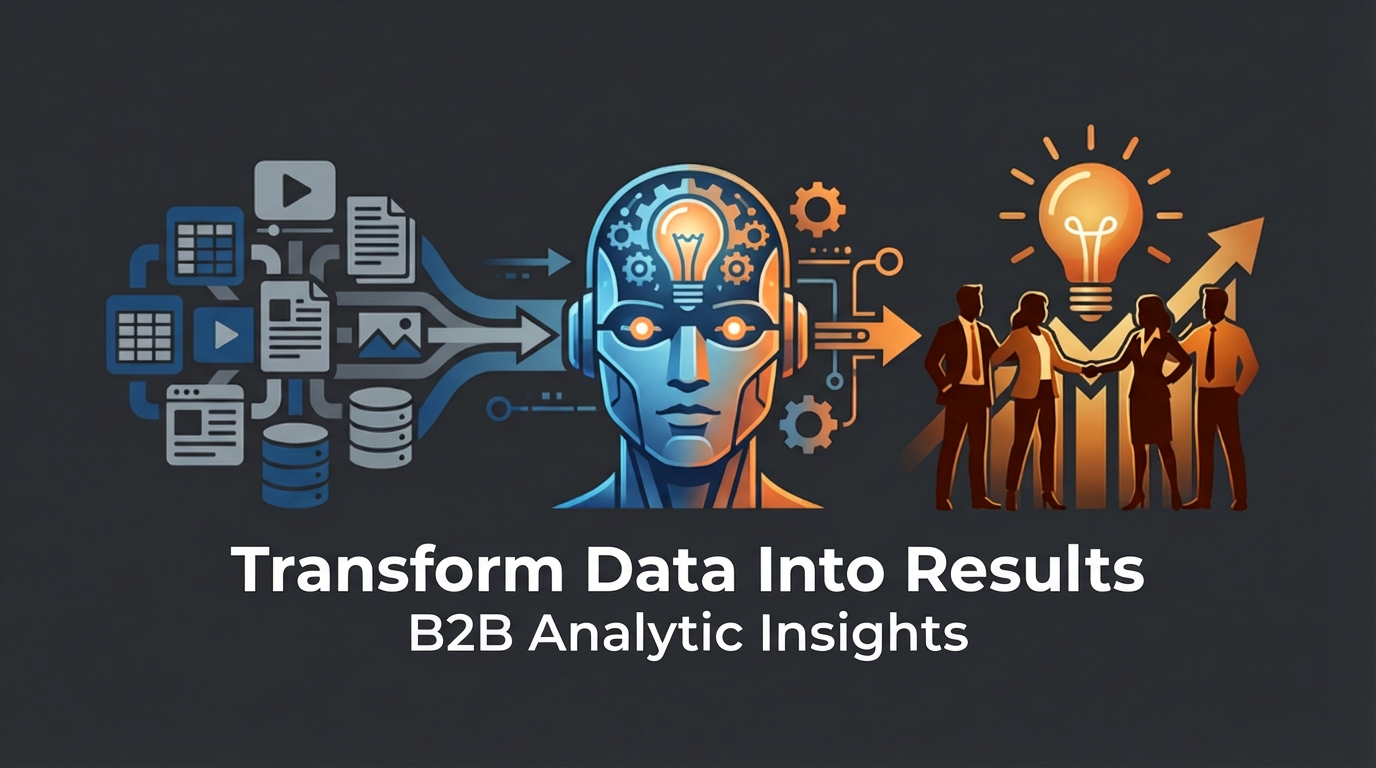

Deep learning is a subset of machine learning that focuses on training artificial neural networks to learn and make predictions from large amounts of data. It is a powerful tool that has gained significant attention in recent years due to its ability to process complex patterns and relationships in data. Financial forecasting, on the other hand, is the process of predicting future financial outcomes based on historical data and market trends. Accurate financial forecasting is crucial for businesses and investors to make informed decisions and mitigate risks.
Understanding the Limitations of Traditional Financial Forecasting Methods
Traditional financial forecasting methods often rely on statistical models and time series analysis techniques. These methods have been widely used for decades and have proven to be effective in many cases. However, they have several limitations and drawbacks. Firstly, traditional methods assume that historical patterns will repeat in the future, which may not always be the case in a dynamic and ever-changing financial market. Secondly, these methods often require a significant amount of manual intervention and expert knowledge to select appropriate models and parameters. This can be time-consuming and prone to human error. Lastly, traditional methods may struggle to handle large amounts of data or complex patterns, limiting their accuracy and efficiency.
Benefits of Deep Learning in Financial Forecasting
Deep learning offers several advantages over traditional financial forecasting methods. Firstly, deep learning models can automatically learn complex patterns and relationships in data without the need for manual intervention or expert knowledge. This makes them more efficient and less prone to human error. Secondly, deep learning models can handle large amounts of data and capture non-linear relationships that may be missed by traditional methods. This allows for more accurate predictions and better risk management. Lastly, deep learning models can adapt and learn from new data, making them more robust and adaptable to changing market conditions.
Types of Deep Learning Models Used in Financial Forecasting
| Deep Learning Model | Description | Advantages | Disadvantages |
|---|---|---|---|
| Recurrent Neural Networks (RNNs) | Models that can process sequential data by using feedback loops. | Can handle variable-length inputs, good for time-series data. | Can suffer from vanishing gradients, slow to train. |
| Convolutional Neural Networks (CNNs) | Models that can process grid-like data, such as images. | Can learn hierarchical representations, good for image data. | May require large amounts of data, can be computationally expensive. |
| Generative Adversarial Networks (GANs) | Models that can generate new data that is similar to the training data. | Can be used for data augmentation, can generate realistic images. | Can be difficult to train, may suffer from mode collapse. |
| Autoencoders | Models that can learn compressed representations of data. | Can be used for data compression, can learn useful features. | May suffer from overfitting, can be difficult to interpret. |
There are several types of deep learning models that are commonly used in financial forecasting. One of the most popular models is the recurrent neural network (RNN), which is designed to process sequential data. RNNs are particularly useful for time series forecasting, as they can capture temporal dependencies and trends in data. Another commonly used model is the convolutional neural network (CNN), which is designed to process grid-like data such as images. CNNs can be used in financial forecasting to analyze patterns and relationships in market data. Lastly, deep belief networks (DBNs) are a type of generative model that can learn hierarchical representations of data. DBNs have been used in financial forecasting to capture complex patterns and relationships in large datasets.
Data Preparation and Preprocessing for Deep Learning in Financial Forecasting
Data preparation and preprocessing are crucial steps in deep learning for financial forecasting. The quality and cleanliness of the data can greatly impact the accuracy and performance of the models. Data cleaning involves removing any outliers, missing values, or errors in the dataset. This ensures that the models are trained on reliable and accurate data. Data normalization is another important step, as it scales the data to a standard range and prevents any biases or distortions in the model. Techniques such as min-max scaling or z-score normalization can be used for this purpose.
Training and Validation of Deep Learning Models for Financial Forecasting

Training deep learning models involves feeding them with historical data and adjusting their parameters to minimize the difference between their predictions and the actual outcomes. This is done through an iterative process called backpropagation, where the models learn from their mistakes and update their weights accordingly. Validation is an important step to ensure that the models are not overfitting or underfitting the data. This is done by splitting the dataset into training and validation sets, where the training set is used to train the models and the validation set is used to evaluate their performance. Hyperparameter tuning is another crucial step in training deep learning models. Hyperparameters are parameters that are not learned by the models themselves, but rather set by the user. Examples of hyperparameters include the learning rate, batch size, and number of hidden layers. Finding the optimal values for these hyperparameters can greatly improve the performance of the models.
Evaluating the Performance of Deep Learning Models in Financial Forecasting
There are several metrics that can be used to evaluate the performance of deep learning models in financial forecasting. One commonly used metric is mean squared error (MSE), which measures the average squared difference between the predicted and actual values. Another metric is mean absolute error (MAE), which measures the average absolute difference between the predicted and actual values. These metrics provide a measure of how well the models are able to predict the future financial outcomes. In comparison with traditional forecasting methods, deep learning models have been shown to outperform in terms of accuracy and efficiency.
Case Studies: Real-World Examples of Deep Learning in Financial Forecasting
There have been several successful implementations of deep learning in financial forecasting. One example is the use of deep learning models to predict stock prices. Researchers have developed models that can analyze historical stock data and make accurate predictions on future stock prices. These models have been shown to outperform traditional forecasting methods and provide valuable insights for investors. Another example is the use of deep learning models to predict foreign exchange rates. By analyzing historical currency data and market trends, these models can make accurate predictions on future exchange rates, helping businesses and investors make informed decisions.
Challenges and Limitations of Deep Learning in Financial Forecasting
Despite its many benefits, deep learning also faces several challenges and limitations when applied to financial forecasting. One challenge is the need for large amounts of high-quality data. Deep learning models require a significant amount of data to learn and make accurate predictions. However, financial data can be limited or noisy, making it difficult to train reliable models. Another challenge is the interpretability of deep learning models. Deep learning models are often referred to as “black boxes” because they are not easily interpretable by humans. This can make it difficult to understand the underlying factors and relationships that drive the predictions. Lastly, deep learning models can be computationally expensive and require powerful hardware to train and run. This can be a barrier for smaller businesses or individuals who do not have access to such resources.
The Future of Financial Forecasting: What’s Next for Deep Learning?
The future of financial forecasting looks promising with the continued development and advancements in deep learning. Researchers are constantly exploring new techniques and models to improve the accuracy and efficiency of financial predictions. One potential future development is the integration of deep learning with other technologies such as natural language processing and sentiment analysis. This would allow for a more holistic approach to financial forecasting by incorporating textual data and market sentiment into the models. Another potential development is the use of deep reinforcement learning, where the models learn from their own actions and experiences in a simulated environment. This could lead to more adaptive and intelligent financial forecasting models. In conclusion, deep learning has the potential to revolutionize financial forecasting by providing more accurate predictions and better risk management tools. However, it is important to acknowledge the challenges and limitations that come with implementing deep learning in this domain. With further research and advancements, deep learning can continue to enhance our understanding of financial markets and improve decision-making processes.