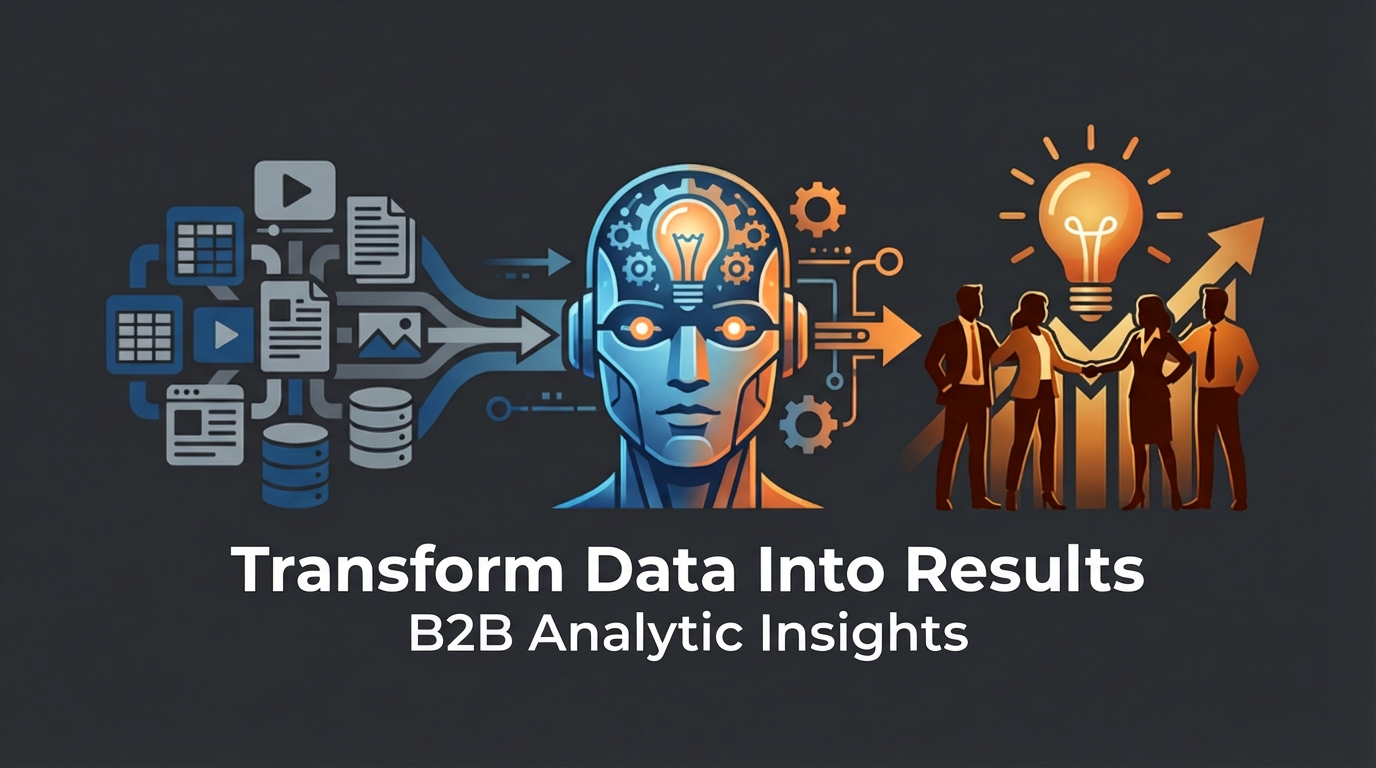

“The credit risk landscape is shifting. We’re no longer just assessing past performance; we’re anticipating future defaults with unprecedented accuracy. This isn’t simply a matter of better algorithms; it’s a fundamental evolution in how we leverage data and intelligence. In today’s competitive B2B environment, the ability to move from a reactive posture—responding to events as they unfold—to a proactive one, anticipating and shaping outcomes, is no longer a differentiator; it’s a prerequisite for survival and growth.”
For decades, our approach to analytics has been akin to observing the world through a rearview mirror. We painstakingly collected data, built sophisticated models, and then delivered reports that explained what happened. In financial analysis, this meant retrospective views on portfolio performance. In enterprise operations, it involved post-mortem analyses of supply chain disruptions. While invaluable, this reactive stance inherently placed us in a position of consequence management, always a step behind the curveball.
The advent of AI, however, is not merely an enhancement to our existing toolkit; it represents a paradigm shift. We are witnessing an agentic AI shift, where AI is evolving from passive tools into intelligent agents capable of autonomous action and complex workflow orchestration. Think of it less like a powerful calculator and more like a team of highly competent consultants, each with specialized expertise, working in concert to achieve strategic objectives. This isn’t science fiction; it’s the emerging reality of an “Agentic Operating System” (AOS) allowing for dynamic adaptation and execution across diverse business environments.
From Data Silos to Semantic Clarity: The Foundation of Proactive Analytics
The irony of the data-rich era is that many organizations remain mired in data fragmentation. A staggering 99% of companies struggle with consistent, reliable metrics across their operations. This fragmentation is the bedrock upon which reactive analytics is built, leading to conflicting insights and delayed interventions. When different departments define “customer churn” in distinct ways, or when credit risk models operate on disparate datasets, the ability to achieve unified, proactive decision-making is crippled.
The foundation of moving to proactive analytics lies in establishing Proactive Infrastructure & Governance. This means architecting systems that not only house data but also imbue it with meaning and structure. A well-defined semantic layer becomes your enterprise’s shared language of data, ensuring that metrics are standardized and understood uniformly across the organization. When every part of the business speaks the same data dialect, the aggregation of intelligence for proactive insights becomes exponentially more powerful.
But it’s not just about the data itself. The rapid advancement of AI necessitates equally advanced safeguards. Proactive governance now extends to building agent safeguards, robust monitoring systems, and embedding responsible AI (RAI) practices from the ground up. This isn’t an afterthought; it’s a scaled, proactive approach to ensure that our AI systems operate ethically, securely, and in alignment with business objectives.
In the context of Strategic Analytics in the AI Era, the transition from reactive to proactive strategies is essential for organizations aiming to leverage data effectively. A related article that delves into this topic is titled “The Power of Analytics: Transforming Data into Meaningful Actions,” which explores how businesses can harness analytics to drive informed decision-making and enhance operational efficiency. For more insights on this transformative journey, you can read the article here: The Power of Analytics: Transforming Data into Meaningful Actions.
Strategic Enterprise Focus: The Upside of AI-Driven Autonomy
The conversation around AI is often framed around efficiency gains. While automation of routine tasks certainly contributes to operational excellence, the true strategic advantage of agentic AI lies in its ability to drive Strategic Enterprise Focus and foster genuine differentiation. Many organizations are only now beginning to grasp this potential, with only 20% currently achieving significant revenue growth through AI-driven strategies. This gap highlights a critical opportunity.
Agentic AI offers the unique capability to move beyond incremental improvements to fundamental business model transformation. Consider customer support: instead of agents merely responding to inquiries, agentic AI can proactively identify at-risk customers, initiate personalized outreach, and even manage complex resolution workflows. In supply chain management, predictive agents can foresee disruptions, reroute logistics in real-time, and optimize inventory levels to prevent stockouts or overages – all before an issue escalates. In R&D, AI agents can accelerate hypothesis generation and experimentation, significantly shortening the time-to-insight for new product development.
This shift requires a top-down approach to AI strategy. It’s no longer about individual teams tinkering with new tools but about a deliberate, enterprise-wide vision for how AI will drive revenue growth and competitive advantage. The power of multi-agent systems, where specialized AI agents collaborate, unlocks capabilities previously unattainable, allowing for dynamic adaptation to market shifts and complex, multi-faceted business challenges.
The Data Strategy Imperative: Building the Bedrock for Proactive AI
The most profound challenge in our journey towards proactive analytics is not a lack of data, but a lack of data readiness. The adage “garbage in, garbage out” has never been more relevant. Without a robust and strategically aligned data strategy, even the most advanced AI capabilities will flounder. This is why Data Strategy Priorities must now center on standardization, governance, and the creation of solid data foundations.
Think of your data as the raw materials for an advanced manufacturing process. If those materials are inconsistent, impure, or poorly organized, the final product will be flawed, regardless of the sophistication of your machinery. Conversely, when data is standardized, with clearly defined definitions and rigorous governance, it becomes the fertile ground upon which proactive AI can flourish.
This involves:
- Standardizing Definitions: Ensuring that key business metrics—revenue, customer acquisition cost, product defect rates, credit default probability—have a single, agreed-upon definition across the entire organization. This eliminates ambiguity and fosters a unified understanding of performance.
- Establishing Robust Governance: Implementing clear policies and procedures for data collection, usage, security, and lifecycle management. This builds trust in the data and ensures compliance with regulations.
- Building Foundational Data Assets: Creating centralized, accessible data repositories or leveraging semantic layers to provide a consistent view of enterprise information. This breaks down silos and enables a holistic perspective.
The current landscape of fragmentation means that many organizations are trying to build proactive AI on shaky ground. Addressing these foundational data issues is not a secondary consideration; it’s the essential prerequisite for any meaningful analytics transformation.
Role Evolution in the Prototype Economy: From Analyst to Advisor
As AI systems become more capable of autonomous execution, the role of the human analyst is also undergoing a profound evolution. We are entering a Prototype Economy, where AI drives faster iteration and outcome-oriented experiences. This doesn’t render human expertise obsolete; rather, it elevates it.
The shift is from a practitioner performing analysis to becoming a strategic advisor. Data analysts, previously tasked with generating reports, will increasingly focus on defining the strategic questions, designing the AI agents and workflows, and interpreting the insights generated by these autonomous systems. The typical data analyst, for instance, might now evolve to become a master orchestrator of AI agents, guiding their actions and ensuring alignment with overarching business goals.
This elevation of the human role means embracing change management within analytics teams. Training and upskilling are paramount. We need to equip our teams with the understanding of agentic AI principles, ethical considerations, and the business acumen to translate AI outputs into tangible strategic gains. The emphasis shifts from doing the analysis to directing and leveraging the analysis performed by intelligent systems. This is the essence of data-driven decision making in the AI era—humans providing the strategic foresight and ethical guardrails, while AI handles the heavy lifting of complex computations and autonomous actions.
In the evolving landscape of business intelligence, the shift from reactive to proactive strategies is crucial for organizations aiming to leverage data effectively. A related article that delves deeper into this transformation is available at B2B Analytic Insights, where you can explore how companies are harnessing advanced analytics to anticipate market trends and enhance decision-making processes. This proactive approach not only improves operational efficiency but also fosters innovation in an increasingly competitive environment.
Embracing the Transformation: A Call to Strategic Action
The journey from reactive to proactive analytics, fueled by the power of agentic AI, is not a simple technological upgrade; it’s an analytics transformation. It requires a holistic approach that integrates technology, strategy, and organizational change.
The challenges are real: overcoming data fragmentation, ensuring responsible AI deployment, and adapting organizational structures and roles. However, the opportunities are immense. Organizations that successfully navigate this transition will unlock unprecedented levels of efficiency, agility, and competitive advantage.
Your strategic recommendations:
- Prioritize Data Foundation: Invest in establishing a robust semantic layer and a unified data governance framework. This is non-negotiable for enabling proactive AI.
- Develop Agentic AI Strategy: Define clear, top-down objectives for how agentic AI will drive revenue growth and differentiation across key business functions.
- Foster a Culture of Continuous Learning: Equip your analytics teams with the skills to design, manage, and interpret AI-driven insights, transitioning them to advisory roles.
- Implement Proactive Governance and Safeguards: Embed RAI principles, monitoring, and agent safeguards from the outset to ensure responsible and ethical AI deployment.
- Focus on Time-to-Insight and Time-to-Action: Redesign workflows to leverage AI for rapid analysis and autonomous decision execution, significantly reducing the lag between insight and impact.
The AI era is here. The question for your organization is not if you will embrace this transformation, but how strategically and how quickly you will move from simply reacting to actively shaping your future. The window for adopting a truly proactive stance is now.