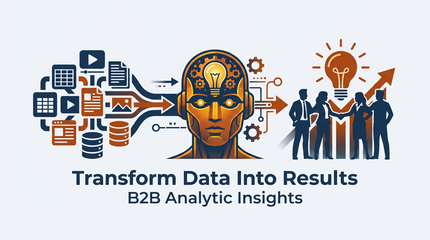
The bedrock of effective analytics is data. Yet, in our quest for profound insights into credit risk, optimized financial operations, and robust enterprise strategies, we consistently hit roadblocks: data scarcity, stringent privacy regulations, and the sheer cost and complexity of obtaining clean, comprehensive real-world datasets. Imagine the strategic advantage if we could conjure data, statistically rich, privacy-preserving, and tailored to our exact analytical needs, with a click. This isn’t science fiction; it’s the burgeoning reality of synthetic data, where AI doesn’t just learn from data, it learns to create it, forging its own training ground for the next generation of predictive models and operational efficiencies.
For too long, our analytics ambitions have been constrained by the data we could painstakingly collect. But what if the very AI models we aim to deploy could, in turn, generate the data necessary to perfect their brethren? This paradigm shift is not just incremental; it’s transformational. Synthetic data is now a mainstream AI training strategy, directly addressing the chronic pain points of data scarcity, privacy constraints, and the prohibitive costs associated with acquiring, cleaning, and labeling real data. It’s a turning point for B2B analytics, particularly in sectors like financial services and supply chain, where data is both gold and a minefield of regulatory and proprietary restrictions.
The traditional analytics pipeline often resembles a bottleneck, with data acquisition and preparation consuming a disproportionate amount of resources. This is where synthetic data enters the arena, offering a compelling business solution to long-standing challenges.
Overcoming Data Scarcity and Cold Start Problems
Consider the challenge of developing a new credit risk model for an emerging market or a niche product. Real-world default events are thankfully rare, making it difficult to train robust models effectively. Or perhaps you’re launching an innovative IoT solution for predictive maintenance; how do you get enough failure data to train your anomaly detection algorithms before you have a large installed base? Synthetic data provides the vital initial training ground. We can generate thousands, even millions, of synthetic loan applications and their associated outcomes, including various default scenarios, allowing us to build and iterate on models far faster than waiting for real-world events. This dramatically accelerates time-to-insight, moving us from concept to validated model in weeks, not years. This isn’t just about speed; it’s about competitive advantage.
Navigating the Labyrinth of Data Privacy and Compliance
GDPR, CCPA, HIPAA, the alphabet soup of privacy regulations has made sharing and using customer data a tightrope walk. For financial institutions analyzing cross-border fraud patterns or healthcare providers developing AI for patient care, real data is often locked down. Synthetic datasets, by their very design, are statistically similar to source data but without personally identifiable information (PII). This allows for privacy-preserving data use in business intelligence, model development, and testing environments, dramatically reducing compliance risk and opening up new avenues for collaboration and innovation. Imagine being able to share a synthetic dataset of anonymized transaction patterns with a third-party cybersecurity vendor to test a new fraud detection algorithm, all while remaining fully compliant with data protection laws. This is not merely a technical solution; it’s an enabler for strategic partnerships and broader analytics transformation.
Reducing Costs and Accelerating Development Cycles
The expense of data acquisition, labeling, and ongoing maintenance can be astronomical. For enterprise operations, think about the cost of generating test data for a complex ERP system upgrade or the burden of creating diverse scenarios for supply chain optimization simulations. Synthetic data dramatically cuts these costs. Instead of paying for costly data collection, anonymization services, or waiting for specific events to occur, we can generate high-quality, relevant data on demand. This translates into faster development cycles, more thorough testing, and ultimately, a quicker return on investment for our AI and analytics initiatives. Companies are seeing a direct correlation between synthetic data adoption and a reduction in model development lead times by 30-50%, a metric that directly impacts our bottom line.
In the realm of artificial intelligence and machine learning, the concept of synthetic data has gained significant traction, particularly for its ability to enhance analytics capabilities. A related article that delves deeper into this topic is available at B2B Analytic Insights, where the implications and applications of synthetic data in various industries are explored. This resource provides valuable insights into how AI-generated data can serve as a robust training ground, ultimately improving model performance and decision-making processes.
The Technical Leap: How AI Generates Its Own Data
This isn’t about random noise; it’s about sophisticated AI models learning the underlying statistical distributions and correlations within real data and then generating new, unique data points that reflect those patterns.
Advanced Generative Models and LLMs as Data Forgers
The advancements in generative AI are at the heart of this revolution. Generative Adversarial Networks (GANs), Variational Autoencoders (VAEs), and more recently, Large Language Models (LLMs) are the engines driving synthetic data creation. Companies like NVIDIA are investing heavily in model families like Nemotron-4 340B specifically designed to generate synthetic data for LLM training. IBM, too, is at the forefront, exploring how synthetic data can improve LLM performance. This isn’t just for text; these principles extend to tabular data, time series, and even image and video data. The key is their ability to understand and replicate complex dependencies that exist within real-world datasets, from the relationship between a customer’s credit score and their repayment history to the subtle correlations in sensor data from an industrial machine.
Quality Assurance: Statistical Fidelity and Representative Data
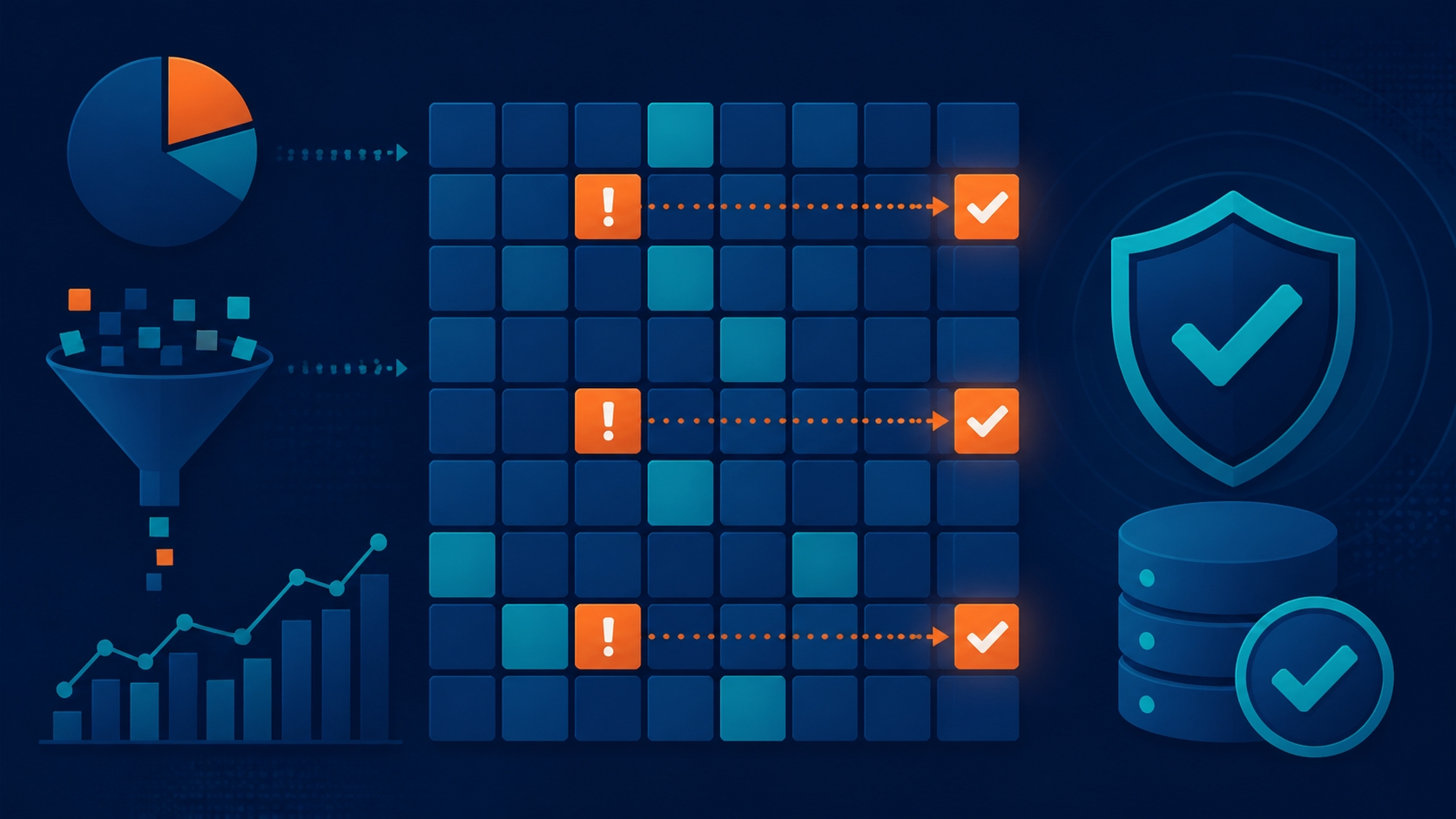
The promise of synthetic data hinges on its statistical fidelity. It must accurately reflect the distributions, correlations, and outliers present in the original data without directly copying it. This is where the technical rigor comes in. Advanced validation techniques, including statistical tests (e.g., KS-tests, chi-squared tests), machine learning model performance comparisons, and expert domain review, are critical. The goal is to produce synthetic datasets that, when used to train a model, result in comparable or even superior performance to models trained on real data. MIT reported that models trained on synthetic video datasets, in certain conditions, even outperformed models trained on real data, particularly when scene-object bias was low. This isn’t a magic wand; it requires careful calibration and continuous monitoring, but the potential is immense.
Navigating the Pitfalls: Challenges and Responsible Deployment

While the potential is undeniable, a mature, strategic approach requires acknowledging and mitigating the inherent risks. We must resist the urge to over-engineer or oversell, focusing instead on pragmatic, value-driven implementation.
The Double-Edged Sword: Amplifying Bias and Model Collapse
A significant concern, and one that recent reporting wisely highlights, is the risk of synthetic data amplifying existing biases or contributing to “model collapse.” If the original data contains biases, say, in lending decisions against certain demographics, a synthetic data generator will learn and replicate those biases. If left unchecked, this could lead to models that perpetuate and even exacerbate unfair outcomes. Furthermore, if synthetic data completely replaces real data too heavily, especially for continuous retraining, models can start to “forget” real-world nuances, leading to a degradation in performance, a phenomenon known as model collapse. This underscores a crucial point: synthetic data is best used as a supplement, a catalyst for growth, rather than a full replacement for real data.
The Imperative of Governance and Quality Control
The rapid expansion of the synthetic data market, with startups, acquisitions, and product launches accelerating, demands a robust framework for governance. We need clear policies and procedures for generating, validating, storing, and using synthetic data. This includes establishing metrics for quality (statistical similarity, utility for downstream tasks), implementing audit trails for synthetic data generation, and defining clear roles and responsibilities. The OECD’s focus on how synthetic data fits within broader AI governance and privacy frameworks signals that regulation and best practices are catching up to innovation. For B2B enterprises, this translates into establishing internal centers of excellence, investing in robust validation tools, and fostering a culture of data literacy and ethical AI. Without strong governance, the promise of synthetic data can quickly turn into a liability.
Strategic Implementation: Bridging Technology and Business Value

To truly harness the power of synthetic data, we must move beyond the technical intricacies and embed it within our overarching business strategy.
Use Cases: From Credit Risk to Operational Excellence
The practical applications are vast and directly address critical business problems. In credit risk, synthetic data can stress-test new scoring models, simulate economic downturns to assess portfolio resilience, and enable rapid A/B testing of new lending products. For financial analysis, it allows us to create realistic market scenarios for back-testing trading strategies or simulating the impact of new regulations on financial products. In enterprise operations, imagine generating synthetic sensor data to train predictive maintenance models for complex machinery, or simulating supply chain disruptions to optimize inventory management without disrupting real-world operations. The time-to-insight for these critical strategic decisions is dramatically reduced, offering a tangible ROI.
Transformation Frameworks: People, Process, and Technology
Adopting synthetic data isn’t just about procuring new software; it’s about analytics transformation. This requires a holistic approach:
- People: We need to upskill our data scientists and analysts in synthetic data generation and validation techniques. We also need to educate business leaders on its capabilities and limitations, fostering realistic expectations. This involves training programs, internal workshops, and a focus on cross-functional collaboration.
- Process: We must integrate synthetic data generation into our existing data pipelines and model development lifecycles. This means establishing clear workflows for data anonymization, synthesis, validation, and deployment. Our MLOps frameworks must evolve to accommodate synthetic data.
- Technology: Investing in robust synthetic data platforms, whether commercial solutions or open-source tools, is essential. This includes capabilities for various data types, robust privacy-preserving techniques, and comprehensive validation metrics. Leading tech companies are actively investing here, and we should be too.
In exploring the innovative realm of synthetic data for analytics, one might find it beneficial to read a related article that delves deeper into the implications of AI-generated datasets. This insightful piece discusses how synthetic data can enhance machine learning models by providing diverse training scenarios, ultimately leading to improved accuracy and efficiency. For more information, you can check out the article on this topic here.
The Path Forward: Strategic Recommendations for C-Suite, Leaders, and Practitioners
| Data Type | Advantages | Challenges |
|---|---|---|
| Synthetic Data | Privacy protection, Cost-effective, Diverse data generation | Quality assurance, Realism, Bias and fairness |
| AI Training | Improved model performance, Reduced data labeling effort | Overfitting, Generalization, Ethical concerns |
The journey into synthetic data is not a sprint, but a strategic marathon.
For the C-Suite: Focus on the ROI. Synthetic data offers a clear path to accelerating innovation, reducing compliance risk, and unlocking new revenue streams through faster model deployment and data-driven insights. Mandate pilot programs in critical areas like fraud detection or credit scoring, focusing on measurable outcomes like reduced time-to-market for new analytical products or demonstrable cost savings in data acquisition. Understand that this is an investment in future competitive advantage, not just a technical trend.
For Analytics Leaders: Champion the integration of synthetic data into your analytics transformation roadmap. Prioritize use cases where data scarcity, privacy, or cost are significant impediments. Invest in the right technologies and, critically, in the training and upskilling of your teams. Establish clear governance frameworks and quality gates for synthetic data, ensuring that it augments, rather than compromises, the integrity of your analytical efforts. Your role is to bridge the technical capabilities with actionable business strategy.
For Practitioners: Dive deep into the technical methodologies. Experiment with various generative models (GANs, VAEs, LLM-based approaches). Become adept at evaluating the statistical fidelity and utility of synthetic datasets. Understand the nuances of bias detection and mitigation. Be the voice of technical rigor, advocating for best practices in data validation and the responsible use of synthetic data, ensuring that we never lose sight of the real-world impact of our models.
Synthetic data is more than a fleeting trend; it’s a fundamental shift in how we acquire, manage, and use data for advanced analytics. By thoughtfully embracing its potential while mitigating its risks, we can unlock unprecedented agility, drive deeper insights, and truly transform our data-driven decision making, propelling our enterprises forward in an increasingly complex and competitive landscape. The AI, indeed, is now creating its own training ground, and we must be ready to cultivate it wisely.