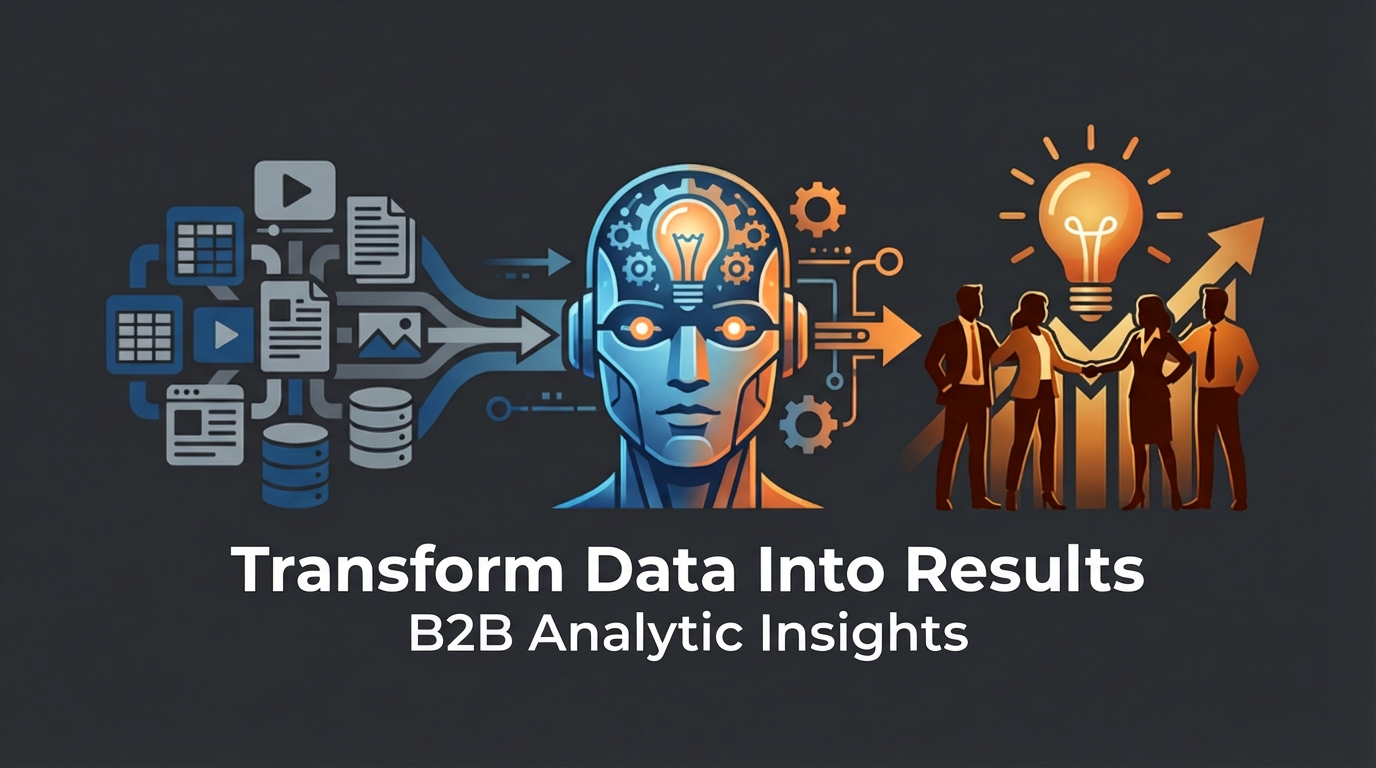

The landscape of business intelligence and strategic decision-making is undergoing a seismic shift. For decades, we’ve spoken about an “analytics transformation,” a journey to embed data-driven decision making into the very fabric of organizations. We’ve invested heavily in infrastructure, honed our data governance, and strived to shorten our time-to-insight. Yet, often, the promise of truly democratized, actionable intelligence has felt just out of reach, like a tantalizing mirage on a well-trodden analytical desert. Now, a new element has entered the equation, a force so potent it’s not merely accelerating this transformation but fundamentally reshaping its trajectory. This is the era we might aptly call the Analytics Renaissance, powered by the unprecedented capabilities of Generative AI.
The core business problems we grapple with haven’t changed at their root: how do we accurately assess credit risk in an increasingly complex global economy? How can we derive deeper, more predictive financial insights that move beyond rearview mirror reporting? How do we optimize enterprise operations for maximum efficiency and agility in the face of constant disruption? For years, our answer lay in more sophisticated algorithms, larger datasets, and more dedicated teams. Today, that answer is being amplified, redefined, and made accessible in ways we could only have dreamed of. Generative AI isn’t just another tool in the analytics toolbox; it’s a paradigm shift, enabling us to tackle these challenges with unprecedented speed, scale, and sophistication. This is not about incremental improvements; this is about a redefinition of what’s possible.
For too long, the bulk of our analytical efforts, particularly in B2B contexts like credit risk and financial analysis for enterprise operations, have been focused on understanding what happened and, with significant effort, why it happened. We’ve built robust descriptive and diagnostic capabilities, the bedrock of sound financial governance and operational oversight. However, the true strategic advantage lies in predicting what will happen and, crucially, prescribing what we should do. Generative AI is proving to be the catalyst for this profound shift.
Accelerating Insights with Autonomous Agents
Consider the traditional workflow for a credit risk analyst. It involves data ingestion, cleansing, feature engineering, model building, validation, and reporting. Each step can be time-consuming, requiring specialized skills and significant manual intervention. Generative AI, moving beyond simple chatbots, is enabling the development of autonomous agents. These are not just responding to prompts; they’re capable of high-level reasoning and executing complex multi-step tasks. For instance, an enterprise operations team might task an autonomous agent with identifying all suppliers exhibiting a heightened risk profile due to geopolitical instability and financial distress, cross-referencing this with their contractual obligations and inventory levels within a single, automated process. This dramatically reduces the time-to-insight from weeks to mere hours, if not minutes. The ability to rapidly synthesize information from disparate internal and external sources – think market sentiment, regulatory filings, and supply chain disruptions – allows for proactive risk mitigation, a critical differentiator in financial analysis.
The Rise of Knowledge Graphs and RAG in Enterprise Analytics
A significant hurdle in AI adoption has always been the “hallucination” problem – AI fabricating information. This is a non-starter for critical B2B functions like credit assessment and financial forecasting. The industry’s pragmatic response, and a key enabler of Generative AI’s enterprise utility, is the widespread adoption of GraphRAG (Retrieval Augmented Generation) patterns. By grounding AI systems with structured knowledge graphs, we ensure that the outputs are not only coherent but factually accurate and contextually relevant. For credit risk analysis, this means an AI can query a knowledge graph containing a company’s financial statements, historical payment data, industry benchmarks, and even news sentiment, to generate a nuanced risk assessment that is directly traceable to its source data. Similarly, in enterprise operations, real-time inventory levels can be linked to production schedules and customer demand forecasts via a knowledge graph, allowing Generative AI to suggest optimal production adjustments. This fusion of structured, reliable data with the generative power of AI creates robust, trustworthy insights. New metrics are emerging, moving beyond simple engagement scores to measure the accuracy and actionability of AI-generated recommendations, a vital evolution in data-driven decision-making.
In the context of the transformative impact of generative AI on various industries, a related article titled “The Future of Data Analytics: Embracing AI Innovations” provides valuable insights into how businesses can leverage these advancements to enhance decision-making processes. This article explores the integration of AI technologies in data analytics and their potential to revolutionize traditional methodologies. For more information, you can read the article here: The Future of Data Analytics: Embracing AI Innovations.
Transforming Operational Efficiency: The Power of AI-Driven Automation
The impact of Generative AI on enterprise operations is less about automating mundane tasks and more about empowering intelligent automation that drives significant ROI. For too long, operational efficiency gains have been incremental. Now, we are witnessing a step-change.
Streamlining Financial Reporting and Analysis
Producing comprehensive financial reports for C-suite consumption is a monumental undertaking. It involves consolidating data from multiple ERP systems, financial planning tools, and regulatory databases. Generative AI can automate the creation of these reports, not just by pulling data, but by synthesizing narratives, explaining variances, and even suggesting strategic implications. Imagine an AI that can generate the quarterly earnings report narrative, highlighting key financial drivers, identifying anomalies in operational spending compared to revenue, and then providing a preliminary analysis of their impact on profit margins. This frees up financial analysts to focus on higher-value activities like strategic financial modeling and executive consultation, rather than the mechanics of report generation. This translates directly to reduced operational costs and a quicker time-to-insight for executive leadership when they need to make critical financial decisions. For a B2B organization, this means faster responses to market shifts and more agile capital allocation.
Enhancing Supply Chain Resilience and Optimization
The fragility of global supply chains has been exposed repeatedly. Generative AI offers a powerful lens through which to build resilience and optimize these complex networks. By analyzing vast datasets encompassing supplier performance, logistics data, geopolitical events, and weather patterns, AI can predict potential disruptions with remarkable accuracy. Furthermore, it can generate alternative sourcing strategies, optimal routing solutions, and even draft contingency plans in real-time. For instance, if a major port experiences a shutdown, an AI can, within moments, identify alternative shipping routes, assess the impact on lead times and costs from different suppliers, and recommend the most viable paths forward, even drafting revised logistics schedules. This is not just about avoiding disruption; it’s about turning potential crises into opportunities for more efficient, cost-effective operations. A 25% increase in infrastructure investment attributed to AI growth[4] signifies the commitment organizations are making to harness these capabilities.
Redefining Credit Risk Assessment: Preciseness in a Volatile World

In the realm of B2B credit risk, precision and foresight are paramount. Generative AI is equipping lenders and businesses with tools to navigate an increasingly intricate financial landscape with greater confidence.
Advanced Predictive Modeling for Creditworthiness
Traditional credit scoring models, while valuable, often struggle to capture the nuanced, forward-looking indicators of creditworthiness. Generative AI, when integrated with GraphRAG approaches, can analyze a far broader spectrum of data – from a company’s digital footprint and customer reviews to its internal innovation pipeline and executive sentiment – and synthesize these into more predictive credit risk assessments. This allows for a more dynamic and granular understanding of a borrower’s ability to repay. Instead of relying solely on historical financial statements, lenders can now gain insights into a company’s adaptability, its market position, and its potential for future growth. This leads to more accurate credit line decisions, reduced defaults, and a healthier overall B2B credit ecosystem. The implications for financial institutions are substantial, potentially leading to a significant reduction in non-performing loans and an increase in lending capacity.
Proactive Identification of Emerging Financial Risks
The volatility of global markets means that emerging financial risks can appear with little warning. Generative AI systems can act as sophisticated early warning mechanisms. By continuously monitoring a vast array of global news, economic indicators, regulatory changes, and social media sentiment, these AI can identify subtle shifts that may signal an increased risk of default or financial distress within a specific industry or for individual companies. For example, an AI might detect a confluence of negative news about a particular sector, coupled with a downturn in a key commodity price, and flag companies within that sector as having a heightened risk profile. This proactive identification allows for timely interventions, such as renegotiating loan terms or seeking additional collateral, before a situation escalates into a significant loss. This represents a move from reactive crisis management to proactive risk mitigation, a hallmark of sophisticated financial analysis. The recognition that analytics requires both technology and human expertise is crucial here, with professionals evolving into “renaissance” roles that combine AI tools with their domain knowledge[5].
The Human Element in the AI Era: Cultivating Renaissance Roles

The narrative of Generative AI often centers on automation displacing human roles. However, the truly transformative impact lies in augmenting human capabilities and fostering new forms of expertise – the “renaissance” roles so often espoused.
Empowering Analysts with AI Co-Pilots
The practitioners on the front lines of analytics – the data scientists, financial analysts, and operations managers – are the ones who will most directly benefit from the intelligent augmentation provided by Generative AI. These AI tools act as sophisticated co-pilots, assisting with tasks that were previously bottlenecks. Instead of spending 80% of their time on data preparation and 20% on analysis, AI can flip this ratio. This allows practitioners to focus on the higher-order thinking: formulating complex hypotheses, interpreting nuanced results, and developing innovative strategies. For example, a business intelligence analyst might use GenAI to rapidly prototype multiple dashboard designs based on user requirements, allowing them to iterate and refine based on immediate feedback, rather than spending days building each iteration from scratch. This also means a much shorter time-to-insight for critical business questions.
Bridging the Gap: Technical Acumen Meets Strategic Vision
The true power of Generative AI in analytics lies in its ability to bridge the often-siloed worlds of technical expertise and strategic business vision. As enterprises move towards enterprise AI integration beyond simple chatbots[2], the demand for individuals who can translate complex AI outputs into actionable business strategies will skyrocket. These are the “renaissance” individuals. They understand the technical underpinnings of AI models, the nuances of data science, and the strategic objectives of the business. They can ask the right questions of the AI, interpret its sophisticated outputs, and articulate their implications to C-suite leaders in a way that drives tangible business outcomes, such as improved ROI on credit portfolios or optimized operational expenditures. This requires a fundamental shift in mindset, recognizing that AI amplifies human intelligence, rather than replacing it. The ongoing investment in data-center and AI infrastructure[4] highlights the foundational support for these evolving roles.
In exploring the transformative impact of generative AI on various industries, a related article that delves deeper into the implications of this technology can be found at B2B Analytic Insights. This resource provides valuable insights into how businesses can leverage advanced analytics and AI to drive innovation and efficiency, complementing the themes discussed in “The Analytics Renaissance: How Generative AI is Changing Everything.” By understanding these connections, organizations can better navigate the evolving landscape shaped by artificial intelligence.
Navigating the Challenges and Embracing the Opportunities
| Metric | Before Generative AI | After Generative AI | Impact |
|---|---|---|---|
| Data Processing Speed | Hours to days | Minutes to seconds | Significant acceleration in analytics workflows |
| Accuracy of Predictive Models | 70-80% | 85-95% | Improved decision-making quality |
| Data Insights Generation | Manual and limited | Automated and expansive | Broader and deeper insights |
| User Accessibility | Requires technical expertise | Accessible to non-experts | Democratization of analytics |
| Cost of Analytics Operations | High due to manual labor | Reduced through automation | Lower operational costs |
| Real-time Analytics Capability | Limited or delayed | Real-time and continuous | Enhanced responsiveness |
The Analytics Renaissance is not without its complexities. While the opportunities presented by Generative AI are immense, a clear-eyed understanding of the challenges is essential for successful implementation.
Ensuring Ethical AI Deployment and Mitigating Bias
One of the most pressing concerns is the ethical deployment of Generative AI, particularly in sensitive areas like credit risk assessment and hiring. AI models can inherit and even amplify biases present in the training data, leading to unfair or discriminatory outcomes. For B2B organizations, this could mean perpetuating existing inequalities in lending or employment. Robust governance frameworks, bias detection tools, and continuous monitoring are therefore not optional but critical. Transparency in how AI models arrive at their decisions, and the ability to audit their logic, is paramount. This is where human oversight and domain expertise become indispensable, acting as a crucial check against potential AI missteps. The development of new metrics to measure AI-powered insights[6] should, therefore, encompass fairness and ethical considerations alongside traditional performance indicators.
The ROI of Analytics Transformation: A Pragmatic Approach
The promise of Generative AI is substantial, but a pragmatic approach to Return on Investment (ROI) is crucial. Organizations must move beyond the hype and focus on specific, measurable business outcomes. For a B2B credit risk department, this might mean quantifying the reduction in default rates attributable to AI-driven early warning systems. For enterprise operations, it could be the measurable improvement in supply chain efficiency or the reduction in operational costs through predictive maintenance. It’s important to acknowledge that the full realization of these benefits often requires significant organizational change, including upskilling the workforce, refining data governance, and adapting existing business processes. An analytics transformation powered by Generative AI is a marathon, not a sprint, and requires sustained investment and strategic commitment. Publishers and enterprises are establishing new metrics to measure AI-powered insights[6], recognizing that success requires more than just technological adoption.
In closing, the Analytics Renaissance, spurred by Generative AI, represents a pivotal moment in organizational evolution. For C-suite executives focused on ROI, the message is clear: the strategic imperative is to leverage these technologies to achieve unprecedented levels of operational efficiency, risk mitigation, and predictive foresight. For analytics leaders, the call to action is to champion this transformation by investing in the Hybrid AI models, fostering the development of “renaissance” roles, and establishing robust governance frameworks that balance innovation with ethical responsibility. And for the practitioners, this is an era of unparalleled opportunity to collaborate with intelligent systems, unlock deeper insights, and contribute to a truly data-driven future. The foundational investments in infrastructure are in place; the frameworks for grounding AI are emerging. The time for organizations to embrace this Renaissance, and reshape their destinies through intelligent, data-driven decision-making, is now.