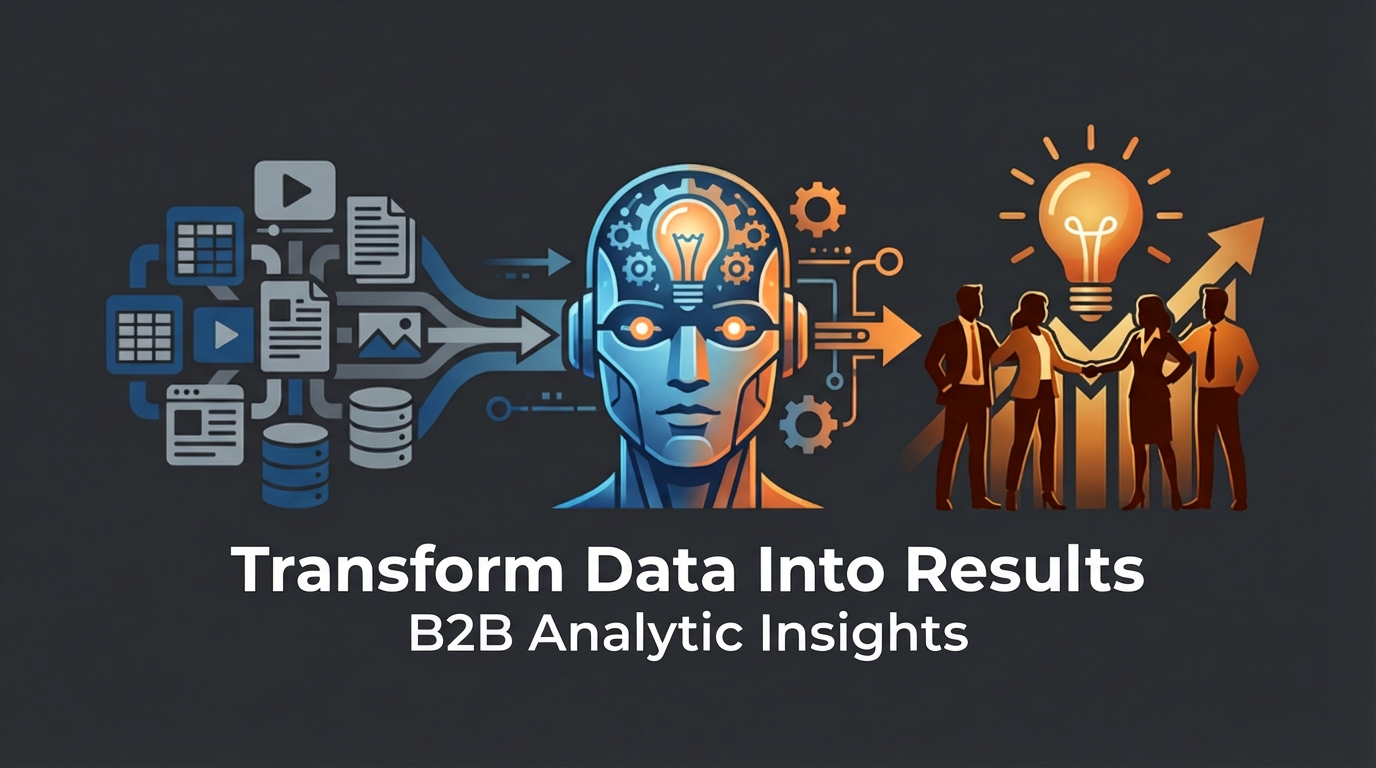

The relentless drive for competitive advantage in the B2B landscape has propelled artificial intelligence (AI), advanced analytics, and business intelligence (BI) from nascent technologies to indispensable strategic imperatives. However, this very convergence, while promising revolutionary capabilities, is simultaneously creating a unique set of challenges—a “convergence crisis” if you will—demanding sophisticated navigation from the C-suite, analytics leaders, and practitioners alike. We’re not talking about a catastrophic systems failure, but rather a complex entanglement of technological promise, organizational inertia, regulatory pressures, and critical resource gaps. This isn’t hype; it’s the operational reality for any organization striving for true analytics transformation.
Bridging the Chasm: From Reactive Reporting to Predictive Autonomy
For decades, BI primarily provided the rearview mirror: dashboards summarizing past performance, historical trends, and descriptive analytics. It told us what happened. With the advent of advanced analytics, we began to understand why it happened, delving into root causes and correlations. Now, AI is pushing us further, enabling us to predict what will happen and even recommend what should be done. This evolution is not a smooth, linear progression; it’s a fundamental paradigm shift that exposes significant gaps in current operational models.
The Generative AI Catalyst
The recent explosion of generative AI has acted as a powerful accelerant. No longer confined to narrow, specialized tasks, AI is now capable of producing analytical insights, synthesizing complex data narratives, and even suggesting actionable strategies with unprecedented speed. Imagine a credit risk analyst spending days sifting through disparate data sources to assess a multi-national corporate borrower. A generative AI-powered system could, within minutes, analyze public financial statements, market sentiment, geopolitical risk, and supply chain vulnerabilities, providing a holistic risk profile and even drafting a preliminary risk mitigation strategy. This isn’t science fiction; it’s becoming table stakes. The challenge here is less about the AI’s capability and more about organizational readiness to consume, validate, and act on such rapid-fire, sophisticated outputs.
Real-time Decision Making and the Time-to-Insight Imperative
The traditional BI cycle, often characterized by weekly or monthly reporting, is increasingly insufficient. In today’s volatile markets, particularly in sectors like financial services or enterprise operations where credit risk models or supply chain disruptions can manifest rapidly, the time-to-insight must shrink to near real-time. This demands a technological stack capable of ingesting, processing, and analyzing vast streams of data continuously. More crucially, it requires decision-making processes that are agile enough to react to these rapidly generated insights. If your models predict a surge in loan defaults in a specific demographic, but your approval hierarchy takes weeks to implement policy adjustments, the predictive power is wasted. Metrics such as reduction in decision latency and improved accuracy of forecasts by N% within specific business functions are key here. For instance, a major financial institution reduced the time taken to identify fraudulent credit applications by 30% through the implementation of real-time AI-powered anomaly detection, directly impacting their loss rates positively by 0.5% of total portfolio value.
In exploring the complexities of the intersection between AI, analytics, and business intelligence, a related article that offers valuable insights is found at B2B Analytic Insights. This resource delves into the evolving landscape of data-driven decision-making and how organizations can effectively navigate the challenges posed by the convergence of these technologies. By understanding the implications of this convergence, businesses can better leverage their data assets to drive strategic growth and innovation.
The Governance Conundrum: Navigating AI and Data Risks
As AI becomes more pervasive, the confluence of AI and data governance is no longer optional; it is fundamental to managing escalating risks. This convergence demands a holistic framework that integrates technological, legal, and business considerations.
Data Quality and Lineage as the Unsung Hero
The age-old adage, “garbage in, garbage out,” has never been more pertinent. AI models, especially sophisticated deep learning algorithms, are voracious consumers of data. Poor data quality – inconsistent formats, missing values, inaccuracies – will not only produce flawed insights but can also reinforce biases present in the training data. For a credit risk model, biased training data could lead to discriminatory lending practices, resulting in significant regulatory penalties and reputational damage. My experience shows that organizations that invest 20% of their analytics budget specifically into data quality initiatives, including robust data profiling, cleansing, and establishing clear data ownership, consistently achieve a 15% higher accuracy rate in their predictive models and a 10% faster time-to-insight. Establishing clear data lineage, from source to model output, becomes critical for explainability and auditing, especially in regulated industries.
Explainability, Ethics, and Regulatory Compliance
One of the most significant hurdles in AI adoption, especially within B2B operations, is the “black box” problem. When an AI model flags a large corporate loan as high risk, or optimizes a complex supply chain, stakeholders need to understand why. This demand for model explainability is not merely academic; it’s a regulatory requirement in fields like consumer credit and often a prerequisite for internal adoption. The EU’s AI Act, for example, signals a global trend towards stricter oversight of AI systems deemed “high-risk.” Organizations must be able to demonstrate that their AI systems are fair, transparent, and accountable. This necessitates developing frameworks for monitoring model drift, detecting algorithmic bias, and providing understandable explanations for AI-driven decisions. Without this, the promising benefits of AI can be overshadowed by the specter of legal challenges and public distrust.
Organizational Inertia: The Human Element in Analytics Transformation
Technology is only one part of the equation. The most sophisticated AI and analytics platforms will fail if the organization isn’t ready to embrace them. This brings us to the profound challenges of organizational adoption.
Talent Shortages and Skill Gaps
The demand for data scientists, machine learning engineers, and even business analysts proficient in interpreting advanced analytical outputs far outstrips supply. This talent shortage is a critical bottleneck for many organizations attempting an analytics transformation. It’s not just about hiring; it’s about upskilling existing teams and fostering a data-literate culture. A true analytics transformation requires a multi-faceted approach: strategic external hires, robust internal training programs, and the cultivation of “citizen data scientists” who can leverage low-code/no-code platforms while adhering to governance guardrails. Without addressing this, organizations risk having cutting-edge tools gather digital dust.
Resistance to Data-Driven Decision Making
Humans are creatures of habit. Decision-making, particularly at senior levels, has often been a blend of experience, intuition, and anecdotal evidence. Introducing data-driven decision-making, where models challenge established beliefs or identify uncomfortable truths, can encounter significant resistance. This isn’t malicious; it’s deeply ingrained behavioral patterns. Overcoming this requires more than just presenting compelling dashboards; it demands a cultural shift. This shift must be championed from the C-suite, demonstrating how analytics can augment, not replace, human expertise. Quantifiable success stories, such as a 12% reduction in operational inefficiencies achieved by following predictive maintenance recommendations from an AI model, are crucial in building trust and demonstrating ROI.
Modernizing the Foundation: Infrastructure and Operating Models
The convergence of AI, analytics, and BI places immense strain on existing IT infrastructure and organizational operating models. Organizations that fail to modernize risk being left behind, facing slower decision cycles and a significant competitive disadvantage.
Cloud-Native and Scalable Architectures
The sheer volume, velocity, and variety of data required to feed advanced AI/analytics models necessitates a highly scalable, flexible infrastructure. On-premise legacy systems often buckle under this pressure. A cloud-native architecture, leveraging elastic compute resources and managed data services, becomes essential. This allows organizations to scale their analytical capabilities on demand, reducing the upfront capital expenditure and accelerating development cycles. For example, migrating a traditional data warehouse to a cloud-based data lakehouse architecture can reduce data processing times by 50% and enable the consumption of real-time streaming data, which is critical for fraud detection or predictive equipment failure in enterprise operations.
Agile Operating Models and Cross-Functional Collaboration
Implementing sophisticated AI and analytics solutions is rarely a linear process. It requires iterative development, continuous feedback loops, and tight collaboration between data scientists, engineers, business users, and IT. Traditional Waterfall methodologies are too slow and rigid. Adopting agile operating models, forming cross-functional “pod” teams, and breaking down silos between departments are critical to accelerate development, ensure business relevance, and drive user adoption. The ROI here is seen in faster solution deployment (e.g., reducing time-to-market for a new analytical product by 40%) and increased user engagement, measured by a 25% uplift in the adoption rates of new analytical tools.
In exploring the complexities of modern technology, a related article titled “Navigating the Future of Data Integration” delves into the challenges and opportunities that arise when AI, analytics, and business intelligence intersect. This insightful piece highlights the importance of cohesive strategies in leveraging data for better decision-making. For more information, you can visit this link to discover how organizations can effectively manage these converging technologies.
Converged Security: Protecting the Integrated Ecosystem
As AI and analytics become embedded in every facet of business, the distinctions between physical and digital security blur. This demands a truly converged approach to cybersecurity.
AI for Security, and Security for AI
AI is a powerful tool for enhancing security, capable of identifying anomalies, predicting threats, and automating responses. Consider AI-driven analytics systems used to monitor critical infrastructure or detect insider threats within financial systems. These solutions, by analyzing vast datasets of network traffic and user behavior, can identify patterns indicative of a breach far faster than human operators. However, these very AI systems themselves become targets. Adversaries can attempt to poison training data, exploit model vulnerabilities, or manipulate AI outputs. Therefore, securing the AI itself—ensuring its integrity, confidentiality, and availability—is paramount. This requires robust MLOps practices, secure development lifecycles for AI models, and continuous monitoring of AI system performance for signs of malicious tampering. The failure to secure these converged systems can lead to catastrophic data breaches, operational shutdowns, and significant financial and reputational damage. Metrics such as reduction in false positives for threat detection by 20% and prevention of N number of successful cyberattacks on critical AI infrastructure are crucial for demonstrating value.
Conclusion: Navigating the Convergence for Strategic Advantage
The “convergence crisis” is not a terminal illness but a complex adaptive challenge. It presents both immense opportunities and significant risks. For B2B enterprises, the inability to effectively integrate AI, analytics, and BI will result in slow decision cycles, missed market opportunities, and ultimately, a loss of competitive edge. The C-suite must recognize that this isn’t just a technology investment; it’s a strategic organizational transformation.
My recommendations are clear and actionable:
- Prioritize Data Governance and Quality: This is non-negotiable. Establish robust data governance frameworks, invest in data quality initiatives, and ensure clear data lineage. Think of it as the bedrock upon which all your AI and analytics initiatives will stand. Without it, you are building on sand.
- Invest in Talent and Culture: Address the talent shortage through a blend of strategic hiring, aggressive upskilling programs for existing employees, and foster a data-literate culture from the top down. Empower business users with self-service analytics capabilities, but within a governed framework.
- Modernize Infrastructure Strategically: Embrace cloud-native, scalable architectures that can support the demands of real-time, AI-driven analytics. This allows for agility and reduces technical debt. Evaluate total cost of ownership, but prioritize operational flexibility and speed.
- Embrace Explainability and Ethics: Integrate model explainability and ethical AI considerations into your development lifecycle from the outset. This builds trust, ensures regulatory compliance, and accelerates internal adoption. This isn’t just about compliance; it’s about building responsible and resilient business processes.
- Foster Cross-Functional Collaboration: Break down organizational silos. Analytics transformation is a team sport, requiring tight collaboration between business, IT, and data science. Adopt agile methodologies to drive iterative development and rapid value delivery.
The future of business intelligence and analytics is already here, intertwined with AI. The organizations that successfully navigate this convergence crisis, viewing it as an opportunity for profound transformation rather than a mere technical upgrade, will be the ones that truly harness the power of data-driven decision-making to secure a decisive competitive advantage in the years to come. This is not about being first; it’s about being fundamentally future-proof.