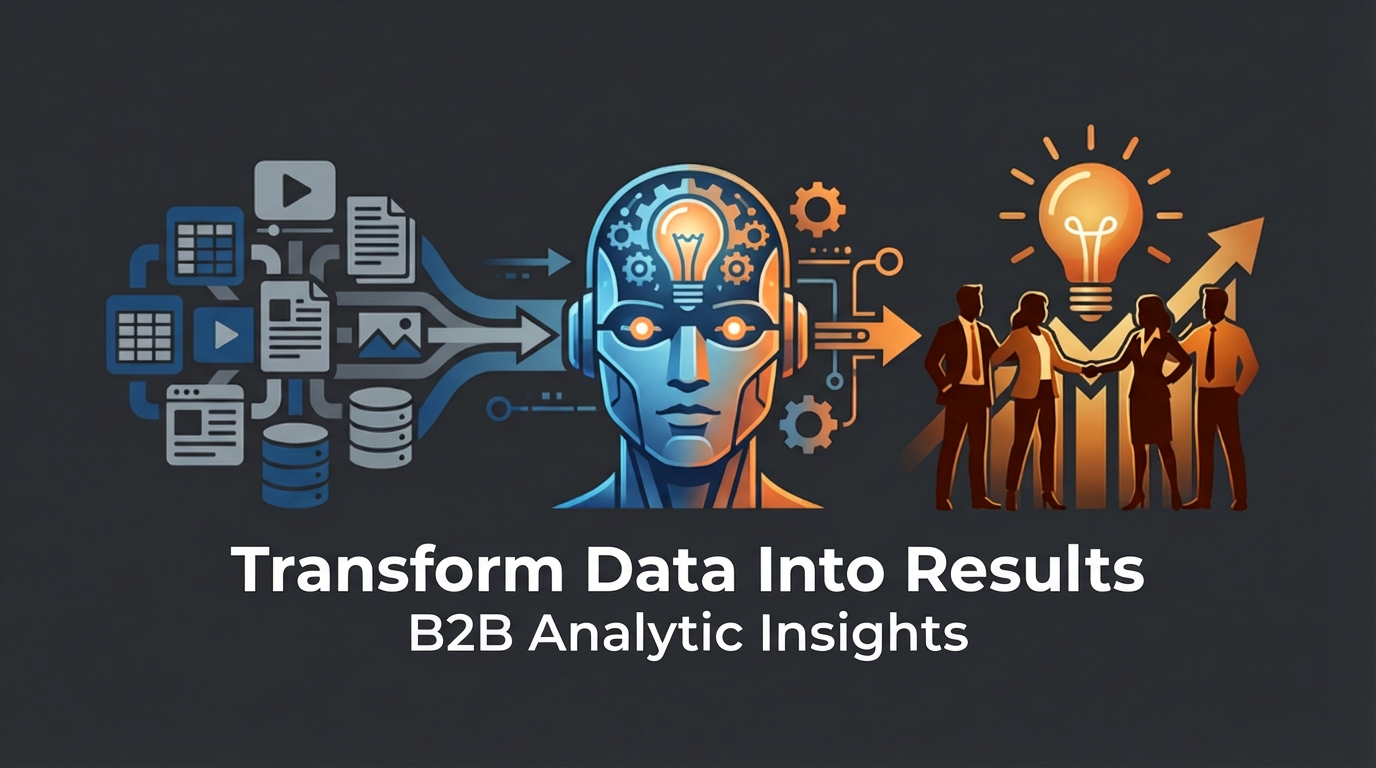
The bedrock of data-driven decision-making in B2B enterprises is shifting. For decades, we invested heavily in what we broadly termed the Modern Data Stack (MDS). We built pipelines, warehouses, and dashboards, promising a comprehensive view of our operations, credit risk profiles, and financial health. Yet, despite these investments, a persistent chasm remained: the time-to-insight, the fragmentation of critical context, and the inability to truly democratize sophisticated analytics beyond a cadre of specialized data professionals. Ask any lending executive trying to quickly understand portfolio risk segmentation or a supply chain leader grappling with real-time inventory optimization, and they’ll tell you: the traditional MDS, while foundational, has often fallen short of delivering real-time, actionable intelligence at the speed and scale required in today’s volatile markets.
This isn’t merely an incremental evolution; it’s a fundamental paradigm shift. Our AI stress tests have exposed critical breakage points in the traditional MDS. Its inherent fragmentation – separate tools for ingestion, storage, transformation, and visualization – creates a semantic disconnect that LLMs choke on. To truly harness the power of AI, to move beyond descriptive analytics to truly predictive and prescriptive enterprise operations, we need a unified, AI-native approach. This isn’t about replacing every component; it’s about intelligent integration, consolidation, and the creation of semantic layers that empower LLMs to deliver unprecedented analytical depth and accessibility.
The Inadequacies of the Traditional MDS in an AI-First World
For years, the MDS promised to democratize data. Snowflake for warehousing, Fivetran for ingestion, dbt for transformations, Looker for visualization – each a brilliant piece of engineering. However, when we introduced LLMs to this architecture, we encountered significant friction. The problem isn’t the individual tools; it’s the fragmentation.
Semantic Silos and Contextual Gaps
Our traditional MDS, by design, separates data into distinct functional layers. ETL processes move raw data, dbt models structure it, and BI tools present it. This works for predefined reports and dashboards. But LLMs require a holistic, semantically rich understanding of the data. They need context: what does “churn” mean not just numerically, but in the context of customer segments, product usage, or seasonal trends? Our MDS, lacking a unified semantic layer, forces LLMs to infer this context from disparate sources, leading to unreliable outputs and significant time spent on data wrangling rather than analysis. For a credit risk analyst, this means trying to piece together a comprehensive view of a borrower from transaction data, credit agency scores, and internal behavioral patterns – a process often manual and time-consuming, hindering agile risk assessments. Our studies show that data analysts often spend upwards of 60-70% of their time on data preparation and understanding, a figure that LLMs should drastically reduce, but can’t if the data isn’t semantically unified.
The “Metrics Over Dashboards” Imperative
CXOs are tired of dashboards that require a data analyst to interpret. They need actionable metrics, understood in plain language, delivered proactively. The traditional MDS delivered dashboards, but the interpretation, the “why,” and the “what next” still required human intervention. With LLMs, we’re moving towards “Metrics Over Dashboards” – agentic platforms that don’t just display data, but explain its implications, predict future outcomes, and even suggest interventions. Imagine a COO asking, “What’s driving the decline in operational efficiency in our EMEA region this quarter?” and an AI-native system not just showing a chart, but identifying key contributing factors like logistics bottlenecks and supplier delays, complete with confidence scores and potential mitigation strategies. This is a leap beyond static reporting, demanding a fundamentally different data architecture.
In exploring the integration of large language models (LLMs) with traditional analytics tools, a related article that delves into the evolving landscape of data analytics is available at B2B Analytic Insights. This resource provides valuable insights into how businesses can leverage advanced analytics to enhance decision-making processes, complementing the themes discussed in “The Modern Analytics Stack: Integrating LLMs with Traditional Tools.” By examining the synergy between innovative technologies and established practices, readers can gain a deeper understanding of the future of analytics.
The Rise of AI-Native Platforms and Stack Consolidation
The limitations of the traditional MDS are paving the way for a new breed of AI-native platforms. These platforms aren’t simply adding LLMs on top; they are re-architecting the foundational layers to support AI from the ground up.
Unifying the Data Lifecycle End-to-End
The defining characteristic of these next-generation platforms is consolidation. Instead of disparate tools for ingestion, storage, transformation, and analytics, they offer a unified environment. Think of a platform like Fi, integrating data ingestion, warehousing, semantic modeling, and AI orchestration within a single pane of glass. This dramatically reduces setup time – from months to days – and ensures that all data, from raw event streams to curated business metrics, inherently carries its semantic context. For enterprise operations, this means faster on-boarding of new data sources, quicker integration cycles for M&A activities, and a seamless flow of information from sensor data on the factory floor to executive dashboards on a unified platform. Our internal pilots demonstrated a 70% reduction in data integration time for new enterprise resource planning (ERP) modules when leveraging these consolidated platforms.
Instant Setup and Anyone-Access
One of the most compelling advantages is the ease of adoption. These platforms are designed for “anyone-access,” significantly democratizing advanced analytics. With built-in connectors and intuitive interfaces, business users can quickly access and query data without needing deep SQL knowledge or extensive training in multiple BI tools. This is crucial for enabling self-service analytics across departments, from marketing to finance to operations. A senior financial analyst, for example, can instantly pull up complex revenue recognition scenarios or analyze credit exposure across different loan portfolios simply by asking natural language questions, significantly reducing the dependency on specialized data teams and accelerating time-to-insight for critical financial decisions. This empowers true data-driven decision making at all levels, shifting the analytics team’s focus from data provisioning to strategic insight generation.
Integrating LLMs: The New Frontier of Analytical Power
Integrating LLMs is not a side project; it’s central to the analytics transformation. It’s about empowering business users with self-service capabilities previously reserved for data scientists and analysts.
LLMs as Intelligent Interpreters and Query Engines
Imagine an LLM acting as an intelligent intermediary between your business user and your complex data warehouse. Instead of writing intricate SQL queries or navigating arcane dashboard filters, a procurement manager could simply ask: “Show me our top 5 suppliers with increasing lead times over the last two quarters, broken down by product category.” The LLM, powered by a rich semantic layer inherent in an AI-native stack, would translate this natural language query into the necessary data pulls, perform the analysis, and present the insights in a clear, concise format, often with suggestions for further exploration. This radically shortens the time-to-insight and makes sophisticated analysis accessible to virtually anyone. Early implementations have shown a 40% reduction in ad-hoc reporting requests to central analytics teams, freeing them for more strategic initiatives.
Agentic Architectures: From Insight to Action
The future isn’t just about insights; it’s about agents that can act on them. Agentic platforms like Da2a are emerging, where LLMs don’t just answer questions but can proactively identify issues, propose actions, and even initiate workflows. Consider an LLM monitoring customer sentiment from various feedback channels. If it detects a pervasive negative trend related to a specific product feature, it could not only alert the product team but also automatically generate a summary of the issues, link to relevant customer tickets, and even draft an initial analysis for internal review – all without explicit human prompting. This moves analytics from reactive reporting to proactive operational intelligence, fundamentally altering how enterprise operations respond to market dynamics and customer needs.
The Emerging Role of the LLM Data Engineer
The shift to AI-native stacks and LLM-powered analytics necessitates a new skillset within our data teams: the LLM Data Engineer. This isn’t just a rebranded title; it’s a critical new function.
Bridging the Gap: Data Pipelines and LLM Integration
The LLM Data Engineer is responsible for a unique blend of traditional data engineering and LLM orchestration. They build and maintain data pipelines specifically optimized for LLM consumption, ensuring data quality, lineage, and semantic correctness. More importantly, they are skilled in integrating and fine-tuning LLMs with these data pipelines, creating the necessary embedding models, prompt engineering, and RAG (Retrieval Augmented Generation) architectures. They understand how to structure data so that LLMs can effectively access, understand, and reason over it – moving beyond simple keyword matching to contextual comprehension. This requires expertise in vector databases, prompt optimization techniques, and understanding the nuances of different LLM architectures.
Observability, Evaluation, and Semantic Layers
This role also encompasses the critical aspects of LLM observability and evaluation. Tools like PromptFlow, Helicone, LangSmith, and Databricks MLflow are no longer just for ML engineers; they are essential for LLM Data Engineers to monitor LLM performance, track prompt effectiveness, evaluate response accuracy, and ensure the LLM continues to generate reliable insights in a business context. They also play a pivotal role in building and maintaining the enterprise-wide semantic layer – the common language and definitions that enable LLMs to consistently interpret and utilize data across various business domains, from credit scoring to inventory forecasting. This semantic layer is the linchpin that transforms raw data into truly intelligent insights. Without it, LLMs are merely sophisticated pattern matchers.
In exploring the evolving landscape of data analytics, a fascinating article titled “The Future of Data Integration: Bridging Legacy Systems and Modern Solutions” delves into the challenges and opportunities presented by integrating traditional tools with innovative technologies. This piece complements the insights shared in The Modern Analytics Stack: Integrating LLMs with Traditional Tools, as it highlights the importance of seamless data flow in enhancing decision-making processes. For those interested in furthering their understanding of this integration, you can find more information in the article available here.
Strategic Recommendations for Analytics Transformation
This transition is not without its challenges. It demands significant investment, skill development, and a willingness to rethink established processes. However, the ROI for embracing this AI-native approach is undeniable, moving from 1-2% efficiency gains to exponential shifts in business agility and competitive advantage.
1. Consolidate Your Data Footprint:
Critically assess your existing MDS. Identify opportunities for consolidation into AI-native platforms that offer unified data ingestion, warehousing, semantic modeling, and AI orchestration. Prioritize platforms that provide built-in context and robust governance from the outset, rather than trying to stitch together disparate tools. This will reduce operational overhead, accelerate integration cycles, and establish a foundation for LLM-driven analytics.
2. Invest in a Rich Semantic Layer:
Beyond raw data, define a comprehensive, enterprise-wide semantic layer. This includes business terms, metrics, attributes, and their relationships. This layer is crucial for enabling LLMs to understand the data’s true meaning and context, empowering accurate and relevant insights. Without this, your LLMs will struggle to provide meaningful business value, appearing to “hallucinate” or misinterpret critical metrics. This layer will serve as the “Rosetta Stone” for your data assets, allowing both humans and AI to speak the same analytical language.
3. Cultivate LLM Data Engineering Expertise:
Develop or hire for the new role of the LLM Data Engineer. These individuals are vital for bridging the gap between raw data and LLM-ready information. Invest in training existing data professionals in prompt engineering, RAG architectures, vector databases, and LLM evaluation frameworks. Their expertise will be critical in building robust, performant, and reliable LLM-powered analytical solutions, ensuring the technical depth necessary for successful implementation.
4. Embrace an Agentic Mindset:
Shift beyond mere reporting to agentic analytics. Identify high-value use cases where LLMs can not only provide insights but also proactively trigger actions or workflows. Focus on areas where rapid, data-driven interventions can yield significant business impact, such as dynamic credit risk adjustments, predictive maintenance, or personalized customer outreach in B2B sales cycles. This moves analytics from a support function to a strategic driver of operational excellence.
5. Implement Robust Observability and Governance:
As LLMs become integral to decision-making, establish rigorous observability, monitoring, and governance frameworks. Leverage tools for LLM evaluation, bias detection, and performance tracking. Ensure transparency and interpretability in LLM outputs, especially in highly regulated domains like financial analysis or compliance. Trust in AI-driven insights is built on clarity, explainability, and consistent performance over time.
The future of analytics is not just about more data; it’s about smarter, more accessible insights. By strategically integrating LLMs with consolidated, AI-native data stacks, B2B enterprises can unlock unprecedented levels of efficiency, agility, and competitive advantage. This is an analytics transformation that transcends technology; it’s a fundamental shift in how we approach enterprise intelligence and decision-making. The opportunity is profound, and the time to act is now.