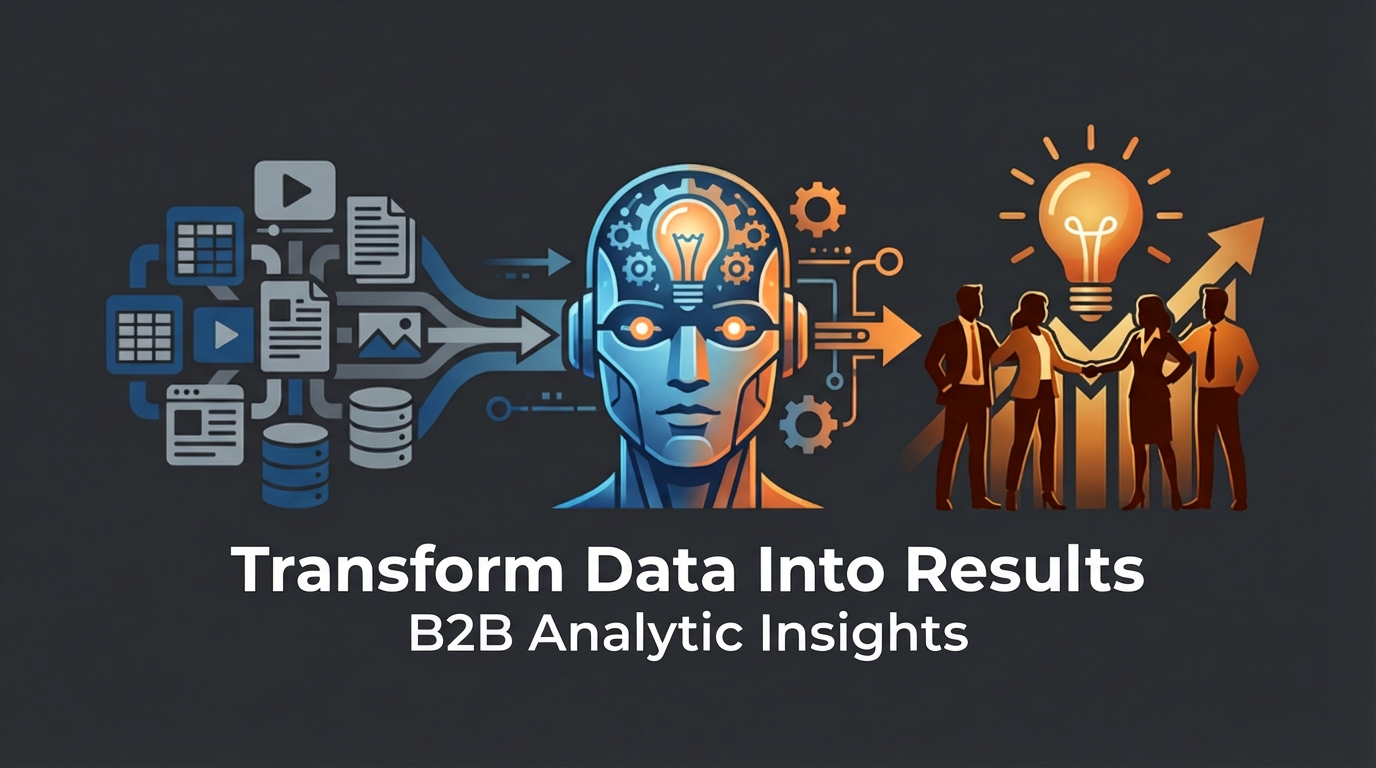

The landscape of enterprise operations is in constant flux, demanding a strategic pivot from traditional operational models to agile, data-centric paradigms. As executives, you’re not just witnessing change; you’re orchestrating it. The pressure to innovate, reduce credit risk, optimize financial performance, and streamline complex enterprise operations has never been higher, intensified by an increasingly competitive and data-rich environment. This isn’t merely about adopting new technology; it’s about a fundamental rewiring of how your organization operates, makes decisions, and ultimately, thrives. We are talking about analytics transformation, a journey that redefines your enterprise from its core.
For many years, the term “digitalization” was sufficient. Today, it’s a necessary but insufficient step. We’ve moved beyond simply digitizing manual processes or lifting and shifting legacy applications to the cloud. The real prize lies in embedding intelligence into every facet of your business operations. This is where analytics transformation distinguishes itself, moving from experimental pilots to foundational architectural shifts.
Let’s consider the credit risk domain. Historically, this involved static models, often updated quarterly, reliant on limited datasets. Today, effective credit risk management demands real-time, dynamic assessments. We’re talking about leveraging alternative data sources – transactional data, behavioral patterns, even unstructured text – to build predictive models that anticipate defaults before they occur. This isn’t just about reducing write-offs; it’s about unlocking new revenue streams by safely extending credit to previously underserved segments, all while maintaining rigorous compliance. The journey from static models to dynamic, AI-driven credit scoring is a testament to the power of analytics transformation in tangible, bottom-line terms.
AI Integration as Core to Enterprise Design
The notion of AI as an experimental venture is a relic of the past. Today, AI must be considered core to enterprise design, foundational architecture rather than an optional add-on. This isn’t a speculative trend; it’s a strategic necessity, enabling measurable value at scale. The integration manifests in intelligent automation within financial analysis, where AI-powered anomaly detection identifies fraudulent transactions or unexpected market shifts with unparalleled speed. In enterprise operations, AI agents are beginning to manage complex workflows, from supply chain optimization to customer service, learning and adapting in real-time. Critically, this widespread integration demands stringent data governance and robust security frameworks. Without these foundational elements, AI becomes a liability rather than an asset, a shadow rather than a beacon.
Globant’s 2026 report illuminates this, highlighting AI agents, quantum encryption, and AI-powered machines as forces driving enterprise innovation. These aren’t futuristic ideas; they are on our immediate horizon, profoundly altering the competitive landscape. For CIOs, this means abandoning the “lift-and-shift” mentality for good. It’s about rewiring organizations for agentic AI, where autonomous systems execute tasks and make decisions within defined parameters. The strategic imperative here is not to react but to proactively design your enterprise around this AI core, ensuring scalability, security, and measurable ROI.
In today’s rapidly evolving business landscape, the importance of effective transformation and strategy cannot be overstated. For insights on how organizations can successfully navigate these changes, you may find the article on “Driving Business Transformation Through Strategic Innovation” particularly relevant. This piece delves into the critical elements of strategy formulation and execution, offering practical tips for leaders looking to enhance their transformation initiatives. To read more, visit the article here: Driving Business Transformation Through Strategic Innovation.
Navigating the Transformation Journey: Strategy and Execution
The path to analytics maturity is rarely linear. It’s a complex interplay of strategic foresight, technological prowess, and human adaptation. This isn’t a project with a start and end date; it’s an evolving capability.
Change Capacity Engineering: Building Resilient Transformations
Traditional change management often falls short in complex, multi-year transformations. It assumes a static environment and linear progression. The reality, however, is that transformation efforts are load-bearing systems. They can overload, leading to project fatigue, resistance, and ultimately, failure. This is where “change capacity engineering” comes into play. It treats transformation like any other complex system, measuring its load, sequencing initiatives intelligently, and providing visibility through capacity dashboards.
Think of it this way: you wouldn’t continuously pump more data into an overburdened analytics pipeline without first ensuring its capacity can handle the influx. The same principle applies to human capital and organizational bandwidth during transformation. We need to identify bottlenecks, prioritize initiatives based on strategic impact and organizational readiness, and communicate clearly how each piece fits into the larger puzzle. For instance, before rolling out a new AI-powered fraud detection system across all credit portfolios, we might pilot it in a specific segment, measure its impact, refine the algorithms, and then gradually expand. This phased approach, supported by robust metrics and clear communication, prevents burnout and builds momentum.
Ecosystem and Modular Approaches: Micro-Transformations and Adaptability
The era of monolithic, top-down transformation projects is waning. The agility demanded by the modern business environment necessitates a more modular, adaptive approach. We are seeing a shift towards “rolling portfolios” of micro-transformations. This involves breaking down large-scale changes into smaller, manageable initiatives, each with its own specific objectives, KPIs, and timelines.
Consider a large financial institution looking to overhaul its enterprise operations. Instead of a single, multi-year project to replace all legacy systems, a modular approach might involve independent “micro-transformations”: one focused on automating specific back-office processes using RPA and AI, another on modernizing the data warehousing infrastructure for a particular product line, and yet another on building out a real-time risk analytics capability. This approach allows for quicker wins, faster feedback loops, and easier adaptation to changing business requirements or technological advancements. Informal network mapping and the dynamic involvement of cross-functional teams are crucial here. It fosters a sense of ownership, reduces transformation fatigue, and ensures a more organic evolution of capabilities. This is about building an organizational immune system that can continuously adapt and self-correct, rather than merely reacting to external pressures.
The Pillars of Sustained Analytics Advantage: Data, Cybersecurity, and Talent

No amount of strategic planning or technological investment will yield sustained returns without robust foundations in data, cybersecurity, and human capital. These are the non-negotiables.
Cybersecurity and Data Governance: Guarding Your Most Valuable Assets
In the data-driven world, your data is your most valuable asset. Simultaneously, it is your greatest vulnerability. The escalating complexity of cyber threats demands that cybersecurity and data governance are embedded architecturally, not treated as afterthoughts. This means integrating security protocols into the very design of your data pipelines, AI models, and enterprise applications. It’s about moving beyond perimeter defense to a zero-trust model, where every access point and transaction is authenticated and continuously monitored.
Data quality is not just a technical concern; it’s a strategic imperative. Inaccurate or incomplete data can lead to flawed insights, poor decisions, and ultimately, significant financial losses. Imagine an AI model designed to predict credit default, trained on spurious data. The consequences could be catastrophic. Therefore, establishing rigorous data quality frameworks, clear ownership, and comprehensive audit trails is paramount. This isn’t just about compliance; it’s about building trust in your data, which then fuels trust in your analytics and the decisions derived from them. This focus is reinforced by the emphasis on managing data as a strategic asset amidst rising complexity, a critical element highlighted by industry leaders.
IT Operating Model Reengineering and Workforce Shifts
CIOs are at the forefront of this transformation. Their focus is shifting from merely maintaining systems to driving velocity, resilience, and AI-driven customer experience. This necessitates a fundamental reengineering of the IT operating model. It’s no longer just about optimizing infrastructure; it’s about embedding AI into the very fabric of how IT operates and delivers value. This means moving beyond lift-and-shift migrations to proactively rewiring organizations for agentic AI.
The impact extends deeply into the workforce. We are witnessing significant HR and workforce shifts, with estimations of up to 30-40% role elimination in HR via superagents and enterprise AI. This isn’t a threat; it’s an opportunity to re-skill and up-skill your workforce, moving them from transactional tasks to more strategic, analytical, and creative roles. Cloud modernization and applied AI with guardrails become critical enablers, providing the platforms and tools for this new, augmented workforce. The challenge is clear: invest in your people as much as you invest in your technology. The human element, with its domain expertise and critical thinking, remains indispensable, especially in interpreting AI outputs and making nuanced business judgments.
Measuring Success and Sustaining Momentum: The ROI of Transformation

Global digital transformation spend is projected to near $4 trillion by 2027. This substantial investment underscores the critical need for clear measurement and tangible returns.
Strategic Roadmaps, Maturity Assessments, and KPIs
Successful analytics transformation isn’t a series of ad-hoc projects. It requires a well-defined strategic roadmap, grounded in clear business objectives. This roadmap should incorporate maturity assessments to understand your current capabilities and identify gaps. What is your current state in terms of data governance, analytical talent, and technological infrastructure? What is your desired future state? Bridging this gap requires a phased approach, supported by specific, measurable KPIs.
For example, in financial analysis, KPIs might include “reduction in time-to-insight for quarterly reports by X%,” “accuracy increase of financial forecasts by Y%,” or “decrease in operational costs through AI-driven process automation by Z%.” These metrics provide tangible proof of value. Agile pilots are crucial here, allowing for rapid experimentation, learning, and iteration, ensuring that investments are aligned with actual business impact. The goal is not just to implement technology but to achieve measurable efficiency gains and enhanced customer experience.
From Technical Concepts to Business Strategy: Bridging the Divide
Ultimately, the success of analytics transformation hinges on your ability to bridge the divide between complex technical concepts and clear business strategy. As leaders, you must translate the capabilities of quantum encryption or AI agents into tangible benefits for credit risk management, financial product innovation, or operational efficiency. This requires a shared language, robust communication channels, and a culture that values data literacy at all levels.
The challenges are real: integrating disparate data sources, managing organizational change, and fostering a data-driven culture. But the opportunities are immense: unlocking new revenue streams, optimizing complex operations, and gaining a decisive competitive edge. Your strategic recommendations must therefore revolve around continuous investment in a hybrid workforce – one that combines technical prowess with deep business domain knowledge. Build cross-functional teams that unite data scientists, business analysts, and operational experts. Empower them with governed data, advanced tools, and a clear mandate to drive value. This isn’t just about technology; it’s about people, process, and purpose. Embrace the transformation, measure its impact diligently, and cultivate a culture where data-driven decision-making is not just encouraged, but ingrained in your organization’s DNA.