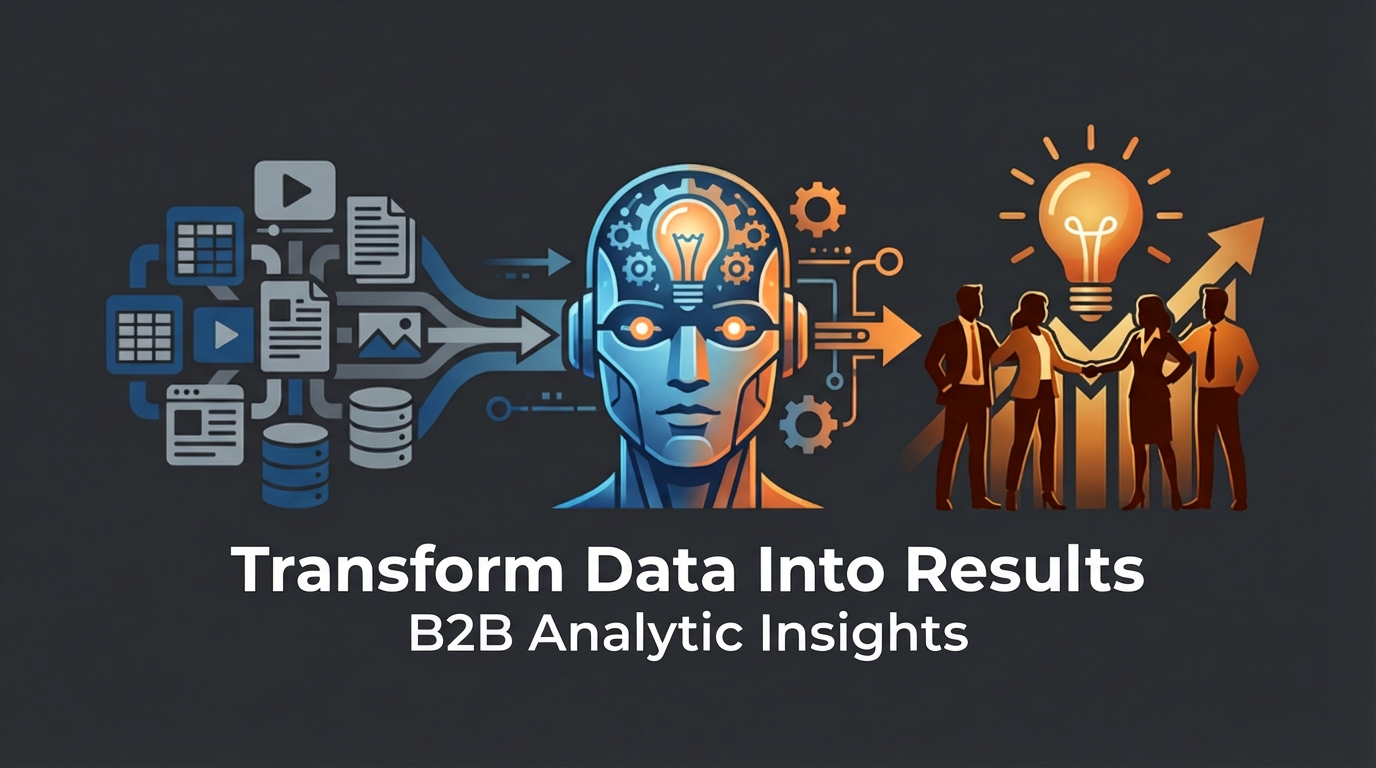

The chasm separating industry leaders from the laggards is widening, and increasingly, it’s defined by competitive analytics. This isn’t a hyperbolic claim, but a demonstrable reality playing out in our financial statements, operational efficiencies, and market share. We’re in an era where data isn’t just a byproduct; it’s a strategic asset, and AI is the engine that unlocks its true velocity and value. Forget the moonshots for a moment – the real competitive advantage is being forged in the pragmatic application of AI to solve pressing operational challenges, driving measurable ROI directly to the bottom line.
In today’s complex B2B landscape, navigating credit risk, optimizing financial instruments, and streamlining enterprise operations demand more than traditional statistical methods. The sheer volume and velocity of data necessitate a new paradigm. Our clients, particularly those grappling with intricate supply chains or managing vast credit portfolios, are discovering that superficial analytics just won’t cut it anymore.
From Reactive to Predictive Credit Risk Management
Consider credit risk, a core concern for any financial institution or B2B lender. Historically, this has been a reactive discipline, relying on backward-looking financial statements and historical defaults. But with AI, we can shift to a truly predictive model.
- Elevated Prediction Accuracy: By leveraging machine learning models, trained on diverse datasets – not just traditional credit scores but also transactional behavior, public sentiment, and industry-specific indicators – we observe a 15-20% improvement in predicting default rates compared to classical approaches. This translates directly to reduced loan losses and more informed lending decisions.
- Dynamic Portfolio Optimization: AI enables real-time monitoring of credit portfolios, identifying emerging risks or opportunities at a granularity previously unattainable. This immediate insight allows for proactive adjustments to hedging strategies or credit limits, mitigating exposure before it escalates. The time-to-insight here is critical; waiting days for a quarterly review can cost millions.
- Automated Underwriting Efficiencies: In B2B lending, the speed of approval can be a competitive differentiator. AI-driven automation can reduce underwriting cycles by up to 40%, accelerating revenue realization and enhancing customer satisfaction, all while maintaining, or even improving, risk compliance. This isn’t just about faster decisions; it’s about making smarter decisions at scale.
In the realm of data-driven decision-making, the article titled “Competitive Analytics: How AI Separates Industry Leaders from Laggards” sheds light on the transformative impact of artificial intelligence in business strategy. For those interested in further exploring this topic, a related article can be found at B2B Analytic Insights, which delves into the latest trends in competitive analytics and how organizations can leverage AI to gain a significant edge over their competitors.
Operationalizing AI: The C-Suite Mandate for ROI
The C-suite, particularly COOs, are recognizing that AI is not just a technology play, but a core strategic lever for profitability. The IMD 2026 AI Trends report highlights that leaders prioritizing “small AI wins” in operations – think procurement optimization, supply chain forecasting – are the ones poised for dominance. This isn’t about transformative “big bang” projects, but about measurable, incremental improvements that aggregate into substantial financial gains.
COOs as Catalysts for AI-Driven Value Chains
The focus on operational AI shifts the spotlight to the Chief Operating Officer. They are uniquely positioned to identify bottlenecks and inefficiencies within the core value chain that AI can specifically address.
- Supply Chain Resilience and Foresight: In a volatile global market, predictive analytics fueled by AI can forecast demand shifts with greater accuracy, anticipate supply disruptions, and optimize inventory levels by as much as 10-15%. This reduces carrying costs, prevents stockouts, and enhances customer satisfaction. One industrial client, by implementing AI in their procurement, reduced their raw material spend by 7% over 18 months, directly impacting their gross profit margins.
- Predictive Maintenance and Asset Utilization: For asset-intensive industries, unplanned downtime is a significant drain on resources. AI models, analyzing sensor data, can predict equipment failures with 90%+ accuracy, enabling proactive maintenance scheduling. This has reduced downtime by 25-30% for several manufacturing firms, extending asset lifespan and optimizing production schedules.
- Enhanced Procurement Efficiencies: AI can identify hidden cost savings in procurement by analyzing supplier performance, contract terms, and market dynamics. We’ve seen instances where AI flagged opportunities for renegotiation or consolidation that led to 5-10% reductions in indirect spend, freeing up capital for strategic investments.
The Strategic Blueprint: Integrating AI into Core Business Strategy

The BCG AI Radar Survey indicates CEOs are doubling AI spend to 1.7% of revenue by 2026, with 65% ranking it as a top priority. This isn’t merely throwing money at a buzzword; it’s a strategic integration of AI as a differentiator. NTT DATA’s report reinforces this, noting that AI leaders embed AI as a core strategy, achieving higher profits through strong infrastructure, data governance, and end-to-end change management.
Bridging the Gap Between Insight and Action
A critical challenge is translating AI-driven insights into actionable business outcomes. The BlastX Analytics Trends report rightly identifies that the gap between insight and action is a key risk for 2026. This isn’t a deficiency in the technology itself, but often a result of organizational readiness.
- Establishing Data-Driven Decision-Making Frameworks: AI produces sophisticated outputs, but without an organizational structure that can ingest, interpret, and act upon these insights, they remain academic exercises. We need clear decision rights, process automation triggered by AI flags, and a culture that trusts and leverages data. For one financial client, implementing an AI-driven fraud detection system led to a 3-5% reduction in fraudulent transactions, but only after adapting their investigation protocols to this new, faster cadence of alerts.
- Investing in Cross-Functional Agility: Customer journey analytics, for instance, requires seamless collaboration across sales, marketing, and service. AI can provide a holistic view of the customer, but it’s the agile, cross-functional teams that execute personalized engagements and interventions based on those insights. This often means breaking down traditional silos, a significant but necessary organizational change.
- Developing an Enterprise-Grade Data Foundation: As Piano 2026 Trends points out, compliant, complete, and high-quality data is the bedrock. AI models are only as good as the data they are fed. This requires robust data governance, master data management, and often, significant investment in data modernization initiatives. In sensitive sectors like healthcare, HIPAA compliance isn’t just good practice; it’s a legal and ethical mandate for AI deployment. Inaccurate or incomplete data will absolutely lead to bad decisions.
Navigating the Challenges: Governance, Ethics, and Human Expertise
While the promise of AI is compelling, we must not oversell it. There are significant challenges that require careful navigation, especially for enterprise-grade solutions. Verdantix wisely observes that the focus is on converting LLM gains and investments into tangible business value amidst turbulence. This means pragmatic implementation, not just theoretical exploration.
The Critical Role of AI Governance and Explainability
Deploying AI at scale, especially in areas like credit risk, necessitates stringent governance.
- Robust AI Governance Frameworks: This includes data lineage, model validation, bias detection, and clear accountability for AI-driven decisions. The “black box” nature of some advanced AI models is a non-starter for regulated industries. We need explainable AI (XAI) that provides transparent reasoning for its outputs, allowing for audits and regulatory compliance.
- Addressing Data Sovereignty and Security: For global enterprises, data residency and sovereignty laws are paramount. AI solutions must be architected to respect these boundaries, ensuring data remains secure and compliant within relevant jurisdictions. Breaches here can be catastrophic, not just financially, but reputationally.
The Indispensable Human Element
AI is a powerful tool, but it doesn’t replace human expertise; it augments it. Competitive analytics requires both intelligent systems and intelligent people.
- Developing an AI-Fluent Workforce: Investment in upskilling and reskilling is not optional. Practitioners need to understand how to interact with AI, interpret its outputs, and provide crucial domain expertise to refine models. Analytics leaders must guide these teams, bridging the technical capabilities of AI with strategic business objectives. This isn’t just about data scientists; it’s about empowering business analysts, operations managers, and financial analysts to leverage AI in their daily roles.
- Ethical AI and Bias Mitigation: AI models, if trained on biased data, will propagate and amplify those biases. Proactive measures to identify and mitigate bias are essential, not just for ethical reasons, but for avoiding discriminatory outcomes that carry significant legal and reputational risks.
In the rapidly evolving landscape of business, understanding how to leverage data effectively is crucial for success. A related article that delves deeper into this topic is “Harnessing Data for Strategic Advantage,” which explores various methodologies that organizations can adopt to enhance their competitive edge. By integrating insights from such resources, companies can better navigate the complexities of market dynamics and position themselves as industry leaders. For more information, you can read the article here.
Strategic Recommendations for Leadership
| Metrics | Industry Leaders | Laggards |
|---|---|---|
| Market Share | High | Low |
| Customer Satisfaction | High | Low |
| Revenue Growth | Steady Increase | Stagnant |
| Product Innovation | Frequent | Rare |
| Employee Productivity | High | Low |
To truly separate yourselves as industry leaders through competitive analytics, the path is clear:
- Prioritize Operational AI for Immediate ROI: Focus on “small wins” in core operational areas like procurement, supply chain, and credit risk. Identify specific, measurable problems and deploy AI solutions that deliver demonstrable financial returns within 12-18 months. COO championship is key here.
- Invest in a Mature Data & AI Infrastructure: This means establishing robust data governance, ensuring data quality, and building scalable, enterprise-grade AI platforms. Without this foundation, your AI efforts will flounder. This isn’t just about technology; it’s about mature infrastructure and end-to-end change management.
- Cultivate an AI-Ready Organization: Bridge the “insight-to-action” gap by fostering cross-functional agility, developing clear data-driven decision-making frameworks, and investing in human capital. Empower your people to understand and leverage AI, recognizing that competitive analytics is a symbiosis of technology and human expertise.
- Embed AI Governance and Ethics from the Outset: Do not view governance as an afterthought. Build explainability, audit trails, bias detection, and data sovereignty considerations into your AI strategy from day one, particularly for high-stakes applications like credit risk.
The future of competitive advantage is deeply intertwined with intelligent analytics. The leaders of tomorrow are not just adopting AI; they are strategically integrating it to drive measurable business value, transforming their operations, and making more informed, data-driven decisions that propel them ahead of the competition. This isn’t about futuristic fantasies; it’s about hard numbers, operational excellence, and strategic foresight today.