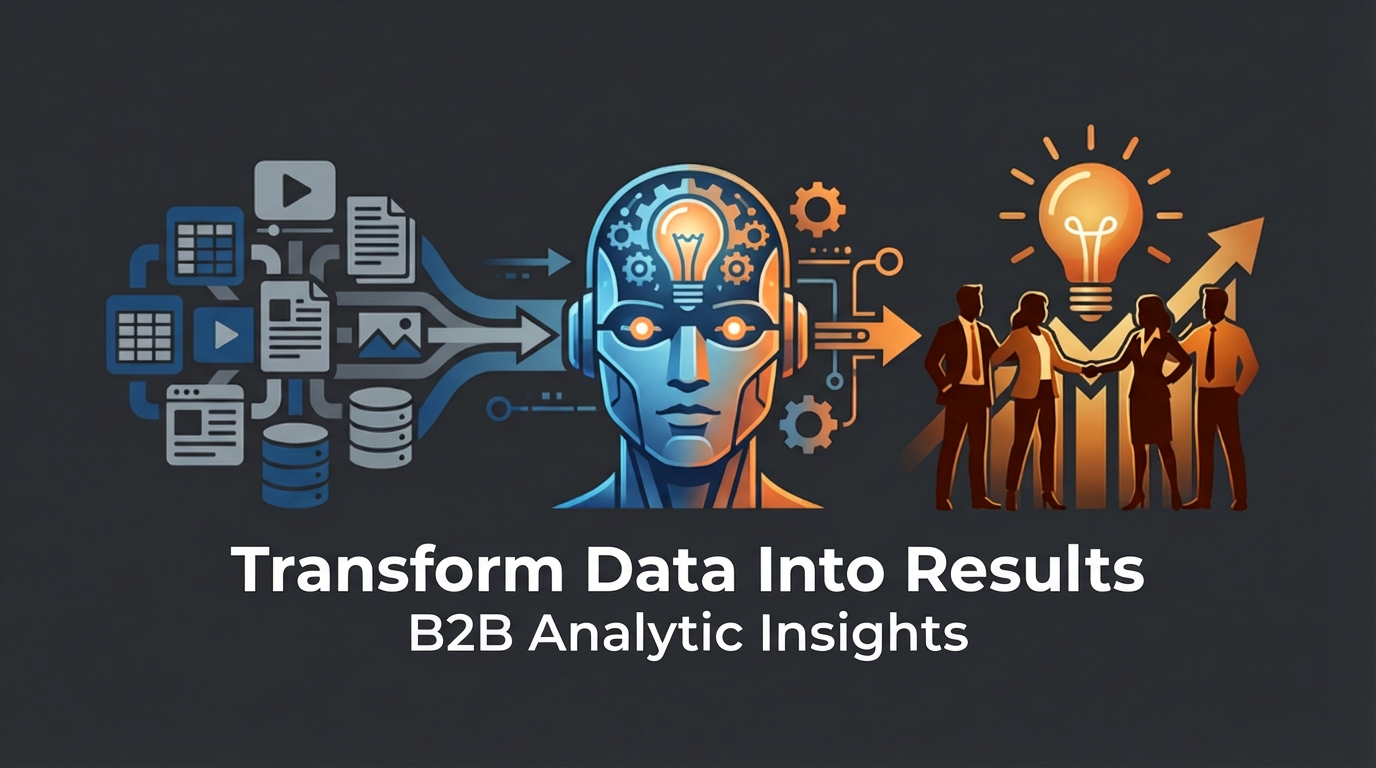

The analytics landscape is shifting at an unprecedented pace, driven by the emergence of powerfully capable AI tools. For too long, the promise of analytics has been debated in terms of potential, often at the expense of actual, quantifiable business impact. Today, we stand at a pivotal moment. The question is no longer if AI will drive productivity; it’s how to effectively measure and harness these gains to unlock deeper levels of data-driven decision making and accelerate our analytics transformation.
The challenges are significant. Many organizations are grappling with the inertia of legacy systems, skill gaps, and a lack of clear strategic alignment. The sheer volume of data, coupled with the complexity of modern business operations – from intricate credit risk assessments to optimizing enterprise-wide workflows – demands a more intelligent and efficient approach. This is where AI, when strategically deployed, acts as a true productivity multiplier. However, we must tread carefully, avoiding the siren song of hype and focusing on tangible, measurable outcomes that resonate with the C-suite and provide clear pathways for implementation.
Unlocking the Developer Engine: AI’s Impact on Engineering Productivity
It’s no secret that software development, a core engine for any modern enterprise, has long been a focal point for AI innovation. The ability of AI to understand context, generate code, and assist with debugging offers a remarkable opportunity to accelerate development cycles and improve code quality. This isn’t theoretical; the data is starting to paint a clear picture of this productivity surge.
Quantifying the Code Commit Acceleration
Consider the insights from the latest GitKraken developer metrics report. For regular users, AI tools are already contributing to an estimated 25% boost in productivity. This means faster iteration, quicker feature delivery, and ultimately, a more agile response to market demands. The true power, however, is seen with power users. These individuals, who have effectively integrated AI into their core workflows, are exhibiting an astonishing 14x increase in commit activity and a 15x surge in test code generation. This isn’t a marginal improvement; it’s a fundamental shift in output. Year-over-year gains confirm this isn’t a fleeting cohort effect but a sustained acceleration, proving that AI can indeed amplify human ingenuity.
In exploring the transformative impact of AI on productivity, a related article titled “Harnessing Data Analytics for Enhanced Business Performance” provides valuable insights into how organizations can leverage data analytics to drive efficiency and growth. This article complements the findings presented in “The Analytics Efficiency Multiplier: Measuring AI’s Productivity Gains” by emphasizing the importance of integrating advanced analytics into business strategies. For more information, you can read the article here: Harnessing Data Analytics for Enhanced Business Performance.
Driving Operational Excellence: AI in Enterprise Functions
Beyond the development team, the ripple effects of AI are being felt across broader enterprise operations. From customer support to financial analysis, AI is beginning to automate mundane tasks, provide richer insights, and streamline complex processes, leading to tangible productivity gains and a leaner organizational structure. The key here is identifying those areas where AI can move beyond augmentation to true transformation.
The B2B Impact: Efficiency Across Departments
A recent Morgan Stanley multi-sector survey offers compelling evidence. Companies are reporting an average net productivity increase of 11.5% directly attributable to AI. Perhaps more startling, this gain is often accompanied by a 4% decline in headcount. This isn’t about widespread job elimination; it’s about optimizing roles, allowing human capital to focus on higher-value strategic work. Notably, these gains are universal, with sectors like healthcare and companies in Australia seeing productivity boosts exceeding 20%. This demonstrates that AI’s impact is not confined to tech-centric industries but is a cross-sector phenomenon.
Streamlining Credit Risk Assessment with Predictive AI
In the realm of financial analysis, particularly credit risk, AI is proving to be a game-changer. Traditional credit scoring models, while robust, can be slow and often rely on historical data that may not fully capture emerging risks. AI-powered predictive models, however, can analyze a far wider array of data points – including alternative data sources – in near real-time. This allows for more accurate risk assessment, faster loan origination, and a significant reduction in potential defaults. The time-to-insight in credit risk modeling is collapsing, enabling faster, more informed lending decisions. For instance, an AI system that can identify subtle patterns indicative of credit deterioration in a portfolio months earlier than traditional methods can prevent significant financial losses. This efficiency gain translates directly to the bottom line.
Navigating the Hype: Realistic Expectations for Productivity
While the potential of AI is undeniable, it’s crucial to approach its adoption with a grounded perspective. The narrative around AI-driven productivity needs to be tempered with empirical evidence, acknowledging that not all applications yield immediate or universal gains. A balanced view is essential for managing stakeholder expectations and ensuring successful analytics transformation.
The Marketing Conundrum: Promise vs. Reality
A comprehensive marketing study, highlighted by an NBER paper, reveals a common pattern: 70% of firms report using AI, yet a staggering 80% see no discernible productivity impact yet. This isn’t necessarily a failure of AI, but an indicator of implementation challenges and the need for strategic targeting. Future expectations, while modest at a projected 1.4% gain, are more realistic. However, the study also points to targeted areas where AI is already delivering significant wins, such as content creation, where it can achieve efficiency gains of 5-20x. This highlights the importance of identifying specific use cases where AI’s strengths align with business needs.
The Macro View: Is AI Reshaping the Economy?
Goldman Sachs analysis mirrors this nuanced reality. While there’s considerable excitement, the firm has identified no economy-wide AI-productivity link yet. The gains observed are often narrow, concentrated in specific departments like customer support and software development, where productivity uplifts are closer to 30%. This suggests that the truly transformative impact of AI on a macro economic level may be a longer-term play, dependent on broader adoption and integration across industries and business processes. The “AI revolution” is not yet a uniform economic uplift, but a series of focused accelerations.
Measuring the Gains: Key Metrics for AI Productivity
To move beyond anecdotal evidence and industry buzz, organizations need to establish clear, quantifiable metrics for measuring AI’s productivity gains. These metrics must be tied to business outcomes, whether it’s faster processing times, reduced error rates, or improved resource utilization. This rigor is foundational for demonstrating ROI and securing continued investment in data-driven decision making.
The Engine of Software Engineering: AI Agents at Work
The emergence of AI agents is a particularly compelling development. A recent observation from Cognition AI details how AI agents are delivering a remarkable 12x productivity gain specifically within software engineering for large firms and government IT projects. This level of acceleration signifies a profound shift in how software is built and maintained, moving towards an era of intelligent automation that significantly reduces manual effort and speeds up delivery. This isn’t just about writing code faster; it’s about AI agents handling complex debugging, code refactoring, and even complex architecture design tasks, freeing up human engineers for more creative and strategic problem-solving.
Beyond Headcount: Identifying True Efficiency
While headcount reduction can be an outcome, true AI productivity is more about enhancing the output and effectiveness of existing resources. This means measuring:
- Time-to-insight: How quickly can generated insights be acted upon? AI can drastically reduce the time from data ingestion to actionable intelligence.
- Task completion rates: For repetitive or complex tasks, is AI enabling a higher volume of completions within a given timeframe?
- Error reduction: In areas like financial reconciliation or data entry, can AI significantly reduce the incidence of human error?
- Resource optimization: Is AI enabling teams to achieve more with existing tools and personnel, freeing up resources for strategic initiatives?
The Yale Budget Lab’s 2025 data, suggesting a productivity increase of approximately 2.2%, while strong, is not unprecedented. Their caution about potential AI boosts being linked to capital investment, and the need to monitor wages and occupations, underscores the importance of distinguishing genuine productivity gains from mere capital expenditure. This data reinforces the need for careful attribution of productivity changes.
In exploring the transformative impact of AI on productivity, a related article that delves into the broader implications of data analytics can be found at B2B Analytic Insights. This resource provides valuable insights into how businesses can leverage analytics to enhance decision-making processes and drive efficiency, complementing the themes discussed in “The Analytics Efficiency Multiplier: Measuring AI’s Productivity Gains.” By understanding these interconnected concepts, organizations can better navigate the evolving landscape of technology and analytics.
Implementing AI for Maximum Impact: Bridging Technology and Talent
The successful integration of AI into an organization is far more than a technology implementation; it’s an organizational change initiative. The allure of sophisticated algorithms and powerful computational capabilities can overshadow the critical need for skilled individuals to leverage them effectively. This is where the dual focus on technology and human expertise becomes paramount for achieving a robust analytics transformation.
The Mexico Lesson: Gaps in Training and Leadership
A report from Mexico Business News highlights a common challenge: while AI adoption is boosting productivity, it also exposes significant training and leadership gaps. This isn’t a problem confined to one region; it’s a universal hurdle. Organizations that are seeing the most substantial gains are those that have invested not only in AI technology but also in upskilling their workforce and empowering leaders to champion AI-driven initiatives. Without this human element, even the most advanced AI tools can languish, their potential unrealized.
Organizational Change: The Unsung Hero of AI Adoption
Our experience consistently shows that the most successful AI deployments are those that are intrinsically linked to broader organizational change frameworks. This involves:
- Culture shift: Fostering an environment where data-driven decision making is not just encouraged but expected.
- Process re-engineering: Adapting existing business processes to seamlessly integrate AI capabilities, rather than trying to force AI into outdated workflows.
- Talent development: Proactively identifying skill gaps and investing in training programs that equip employees to work alongside AI, not against it. This includes developing analytics leaders who can bridge the gap between technical possibilities and business strategy.
- Clear governance: Establishing clear policies and ethical guidelines for AI usage, ensuring responsible and accountable implementation.
The time-to-insight is dramatically reduced when people are empowered and processes are aligned.
Strategic Recommendations for the C-Suite and Analytics Leaders
To truly capitalize on AI as an efficiency multiplier, organizations must move beyond pilot projects and embrace strategic, scaled implementation. This requires a clear vision, a commitment to data governance, and a focus on building human capital alongside technological investment.
For the C-Suite:
- Prioritize AI investments with clear ROI: Demand quantifiable metrics for productivity gains in pilot programs before scaling. Focus on use cases with clear impact on revenue, cost reduction, or operational efficiency.
- Champion a data-driven culture: Lead by example. Ensure that AI-generated insights are integrated into strategic planning and decision-making processes.
- Invest in talent development: Recognize that AI success hinges on human expertise. Allocate resources for upskilling and reskilling your workforce in AI literacy and data analytics.
- Foster cross-functional collaboration: AI initiatives often span multiple departments. Encourage collaboration and break down data silos to enable more holistic insights.
For Analytics Leaders:
- Develop a clear AI roadmap: Align AI initiatives with overarching business objectives. Identify key areas where AI can deliver the most significant productivity multiplier.
- Focus on demonstrable “time-to-insight”: Implement AI solutions that provide actionable insights quickly, enabling faster decision-making and agility. Track metrics that directly correlate with reduced time from data to decision.
- Build a hybrid workforce: Cultivate a team that comprises both AI experts and domain specialists. The synergy between technical prowess and business acumen is critical for successful implementation and sustained impact.
- Establish robust data governance and ethical frameworks: Ensure data quality, security, and responsible AI deployment. This builds trust and mitigates risks.
- Measure and communicate value: Continuously track and report on the productivity gains achieved through AI. Use these metrics to advocate for further investment and to guide future strategy.
AI is not a magic bullet, but a powerful lever for unprecedented efficiency and effectiveness. By focusing on quantifiable results, strategic implementation, and the essential human element, organizations can unlock AI’s true potential as an analytics transformation engine, driving genuine data-driven decision making and forging a path towards sustained competitive advantage. The era of AI-driven productivity has arrived; our readiness to measure and harness it will define our success.