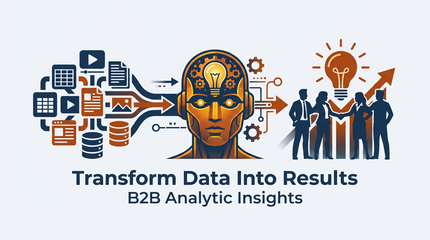

We all face a constant challenge. Our data tells us what happened. But the real value is knowing what will happen. And what we should do. Working capital is where this dynamic plays out every day. It’s the engine of our businesses. Keeping it running smoothly, and efficiently, is paramount. We need to see the future in our numbers. We need to act before the numbers even reach the ledger. This is about working capital intelligence. It’s about staying ahead.
We operate in a complex world. Supply chains stretch globally. Markets shift rapidly. And the pace of information is relentless. For decades, we have managed working capital. We’ve relied on our experience. We’ve built our understanding. But the scale of today’s operations demands more. We deal with thousands of commercial entities. The interdependencies are immense. Descriptive analytics give us a baseline. They show us our current state. They tell us how much inventory we hold. They reveal how long receivables linger. They detail our payables. This is essential. It’s the foundation of any discussion.
Inventory: More Than Just Stock
Inventory is a significant investment. It ties up capital. But too little can cripple operations. We need to understand what’s moving and why.
Tracking Inventory Turns
We look at inventory turns. This tells us how efficiently we are selling our stock. It’s a key indicator of demand and management.
Identifying Slow-Moving Stock
We must identify obsolete or slow-moving inventory. This is capital that’s not generating returns. It’s a drain.
Predicting Demand Fluctuations
This is where we start moving beyond just looking back. Predictive analytics help us forecast demand. We can then align inventory levels with anticipated needs. This reduces carrying costs and stockouts.
Receivables: The Lifeblood of Cash Flow
Accounts receivable is the cash tied up in sales not yet collected. Managing this effectively is critical.
Monitoring Days Sales Outstanding (DSO)
DSO is a standard measure. It tells us the average number of days it takes to collect payment. A rising DSO signals potential issues.
Analyzing Customer Payment Behavior
We can move beyond the aggregate. We can analyze actual payment behavior by customer. This reveals patterns. It highlights risk.
Proactive Credit Risk Assessment
Diagnostic analytics can help us understand why DSO is increasing. Is it specific customer segments? Are there internal process bottlenecks? Predictive models can then forecast potential late payments. This allows us to act proactively on credit terms or collection efforts.
Payables: Strategic Payment Timing
Accounts payable offers opportunities for optimized cash flow. It’s not just about paying bills. It’s about strategic payment.
Evaluating Payment Terms
Understanding our supplier payment terms is crucial. Can we negotiate better terms?
Identifying Early Payment Discounts
Are there early payment discounts we can capture? This can offer a guaranteed return.
Optimizing Payment Cycles
Prescriptive analytics can guide optimal payment timing. This balances our cash needs with supplier relationships and discount opportunities. We aim to hold cash as long as possible, without jeopardizing good standing or missing valuable discounts.
Uncovering the Deeper Causes
Descriptive analytics show us what happened. Diagnostic analytics help us understand why. This is where we start to see the real drivers of our working capital performance. It’s about peeling back the layers. It’s about looking beyond the surface. We must ask “why” repeatedly.
The Impact of Supply Chain Volatility
Our supply chains are more complex than ever. A disruption anywhere can ripple through our entire working capital cycle.
Mapping End-to-End Supply Chains
We need to see the entire chain. From raw material sourcing to final delivery. This gives us a holistic view.
Identifying Bottlenecks and Dependencies
Where are the choke points? What are the critical dependencies? Understanding these reveals vulnerabilities.
Assessing Supplier Risk Factors
Are our suppliers financially stable? Are they susceptible to disruptions? This is a key diagnostic step.
Customer Behavior and Market Dynamics
Customer behavior is not static. Market conditions are constantly evolving. These external factors significantly influence working capital.
Analyzing Sales Cycles and Trends
How long does it take to close a deal? What are the seasonal trends? Understanding these informs forecasting.
Gauging Economic Indicators
Broader economic trends impact demand and payment behavior. We need to monitor these closely.
Predicting Payment Delays Based on External Events
Geopolitical events, natural disasters, or industry shifts can all impact timely payments. Can we predict these impacts?
Internal Process Efficiencies
Our own internal processes play a massive role. Inefficiencies here can create significant drag on working capital.
Evaluating Order-to-Cash Processes
Are there delays in invoicing? Are there errors in billing? This directly impacts receivables.
Streamlining Procure-to-Pay Workflows
Are there delays in approving invoices? Are there manual steps that introduce errors? This impacts payables and supplier relationships.
The Role of Automation in Reducing Errors
We have seen tremendous advancements in automation. It’s no longer about replacing people. It’s about augmenting their capabilities. Automation reduces manual errors. It speeds up processes. It frees up our teams to focus on higher-value analysis and decision-making.
Forecasting the Future, Not Just Guessing
Predictive analytics is where we begin to anticipate. We move from reactive to proactive. This is not crystal ball gazing. It’s about building models based on data. It’s about understanding probabilities. The landscape is challenging. Global pressures like reshoring, sustainability mandates, and increased AI investment create uneven demand. Forecasting working capital becomes inherently more difficult. Yet, the need for accuracy is greater than ever.
AI-Driven Demand Forecasting
Artificial intelligence and machine learning offer powerful capabilities. They can process vast amounts of data. They identify complex patterns that humans might miss.
Incorporating External Data Sources
We can now integrate a wider array of data. This includes economic indicators, weather patterns, and even social media sentiment. This enriches our demand models.
Identifying Leading Indicators of Demand Change
AI can help us pinpoint early signals of shifts in market demand. This allows for faster adjustments to inventory and production plans.
Real-Time Forecasting Adjustments
The ability to continuously update forecasts means we are always working with the most current information. This responsiveness is crucial in volatile markets.
Predicting Payment Behavior
Understanding when payments are likely to be made is as important as forecasting demand.
Modeling Customer Payment Likelihood
By analyzing historical payment data, customer credit profiles, and external risk factors, we can build models to predict the probability of on-time payment.
Anomaly Detection for Potential Delinquencies
AI can flag unusual payment patterns or deviations from expected behavior. This allows for early intervention before a payment becomes significantly late.
Scenario Planning for Payment Disruptions
We can model the impact of various scenarios, such as economic downturns or industry-specific crises, on customer payment behavior. This prepares us for potential challenges.
The Value of Simulation and Sensitivity Analysis
Once we have predictive models, we can test their robustness.
Running “What-If” Scenarios
What happens to our cash flow if demand drops by 10%? What if a key supplier experiences a disruption? Simulation helps us understand these impacts.
Quantifying Risk Exposure
Sensitivity analysis helps us understand which variables have the largest impact on our working capital. This allows us to focus our mitigation efforts.
Prescribing Actionable Strategies
This is the ultimate goal. It’s not enough to forecast. We must know what to do. Prescriptive analytics turn insights into action. It’s about guiding our decisions. This is where we translate data into results. The top performers are widening the gap. They are those who adopt best practices and automation. They focus on better metrics.
Optimizing Inventory Levels
Based on forecasts and risk assessments, we can prescribe optimal inventory strategies.
Dynamic Safety Stock Adjustments
Safety stock levels should not be static. They should adjust based on predicted demand variability and supply chain risk.
Reorder Point Optimization
Prescriptive models can determine the ideal reorder points for each item, minimizing holding costs while preventing stockouts.
Markdown and Liquidation Recommendations
For slow-moving or obsolete inventory, prescriptive analytics can recommend optimal markdown strategies or liquidation timing to recover capital.
Enhancing Credit and Collections Management
Prescriptive insights can directly improve our credit and collections efforts.
Dynamic Credit Limit Recommendations
Based on real-time risk assessment and payment behavior, prescriptive models can recommend dynamic credit limits for customers.
Optimized Collection Strategies
We can prescribe the most effective communication channel and timing for collections outreach for different customer segments.
Early Warning and Intervention Triggers
Prescriptive systems can automatically trigger interventions, such as personalized payment reminders or requests for partial payments, when potential issues are detected.
Strategic Payment Policy Recommendations
Prescriptive analytics can guide our approach to paying our suppliers.
Balanced Payment Timing Guidance
This guidance optimizes cash holding while respecting supplier relationships and capturing available discounts.
Supplier Risk-Based Payment Prioritization
In situations of extreme liquidity constraint, prescriptive models can help prioritize payments to critical suppliers.
Building an Intelligent Working Capital Framework
| Metrics | Data |
|---|---|
| Days Sales Outstanding (DSO) | 45 days |
| Days Payable Outstanding (DPO) | 30 days |
| Inventory Turnover | 6 times |
| Working Capital Ratio | 1.5 |
This entire process is not a one-off project. It requires a continuous, integrated framework. It’s about building intelligence into our operations. This is where AI is becoming central. It’s used for document processing, anomaly detection, and decision support. Generative and agentic AI are entering cash visibility. This is a significant shift.
The Foundation: Robust Data Management
Our decisions are only as good as our data. A clean, integrated data ecosystem is non-negotiable.
Centralized Data Repositories
We need a single source of truth for our financial and operational data.
Data Quality and Governance
Implementing strong data governance ensures accuracy, consistency, and reliability.
Integrating Internal and External Data Streams
Bringing together all relevant internal data with external market intelligence is key.
The Engine: Advanced Analytics and AI
This is where we unlock the predictive and prescriptive power.
Implementing AI/ML for Key Tasks
From document processing in AP to anomaly detection in AR, AI drives efficiency and insight.
Developing Predictive and Prescriptive Models
We need models tailored to our specific business context and challenges.
Continuous Model Refinement and Training
AI models require ongoing monitoring and retraining to maintain accuracy.
The Outcome: Enhanced Cash Visibility and Decision Support
Generative and agentic AI are enhancing cash visibility. This means seeing our cash position clearly, in real-time, and understanding its drivers.
Real-Time Cash Flow Dashboards
Providing accessible, intelligent views of our cash position.
Automated Alerting and Exception Management
Highlighting critical deviations and potential issues immediately.
AI-Powered Decision Support Tools
Providing recommendations and insights to aid human decision-makers.
Cultural Integration and Change Management
Technology is only part of the equation. Our people must be equipped and empowered.
Training and Upskilling Finance Teams
Ensuring our teams can effectively interpret and act on the insights provided.
Fostering a Data-Driven Decision Culture
Encouraging a mindset where data informs strategy and operations.
Collaboration Between Finance, Operations, and IT
Breaking down silos is essential for a unified approach.
Working capital intelligence is not a luxury. It is a necessity. It is about seeing the future within our present numbers. It is about transforming data into tangible results. It is about leading with insight, supported by data, and executed with precision. By embracing these principles, we can ensure our working capital is a strategic asset, not a constraint. We can stay ahead, before the numbers even catch up.