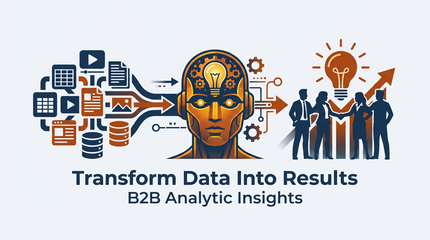
The pressure is on. In today’s hyper-competitive B2B landscape, stale data is equivalent to a missed opportunity—or worse, a strategic misstep. For years, we’ve talked about the promise of AI, the potential of unleashing intelligent systems to revolutionize everything from credit risk assessment to enterprise operations. But the reality has often been a complex, disconnected development cycle: models built in isolated environments, deployed, and then left to languish, fed by infrequent batch updates. This disconnect is no longer tenable. The imperative is clear: production AI needs real-time data. My 25 years in analytics have taught me that transformative change doesn’t happen by accident; it requires a fundamental shift in how we architect and operationalize intelligence.
The Real-Time Imperative: From Data Static to Data Dynamic
The narrative around AI is evolving. What was once a “nice-to-have” is now a non-negotiable bedrock for delivering actual business value. Think about it: if your credit risk models are trained on data that’s a week old, how effectively can they predict an impending default caused by a sudden market disruption that occurred yesterday? The answer is, poorly. This is precisely why real-time data is becoming the oxygen for production AI. It’s not about simply having access to data; it’s about having access to fresh, governed data in motion. This shift is fundamentally altering how we approach analytics transformation. We’re moving from a world of periodic reports and dashboards to a world where intelligence is embedded, acting on live signals. This is where the rubber meets the road for data-driven decision-making.
The Shifting Sands of Data Strategy
For too long, our analytical capabilities have been tethered to batch processing. We’d extract, transform, and load data in scheduled intervals, creating snapshots that, while useful for historical analysis, inherently lack the immediacy required for proactive decision-making. This approach creates inevitable lag, a delta between the real world and the data representation of it. This lag is where opportunities slip through our fingers and risks fester undetected. Consider a B2B financial services firm evaluating a large loan application. If the underlying market sentiment indicators or a fraud consortium flag are only updated daily, the decision engine is operating with outdated context, significantly increasing exposure. The move to streaming AI acknowledges this deficiency and positions real-time data as the antidote, ensuring our intelligence systems are as agile as the market itself.
Beyond Dashboards: Towards Actionable Intelligence
The market is clearly signaling a departure from static dashboards. While visualization tools remain important for understanding trends, the true power of modern analytics lies in decisioning. This means AI systems not only identify anomalies or predict outcomes but also autonomously initiate actions or provide immediate, contextual guidance to human decision-makers. For instance, in enterprise operations, a predictive maintenance system that detects an impending equipment failure can not only alert an operator but also automatically trigger a work order and even adjust production schedules to minimize downtime. This transition from ‘reporting’ to ‘acting’ is a hallmark of mature analytics transformation programs, and it is inextricably linked to the consumption of real-time data.
For those interested in exploring the intricacies of Real-Time Analytics Architecture and its application in Streaming AI, a related article can be found at B2B Analytic Insights. This resource delves into the foundational concepts of data analytics and provides insights into how businesses can leverage real-time data processing to enhance decision-making and operational efficiency.
Architecting for Velocity: The Streaming Foundation
The technical underpinning of this real-time revolution is streaming architecture. It’s the unsung hero that bridges the gap between the ambition of AI and the tangible value it can deliver to the enterprise. Historically, integrating real-time streams with established data warehouses or data lakes for analytical purposes was a complex, often bespoke endeavor. Streaming architecture, however, is designed to unify these disparate elements. It allows for continuous ingestion of data as it’s generated, processing it on the fly while simultaneously making it available for both immediate inference and historical storage. This creates a single, coherent architecture that fuels both current decision-making and future model training, eliminating the silos that have hampered progress. This is the engine of truly dynamic data-driven decision-making.
The Rise of Continuous Feature Engineering
A critical aspect of modern real-time AI architectures is the emphasis on fresh feature pipelines. Gone are the days of scheduled batch feature engineering jobs. Instead, we are seeing a surge in the adoption of techniques like Change Data Capture (CDC), event streaming platforms, and continuous stream processing. These methods enable the continuous extraction and transformation of raw data into meaningful features that AI models can consume with minimal latency. For example, in a B2B e-commerce scenario, a customer’s purchasing intent can be instantly captured through their browsing behavior, cart additions, and interaction patterns, transforming these raw events into real-time features that can inform personalized recommendations or fraud detection algorithms. This continuous evolution of features ensures that AI models are always leveraging the most current understanding of the business context.
Unifying Data Streams and Historical Context
The power of streaming architecture lies in its ability to create a unified view of data. It’s not about abandoning historical data stores; rather, it’s about augmenting them. Real-time streams provide the immediate context, while historical data offers the long-term perspective for pattern recognition and trend analysis. A sophisticated fraud detection system, for instance, needs to identify newly emerging fraud patterns in real-time (streaming data) while also understanding historical anomalies and the typical behavior of legitimate transactions over time (historical data). Streaming architecture facilitates this by allowing models to access both, creating a far more robust and accurate intelligence system. This is the essence of a complete analytics transformation, where technology and business strategy are in lockstep.
Production-Readiness: Governance and Reliability are Paramount
The challenge then becomes operationalizing this real-time intelligence. It’s one thing to build a model that uses fresh data; it’s another to ensure that system is reliable, accountable, and performing as expected in a production environment. This necessitates a significant expansion of AI reliability monitoring, moving beyond just the model itself. We now need to scrutinize the health of the entire streaming pipeline, from data ingestion to model inference. This includes rigorous oversight of schema governance, data freshness, latency across the entire flow, and, crucially, feature consistency. The goal is to achieve dependable, trustworthy AI.
Beyond Model-Centric Monitoring
The traditional approach to monitoring focused on model performance metrics like accuracy or precision. While important, this is insufficient for streaming AI. We’re now seeing operational teams meticulously tracking end-to-end latency, from the moment an event is generated to when its inference is completed. Equally vital is monitoring feature freshness – how up-to-date are the features that the model is using? Furthermore, a critical consideration is feature drift. The distribution of features used for training a model can differ significantly from the distribution of features observed in production, especially with real-time data. Detecting and mitigating this drift is essential for maintaining model performance over time.
Continuous Evaluation: The AI Lifecycle in Motion
Production-ready AI demands continuous evaluation, not just periodic retraining. This means constantly feeding streams of fresh information into the system, not only to retrain models but also to validate their ongoing performance against current reality. This is a fundamental shift in the AI lifecycle. Instead of a discrete development and deployment phase, we’re embracing a dynamic, always-on process. This iterative approach, fueled by real-time data and robust monitoring, is what drives a true analytics transformation and ensures that AI systems remain effective and relevant in a constantly changing business environment. The emphasis on time-to-insight becomes paramount when every second of delay can translate to lost revenue or increased risk.
The Technological Backbone: Managed Cloud-Native Stacks
Where are organizations building these sophisticated real-time analytics and AI capabilities? The answer is increasingly clear: managed cloud-native stacks. These platforms are becoming the default choice for good reason. They offer an integrated suite of services that handle the complexities of data ingestion, processing, storage, and AI model deployment and management. Giants like Google Cloud, Databricks, Microsoft Fabric, and AWS are investing heavily in building comprehensive ecosystems. These platforms are not just offering individual tools; they are integrating streaming capabilities, advanced analytics engines, and robust machine learning frameworks into unified architectures. This simplifies the development and operationalization of real-time AI, allowing businesses to focus on deriving value rather than wrestling with infrastructure.
The Power of Integrated Platforms
The advantage of these managed platforms is the inherent synergy between their components. For example, a data engineer can leverage a platform’s event streaming service to ingest customer interactions in real-time, then seamlessly pass that data to a stream processing engine for feature engineering, before feeding it into a managed ML platform for inference. This end-to-end integration reduces the friction and complexity often associated with stitching together disparate open-source tools. This level of integration accelerates the time-to-insight and empowers organizations to deploy AI solutions faster and more reliably. It’s about democratizing access to sophisticated real-time capabilities.
Balancing Open Source and Managed Services
While managed cloud-native stacks are dominant, the landscape isn’t monolithic. Many organizations still leverage open-source technologies, often in conjunction with managed services. For instance, Kafka might be used for message queuing, while cloud provider services handle the machine learning model deployment. The key is to adopt an architecture that balances the flexibility and customization of open-source solutions with the scalability, reliability, and managed operational overhead of cloud platforms. The ultimate goal is to build an architecture that is both technically sound and practically feasible for your organization’s specific needs and resources.
In the rapidly evolving world of data processing, understanding the intricacies of Real-Time Analytics Architecture is crucial for organizations looking to leverage Streaming AI in production. A related article that delves deeper into the practical applications and benefits of this technology can be found at B2B Analytic Insights. This resource provides valuable insights into how businesses can effectively implement real-time analytics to enhance decision-making and drive operational efficiency.
Enterprise Operations and Financial Analysis: Real-Time Use Cases
The impact of real-time analytics and streaming AI is profound, particularly in areas like enterprise operations and financial analysis. These domains are inherently data-intensive and benefit immensely from the ability to react, adapt, and predict with high velocity. My experience has shown that organizations that embrace this paradigm witness tangible improvements in efficiency, risk management, and profitability.
Streamlining Enterprise Operations for Peak Efficiency
In a manufacturing setting, real-time sensor data from machinery can be fed into an AI model to predict equipment failure before it occurs. This proactive approach, facilitated by streaming AI, allows for scheduled maintenance, minimizing costly unplanned downtime. This translates directly to increased throughput, reduced repair costs, and improved operational efficiency – all quantifiable ROI metrics. Similarly, supply chain optimization can leverage real-time data on weather patterns, geopolitical events, and demand fluctuations to dynamically reroute shipments, reallocate inventory, and mitigate disruptions. This level of agility is only possible with a real-time data architecture.
Revolutionizing Credit Risk and Fraud Detection
For financial institutions, the stakes are even higher. Real-time credit risk assessment is no longer a luxury but a necessity. By analyzing live market data, transaction patterns, and external risk signals, lending decisions can be made with a more accurate understanding of current risk exposure. Consider the impact of immediately flagging suspicious transactions as they occur, preventing fraud before losses materialize. This involves ingesting transaction data in real-time, applying AI models that continuously assess risk scores, and triggering alerts or interventions within milliseconds. This is where the tight coupling of streaming data and AI delivers immediate, verifiable financial benefits, significantly reducing financial losses – a core C-suite concern.
Predictive Analytics for Enhanced Customer Experience
In B2B sales and customer service, real-time analytics can transform customer interactions. By analyzing a customer’s live engagement with marketing materials, website interactions, and support requests, AI can predict their next likely action or identify potential churn signals. This allows sales teams to proactively engage with personalized offers or for customer success teams to intervene with targeted support, driving both customer satisfaction and retention. The ability to offer contextual, real-time assistance based on live behavioral data is a significant differentiator in the B2B market, directly impacting customer lifetime value and revenue.
Challenges and the Path Forward
While the benefits are compelling, the journey to a production-ready streaming AI architecture is not without its hurdles. It requires a significant investment in technology, talent, and organizational change. It’s crucial to acknowledge these challenges and approach them strategically.
The Talent Gap and Skill Development
One of the most significant challenges is the availability of skilled personnel. Building, deploying, and managing real-time streaming AI systems requires a blend of expertise in data engineering, machine learning, MLOps, and cloud infrastructure. Many organizations find themselves grappling with a talent gap. This necessitates a proactive approach to upskilling existing staff and attracting new talent with specialized skills. Investing in training programs and fostering a culture of continuous learning is paramount for successful analytics transformation.
Technical Debt and Legacy Systems
Many established enterprises operate with legacy systems that were not designed for real-time data processing. Integrating new streaming architectures with these existing systems can be complex and costly. Addressing technical debt proactively, through phased modernization efforts or strategic API development, is often a prerequisite for realizing the full potential of real-time AI. This involves careful planning and prioritization to ensure that new investments align with long-term strategic goals.
The Complexity of Governance and Security
Maintaining governance and security across a continuous stream of data is a formidable undertaking. Ensuring data lineage, compliance with regulations like GDPR, and robust cybersecurity protocols becomes more intricate in a real-time environment. Implementing comprehensive data governance frameworks that can scale with the velocity and volume of streaming data is essential. This includes establishing clear ownership, defining access controls, and implementing automated auditing mechanisms.
Strategic Recommendations for C-Suite and Analytics Leaders
To navigate this evolving landscape effectively, my recommendations are clear:
- Embrace a Data-In-Motion Strategy: Reframe your data strategy around the principle that data is a living entity, not a static artifact. Prioritize investments in streaming infrastructure and real-time data pipelines as the foundation for all future AI initiatives.
- Champion Analytics Transformation Holistically: Recognize that analytics transformation is not solely a technology play. It’s an organizational endeavor that requires leadership buy-in, cross-functional collaboration, and a cultural shift towards data-driven decision-making at all levels. Focus on building capabilities, not just implementing tools.
- Invest in Skills and Talent Development: Proactively address the talent gap by investing in continuous learning programs for your existing workforce and by strategically recruiting individuals with specialized skills in streaming technologies and MLOps.
- Prioritize End-to-End Reliability and Governance: Implement robust monitoring for streaming pipelines, feature freshness, and model drift. Establish clear governance frameworks that extend beyond model performance to encompass the entire data lifecycle.
- Start Small, Scale Smart: Begin with pilot projects that demonstrate clear ROI and progressively scale your real-time AI capabilities across the organization. Focus on solving specific, high-impact business problems first to build momentum and validate your approach.
The era of real-time AI in production is here. The organizations that strategically architect their data and leverage streaming technologies will be the ones that lead in data-driven decision making, achieve superior operational efficiency, and gain a decisive competitive edge. This is not a future prospect; it is an immediate imperative for sustained B2B success.