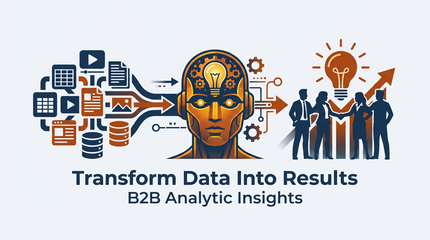

The financial services sector, grappling with increasingly complex credit risk models, and enterprise operations struggling with fragmented data landscapes, face a critical imperative: extracting actionable insights from ever-growing, diverse datasets. We’re beyond the era of simple dashboards; today, the competitive edge belongs to those who operationalize AI at speed and scale. This isn’t just about faster reporting; it’s about transforming how we make decisions, from identifying fraudulent transactions to optimizing supply chains. The challenge isn’t merely data volume, but data variety and the nuanced, contextual understanding required for true data-driven decision-making. We need a new foundation, a paradigm shift, to unlock the full potential of AI for analytics.
For decades, relational databases and even NoSQL solutions have served us well for structured and semi-structured data. But the rise of unstructured data – text, images, audio, video – combined with the explosion of generative AI and large language models (LLMs), has created a critical gap. Traditional databases are fundamentally ill-equipped to handle the semantic similarity and contextual searches that power truly intelligent applications. This is where vector databases come in, transforming data into high-dimensional numerical representations – vectors – that capture meaning and relationships.
Bridging the Semantic Gap with Vector Embeddings
Think about credit risk. It’s not just about a credit score; it’s about the narrative around a borrower’s financial history, their industry sector, market sentiment, and even news articles impacting their business. A vector database can encode these multifaceted data points into a single vector, allowing for lightning-fast comparisons and pattern recognition. This isn’t just “fuzzy matching”; it’s a deep understanding of contextual relevance.
Beyond Keywords: The Power of Semantic Search
Traditional search relies on keywords, often missing the nuances of user intent. Semantic search, fueled by vector embeddings, understands the meaning behind the query. For our enterprise operations, this means a procurement team searching for “sustainable durable goods suppliers” doesn’t just get results matching those exact words but also suppliers known for eco-friendly practices, long-lasting products, and ethical sourcing, even if those specific terms aren’t present. The time-to-insight shrinks dramatically as the need for manual curation and keyword iteration vanishes.
In exploring the transformative potential of vector databases for analytics, it is essential to consider the broader context of AI-driven data solutions. A related article that delves into the foundational aspects of these technologies is available at B2B Analytic Insights, which discusses how innovative data management strategies are shaping the future of business intelligence and analytics. This resource provides valuable insights into the evolving landscape of data analytics and its implications for organizations looking to harness AI for enhanced decision-making.
Unlocking AI’s Potential: Vector Databases as the Backbone for Advanced Analytics Workloads
The latest advancements in AI, particularly generative AI and large language models (LLMs), are voracious consumers of vector embeddings. Retrieval Augmented Generation (RAG) architectures, semantic search capabilities for copilots, and multimodal analytics – which integrates various data types like text, images, and sensor data – all depend fundamentally on efficient vector storage and retrieval. This isn’t a niche technology; it’s becoming core infrastructure.
Powering Retrieval Augmented Generation (RAG)
In B2B scenarios, imagine a financial analyst querying a system about a specific company’s financial health. Instead of hallucinating responses, a RAG system leverages a vector database to retrieve highly relevant internal documents, market reports, and news articles, then uses an LLM to synthesize an accurate, contextualized answer. We’re talking about analytical veracity at scale. Weaviate’s expansion of its AI stack with agent services is a direct example of catering to these advanced retrieval and analytics workflows, moving beyond simple Q&A to proactive, intelligent assistants.
The Rise of Intelligent Copilots
Enterprise copilots are poised to revolutionize how employees interact with complex data. From sales teams asking about customer behavior patterns to IT operations diagnosing system anomalies, these copilots need to access and interpret vast amounts of information quickly and accurately. Vector databases provide the engine for these copilots to semantically understand queries and pull the most relevant data points for informed responses, driving efficiency and reducing decision-making latency.
Multimodal Analytics: Integrating Diverse Data for Holistic Views
Financial fraud detection, for instance, often requires correlating transaction data with communication logs, video surveillance snippets, and social media sentiment. This is multimodal analytics. By embedding different data types into a shared vector space, vector databases allow for cross-modal queries and analysis that were previously impossible or prohibitively complex. The market trend is clear: hybrid search capabilities that combine traditional keyword search with semantic vector search are becoming the standard for comprehensive analytics.
Addressing Performance and Scalability: The Engineering Imperative

While the conceptual power of vector databases is undeniable, practical implementation in enterprise environments demands robust performance and scalability. This is where engineering innovations are rapidly closing the gap, enabling organizations to deploy vector-powered analytics without incurring prohibitive infrastructure costs or sacrificing query speed.
Optimizing for Speed and Efficiency
The performance race is on. Google AlloyDB’s upgrades, including inline filtering for faster Approximate Nearest Neighbor (ANN) queries, demonstrate a commitment to reducing query latency, a critical factor for real-time analytics and interactive AI applications. Similarly, the Zilliz/Milvus 2.4 upgrades leveraging NVIDIA-powered GPU indexing represent a significant leap in speeding up large-scale vector search, essential for handling the massive datasets common in enterprise operations like supply chain optimization or fraud detection across millions of transactions. These aren’t just incremental improvements; they are foundational enhancements that unlock new possibilities.
Cost-Effective Scalability for Enterprise Workloads
One major concern for any C-suite executive is infrastructure cost. Elastic DiskBBQ for Elasticsearch directly addresses this by introducing a disk-friendly vector search algorithm. This innovation significantly reduces memory usage, directly translating into lower infrastructure costs while improving query speed. For organizations dealing with petabytes of data, this is not a minor detail; it’s a game-changer for economic scalability. Microsoft Azure Cosmos DB also recognizes this with its updates in October 2025, offering faster batch reads and automatic write retries, addressing the operational resilience required for large-scale, mission-critical analytics workloads.
Hybrid and Cloud-Native Deployments
The flexibility of deployment is paramount in complex enterprise environments. MongoDB’s extension of its vector search capabilities to Community Edition and Enterprise Server – supporting full-text, semantic, and hybrid search – is a testament to the need for self-managed AI and analytics environments. This acknowledges that not all data resides in the cloud, and organizations require robust vector search capabilities across hybrid and multi-cloud architectures. The trend towards cloud-native and hybrid-search capabilities is a direct response to these diverse enterprise needs, offering architectural flexibility without compromising on advanced AI-powered insights.
Strategic Implementation: Bridging Technology with Business Value

Adopting vector databases for analytics isn’t just a technical upgrade; it’s an analytics transformation that requires a strategic approach, encompassing technology, process, and people. Simply deploying the technology without an overarching strategy will yield minimal ROI.
Defining Use Cases and Measuring ROI
The C-suite demands a clear return on investment. For credit risk, this means demonstrating how vector databases improve default prediction accuracy by X%, leading to Y% reduction in bad debt. For enterprise operations, it could be a Z% reduction in maintenance costs through predictive analytics or an A% improvement in customer satisfaction driven by more personalized service offerings. Start with high-impact, well-defined business problems where vector databases can deliver a measurable uplift. For example, a major financial institution could use vector search to analyze unstructured analyst reports, earnings call transcripts, and news media sentiment to build a more comprehensive and forward-looking credit risk profile for corporate borrowers, reducing write-offs by targeting specific high-risk sectors or individual companies with early intervention strategies.
Data Governance and ETL for Vectorization
The quality of the vector embeddings is directly tied to the quality of the underlying data and the effectiveness of the embedding models. Therefore, robust data governance and efficient Extract, Transform, Load (ETL) processes for data vectorization are critical. This involves identifying relevant data sources, selecting appropriate embedding models (e.g., for natural language processing, image recognition), and establishing pipelines to continuously update and refresh these embeddings. The journey from raw data to actionable vectors must be seamless and automated, enabling organizations to maintain a real-time, comprehensive view of their operational landscape.
Organizational Change and Skill Development
The most sophisticated technology is useless without the human capital to leverage it. Analytics leaders must invest in upskilling their teams in areas like vector embedding techniques, prompt engineering for LLMs, and the nuances of vector search algorithms. This isn’t about replacing data scientists; it’s about augmenting their capabilities and enabling them to tackle more complex, nuanced problems. Fostering a culture of experimentation and continuous learning is paramount for successful analytics transformation. The human expertise in understanding business context and translating it into analytical frameworks remains irreplaceable.
In the rapidly evolving landscape of data analytics, the emergence of vector databases is reshaping how organizations harness AI for insights. A related article that delves deeper into this transformation can be found at B2B Analytic Insights, where it explores the foundational role these databases play in enhancing analytical capabilities. By leveraging vector databases, businesses can unlock new dimensions of data processing, ultimately driving more informed decision-making and strategic growth.
The Path Forward: Strategic Recommendations for C-Suite and Analytics Leaders
| Database Name | Features | Scalability | Performance |
|---|---|---|---|
| Vectorwise | Columnar storage, compression, vector processing | Highly scalable | High performance for analytical workloads |
| VectorH | Hybrid row-column storage, vector processing | Horizontally scalable | Optimized for mixed workloads |
| VectorP | Parallel processing, vectorized execution | Linearly scalable | High performance for parallel processing |
The trajectory is clear: vector databases are moving from specialized tools to essential infrastructure for any organization serious about data-driven decision-making and AI-powered insights.
For the C-Suite: Prioritize investments in vector database technologies as part of your broader AI strategy. Focus on use cases with clear, measurable ROI, particularly in areas like risk management, customer experience, and operational efficiency where semantic understanding provides a distinct advantage. Recognize this as a strategic enabler for competitive differentiation, not just a technical upgrade. Your competitors are already looking here.
For Analytics Leaders: Develop a roadmap for integrating vector databases into your existing data infrastructure. Start with pilot projects that demonstrate tangible business value. Invest in training your teams and collaborating with data engineering to establish robust data pipelines for vectorization. Embrace hybrid search capabilities to maximize the value from both structured and unstructured data. Your role is to bridge the technical capabilities of vector databases with the strategic needs of the business.
For Practitioners: Dive into the technical details. Experiment with different embedding models, explore the performance characteristics of various vector algorithms, and understand the trade-offs between precision and recall in approximate nearest neighbor search. Your hands-on expertise will be critical in translating high-level business objectives into effective vector-powered solutions.
The era of merely descriptive analytics is over. We are firmly in the age of predictive and prescriptive AI, driven by a deep, semantic understanding of our data. Vector databases are not merely a new component in our data stack; they are the new foundation, enabling the sophisticated time-to-insight and data-driven decision-making that will define success in the coming years. Embrace this change, and you’ll unlock unparalleled analytical power.