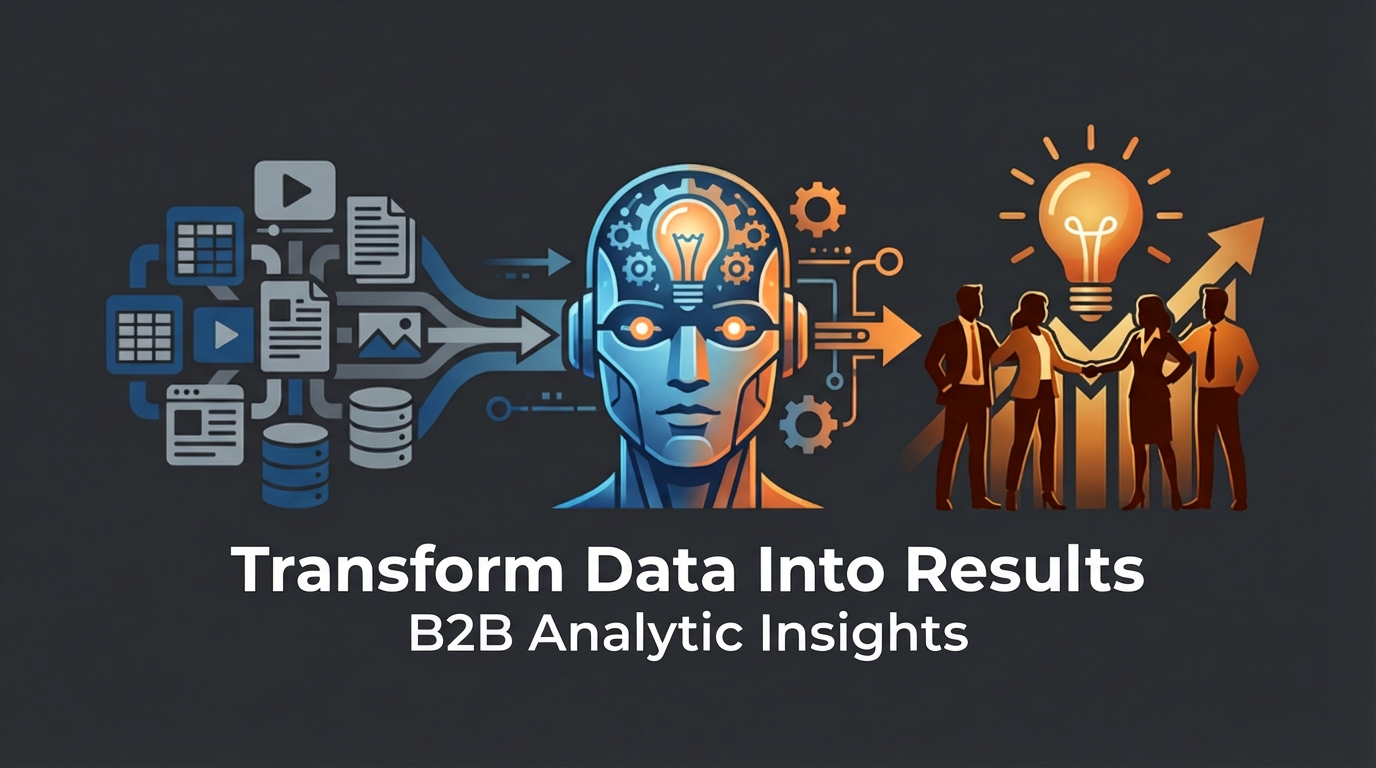

Greetings. For over two decades, I’ve navigated the complex intersection of data, strategy, and execution within B2B enterprises. I’ve witnessed firsthand the profound impact of analytics transformation on the bottom line, particularly in credit risk, financial analysis, and optimizing enterprise operations. Today, the conversation isn’t just about data; it’s about infusing intelligence directly into the operational fabric of our organizations. We’re beyond the theoretical – we’re in the trenches, leveraging analytical capabilities to solve real business problems, drive efficiency, and unlock entirely new avenues of growth. This isn’t just about fancy algorithms; it’s about connecting the dots from data-driven insight to tangible business value, a journey that demands shrewd strategy and meticulous implementation.
Driving Operational Excellence Through Intelligent Automation
The pursuit of operational excellence is a perpetual organizational imperative. For years, we’ve optimized processes, streamlined workflows, and sought marginal gains. Now, with the accelerated adoption of advanced analytics and AI, we’re witnessing a seismic shift. This isn’t just process improvement; it’s about fundamentally rethinking how work gets done, identifying and eliminating what Celonis aptly terms “execution gaps” that silently erode productivity and profitability.
AI Infusion in Enterprise Workflows
The reality is, AI is no longer a peripheral technology; it’s being pushed deeper into the core of enterprise workflows. We’re embedding intelligent agents directly into the systems our teams use every day. Consider the example of Fresworks’ pivot toward AI-driven employee experience. Their AI Agent Studio, MCP Gateway, and AI dashboards aren’t just incremental updates; they represent a strategic commitment to transforming how employees interact with internal systems. Imagine an AI agent autonomously handling a significant percentage of routine HR queries, freeing up human resources for more complex, empathetic interactions. This directly translates to reduced overhead and improved employee satisfaction—a measurable ROI.
From a credit risk perspective, this can mean AI agents pre-processing loan applications, performing initial fraud checks, and flagging discrepancies, significantly reducing the “time-to-decision” while improving accuracy. This isn’t about replacing analysts; it’s about augmenting their capabilities, allowing them to focus on nuanced evaluations and high-risk cases. For financial analysis teams, think about AI accelerating the reconciliation of complex financial data, identifying anomalies in spending patterns, and even generating preliminary financial forecasts, shaving hours off reporting cycles. The practical implementation here involves careful integration with existing ERP and CRM systems, ensuring data integrity and robust API connectivity.
Modernizing Legacy Systems with AI
A significant challenge for many established enterprises lies in their extensive portfolio of legacy systems. These platforms, often decades old, are deeply embedded in core operations. The notion of “ripping and replacing” is financially prohibitive and operationally disruptive. This is where strategic integration of AI becomes paramount. SAP’s initiative to add AI to legacy enterprise systems, even with its stipulated conditions for older platforms, acknowledges this reality. It’s not about immediate, wholesale transformation, but about finding intelligent ways to augment existing capabilities.
For credit risk management, this could involve overlaying AI-powered predictive models onto existing mainframe-based credit scoring engines, enhancing their accuracy without a complete system overhaul. In enterprise operations, imagine leveraging AI to analyze transaction logs from legacy supply chain systems, identifying bottlenecks and predicting potential disruptions long before they impact delivery schedules. The key here is developing intelligent connectors and APIs that allow AI models to ingest and process data from these older systems, then feed actionable insights back into the operational flow. This requires a deep understanding of both the legacy architecture and modern AI deployment paradigms, bridging the technical gap with a clear business objective. Our success hinges on meticulous integration plans and rigorous testing, ensuring that incremental AI enhancements deliver measurable improvements without compromising system stability.
The Blueprint for AI at the Core
IBM’s blueprint for running AI at the core of enterprise operations underscores this strategic imperative. It’s not about isolated AI projects but about fundamentally rethinking the design of our enterprise architecture to be AI-centric. This requires a shift in mindset, from viewing AI as a tool to seeing it as an integral component of our operational machinery. For credit risk, this means integrating AI into every stage of the customer lifecycle, from initial onboarding to ongoing portfolio monitoring. For financial analysis, it involves AI-driven scenario planning and predictive analytics embedded directly into financial planning and analysis (FP&A) systems. In enterprise operations, it means building AI into inventory management, logistics optimization, and predictive maintenance protocols. This is a foundational change, demanding significant investment in infrastructure, talent, and data governance.
For those interested in exploring the latest trends and innovations in Industry Applications, a related article that delves into the impact of data analytics on manufacturing processes can be found at this link. This article provides valuable insights into how businesses can leverage data to enhance operational efficiency and drive growth in various industrial sectors.
Securing the Intelligent Enterprise
As we usher in this era of deeply integrated AI, the cybersecurity landscape dramatically shifts. More intelligent systems mean more sophisticated attack surfaces. The challenge is no longer just about protecting data; it’s about protecting the intelligent decision-making apparatus itself. This demands a proactive, robust approach to security.
Addressing AI-Related Cybersecurity Threats
Oracle’s plan for more frequent patching to address AI-related cybersecurity threats is a stark reminder of this evolving risk. As AI models become more sophisticated and trained on vast datasets, they become attractive targets for manipulation or intellectual property theft. Adversarial AI, where malicious actors attempt to trick or corrupt AI models, is a growing concern. For credit risk systems, this could manifest as attempts to bypass fraud detection algorithms or manipulate credit scores. In financial analysis, imagine scenarios where AI models are tampered with to generate misleading financial reports.
Our strategy must encompass not only traditional cybersecurity measures but also AI-specific security protocols. This includes robust data anonymization, secure model deployment environments, and continuous monitoring for anomalous AI behavior. It also means incorporating explainable AI (XAI) techniques to understand how models arrive at their decisions, helping to identify potential compromises. The cost of a breach, both reputational and financial, far outweighs the investment in preventative security measures, a point I frequently emphasize to C-suite executives who prioritize ROI.
Industrial Cybersecurity and Asset Intelligence
The convergence of IT and OT (Operational Technology) is accelerating, particularly in manufacturing and industrial settings. Accenture’s expansion into industrial cybersecurity and asset intelligence, with acquisitions like Dragos, runZero, and NetRise, highlights the criticality of securing these interconnected environments. Industrial Ethernet, now dominating factory networks, creates a vast attack surface that requires specialized protection.
For enterprise operations with significant manufacturing or industrial components, the threat of cyber-physical attacks is real and potentially catastrophic. Imagine a malicious actor tampering with the AI controlling a robotic assembly line or disrupting the predictive maintenance systems for critical machinery. This isn’t just about data loss; it’s about production halts, physical damage, and even safety hazards. Our analytics leaders must recognize that asset intelligence—understanding the behavior and health of our industrial assets—is inextricably linked with cybersecurity. This involves using analytics to detect anomalies in machine performance that could indicate either a mechanical failure or a cyber intrusion. The integration of OT security analytics into our broader enterprise security operations center (SOC) is no longer optional; it’s a strategic imperative. We need to be able to identify, respond to, and mitigate threats across both our digital and physical operational landscapes with speed and precision.
The Rise of Intelligent Industrial Operations
The factory floor, once a bastion of mechanical processes, is now at the forefront of analytics transformation. The marriage of AI, robotics, and smart connectivity is revolutionizing manufacturing and industrial operations, driving unprecedented levels of efficiency, precision, and agility.
Accelerating Automation and Precision Engineering
The latest developments in industrial automation and connectivity are nothing short of transformative. HMS Networks’ Ewon Edge & Cloud, N-Tron NT7000 switches, and Yaskawa’s larger handling robots are examples of products that are enabling a new era of intelligent factories. This isn’t just about automating repetitive tasks; it’s about using data-driven insights to optimize every aspect of the production process, from material flow to quality control.
In manufacturing, AI-powered vision systems can inspect products with far greater accuracy and speed than human inspectors, reducing defects and improving overall quality. Predictive maintenance, driven by machine learning models analyzing sensor data, allows for the proactive replacement of components before they fail, minimizing costly downtime. For larger enterprises with complex supply chains, this translates directly to reduced operational costs and increased output. The analytics leader’s role here is to identify the critical operational bottlenecks and leverage these new technologies to deliver measurable improvements, focusing on metrics like OEE (Overall Equipment Effectiveness) and MTBF (Mean Time Between Failures).
Smart Connectivity and Industrial IoT
Industrial Ethernet’s dominance, connecting nearly eight in ten new automation nodes, underscores the foundational role of pervasive connectivity. This network infrastructure is the nervous system of the intelligent factory, enabling the massive data flows required for AI and IoT applications. Manufacturing and industrial software continues to focus heavily on AI, robotics, and smart connectivity because these are the foundational pillars of the next industrial revolution.
Consider the application of Industrial IoT (IIoT) sensors throughout a production facility. These sensors generate vast quantities of data on temperature, pressure, vibration, and energy consumption. Analytics, particularly edge analytics, can process this data in real-time, identifying anomalies, optimizing machine settings, and even predicting equipment failures. This level of granular visibility and control was unimaginable a decade ago. For example, a large discrete manufacturer might use AI to optimize tool path generation, reducing material waste and cycle times by 15-20%, a significant impact on profitability. This requires a robust data architecture, from sensor to cloud, and the analytical expertise to extract actionable insights from the torrent of IIoT data.
AI in the Consumer-Facing Enterprise
While much of the focus has been on internal operational efficiencies, the application of AI in the consumption sector is rapidly expanding, driving better customer experiences and opening new revenue streams. China’s promotion of AI use in both products and services signals a broader global trend.
Enhancing Customer Experience and Personalization
For B2B enterprises serving large customer bases, particularly in financial services or telecoms, AI is revolutionizing customer interaction. Imagine AI-powered chatbots handling routine customer inquiries with high accuracy, leading to shorter wait times and higher satisfaction scores. Beyond simple chatbots, AI is enabling advanced personalization across the customer journey.
For credit card companies, AI can analyze spending patterns to offer highly targeted promotions, improving customer loyalty and increasing average transaction values. In wealth management, AI can assist advisors in generating personalized investment recommendations based on a client’s risk profile and financial goals. This isn’t just about selling more; it’s about delivering a superior, tailored experience that fosters long-term relationships. Measuring the impact here involves metrics like Net Promoter Score (NPS), customer lifetime value (CLTV), and conversion rates for personalized offers. We need to go beyond surface-level metrics and understand the true impact on customer engagement and loyalty.
Optimizing Product and Service Delivery
AI is also playing a crucial role in optimizing the delivery of products and services. From dynamic pricing models that respond to real-time market conditions to AI-driven logistics that ensure timely and efficient delivery, the impact is widespread.
Consider a large e-commerce platform where AI algorithms optimize warehousing layouts, route delivery vehicles, and even predict demand for specific products, ensuring optimal inventory levels. This directly impacts fulfillment costs and customer satisfaction. In the insurance sector, AI is being used to streamline claims processing, using natural language processing (NLP) to analyze claims documents and identify potential fraud more efficiently. This not only reduces operational costs but also accelerates payouts for legitimate claims, improving customer trust. The strategic recommendation here is to identify high-volume, repetitive processes within your customer-facing operations and evaluate where AI can introduce significant efficiencies and elevate the customer experience. The key is to blend human empathy and problem-solving with AI’s speed and analytical power.
In the realm of Industry Applications, the integration of advanced analytics is becoming increasingly vital for businesses looking to enhance their operational efficiency and decision-making processes. A related article discusses how analytics can transform raw data into meaningful actions, providing insights that drive strategic initiatives. For more information on this transformative power, you can read the article here. This resource highlights the importance of leveraging data to gain a competitive edge in today’s fast-paced market.
Organizational Strategy for Analytics Transformation
Analytics transformation is not merely a technology upgrade; it is an organizational shift that demands integrated strategy, careful execution, and a culture that champions data-driven decision-making. The challenges are significant, ranging from data quality issues to talent gaps and internal resistance. However, the opportunities for competitive advantage are immense.
Bridging Technology and Business Strategy
The most successful analytics transformations are those where technology teams and business leaders are in lockstep. The C-suite must articulate a clear vision for how analytics will drive core business objectives, be it reducing credit losses, optimizing supply chains, or enhancing customer engagement. For analytics leaders, this means translating that strategic vision into a concrete roadmap of projects, prioritizing initiatives with the highest potential ROI.
For practitioners, it’s about having the technical depth and adaptability to implement these solutions, often integrating cutting-edge AI with existing enterprise systems, as seen with SAP’s approach to legacy platforms. It requires fostering a culture of continuous learning and experimentation, recognizing that AI and analytics are rapidly evolving fields. We cannot simply acquire technology; we must cultivate the human expertise to wield it effectively. This is where investing in upskilling and reskilling programs becomes critical. We need data scientists who understand credit risk and enterprise operations, and operational leaders who grasp the capabilities—and limitations—of AI.
Cultivating a Data-Driven Culture
Ultimately, the effectiveness of any analytics transformation hinges on an organization’s ability to cultivate a truly data-driven culture. This goes beyond simply having dashboards; it involves empowering every level of the organization to access, interpret, and act upon data. This means providing intuitive tools, offering comprehensive training, and establishing clear metrics and accountability.
For credit risk teams, this might involve self-service analytics platforms that allow them to explore portfolio performance in new ways. For financial analysts, it could be AI-powered anomaly detection that proactively flags inconsistencies, reducing “time-to-insight” from days to hours. It requires executive sponsorship in setting the tone, demonstrating commitment, and celebrating successes. We must acknowledge that organizational change is hard. It requires patience, clear communication, and a recognition that analytics requires both robust technology and the invaluable human expertise to interpret, contextualize, and strategize from its findings. Don’t oversell AI as a magical solution; instead, position it as a powerful augment to human intelligence and decision-making.
In conclusion, the industry applications of advanced analytics and AI are no longer conceptual. They are actively reshaping enterprise operations, enhancing financial precision, and fortifying risk management across the B2B landscape. From solving critical “execution gaps” via agentic AI to securing industrial control systems and personalizing customer experiences, the imperative is clear: integrate intelligence deeply and strategically. My recommendation to the C-suite is to champion this transformation with an ROI-focused lens, investing not just in technology but equally in the people and processes required for adoption. For analytics leaders, focus on bridging the technical intricacies with tangible business value, driving initiatives that deliver measurable improvements. And for practitioners, embrace the technical depth required to build and deploy robust, secure, and ethical AI solutions. The future is an intelligently automated, data-driven enterprise, and the time to build it is now.