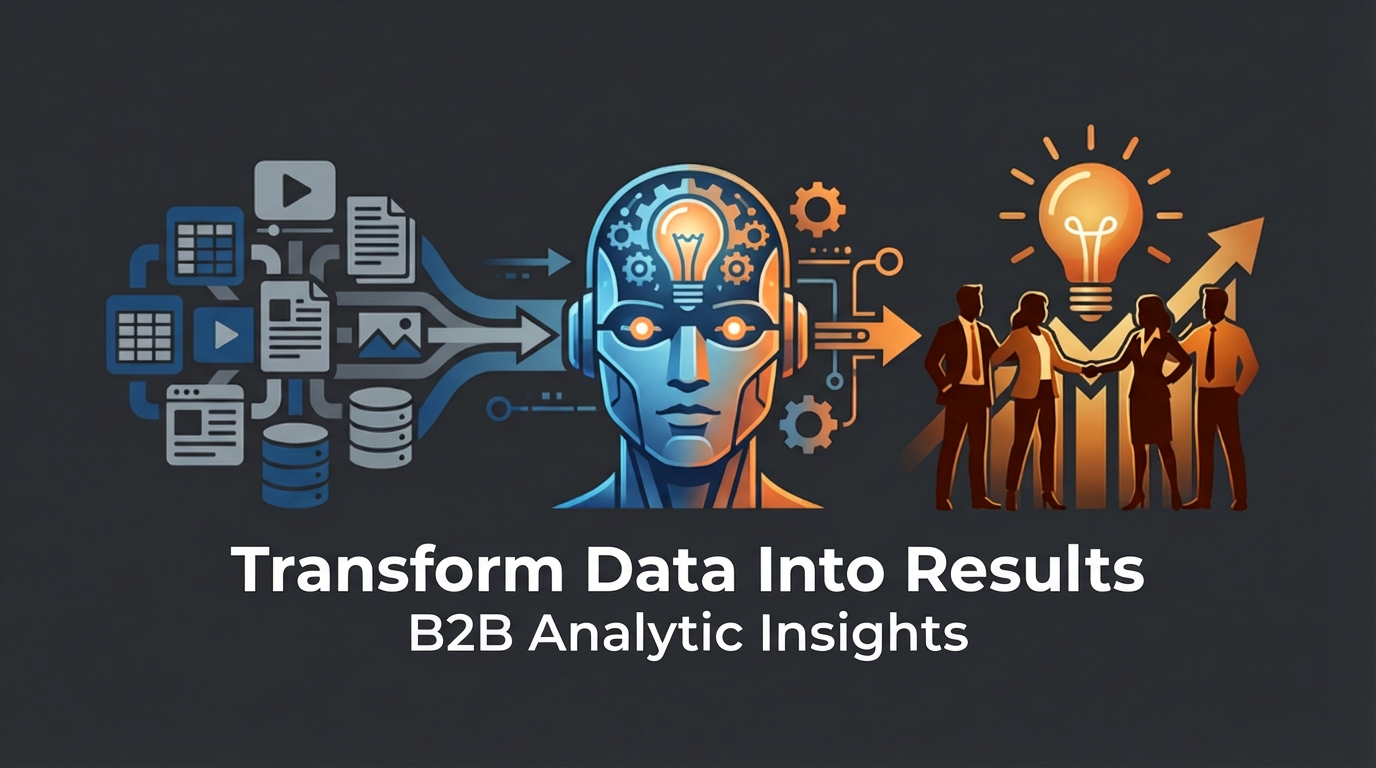

The healthcare sector, a behemoth grappling with spiraling costs, inconsistent outcomes, and an ever-increasing demand for personalized care, faces an existential imperative: transform or be left behind. We’re beyond the point of merely considering data; we’re in an era where data-driven decision making isn’t a luxury, it’s the bedrock of sustainable operations and superior patient care. My 25 years navigating complex data landscapes, from credit risk models to optimizing enterprise operations, have ingrained in me a fundamental truth: robust analytics, strategically deployed, is the most potent lever for business transformation. In healthcare, this translates directly to saving lives, improving quality of life, and optimizing an entire ecosystem – a return on investment that speaks for itself.
The challenges are stark: predicting hospital readmissions that strain resources, identifying high-risk patients before a crisis, and personalizing treatment to avoid adverse drug reactions. These aren’t abstract problems for academic discussion; they’re daily battles impacting millions of patient lives and billions in healthcare expenditure. This is where AI, specifically in patient outcome prediction, isn’t just a buzzword; it’s a critical strategic asset.
The Imperative for Predictive Analytics in Healthcare
Healthcare’s data landscape is a goldmine, albeit one often residing in disparate, unstructured silos. Electronic health records, imaging data, genomic sequences, and even wearable device data – collectively, these represent an unparalleled opportunity to move beyond reactive care. Our goal is not just faster reporting; it’s about anticipating, intervening, and ultimately, personalizing healthcare at scale.
From Retrospection to Foresight: The Business Case
Traditional healthcare analytics excelled at understanding what happened. We could dissect historical mortality rates, track readmission trends, and retrospectively analyze treatment efficacy. But the true strategic value lies in moving to what will happen and what should we do about it. This shift from retrospective analysis to predictive foresight fundamentally alters how healthcare systems operate, enabling proactive resource allocation, early intervention, and ultimately, enhanced patient outcomes. For C-suite executives, this translates to tangible ROI: reduced avoidable hospitalizations, optimized bed utilization, and improved clinical efficiency, directly impacting the bottom line.
The Cost of Inaction: Why We Can’t Wait
The financial and human costs of not leveraging predictive analytics are staggering. Consider the economic burden of preventable readmissions or the emotional toll of adverse events that could have been mitigated. These aren’t just line items on a balance sheet; they represent missed opportunities to deliver better care, enhance patient satisfaction, and strengthen the financial health of healthcare providers. The market itself is speaking volumes, with projections for the Healthcare Predictive Analytics market to reach $39.98 billion by 2030, driven significantly by AI. The investment decisions happening today will determine tomorrow’s leaders in patient care and operational efficiency.
In the realm of Healthcare Analytics, understanding the impact of artificial intelligence on patient outcome prediction is crucial for improving care delivery. A related article that delves deeper into this topic is available at B2B Analytic Insights, where you can explore various case studies and insights on how AI technologies are transforming patient care and enhancing predictive analytics in healthcare settings.
AI’s Transformative Power in Patient Outcome Prediction
The recent advancements in AI are nothing short of revolutionary, fundamentally reshaping our ability to predict patient trajectories. We’re moving from statistical models to sophisticated machine learning algorithms that uncover patterns indiscernible to the human eye, processing volumes of data at speeds previously unimaginable.
Breakthroughs in Predicting Critical Outcomes
The capabilities we’re seeing today are a leap forward. NYU Langone Health’s NYUTron, for instance, an advanced LLM-based tool, is now predicting 80% of hospital readmissions, 85% of in-hospital deaths, and 79% of actual stay lengths with significantly higher accuracy than standard models. This isn’t just an incremental improvement; it’s a paradigm shift in how we approach patient risk management. Imagine the ripple effect across an entire hospital system: better capacity planning, proactive interventions for high-risk individuals, and reduced healthcare-acquired conditions. This level of predictability allows for clinical action, not just observation.
Early Warning Systems: Bridging Prediction to Prevention
The true power of AI lies in its ability to provide early warnings, enabling clinicians to intervene much earlier in the disease trajectory. The University of Florida’s “Foresight” tool, for example, accurately forecasts patient risk for deterioration and adverse outcomes within just six hours of hospitalization. This incredibly short time-to-insight is a game-changer. It means moving from a reactive “code blue” scenario to proactive ward rounds, targeted monitoring, and timely adjustments to treatment plans. For financial analysts, this translates to reduced ICU admissions, shorter lengths of stay, and optimized resource utilization – a direct impact on operational expenditure.
In the evolving landscape of healthcare, the integration of AI in patient outcome prediction is becoming increasingly significant. A related article that delves deeper into this topic can be found at B2B Analytic Insights, where the implications of advanced analytics in improving patient care are thoroughly explored. As healthcare professionals seek innovative solutions to enhance treatment effectiveness, understanding the role of AI in predicting outcomes is essential for driving better health results.
Mapping Future Health Trajectories: Personalized Care at Scale
Beyond immediate crisis prevention, AI is also enabling a more strategic, long-term view of patient health. King’s College London’s new AI tool forecasts future disorders, symptoms, and medication needs with high precision. This isn’t just about treating the current illness; it’s about understanding the patient’s entire health journey, allowing for proactive, personalized care plans. This capability supports both clinical decision-making and continuous monitoring, shifting the focus from episodic treatment to holistic health management. From a business perspective, this improves patient loyalty, reduces long-term care costs, and promotes a healthier population – a critical aspect of value-based care models.
From Data Piles to Actionable Insights: The Implementation Journey
The journey from raw medical data to actionable AI-driven predictions is complex, requiring a structured approach that encompasses technology, process, and people. It’s not just about procuring the latest AI software; it’s about embedding intelligence into the clinical workflow.
Overcoming Data Silos and Integration Challenges
A significant hurdle common across enterprise operations, and particularly acute in healthcare, is data fragmentation. Electronic health records (EHRs), lab systems, imaging platforms – they often operate in isolation. Achieving comprehensive patient outcome prediction requires robust data governance, integration strategies, and often, a modern data architecture capable of handling diverse data types and volumes. This foundational work, while challenging, is non-negotiable. Without it, even the most sophisticated AI models will suffer from incomplete or biased data, undermining their predictive power.
AI Digital Twins: A New Frontier in Personalized Management
The concept of “digital twins,” long utilized in manufacturing and engineering, is now finding its powerful application in healthcare. Cleveland Clinic studies highlight how AI digital twin technology is improving day-to-day diabetes management, allowing patients to reduce their reliance on medication. This involves creating a virtual replica of a patient, fed with real-time data, to simulate responses to different interventions and predict future states. This takes personalized medicine to an unprecedented level, offering an individualized, proactive approach to chronic disease management. For providers, this supports better patient self-management, fewer complications, and improved quality of life metrics, which are increasingly tied to reimbursement.
Measuring Impact: Beyond Accuracy Scores
While the accuracy of predictive models is paramount – and impressive, with 92% of U.S. hospitals now using AI-assisted predictive models – the true measure of success lies in its impact on clinical action and patient outcomes. The industry has rightly shifted its focus from merely flagging at-risk patients to turning AI predictions into optimized clinical interventions. This means embedding AI output directly into physician dashboards, integrating alerts into nursing workflows, and designing clear, actionable protocols based on the predictions. This transformation requires close collaboration between data scientists, clinicians, and operational leaders.
Challenges and the Path Forward: A Balanced Perspective
While the benefits are clear, we must acknowledge that analytics transformation in healthcare, especially with AI, isn’t without its challenges. It requires not just technological prowess but also significant organizational change management and a deep understanding of ethical implications.
The Human Element: Clinician Adoption and Trust
One of the most critical challenges is ensuring clinician adoption and fostering trust in AI-driven insights. Physicians are inherently trained to be skeptical and to prioritize patient safety above all else. Simply presenting an AI prediction without context, explainability, or clear pathways for intervention will lead to resistance. Education, co-creation of solutions with clinical staff, and demonstrating tangible benefits – like the CoMET tool accurately predicting respiratory patient decline in randomized trials – are crucial for building this trust. This is a change management exercise as much as a technical one.
Ethical Considerations and Explainable AI
The stakes in healthcare are incredibly high, meaning ethical considerations are paramount. Bias in data can lead to biased predictions, exacerbating existing health inequities. The drive for “explainable AI” (XAI) is particularly strong in this domain, allowing clinicians to understand why an AI model made a particular prediction, rather than simply accepting it. This transparency is vital for clinical acceptance and responsibility. Data privacy and security, given the sensitive nature of patient information, also demand robust, compliant solutions.
Strategic Recommendations for Analytics Transformation
For C-suite executives, the path forward is clear:
- Develop a Holistic Data Strategy: Prioritize data governance, integration, and a scalable data architecture as foundational elements. You cannot build a mansion on quicksand.
- Invest in Both Technology and Talent: Acquire cutting-edge AI tools, but equally important, cultivate a talented team of data scientists, clinical informaticists, and change management specialists. Remember, analytics requires both technology and human expertise.
- Embed AI into Clinical Workflows: Focus on actionable insights. Work closely with clinicians to design interfaces and processes that seamlessly integrate AI predictions into daily practice, moving beyond merely flagging patients to enabling critical early intervention.
- Embrace Incremental Rollouts and Continuous Learning: Start with targeted, high-impact use cases (e.g., readmission prediction, sepsis early warning) and iterate. Measure ROI rigorously and scale successes. The market is moving fast; 39% of healthcare leaders planned to invest in AI for outcome prediction in 2023 – this is not a trend to ignore.
- Prioritize Ethics and Explainability: Build trust through transparent models and robust data privacy protocols. This is not optional; it’s a non-negotiable requirement for sustainable AI adoption in healthcare.
Healthcare analytics, powered by AI, is no longer a futuristic concept; it is the strategic imperative of today. The opportunities to enhance patient outcomes, improve operational efficiency, and deliver personalized care are immense. By strategically investing in these capabilities and diligently navigating the implementation challenges, healthcare organizations can achieve a profound and lasting transformation, driving both clinical excellence and financial sustainability. The time-to-insight is shrinking, and the time for action is now.