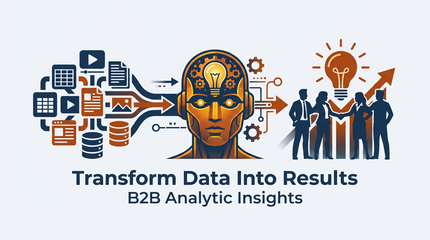

The multi-touch marketing attribution problem is a complex beast. For decades, CMOs and marketing leaders have wrestled with the fundamental question: where did that dollar of revenue truly originate? In the B2B world, where sales cycles are long, touchpoints are numerous and varied, and the stakes are high, simply crediting the last click is a egregious misallocation of resources. We’ve all seen the dashboards – the first-click hero, the last-click champion – yet neither truly reflects the intricate dance of a B2B buying journey. This isn’t just an academic exercise; it’s a strategic imperative that directly impacts return on investment and resource allocation across your multi-million dollar marketing budgets. We need to move beyond intuition and anecdote to data-driven certainty.
The Imperative for Smarter Attribution in B2B Operations
In complex enterprise sales, a single deal might involve multiple decision-makers, a dozen content downloads, several webinar attendances, and multiple sales interactions over many months. Assigning credit accurately isn’t just about marketing performance; it’s about understanding the levers that drive pipeline and revenue, optimizing the entire customer journey, and giving finance the confidence that marketing spend is directly tied to measurable business outcomes. Without a precise understanding of touchpoint influence, we risk misallocating budgets, underfunding critical channels, and perpetuating inefficient spending. This fundamental challenge ripples through credit risk analysis by obscuring the true value of certain lead sources, and impacts financial analysis by making it harder to project marketing ROI with accuracy. Effective attribution, therefore, becomes a cornerstone of sound enterprise operations.
Why Traditional Models Fall Short
Traditional attribution models – first-click, last-click, linear, time decay – are often arbitrary and lack the sophistication needed for today’s fragmented customer journeys. They operate on fixed rules, not on the actual influence of each interaction. This leads to a skewed understanding of performance. Imagine a whitepaper download that warms a prospect for months, followed by a demo request. A last-click model would entirely discount the whitepaper’s role, despite its critical contribution to the buyer’s education and trust-building. In B2B, where education and consideration are paramount, these arbitrary models simply don’t hold water. Google itself, recognizing these limitations, has actively pushed advertisers away from these rudimentary models towards AI. This isn’t a suggestion; it’s a clear signal of the industry’s direction.
The Financial Cost of Inaccurate Attribution
The financial implications of inaccurate attribution are staggering. Without accurate attribution, marketing budgets become a black box. Are you overspending on channels that contribute little, or underfunding those that are quietly driving the bulk of your pipeline? The difference can be millions. Documented ROAS improvements, ranging from 17% to 180% with AI-driven attribution, aren’t anecdotes; they are hard metrics demonstrating significant financial upside. This isn’t merely about tweaking campaigns; it’s about strategically re-engineering your marketing investments to maximize their impact on the bottom line. For any CFO, these figures should be compelling enough to spark an immediate investigation into current attribution practices.
In the ever-evolving landscape of digital marketing, understanding the effectiveness of various channels is crucial for optimizing strategies. A related article that delves deeper into this topic is “AI’s Solution to the Multi-Touch Problem,” which explores how artificial intelligence can enhance marketing attribution models. By leveraging AI, marketers can gain clearer insights into customer journeys and the impact of multiple touchpoints on conversion rates. For more information, you can read the article here: AI’s Solution to the Multi-Touch Problem.
AI’s Transformative Role in Disentangling the Multi-Touch Maze
This challenge, historically a Gordian knot for marketers, is precisely where AI shines. AI isn’t just a buzzword; it’s the technology that finally allows us to move beyond arbitrary rules to sophisticated, data-driven insights into true channel influence. The market is already responding, with projections showing growth from $36 billion to $89.85 billion by 2025. This isn’t hype; it’s a rapid shift driven by tangible results.
Predictive Attribution Models: Seeing Beyond the Visible
The most significant leap comes from advanced AI models, particularly Predictive Attribution Models. These models don’t just assign credit to known touchpoints; they analyze thousands of variables to predict the influence of untracked touchpoints. Think about “dark social” – the word-of-mouth, private messages, and offline conversations that are almost impossible to track traditionally. New AI frameworks are now achieving 70-80% accuracy in estimating this “dark social” influence. This capability fundamentally changes the game by giving us a more complete picture of the customer journey, bridging the gaps that human analysis simply cannot. It provides unprecedented clarity into the complete ecosystem of influence, allowing B2B firms to strategically invest in brand building and indirect awareness efforts with greater confidence.
Agentic AI: Continuous Optimization and Experimentation
The next frontier is Agentic AI. This isn’t just about passive analysis; it’s about active, continuous optimization. Agentic AI automates A/B tests and attribution experiments, constantly learning and refining its understanding of channel influence. This means your attribution model isn’t static; it’s a dynamic, self-improving system that adapts to market changes and consumer behavior in real-time. For enterprise operations, this translates into an agile marketing ecosystem that self-corrects and optimizes, reducing manual effort and accelerating time-to-insight. Adobe’s new AI agents, for instance, are designed for autonomous optimization – a clear indicator of where this technology is headed.
The Foundation: Probabilistic Identity Resolution and Data Integration
The efficacy of any AI attribution model is directly tied to the quality and completeness of its underlying data. Before AI can assign credit, it needs to know who it’s assigning credit to across their entire journey. This is where Probabilistic Identity Resolution becomes the bedrock of advanced attribution.
Bridging the Gaps: Cross-Device and Cross-Channel Identity
Traditional identity resolution methods were a patchwork, often struggling to connect disparate devices and platforms. Modern AI identity graphs, however, are a quantum leap forward. They can probabilistically connect 60-75% of cross-device journeys, a significant improvement from the 30-40% of traditional methods. This means your AI isn’t just seeing isolated touchpoints; it’s seeing the complete, albeit probabilistic, journey of an individual human being across their mobile phone, desktop, work laptop, and even offline interactions like events or sales calls. This holistic view is paramount in B2B where a single buyer might interact with your brand across numerous channels over an extended period. This enhanced capability directly supports sophisticated customer lifetime value (CLV) analysis crucial for long-term financial planning in B2B.
The Challenge of Signal Loss and Modeled Data
The increasingly privacy-centric digital landscape, exemplified by iOS 14 changes and GA4’s reliance on modeled data, presents new challenges for data integrity. Traditional direct tracking faces significant signal loss. This requires a robust approach to data integration, combining multiple sources to create a complete picture. AI helps bridge these gaps by modeling behavior based on available signals, providing more accurate estimates even when direct tracking is limited. This is where vendors like Mediaocean and Publicis are investing heavily, acquiring companies like Innovid and Lotame to bolster their AI-driven capabilities in cross-channel attribution and identity resolution.
Enhancing Accessibility: Natural Language Analytics and Triangulation
For analytics to drive strategic decisions, it must be accessible and trustworthy. AI isn’t just improving the accuracy of attribution; it’s also making it easier for business users to interact with and interpret the data, while simultaneously building trust through advanced validation frameworks.
Plain English Queries for Strategic Insights
One of the most exciting developments is Natural Language Analytics. The ability to simply ask, “Which channels drive the highest lifetime value?” and receive an answer with confidence intervals, without needing a data scientist or complex dashboard setup, is transformational. This democratizes access to powerful attribution insights, enabling C-suite executives and marketing leaders alike to quickly grasp key performance drivers. This capability significantly reduces the “time-to-insight” for critical strategic questions, allowing for faster, more informed decision-making across enterprise operations. Imagine a credit risk analyst quickly querying the impact of a specific marketing campaign on the quality of new account applications – this is now within reach.
The Triangulation Standard: Building Trust and Accuracy
As we move towards 2026, the emerging standard of “triangulation” offers a robust solution to data validity concerns. This involves combining platform-reported data (e.g., Google Ads), sophisticated Marketing Mix Modeling (MMM), and incrementality experiments. This multi-pronged approach creates a cross-check system that mitigates the limitations of any single data source. By validating insights across different methodologies, triangulation provides a higher degree of confidence in the attribution results, addressing concerns about signal loss and the inherent limitations of modeled data in platforms like GA4. This level of rigor is vital for financial analysis, ensuring that marketing ROI figures are not just plausible, but demonstrably robust.
In the ever-evolving landscape of digital marketing, understanding the effectiveness of various channels can be a daunting task, especially when it comes to multi-touch attribution. A related article that delves into innovative solutions is available at B2B Analytic Insights, which explores how AI technologies are transforming the way marketers analyze customer journeys and allocate resources effectively. By leveraging these advanced tools, businesses can gain deeper insights into their marketing strategies and optimize their campaigns for better performance.
Strategic Recommendations for Analytics Transformation
Leveraging AI for marketing attribution is not a trivial undertaking; it requires a strategic, phased approach to analytics transformation. It’s about more than just buying new software; it’s about integrating technology with process and people.
Invest in AI-Powered Attribution Platforms
Strategic investment in platforms recognized for innovation is paramount. AiOpti, for instance, being named the “2025 Top AI-Powered Marketing Attribution Platform” for its machine learning approach to assign fractional credit based on actual influence, highlights the caliber of solutions available. Prioritize platforms that demonstrate documented ROAS improvements and offer advanced capabilities like predictive attribution and agentic AI. Don’t settle for incremental improvements; demand transformative ones. Evaluate vendors not just on features, but on their ability to integrate with your existing CRM, ERP, and analytics ecosystems, crucial for a B2B context.
Foster a Data-Driven Culture and Upskill Teams
Technology alone is insufficient. You must cultivate a data-driven decision-making culture throughout your organization. This means upskilling marketing teams to understand and interpret AI-driven attribution insights, and collaborating closely with data science and IT to ensure robust data pipelines. The “human in the loop” remains vital. While AI automates analysis, human expertise is essential for strategic interpretation, hypothesis generation, and ethical oversight. Provide training on the new attribution models, how to use natural language queries, and how to translate insights into actionable marketing strategies.
Implement a Phased Approach to Triangulation
Don’t attempt to overhaul everything overnight. Start by integrating AI-powered attribution with your existing platform data, then layer in Marketing Mix Modeling for a broader, top-down view, and finally, strategically deploy incrementality experiments for specific high-value campaigns or channels. This phased approach allows for continuous learning and refinement, building organizational confidence in the new framework over time. For the C-suite, this offers a practical roadmap with measurable milestones, ensuring return on investment is tracked and validated at each stage. This isn’t just about marketing; it’s about establishing a new standard for analytical rigor across the enterprise.
In conclusion, the multi-touch attribution problem is a strategic weak point for many B2B organizations, hindering effective resource allocation and obscuring true ROI. AI, however, offers a powerful, empirically-validated solution. By embracing advanced AI models, robust identity resolution, natural language analytics, and the triangulation standard, we can move from guesswork to precision. The opportunity to unlock significant ROAS improvements and achieve genuine data-driven decision making is now within reach. This isn’t just a marketing advantage; it’s a fundamental shift in how successful businesses will operate, ensuring every marketing dollar contributes measurably to the bottom line.