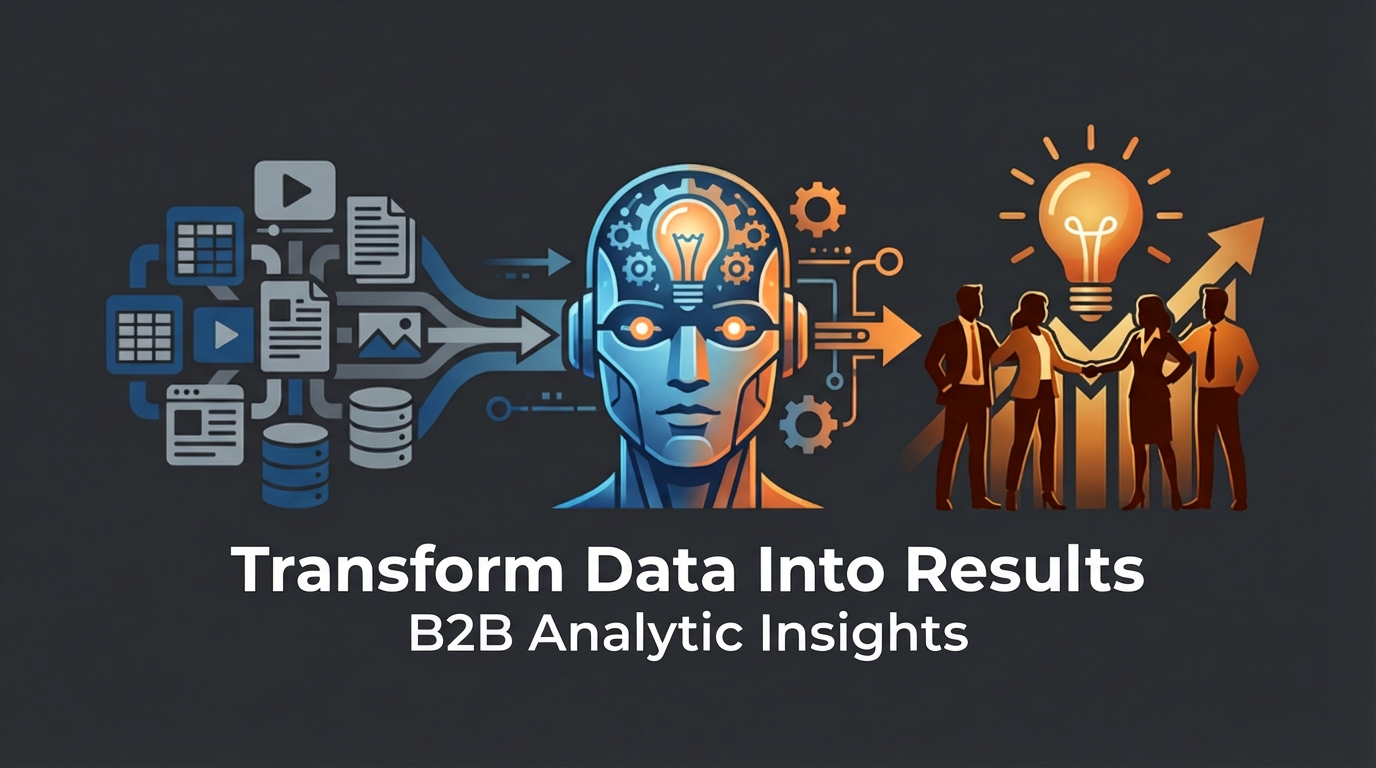

The real estate industry, long perceived as a bastion of traditional practices, is undergoing a profound transformation. For decades, decisions in credit risk assessment, financial analysis, and enterprise operations within this sector relied on extensive manual research, gut instinct, and static data points. This approach, while foundational, often meant that critical insights were buried, time-to-insight was glacial, and missed opportunities were the norm. We’re now at a precipice where the intelligent application of AI isn’t just an enhancement; it’s a fundamental enabler of analytics transformation, driving true data-driven decision making across the board.
The challenges are stark and familiar to any C-suite executive wrestling with portfolios, development pipelines, or risk exposure. How do we accurately price assets in an increasingly volatile market? Can we proactively identify distressed properties before they impact our balance sheet? How do we optimize resource allocation for development or property management when market signals are ambiguous? These aren’t hypothetical questions; they are day-to-day realities that have historically consumed enormous human capital and often led to suboptimal outcomes due to incomplete or delayed information. The sheer volume and velocity of data now available, from transaction histories and demographic shifts to environmental factors and granular property-level details, have rendered traditional methods insufficient. This is precisely where the power of AI-driven analytics is not just relevant, but revolutionary.
The days of relying solely on historical sales data and broad economic indicators for market analysis are rapidly receding. The evolution of AI in real estate intelligence is moving us decisively towards predictive and prescriptive capabilities, moving beyond what has happened to anticipate what will happen. For B2B decision-makers, this shift translates directly into a stronger competitive advantage and a more resilient business. The market for AI in real estate experienced significant growth, reaching an estimated $301.58 billion in 2025 and projected to climb to $404.9 billion in 2026. This surge is a clear indicator of the industry’s recognition of AI’s immense potential, particularly in driving data-driven decision making.
Transforming Data into Actionable Intelligence
The fundamental challenge in real estate intelligence has always been the fragmentation and sheer volume of data. Think about the myriad sources: property records, zoning documents, survey data, economic reports, local news, and social media sentiment. Traditionally, aggregating and synthesizing this information was a Herculean task, prone to human error and significant delays. AI, however, excels at this. Platforms are emerging that can ingest, cleanse, and analyze massive datasets with unprecedented speed and accuracy.
For instance, the launch of Crexi Market Analytics in April 2026 exemplifies this trend. This AI-powered tool has been designed to transform fragmented commercial real estate (CRE) data into actionable insights and reports for major and secondary markets in mere minutes. This isn’t about incremental improvement; it’s about fundamentally altering the time-to-insight from days, if not weeks, down to minutes. For an executive tasked with making strategic acquisition or divestment decisions, this speed can be the difference between capitalizing on a fleeting opportunity or being left behind. The implication for financial analysis is significant: faster, more comprehensive market understanding allows for more precise risk calibration and return forecasting.
Identifying Emerging Trends and Opportunities
Beyond just summarizing current conditions, AI’s predictive capabilities are opening new frontiers. Machine learning algorithms can identify subtle patterns and correlations that human analysts might overlook. This includes anticipating shifts in demand based on demographic changes, economic forecasts, or even the impact of infrastructure development announcements. For enterprise operations, this means being able to strategically position assets, develop new properties in areas with anticipated growth, or even recalibrate leasing strategies before market saturation occurs.
The implications for credit risk are profound. By analyzing a wider array of leading indicators, lenders can gain a more nuanced understanding of borrower and property-level risk. This can lead to more accurate loan underwriting, reduced default rates, and optimized capital allocation. Imagine being able to assess the risk profile of a loan portfolio not just on historical performance, but on AI-driven projections of future market values, rental income stability, and local economic vitality. This level of foresight was largely unattainable just a few years ago.
For those interested in exploring the intersection of technology and real estate further, a related article titled “Harnessing Big Data for Real Estate Investment Decisions” can provide valuable insights. This piece delves into how data analytics is transforming investment strategies in the real estate sector, complementing the themes discussed in Real Estate Intelligence: AI-Powered Market and Valuation Analytics. You can read the article by following this link: Harnessing Big Data for Real Estate Investment Decisions.
Revolutionizing Property Valuation: Accuracy and Efficiency
Property valuation has long been a cornerstone of real estate finance, but also a significant pain point. Valuations can be subjective, time-consuming, and often fall behind market realities. AI is not just improving the accuracy of valuations; it’s fundamentally changing how they are performed, making them more dynamic, objective, and accessible. For B2B stakeholders, this means more reliable collateral assessments, better investment due diligence, and streamlined asset management. We’re seeing AI-driven price engines and Automated Valuation Models (AVMs) that claim an impressive up to 98% accuracy in residential estimates. This level of precision has game-changing implications for any organization with a stake in property values.
The Power of Comprehensive Data in Valuation
Modern AI valuation platforms go far beyond traditional appraisal methods. They leverage machine learning to process thousands of data points. This includes not only direct comparable sales but also market trends, school ratings, traffic patterns, crime statistics, local employment figures, and even environmental factors. This comprehensive analysis creates a richer, more context-aware valuation. For financial institutions, this translates to more robust collateral valuation for lending. For real estate investment firms, it means more confident underwriting and more accurate portfolio valuations.
The launch of Homesage.ai’s Real Estate MCP in 2026 is a prime example of this evolution. By granting AI assistants access to 155 million U.S. property records, along with new tools for automated valuation models and investment potential scores, Homesage.ai is democratizing access to investor-grade intelligence. This server offers a depth of data previously only available to large, specialized firms. This allows smaller investors and even individual enterprise departments to perform sophisticated valuations and risk assessments, leveling the playing field and fostering more informed data-driven decision making.
AI-Driven Property Condition Grading
A significant underappreciated aspect of property valuation is its physical condition. A property’s value is intrinsically linked to its state of repair, posing risks and impacting potential returns. Homesage.ai took a significant step forward with its introduction of a new AI-powered Property Condition Grading System. This system utilizes computer vision to objectively evaluate property conditions from images. This is a crucial advancement for risk and return assessment.
For lenders, this means a more objective understanding of physical depreciation and potential capital expenditure requirements, leading to more conservative and accurate loan-to-value ratios. For property managers and investors, it enables proactive maintenance planning, identification of potential defects that could lead to larger issues, and a more accurate projection of long-term holding costs. Imagine spotting potential structural issues from an image taken during an initial property assessment without needing a full, expensive site visit. This directly impacts operational efficiency and reduces unforeseen expenses. This is not just about automating a process; it’s about introducing a new layer of objective, verifiable data into the valuation equation.
Enhancing Operational Efficiency and Risk Management

The impact of AI-powered analytics extends far beyond market analysis and valuation; it is fundamentally reshaping enterprise operations and risk management within the real estate sector. For C-suite executives and analytics leaders, the promise lies in optimizing resource allocation, streamlining workflows, and mitigating potential threats before they materialize. This is where the concept of analytics transformation becomes most tangible.
Streamlining Portfolio Management
Managing large real estate portfolios is an exercise in balancing complex variables: occupancy rates, lease expirations, tenant satisfaction, maintenance backlogs, and capital expenditure cycles. AI can provide an integrated view of these elements, identifying synergies and potential risks. Predictive maintenance algorithms, for example, can analyze sensor data and historical repair records to forecast equipment failures, allowing for scheduled maintenance that prevents costly downtime and tenant disruption. This moves operations from a reactive to a proactive stance. For enterprise operations, this optimization can lead to significant cost savings.
The acquisition of Virtual Staging AI Inc. by Zillow Group in late 2024, with its ripple effects throughout 2025–2026 offerings, illustrates how AI is enhancing the presentation and perception of properties, which in turn influences market dynamics and operational strategies. While virtual staging might seem like a marketing tool, its integration into valuation and market offerings signals a broader understanding of how AI can influence perceived value and market velocity, thereby impacting lease-up times and sale prices. This integration signifies a more holistic approach to managing an asset’s lifecycle, from initial listing to final sale or long-term occupancy.
Proactive Credit Risk Mitigation
In credit risk assessment, AI offers the ability to move beyond static credit scores and historical performance to dynamic, forward-looking risk profiles. By analyzing a multitude of data streams – market sentiment, local economic indicators, borrower behavior, and property-specific risks identified through AI valuation – lenders can gain a more comprehensive view of creditworthiness. This enables them to identify potential defaults before they occur, allowing for proactive interventions such as loan restructuring or portfolio adjustments. For B2B financial institutions, this translates directly to a stronger, more resilient balance sheet. The ability to accurately assess the risk associated with a loan, informed by AI-driven insights, is paramount.
Consider a scenario where AI flags a developing correlation between rising interest rates, a projected slowdown in a specific employment sector within a particular metropolitan area, and a potential decline in commercial property values supported by that sector as collateral. This predictive insight allows a lender to reassess exposure to borrowers in that specific segment, potentially adjusting risk appetite or requiring additional collateral before market conditions deteriorate significantly. This is the essence of transforming raw data into strategic risk management.
Bridging Technical Concepts to Business Strategy

The true power of AI in real estate intelligence lies not just in the technology itself, but in its ability to translate complex technical concepts into clear, actionable business strategies. For C-suite executives, the focus is ROI, strategic advantage, and risk reduction. For analytics leaders, it’s about implementation, scalability, and building robust, data-informed organizations. And for practitioners, it’s about the technical depth and the continuous pursuit of accuracy and efficiency.
Fostering a Culture of Data-Driven Decision Making
Achieving true analytics transformation requires more than just deploying new software; it necessitates a cultural shift. This means fostering a mindset where decisions are consistently informed by data and insights, rather than solely by intuition or anecdote. Leaders must champion the use of AI-powered tools and demonstrate their value in achieving strategic objectives. This involves investing in training and development to upskill teams, ensuring they can effectively leverage these new capabilities.
The time-to-insight reduction facilitated by AI is a critical enabler of this cultural shift. When critical market information or a property valuation can be generated rapidly, decision-makers are more inclined to consult it. This creates a virtuous cycle where the effectiveness of data-driven decisions reinforces the value of analytics. It’s about making data accessible, understandable, and actionable for everyone, from the front lines of property management to the boardroom.
Identifying and Addressing Challenges
It’s crucial to acknowledge that AI is not a silver bullet. While advancements are remarkable, there are inherent challenges. Data quality remains paramount—garbage in, garbage out. Ensuring the accuracy, completeness, and ethical sourcing of data is foundational to any successful AI implementation. Furthermore, the “black box” nature of some advanced AI models can be a hurdle for transparency and trust, particularly in highly regulated industries like finance. Organizations must invest in explainable AI (XAI) techniques where appropriate to build confidence and enable effective oversight.
The implementation of AI also requires significant investment in technology infrastructure and human capital. This isn’t simply about buying a platform; it’s about integrating it into existing workflows, managing data pipelines, and ensuring cybersecurity. Organizational change management is also a critical component. Resistance to new technologies or a fear of job displacement can hinder adoption. Open communication, clear articulation of benefits, and investment in reskilling are vital to navigate these challenges effectively.
In the ever-evolving landscape of real estate, understanding market dynamics and property valuations has become increasingly complex. A recent article on AI-driven analytics highlights how technology is transforming this sector, providing valuable insights for investors and developers alike. For those interested in exploring these advancements further, you can read about it in the article on B2B Analytic Insights, which delves into the implications of AI-powered market and valuation analytics.
Strategic Recommendations for the C-Suite and Analytics Leaders
| Metrics | Data |
|---|---|
| Property Market Trends | Up-to-date information on property market trends |
| Property Valuation | AI-powered property valuation analytics |
| Market Analysis | Insights into market dynamics and performance |
| Property Comparables | Comparable property data for accurate analysis |
| Investment Opportunities | Identification of potential investment opportunities |
The journey towards AI-powered real estate intelligence is not a distant aspiration; it is a present imperative. For those at the helm of real estate organizations, the time to act is now.
For C-Suite Executives:
- Prioritize Investment in Analytics Transformation: Allocate sufficient budget and resources to initiatives that leverage AI for market intelligence, valuation, and operational efficiency. Focus on the potential ROI, whether through risk reduction, revenue enhancement, or cost optimization.
- Champion a Data-Centric Culture: Lead by example. Insist on data-backed decision-making and empower your teams to explore and utilize AI-driven insights. Foster cross-departmental collaboration to break down data silos.
- Focus on Strategic Impact: Understand how AI can inform your long-term strategic planning, not just immediate operational improvements. Explore opportunities for market expansion, new product development, or enhanced competitive positioning enabled by superior intelligence.
For Analytics Leaders:
- Develop a Scalable AI Strategy: Don’t chase every shiny object. Build a coherent strategy that aligns with business objectives, prioritizing use cases with the highest potential impact and ROI.
- Invest in Data Governance and Quality: Treat data as a strategic asset. Implement robust data governance frameworks to ensure accuracy, consistency, and security. This is the bedrock of reliable AI.
- Build Hybrid Teams: Recognize that AI is a tool that augments human expertise, not replaces it entirely. Cultivate teams with a blend of deep domain knowledge, analytical skills, and AI literacy. Foster continuous learning and development.
The landscape of real estate intelligence is being fundamentally reshaped by AI. By embracing these advancements strategically, organizations can move beyond reactive decision-making to a future defined by proactive strategies, superior risk management, and unparalleled operational efficiency. The opportunities for competitive advantage are immense; the key is to harness the power of AI with clear intent and sophisticated execution. This is the future of real estate analytics, and it’s unfolding today.