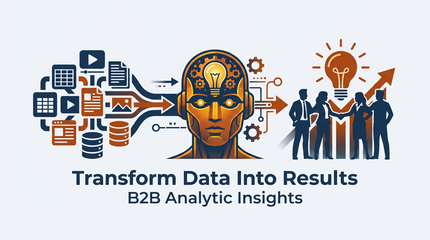

The landscape of enterprise analytics is at a critical juncture. For too long, businesses have grappled with the inherent tension between extracting maximum value from their data and upholding the stringent privacy requirements that govern it. Consider the credit risk sector: the desire to build more predictive models necessitates access to granular customer financial histories. Yet, the regulatory and ethical imperative to protect that very data creates a significant bottleneck. This is not a new problem, but the advent of sophisticated analytical techniques, particularly Artificial Intelligence, amplifies the stakes. How do we unlock the power of AI and advanced analytics for data-driven decision making across critical functions like credit risk assessment, financial analysis, and enterprise operations, without compromising privacy? The answer lies in embracing a new paradigm: Privacy-Preserving Analytics.
This is where concepts like Federated Learning and Differential Privacy move from academic curiosity to essential business tools. They represent not just technological advancements, but fundamental shifts in how we approach data governance and value generation. The promise is tangible: enabling collaboration across sensitive datasets, building more robust and accurate models, and ultimately, accelerating analytics transformation for greater competitive advantage. We’re talking about achieving better time-to-insight not by circumventing privacy, but by designing it into the analytical process from the ground up.
The Evolving Data Privacy Imperative
The days of simply anonymizing data and calling it a day are long past. Regulatory frameworks like GDPR, CCPA, and a growing wave of sector-specific mandates have made it clear: data privacy is no longer a ‘nice-to-have’ but a fundamental compliance and reputational requirement. For enterprises, particularly in regulated industries like finance and healthcare, this presents a profound challenge.
The ‘Data Silo’ Conundrum
One of the most significant hurdles to advanced analytics has been the fragmentation of data. Sensitive information – customer transaction histories, patient medical records, proprietary operational logs – often resides in isolated silos, protected by robust security measures. While these measures are necessary, they prevent the aggregation of data needed for comprehensive analysis. Building a truly predictive credit risk model, for instance, requires a holistic view of financial behaviors that might be spread across different institutions or even different departments within a single, large conglomerate. The inability to pool this data means models are inherently less accurate, leading to suboptimal decisions. This silo effect directly hinders our ability to achieve the deep data-driven decision making that AI promises.
The Risk of Re-identification
Even with traditional anonymization techniques, the risk of re-identification remains a persistent threat. As datasets grow larger and more sophisticated, combining seemingly innocuous pieces of information can inadvertently reveal an individual’s identity. This is particularly concerning when dealing with sensitive financial or health data. The reputational and financial damage from a privacy breach can be catastrophic, far outweighing the perceived short-term gains from unfettered data access. Therefore, our approach to privacy must be proactive, not reactive.
The Competitive Disadvantage
Organizations that are unable to leverage their data effectively due to privacy concerns are at a distinct disadvantage. They miss out on opportunities to:
- Improve credit scoring accuracy: Leading to better lending decisions and reduced default rates.
- Optimize fraud detection: Minimizing financial losses and enhancing customer trust.
- Personalize customer experiences: Driving loyalty and increasing revenue.
- Enhance operational efficiency: Identifying bottlenecks and improving resource allocation.
This is where privacy-preserving analytics, specifically Federated Learning and Differential Privacy, offer a powerful solution. They provide a pathway to unlock the analytical potential of distributed, sensitive data without compromising its confidentiality. This is not about abstract concepts; it’s about concrete ROI and a tangible competitive edge.
In the realm of data security and privacy, the article on Privacy-Preserving Analytics: Federated Learning and Differential Privacy offers valuable insights into how organizations can leverage advanced techniques to protect sensitive information while still gaining analytical benefits. For further exploration of related concepts and practical applications in the field, you can refer to this informative piece on B2B Analytic Insights, which delves into the latest trends and innovations in data analytics.
Federated Learning: Bringing the Model to the Data
At its core, Federated Learning is a paradigm shift from traditional machine learning, where data is brought to a central server for training. Instead, in Federated Learning, the machine learning model is sent to the data. This means the sensitive raw data never leaves its original location.
How it Works: A Distributed Approach
Imagine multiple financial institutions wanting to collaboratively build a more sophisticated credit risk model. Instead of sharing customer transaction data, which is highly sensitive and regulated, they agree to a Federated Learning approach.
- Model Initialization: A global model is initialized on a central server.
- Model Distribution: This model is then sent to each participating institution (the ‘clients’).
- Local Training: Each institution trains the model locally on its own private data. This training process generates model updates – essentially, learned parameters and gradients – but not the raw data itself.
- Update Aggregation: The clients send these anonymized model updates back to the central server.
- Global Model Update: The central server aggregates these updates to improve the global model.
- Iteration: This process is repeated for multiple rounds, progressively refining the global model without any client ever directly sharing its sensitive data.
This distributed approach fundamentally changes the privacy calculus. As TNO summarized, “federated learning as a privacy-friendly approach where models move to the data, and only anonymized intermediate results are shared instead of raw sensitive data.” This elegance bypasses many of the data transfer and consent issues that plague traditional centralized analytics. The models learn from the collective intelligence of the distributed data, leading to a more robust and generalizable outcome. This is a crucial step in achieving effective data-driven decision making at scale.
Real-World Applications: Beyond the Lab
The applicability of Federated Learning is vast and growing, especially in B2B contexts:
- Financial Services: Collaborative fraud detection across banks, development of more accurate credit scoring models without sharing customer PII, and enhanced anti-money laundering (AML) analytics. The potential for reduced false positives in fraud detection alone can translate to millions in savings.
- Healthcare: Training diagnostic models on diverse patient populations across multiple hospitals, enabling breakthroughs in disease prediction and treatment efficacy while respecting strict patient confidentiality. Nature Scientific Reports highlighted this for multi-institutional medical data mining, using FL plus differential privacy.
- Telecommunications: Improving network anomaly detection and predicting service outages by training models on data from distributed network infrastructure.
- Manufacturing: Optimizing supply chain logistics and predictive maintenance by learning from operational data across different factories or suppliers.
The key advantage here is enabling collaboration where it was previously impossible due to privacy constraints. This unlocks new avenues for building sophisticated analytical capabilities and accelerating analytics transformation. The practical benefit is a faster time-to-insight into complex, distributed business problems.
Challenges and Considerations
While powerful, Federated Learning is not a silver bullet. Organizations must consider:
- Communication Overhead: Frequent model updates can lead to significant network traffic, especially with large models.
- System Heterogeneity: Clients may have varying computational power and data distributions, impacting training efficiency.
- Security Vulnerabilities: While raw data isn’t shared, model updates themselves can sometimes be vulnerable to inference attacks. This is where the next piece of the puzzle, Differential Privacy, becomes critical.
Differential Privacy: Quantifying and Guaranteeing Privacy
Differential Privacy is a mathematical framework for quantifying and limiting the privacy loss incurred when releasing information about a dataset. It provides a rigorous guarantee that the output of an analysis does not reveal whether any single individual’s data was included in the dataset.
The Noise Injection Mechanism
The fundamental principle of Differential Privacy is the strategic addition of calibrated noise. When data is processed or analyzed, a small, carefully calculated amount of random noise is injected into the results. This noise is just enough to obscure the contribution of any single data point, making it impossible for an observer to confidently determine if an individual’s information was part of the input.
Imagine a credit bureau calculating the average credit score of individuals in a particular region. Without Differential Privacy, an attacker might be able to deduce information about a specific individual if they could somehow isolate their contribution. With Differential Privacy, noise is added to the average, making it statistically impossible to distinguish between the average calculated with and without that individual’s data.
The level of privacy is controlled by a parameter, epsilon (ε). A lower epsilon signifies stronger privacy guarantees, but typically at the cost of reduced accuracy. Finding the right balance between privacy (low ε) and utility (high accuracy) is a key challenge in practical implementation. This is where the sophisticated mathematical underpinnings meet the pragmatic demands of business analytics. We need to deliver actionable insights, not just mathematically pure privacy.
Applications in Federated Learning: A Powerful Synergy
Differential Privacy and Federated Learning are often used in tandem to create highly secure analytical pipelines. In the Federated Learning context, Differential Privacy can be applied in two primary ways:
- Local Differential Privacy: Noise is added to the model updates before they are sent from the client to the central server. This provides strong privacy guarantees at the individual client level. The arXiv (Apr 2026) DDP-SA framework exemplifies this, combining local differential privacy with secure aggregation for end-to-end protection.
- Global Differential Privacy (on aggregated updates): Noise is added to the aggregated model updates on the central server. This protects against an attacker who might have access to all the aggregated updates. ORNL’s GDPFed/GDPFed+ is a prime example of advances in group-based differential privacy, aiming to make federated learning more secure for large-scale collaborations.
By layering Differential Privacy onto Federated Learning, we can achieve a robust defense against a wider range of privacy attacks, including those that might try to infer information from the shared model updates themselves. This layered approach is crucial for building trust and enabling widespread adoption of AI in sensitive domains. This synergy is key to unlocking true data-driven decision making in highly regulated environments.
The Trade-off: Accuracy vs. Privacy
It is critical to acknowledge that Differential Privacy introduces an inherent trade-off. The noise added, while protecting privacy, can also slightly degrade the accuracy of the resulting model. This is a fundamental principle, not a flaw. The challenge for organizations is to determine the acceptable level of accuracy loss for a given analytical task, weighed against the required level of privacy.
This is where experienced analytics leaders and practitioners come into play. They must understand the mathematical underpinnings of Differential Privacy well enough to:
- Select appropriate privacy budgets (ε): Based on the sensitivity of the data and the business impact of potential privacy breaches.
- Calibrate noise levels: To minimize accuracy degradation while still meeting privacy requirements.
- Evaluate model performance: Rigorously assessing the impact of privacy mechanisms on downstream business outcomes.
The goal is to find the “sweet spot” where privacy is rigorously protected, and the resulting analytics remain sufficiently accurate to drive meaningful business value and accelerate analytics transformation. This requires a nuanced understanding, not just a technical application.
Bridging the Gap: From Technical Concepts to Business Strategy
The true power of Federated Learning and Differential Privacy lies not in their technical sophistication alone, but in their ability to translate into tangible business outcomes. For C-suite executives, the focus must be on the ROI, the strategic advantage, and the risk mitigation these technologies offer.
ROI in Credit Risk Management
In credit risk, the ability to train more accurate predictive models is directly linked to financial performance.
- Reduced Defaults: More precise credit scoring can identify higher-risk applicants more reliably, reducing the number of defaults. For a large financial institution, a 0.1% reduction in default rates can equate to millions of dollars in saved capital.
- Increased Lending Opportunities: Conversely, more accurate models can also identify lower-risk individuals who might have been previously overlooked, opening up new lending opportunities and increasing revenue.
- Enhanced Fraud Detection: Collaborative fraud detection models trained via Federated Learning can identify sophisticated, cross-institutional fraud rings more effectively. A single significant fraud event can cost millions; improving detection rates by even a fraction of a percent yields substantial savings.
This is data-driven decision making in its most potent form, directly impacting the bottom line.
Financial Analysis and Market Insights
For financial analysts, these techniques can unlock deeper market insights.
- Collaborative Market Analysis: Investment firms can collaborate on analyzing market trends without sharing proprietary trading data. This allows for more comprehensive sentiment analysis and risk assessment.
- Benchmarking and Performance Measurement: Companies can benchmark their operational efficiency or customer acquisition costs against anonymized, aggregated data from peers, enabling better strategic planning. The ability to gain granular insights without revealing competitive secrets is invaluable.
- Personalized Financial Advice: Wealth management firms can develop more sophisticated algorithms for personalized financial advice by learning from client behavior across a broader, privacy-preserving dataset.
The objective is to move beyond basic descriptive analytics to predictive and prescriptive insights that drive measurable business improvement and accelerate analytics transformation.
Enterprise Operations and Supply Chain Optimization
Beyond finance, the applications are equally compelling:
- Supply Chain Resilience: Manufacturers can collaborate to build more accurate demand forecasting models or identify supply chain vulnerabilities by training models on distributed inventory and logistics data, ensuring better inventory management and fewer disruptions. A 5% improvement in forecast accuracy can lead to significant reductions in holding costs and stockouts.
- Predictive Maintenance: Across industries, operational equipment can be monitored and analyzed for predictive maintenance needs using models trained on data from distributed sensor networks. This reduces downtime, optimizes maintenance schedules, and extends asset life, saving millions in repair and lost production costs.
- Cybersecurity Threat Intelligence: Sharing anonymized threat intelligence across organizations, using Federated Learning, can create more robust and proactive cybersecurity defenses without revealing sensitive network intrusion details.
The key takeaway for the C-suite is that these are not just academic exercises; they are strategic enablers of operational excellence and competitive differentiation, driving a tangible time-to-insight into complex operational challenges.
In the realm of data security, the concepts of federated learning and differential privacy are gaining significant attention for their ability to enable privacy-preserving analytics. A related article that delves deeper into these innovative techniques can be found at B2B Analytic Insights, where it discusses how organizations can leverage these methods to analyze data without compromising individual privacy. This exploration highlights the importance of balancing data utility with privacy concerns in today’s data-driven landscape.
Implementing Privacy-Preserving Analytics: A Framework for Success
Adopting Privacy-Preserving Analytics, including Federated Learning and Differential Privacy, requires a strategic and structured approach. It’s not just about deploying new technology; it’s about organizational change, governance, and a deep understanding of both the technical possibilities and the business realities.
Building a Strong Data Governance Foundation
Before diving into the technical implementation, a robust data governance framework is paramount. This includes:
- Clear Data Classification: Understanding what data is sensitive, what are the privacy implications, and who has access.
- Defined Privacy Policies: Establishing clear guidelines on data usage, retention, and sharing, especially in the context of collaborative analytics.
- Consent Management: Ensuring that appropriate consent mechanisms are in place, particularly for customer-facing applications.
- Regulatory Compliance Mapping: Ensuring that the chosen privacy-preserving methods align with all relevant industry regulations and legal requirements. This is not optional; it is foundational.
Without this governance backbone, even the most sophisticated privacy-preserving technologies can be implemented ineffectively or, worse, create new compliance risks.
Phased Implementation and Pilot Programs
The journey to widespread adoption of Privacy-Preserving Analytics should be phased.
- Identify High-Impact Use Cases: Start with pilot programs that address specific, high-value business problems where privacy is a significant concern. This could be a fraud detection initiative for a consortium of banks or a medical diagnostic model for a group of hospitals.
- Measure and Iterate: Rigorously measure the performance of the pilot programs, focusing on both accuracy metrics and privacy guarantees. Use these learnings to refine the approach before scaling. The ACM survey page highlighting expanding 2025-2026 literature on privacy-preserving federated learning, including communication efficiency and heterogeneous data, underscores the iterative nature of this field.
- Cross-Functional Collaboration: Ensure close collaboration between analytics teams, IT, legal, and business stakeholders throughout the implementation process. This ensures alignment and addresses potential roadblocks proactively.
This structured approach ensures that the organization learns and adapts, building confidence and demonstrating value at each step. It’s about proving the concept and then scaling, not a big bang rollout.
Investing in Talent and Technology
Successful implementation requires both skilled personnel and the right technological infrastructure.
- Talent Development: Investing in training for existing analytics teams to develop expertise in Federated Learning, Differential Privacy, and related privacy-enhancing technologies (PETs). This includes understanding the mathematical underpinnings and practical implementation challenges.
- Platform Selection: Choosing analytical platforms and tools that natively support Federated Learning and Differential Privacy. Many cloud providers and specialized AI vendors are increasingly offering such capabilities.
- Security Infrastructure: Ensuring that the underlying IT infrastructure is secure and capable of supporting distributed computations and secure communication channels. The ANL project for privacy-preserving federated learning in scientific research highlights the importance of controlled noise addition and distributed data.
This isn’t just about buying software; it’s about building the capabilities within the organization to leverage these advanced techniques effectively. The human element, the expertise and understanding, is as critical as the technology itself.
The Future: Enhanced Collaboration and Smarter Decisions
The future of enterprise analytics is intrinsically linked to our ability to manage data privacy effectively. Federated Learning and Differential Privacy are not merely technical trends; they are essential components of a new era of responsible and powerful data-driven decision making. They enable organizations to break down data silos, foster collaboration, and unlock unprecedented analytical insights without compromising the trust of their customers and stakeholders.
As the literature expands (as noted by the Springer systematic review), and new advancements emerge (like ORNL’s GDPFed/GDPFed+ and TraMark, or arXiv’s DDP-SA), the imperative to adopt these technologies will only grow. For leaders focused on ROI, risk mitigation, and sustainable competitive advantage, embracing Privacy-Preserving Analytics is not just a strategic option; it is a fundamental necessity for navigating the complexities of the modern data-driven economy and achieving a true analytics transformation. The organizations that master this will be the ones that lead.