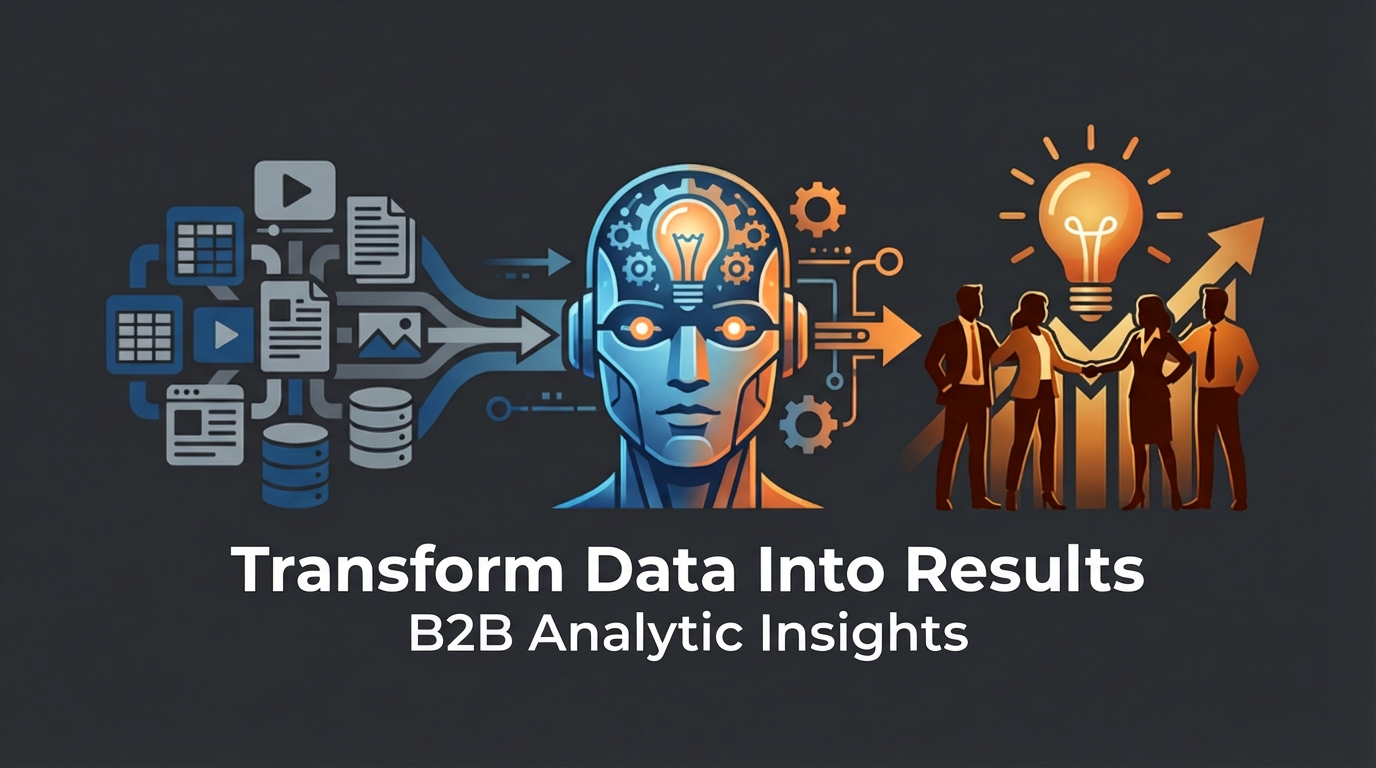

The perennial challenge in enterprise analytics, especially in the high-stakes arenas of credit risk and financial analysis, isn’t just about having data, but about leveraging it with unprecedented speed and accuracy. We’re past the era where a well-crafted SQL query was the pinnacle of analytical prowess. Today, the strategic imperative is an analytics transformation that embeds data-driven decision making at every level, and increasingly, that means building teams that are not just data-literate, but AI-literate. The question for C-suites and analytics leaders isn’t if AI will impact their operations, but how they will equip their people to harness its power effectively, turning potential into tangible ROI, and accelerating time-to-insight from months to days, or even hours.
The promise of AI in areas like predictive credit scoring, fraud detection, and optimizing enterprise operations is immense. Imagine reducing loan default rates by an additional 5% through more nuanced AI-driven risk assessments, or identifying operational inefficiencies that shave 10% off processing times. These aren’t futuristic fantasies; they are achievable outcomes. Yet, the gap between the potential of AI and its actual, realized value often lies in the human element. Our analytics teams, the very engine of our data-driven decision making, need to evolve. They require a new set of skills, a new mindset, and a new approach to training and development. This isn’t about replacing our seasoned analysts; it’s about augmenting their expertise, empowering them to work with AI, not against it.
The stakes are incredibly high. In financial services, a missed fraud alert due to a lack of AI understanding can lead to millions in losses. In enterprise operations, failing to grasp how AI can optimize supply chains can result in significant cost overruns. The challenge, then, is clear: how do we build AI-literate analytics teams that can not only implement AI tools but also critically evaluate their outputs, understand their limitations, and drive meaningful business outcomes? This is the core of our analytics transformation journey.
Foundational AI Literacy: Beyond Buzzwords
The first, and arguably most critical, step in building AI-literate analytics teams is establishing a solid foundation in AI literacy. This isn’t about turning every analyst into a machine learning engineer; it’s about ensuring they understand what AI is, what it isn’t, and how it can be applied to solve real-world business problems. The days of generic, one-size-fits-all training are over. We need a sophisticated, role-based approach that prioritizes practical application.
Understanding Core AI Concepts Through a Business Lens
For credit risk analysts, this means understanding how generative AI can augment their ability to synthesize vast amounts of unstructured data for a more comprehensive borrower profile. For financial analysts, it’s grasping how AI can automate complex reconciliation processes or identify subtle anomalies indicative of financial misconduct, thereby reducing manual review hours by an estimated 30%. For operations teams, it might be understanding how AI can predict equipment failures in manufacturing plants, leading to a projected 15% reduction in downtime. The key here is to translate technical AI concepts like machine learning algorithms, natural language processing (NLP), and deep learning into their direct business implications. We must frame these not as abstract technologies, but as tools that directly address challenges like improving forecast accuracy by 12% or reducing operational costs by 8%.
The Power of Prompt Engineering for Practical Application
A significant development in AI training is the emphasis on prompt engineering. This is where the rubber meets the road for many roles. For an analytics team focused on customer segmentation for a B2B SaaS company, effective prompt engineering can drastically improve the quality and relevance of insights. Instead of vaguely asking for “customer segments,” a well-prompted query can elicit detailed personas, identify churn indicators, and even suggest targeted upselling opportunities. We’re seeing organizations report that by training their teams in effective prompting for generative AI, they can reduce the time spent on initial data exploration and hypothesis generation by as much as 40%. This is not just about asking better questions; it’s about unlocking the latent potential within these AI models.
Recognizing AI’s Strengths and Limitations
Crucially, AI literacy must encompass a clear understanding of AI’s limitations. It’s not a silver bullet. For credit risk modeling, it means acknowledging that AI might struggle with unprecedented economic shocks or emerging fraudulent patterns not present in historical data. For financial analysis, it means recognizing that AI-generated summaries of earnings calls still require human oversight for nuanced interpretation. This critical perspective, often referred to as “AI skepticism” or “critical AI evaluation,” is vital. Organizations that actively train their teams to question AI outputs, cross-reference findings, and understand potential biases are far more likely to avoid costly errors. This includes understanding that while AI can automate report generation, the strategic interpretation and communication of those findings remain a human-driven, high-value activity.
In the pursuit of enhancing data-driven decision-making, organizations are increasingly recognizing the importance of building AI-literate analytics teams. A related article that delves into effective training and development strategies for cultivating such teams can be found at B2B Analytic Insights. This resource provides valuable insights into the skills and competencies necessary for analytics professionals to thrive in an AI-driven landscape, emphasizing the need for continuous learning and adaptation in a rapidly evolving technological environment.
Role-Based Learning Paths: Tailoring for Impact
The most effective AI literacy programs are not one-size-fits-all. They recognize that a credit risk manager needs different AI skills than a fraud analyst or an enterprise operations lead. This role-based, use-case-first approach ensures that training is directly relevant to the daily challenges and strategic objectives of each individual, maximizing engagement and knowledge retention. We’re moving away from generic “AI 101” courses towards highly targeted modules that address specific business functions and the AI applications within them.
AI for Credit Risk: Enhancing Predictive Power
For teams focused on credit risk, AI literacy development should zero in on how AI can refine existing models and uncover new risk factors. Training should cover how to leverage AI for advanced anomaly detection in transaction data, interpret complex AI-generated risk scores, and understand the implications of AI in regulatory compliance. For instance, training could focus on how to use AI to analyze non-traditional data sources, such as social media sentiment (with appropriate privacy controls), to gain a more holistic view of borrower risk, potentially improving prediction accuracy by an additional 3-7% beyond traditional metrics. The goal is to empower these professionals to build more robust, adaptive, and compliant credit risk frameworks.
AI in Financial Analysis: Driving Efficiency and Insight
Financial analysts benefit immensely from AI training that emphasizes automation of repetitive tasks and enhancement of analytical capabilities. This includes training on AI-powered tools for financial statement analysis, automated regulatory reporting, and sophisticated fraud detection. For example, training could focus on how AI can identify subtle patterns in financial transactions that indicate potential fraud, leading to a projected 20% increase in early fraud detection. Furthermore, AI literacy in this domain means understanding how to use AI to generate dynamic financial forecasts that are more responsive to market fluctuations, providing the C-suite with more agile strategic guidance.
AI for Enterprise Operations: Optimizing Performance
In enterprise operations, AI literacy translates to tangible improvements in efficiency, cost reduction, and supply chain resilience. Training should equip teams with the knowledge to apply AI for demand forecasting, inventory optimization, predictive maintenance, and process automation. Imagine an operations team trained to use AI for optimizing warehouse logistics, resulting in a 10% reduction in shipping costs and a 5% improvement in order fulfillment times. This requires understanding how AI models can process vast datasets to identify bottlenecks and inefficiencies that human analysis alone might miss.
Microlearning and Modular Development: Flexibility at Scale
The rapid evolution of AI necessitates a flexible and scalable approach to training. Microlearning and modular learning paths are emerging as the preferred methods for equipping large analytics teams. These approaches break down complex AI concepts into digestible, bite-sized modules that can be consumed at the learner’s pace and convenience. This is particularly effective for busy professionals who may not have the luxury of extended full-day training sessions.
Building Core AI Competencies with Short Modules
Organizations are developing libraries of short, focused modules covering topics like “Introduction to Generative AI for Business,” “Ethical AI Considerations in Financial Services,” or “Prompt Engineering for Data Analysis.” These modules can be delivered via Learning Management Systems (LMS), internal collaboration platforms, or even short video series. The advantage is significant: a team can complete a 20-minute module on AI-driven anomaly detection in financial data and immediately apply that knowledge to their current work. This iterative approach fosters continuous learning and adaptation, which is essential in the fast-paced world of analytics.
Integrating Workshops and Live Sessions for Deeper Engagement
While microlearning provides foundational knowledge, it’s often most impactful when complemented by interactive workshops and live sessions. These can be used for hands-on practice with specific AI tools, Q&A with AI experts, and collaborative problem-solving using AI. For example, a workshop focused on applying AI to credit risk assessment could involve participants working through real-world case studies, experimenting with different AI models, and receiving immediate feedback. This blend of self-paced learning and guided application ensures a deeper understanding and a higher degree of skill mastery.
Internal Certifications to Validate and Incentivize Skill Development
To further incentivize and formalize AI literacy, many organizations are implementing internal certification programs. These programs typically involve a combination of completing specific learning modules, demonstrating proficiency through practical assignments, and potentially passing a knowledge-based assessment. Such certifications provide a clear signal of an individual’s AI capabilities, both to themselves and to the wider organization. It also allows for tracking progress and identifying areas where further development might be needed. For example, a “Certified AI Analyst” credential can become a valuable internal marker of expertise.
On-the-Job Practice: The 70% Rule for Mastery
The most impactful AI literacy development occurs not in the classroom, but on the job. Gartner’s recommendation that as much as 70% of learning time be dedicated to applied, real-world work is a powerful testament to this shift. This hands-on approach allows analysts to immediately put their newly acquired AI knowledge into practice, reinforcing learning and demonstrating tangible value. Measuring the effectiveness of training then shifts from simply tracking course completions to observing how these new skills are being applied and the impact they are having.
Experiential Learning for Credit Risk Modeling
For credit risk teams, on-the-job practice might involve using AI tools to analyze historical loan data for patterns that were previously invisible, or experimenting with AI-driven sentiment analysis of public financial statements for key corporate borrowers. It’s about empowering them to iteratively refine their risk models by integrating AI insights, not just relying on legacy statistical methods. The goal is to enable them to build more predictive and resilient risk assessments, potentially reducing default rates by an additional 5-10% in targeted portfolios.
Applying AI to Financial Statement Analysis and Fraud Detection
Financial analysts can gain AI literacy through practical application by using AI-powered tools to automate the extraction and summarization of financial data from annual reports, or by employing AI algorithms to flag suspicious transaction patterns in real-time. This experiential learning allows them to move beyond manual data entry and traditional spreadsheet analysis to a more sophisticated, AI-augmented workflow. The measurable outcome is a significant reduction in the time-to-insight for financial reporting and a marked improvement in fraud detection rates, potentially by 25-30%.
Optimizing Enterprise Operations Through AI Pilots
For operations teams, on-the-job practice means leading pilot projects that leverage AI to optimize specific processes. This could involve using AI for demand forecasting for a particular product line, experimenting with AI-driven inventory management for a warehouse, or implementing AI-powered predictive maintenance for a critical piece of machinery. These hands-on experiences, guided by AI literacy training, allow teams to directly quantify the impact of AI on operational efficiency, cost savings, and uptime. For example, a pilot project focused on AI for predictive maintenance might demonstrate a 20% reduction in unexpected equipment failures.
Continuous Measurement and Iteration of Learning Programs
The “70% rule” for on-the-job practice necessitates a shift in how we measure learning effectiveness. Instead of just tracking attendance, we need to monitor tool adoption, task-level proficiency, and most importantly, the business impact. Is the AI-literate team reducing credit default rates? Are financial analysts uncovering fraud more quickly? Are operations teams driving tangible efficiency gains? This data-driven approach to evaluating training programs allows for continuous iteration and improvement, ensuring that our AI literacy initiatives remain aligned with business objectives and deliver maximum ROI. We must shift from measuring input (e.g., training hours) to measuring outcome (e.g., reduction in manual review time by 40%).
In the quest to enhance data-driven decision-making, organizations are increasingly recognizing the importance of fostering AI literacy within their analytics teams. A related article that delves into effective strategies for training and development in this area can be found at B2B Analytic Insights. By implementing tailored educational programs and hands-on workshops, companies can empower their teams to leverage AI tools more effectively, ultimately driving better business outcomes.
Cultivating Internal AI Champions and Peer Learning
Fostering a culture of AI literacy requires more than just formal training programs. It necessitates nurturing internal expertise and creating channels for knowledge sharing and peer-to-peer learning. AI champions and the promotion of collaborative learning environments are becoming indispensable components of successful AI upskilling strategies. This organic spread of knowledge complements structured training and helps embed AI capabilities deeply within the organization.
Identifying and Empowering AI Ambassadors
Organizations are increasingly identifying individuals who show a natural aptitude and enthusiasm for AI and empowering them as “AI champions” or “AI ambassadors.” These individuals act as go-to resources for their colleagues, offering informal guidance, sharing best practices, and helping to demystify AI. They can organize lunch-and-learn sessions, demonstrate new AI tools, and provide a relatable point of contact for those who may be hesitant to approach central IT or analytics leadership with their AI-related questions. This grassroots approach is incredibly effective for accelerating adoption and building confidence.
Leveraging Lunch-and-Learns and Internal Demos
Informal learning sessions, such as lunch-and-learns and internal demo days, are powerful vehicles for disseminating practical AI knowledge. These sessions can showcase how AI is being successfully applied to solve specific business problems within the organization, generating excitement and inspiring others to explore AI solutions for their own challenges. For example, a lunch-and-learn session on using AI for enhanced credit risk assessment might feature a live demonstration of a new AI-powered tool and a Q&A with the analyst who implemented it. This peer-to-peer sharing fosters a collaborative learning environment and accelerates the adoption of new AI capabilities across teams.
Building Communities of Practice for AI Enthusiasts
Creating dedicated communities of practice for AI enthusiasts within the organization can foster deep collaboration and continuous learning. These communities can provide a forum for discussing emerging AI trends, sharing project experiences, and collectively tackling complex AI challenges. For teams working in credit risk, this might involve a community focused on AI for fraud detection, where members share insights on new AI techniques and discuss the effectiveness of different algorithms. Such communities ensure that knowledge is not siloed but rather democratized and amplified across the analytics landscape.
Integrating AI Literacy into Existing Data Programs
The most sustainable approach to building AI-literate analytics teams involves integrating AI training into broader data literacy and analytics initiatives. AI is not an isolated discipline; it is an evolution of how we leverage data. By embedding AI literacy within existing frameworks, organizations can ensure that it becomes a natural extension of their current data-driven culture, rather than a separate, potentially disconnected effort. This prevents siloing and reinforces the interconnectedness of data, analytics, and AI.
Expanding Data Literacy Frameworks to Include AI
Many organizations already have established data literacy programs. The next logical step is to expand these frameworks to explicitly include AI literacy. This means incorporating modules on AI concepts, ethical considerations, and practical applications into existing data governance, data analysis, and business intelligence training. For example, a data governance training module could now include a section on managing AI model risks and ensuring data privacy in AI deployments. This integration ensures that AI knowledge is built upon a strong foundation of data management and ethical principles.
Tailoring AI Training for Non-Technical Staff
It’s crucial to recognize that AI literacy is not solely for analytics specialists. Non-technical staff across the organization also stand to benefit from understanding how AI can impact their roles and the broader business. Training for these individuals should focus on the practical applications and implications of AI, rather than the technical intricacies. For example, sales teams can benefit from learning how AI-powered CRM tools can help them identify high-potential leads, or how generative AI can assist in drafting initial customer communications. This broad-based AI literacy fosters a more informed and agile workforce, capable of embracing AI-driven innovations.
Partnering for Structured Upskilling: The Rise of AI Certificates
The demand for structured AI upskilling is leading to new partnerships and the launch of specialized certificate programs. As evidenced by initiatives like the AI & Business Analytics certificate series from Michigan State University and Bisk, these programs offer professionals a formalized path to acquiring in-demand AI skills. For organizations looking to provide their teams with recognized credentials and comprehensive training, partnering with educational institutions or specialized training providers can be a highly effective strategy. These programs often blend theoretical knowledge with practical application, ensuring graduates are well-equipped for real-world AI challenges.
Strategic Recommendations for C-Suites and Analytics Leaders
Building AI-literate analytics teams is not a project; it’s a continuous journey of analytics transformation. The ROI of such an endeavor is directly tied to the organization’s ability to accelerate data-driven decision making and achieve a faster time-to-insight. The C-suite needs to champion this initiative, not just with budget, but with a clear strategic vision. Analytics leaders must then translate this vision into actionable plans that empower their teams.
- Prioritize Role-Based, Use-Case-First Training: Don’t invest in generic AI courses. Identify your highest-value use cases in credit risk, financial analysis, and enterprise operations and build training around them. This ensures immediate relevance and demonstrable impact. Think: “How can AI help us reduce credit default by X%?” not “What is deep learning?”
- Embrace Microlearning and Modular Paths with Applied Practice: Deliver AI education in bite-sized, digestible modules, complemented by hands-on workshops. Critically, ensure at least 70% of learning is dedicated to real-world application. Measure success not by attendance, but by observed skill adoption and tangible business improvements – e.g., a 15% reduction in manual credit review time.
- Cultivate Internal AI Champions and Foster Peer Learning: Empower your internal AI enthusiasts to spread knowledge organically. Facilitate lunch-and-learns, demo days, and communities of practice. This builds a self-sustaining ecosystem of AI expertise. A strong internal champion can drive adoption more effectively than any external vendor.
- Integrate AI Literacy into Broader Data Programs: AI is an extension of data analytics. Weave AI education into your existing data governance, analytics, and data literacy frameworks. This ensures a holistic approach and prevents AI from becoming an isolated initiative. Broaden training to include non-technical roles who can benefit from understanding AI’s impact on their daily tasks.
- Measure What Matters: Focus on Outcomes, Not Just Completions: Shift your metrics from course completion rates to concrete business outcomes. Track AI tool adoption, task-level proficiency gains, and demonstrable improvements in key performance indicators like credit default rates, operational efficiency, or fraud detection speed. This data-driven approach to evaluating training ROI is non-negotiable.
The future of competitive advantage in B2B markets – particularly in areas like credit risk, financial analysis, and enterprise operations – hinges on our ability to effectively harness AI. This requires a deliberate, strategic investment in our people. By building AI-literate analytics teams, we are not just adopting new technology; we are fundamentally transforming how we operate, innovate, and achieve our strategic objectives. The journey requires vision, dedication, and a relentless focus on practical implementation. The rewards – increased efficiency, reduced risk, and accelerated time-to-insight – are substantial.