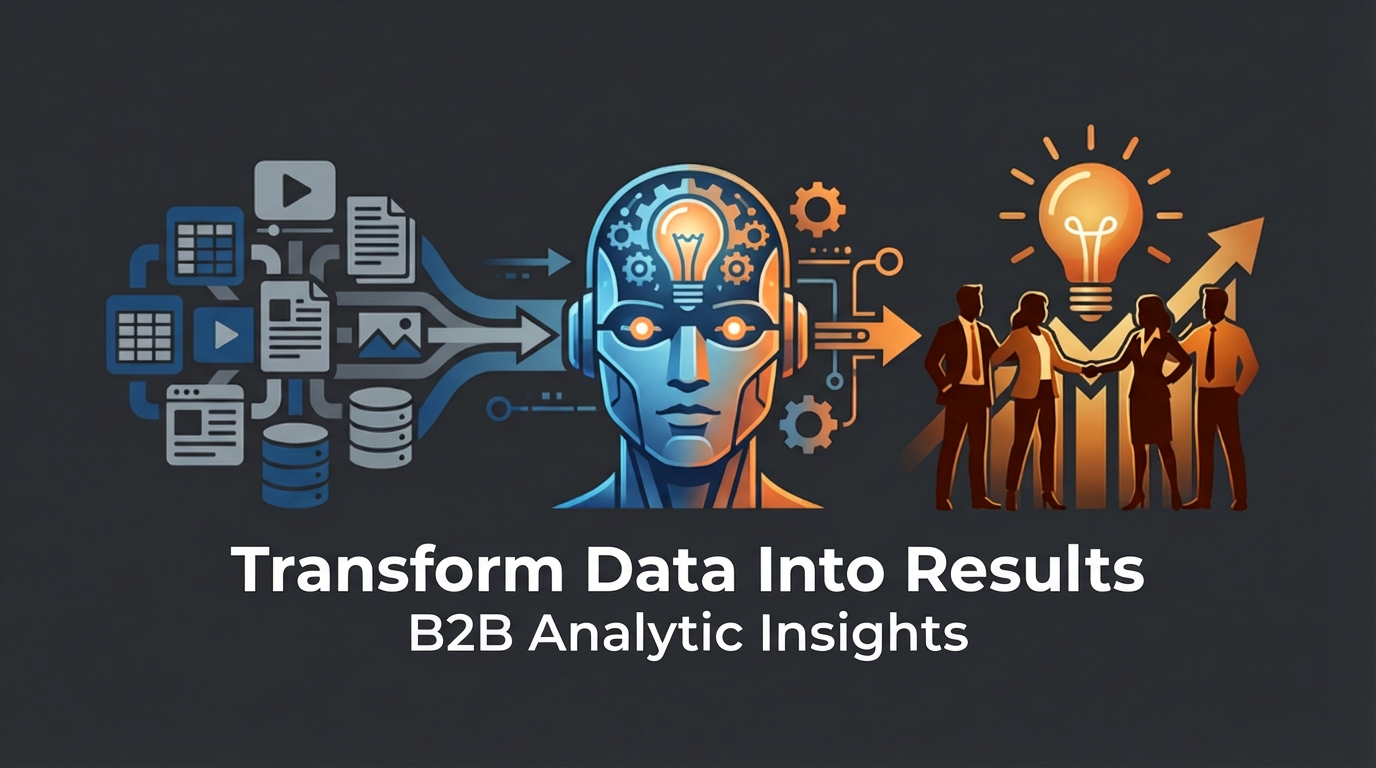

Data conversion and insights generation are crucial processes in the world of data analysis and decision making. In order to make informed decisions, it is important to understand the basics of data conversion and how it leads to actionable insights. This article will explore the different types of data conversion, the importance of data insights in decision making, techniques for converting data into insights, the role of data analytics and visualization, challenges of converting big data, the benefits of machine learning, the impact of data quality, best practices, and the future of data conversion and insights generation.
Key Takeaways
- Understanding the basics of data conversion is crucial for generating actionable insights.
- Data insights play a vital role in decision making, helping organizations make informed choices.
- Techniques such as data analytics and visualization are essential for converting data into actionable insights.
- Machine learning can help overcome the challenges of converting big data into insights.
- Data quality is critical for accurate insights conversion, and best practices should be followed for optimal results.
Understanding the Basics of Data Conversion
Data conversion refers to the process of transforming data from one format to another. This can involve converting data from physical to digital form, or from one digital format to another. There are various types of data conversion, including file format conversion, database migration, character encoding conversion, and more. The purpose of data conversion is to ensure that data can be easily accessed, analyzed, and used for decision making.
Data conversion is important in decision making because it allows for the integration and analysis of different types of data. For example, if an organization has data stored in different file formats or databases, it may be difficult to analyze and gain insights from this data without first converting it into a unified format. Additionally, data conversion allows for the integration of external data sources, such as market research or customer feedback, which can provide valuable insights for decision making.
The Importance of Data Insights in Decision Making
Data insights refer to the meaningful patterns, trends, and relationships that can be derived from analyzing data. These insights provide valuable information that can guide decision making and help organizations achieve their goals. Data insights are important in decision making because they provide a factual basis for making informed decisions. Without insights derived from data analysis, decisions may be based on assumptions or intuition, which can lead to poor outcomes.
Data insights can have a significant impact on decision making. For example, insights derived from customer data analysis can help organizations understand customer preferences and behavior, which can inform marketing strategies and product development. Insights from financial data analysis can help organizations identify cost-saving opportunities or revenue growth potential. By leveraging data insights, organizations can make more informed decisions that are based on evidence rather than guesswork.
Techniques for Converting Data into Actionable Insights
There are several techniques that can be used to convert data into actionable insights. The first step is data cleaning and preparation, which involves removing any errors or inconsistencies in the data and ensuring that it is in a format suitable for analysis. This may involve removing duplicate records, correcting spelling errors, or filling in missing values.
Once the data is cleaned and prepared, various data analysis techniques can be applied to uncover patterns and relationships. This may involve descriptive statistics, such as calculating averages or percentages, or more advanced techniques such as regression analysis or clustering. These techniques help to identify trends, correlations, and outliers in the data.
Data modeling and prediction is another technique for converting data into insights. This involves using statistical models or machine learning algorithms to make predictions or forecasts based on historical data. For example, a retailer may use sales data to build a predictive model that can forecast future sales based on factors such as seasonality, promotions, or economic indicators.
The Role of Data Analytics in Converting Data to Insights
Data analytics refers to the process of analyzing raw data to uncover patterns, trends, and insights. It involves applying various statistical and mathematical techniques to transform data into meaningful information. Data analytics plays a crucial role in converting data into insights because it provides the tools and methods for analyzing and interpreting data.
Data analytics is important in converting data to insights because it allows organizations to make sense of large volumes of complex data. It helps to identify patterns and trends that may not be immediately apparent, and provides a systematic approach to analyzing data. By leveraging data analytics, organizations can gain a deeper understanding of their data and uncover valuable insights that can drive decision making.
For example, a retailer may use data analytics to analyze customer purchase history and identify patterns in customer behavior. This can help the retailer understand which products are popular among different customer segments, and tailor marketing strategies accordingly. Data analytics can also be used to analyze operational data and identify inefficiencies or bottlenecks in processes, leading to process improvements and cost savings.
Data Visualization: A Key Tool for Converting Data to Insights

Data visualization refers to the graphical representation of data to facilitate understanding and interpretation. It involves creating visualizations such as charts, graphs, and maps that allow for the exploration and communication of data insights. Data visualization is a key tool for converting data into insights because it helps to make complex data more accessible and understandable.
Data visualization is important in converting data to insights because it allows for the exploration and discovery of patterns and relationships in the data. By visualizing data, it becomes easier to identify trends, outliers, and correlations that may not be immediately apparent from raw data. Additionally, data visualization helps to communicate insights in a clear and concise manner, making it easier for decision makers to understand and act upon the information.
For example, a healthcare organization may use data visualization to analyze patient outcomes and identify areas for improvement. By visualizing patient data in the form of charts or graphs, it becomes easier to identify patterns or trends that may indicate areas where patient care can be enhanced. Data visualization can also be used to communicate these insights to healthcare providers or policymakers, facilitating informed decision making.
The Challenges of Converting Big Data to Insights
Big data refers to large volumes of complex and diverse data that cannot be easily managed or analyzed using traditional methods. Converting big data into insights poses several challenges due to its volume, velocity, variety, and veracity. The sheer volume of big data can make it difficult to store, process, and analyze. The velocity at which big data is generated requires real-time or near-real-time analysis. The variety of data sources and formats makes it challenging to integrate and analyze the data. Finally, the veracity of big data refers to the quality and reliability of the data, which can vary significantly.
To overcome these challenges, organizations can employ techniques such as distributed computing, parallel processing, and advanced analytics algorithms. Distributed computing allows for the processing of big data across multiple machines or servers, enabling faster and more efficient analysis. Parallel processing involves dividing the data into smaller subsets and analyzing them simultaneously, further speeding up the analysis process. Advanced analytics algorithms, such as machine learning algorithms, can be used to analyze big data and uncover insights that may not be apparent using traditional methods.
The Benefits of Machine Learning in Converting Data to Insights
Machine learning is a subset of artificial intelligence that involves the development of algorithms that can learn from and make predictions or decisions based on data. Machine learning is particularly useful in converting data into insights because it can uncover patterns and relationships that may not be immediately apparent to humans. Machine learning algorithms can analyze large volumes of complex data and identify trends or correlations that can inform decision making.
Machine learning is important in converting data to insights because it can automate the analysis process and uncover insights at scale. Traditional methods of data analysis may be time-consuming and require manual intervention, whereas machine learning algorithms can analyze large volumes of data quickly and efficiently. Additionally, machine learning algorithms can adapt and improve over time as they are exposed to more data, leading to more accurate predictions or decisions.
For example, a financial institution may use machine learning algorithms to analyze customer transaction data and identify patterns that indicate fraudulent activity. By training the algorithms on historical fraud cases, they can learn to recognize patterns that may indicate fraudulent transactions in real-time. This can help the financial institution detect and prevent fraud, leading to cost savings and improved customer trust.
The Impact of Data Quality on Insights Conversion
Data quality refers to the accuracy, completeness, consistency, and reliability of data. The quality of data has a significant impact on the conversion of data into insights. If the data is inaccurate, incomplete, or inconsistent, the insights derived from it may be unreliable or misleading. Therefore, ensuring data quality is crucial in generating meaningful insights.
There are several techniques for ensuring data quality. Data validation involves checking the accuracy and completeness of data by comparing it against predefined rules or criteria. Data cleansing involves removing errors or inconsistencies in the data, such as duplicate records or incorrect values. Data integration involves combining data from different sources and resolving any inconsistencies or conflicts. Data governance involves establishing processes and controls to ensure that data is accurate, consistent, and reliable.
By ensuring data quality, organizations can have confidence in the insights derived from their data analysis. This allows for more informed decision making and reduces the risk of making decisions based on faulty or unreliable information.
Best Practices for Converting Data to Insights
There are several best practices that organizations can follow to ensure effective conversion of data into insights. First and foremost, it is important to clearly define the objectives and questions that need to be answered through data analysis. This helps to focus the analysis and ensure that it is aligned with the organization’s goals.
Secondly, organizations should invest in data infrastructure and tools that enable efficient storage, processing, and analysis of data. This may involve implementing a data warehouse or a big data platform that can handle large volumes of data and support advanced analytics techniques.
Thirdly, organizations should prioritize data quality by implementing processes and controls to ensure accurate and reliable data. This may involve establishing data governance frameworks, conducting regular data audits, and investing in data cleansing and validation tools.
Finally, organizations should foster a data-driven culture that encourages the use of data in decision making. This involves providing training and resources to employees to enhance their data analysis skills, and promoting the use of data insights in decision making processes.
By following these best practices, organizations can maximize the value of their data and generate meaningful insights that drive informed decision making.
The Future of Data Conversion and Insights Generation
The field of data conversion and insights generation is constantly evolving, driven by advancements in technology and the increasing availability of data. Some emerging trends in this field include the use of artificial intelligence and machine learning algorithms to automate the analysis process, the integration of real-time data sources for faster insights generation, and the use of natural language processing and text analytics to analyze unstructured data.
These trends have the potential to significantly impact decision making by providing faster, more accurate, and more actionable insights. For example, the use of machine learning algorithms can automate the analysis of large volumes of complex data, allowing organizations to uncover insights at scale. The integration of real-time data sources can provide up-to-date information that can inform real-time decision making. Natural language processing and text analytics can enable organizations to analyze unstructured data such as customer reviews or social media posts, providing valuable insights into customer sentiment or market trends.
In conclusion, data conversion and insights generation are crucial processes in decision making. Understanding the basics of data conversion is important in order to ensure that data can be easily accessed, analyzed, and used for decision making. Data insights provide valuable information that can guide decision making and help organizations achieve their goals. Techniques such as data cleaning and preparation, data analysis, data modeling and prediction, data analytics, and data visualization are used to convert data into actionable insights. Challenges such as big data and data quality can be overcome through techniques such as distributed computing, parallel processing, advanced analytics algorithms, and data validation. Following best practices and embracing emerging trends can further enhance the conversion of data into insights. Ultimately, data conversion and insights generation play a crucial role in decision making by providing a factual basis for making informed decisions.