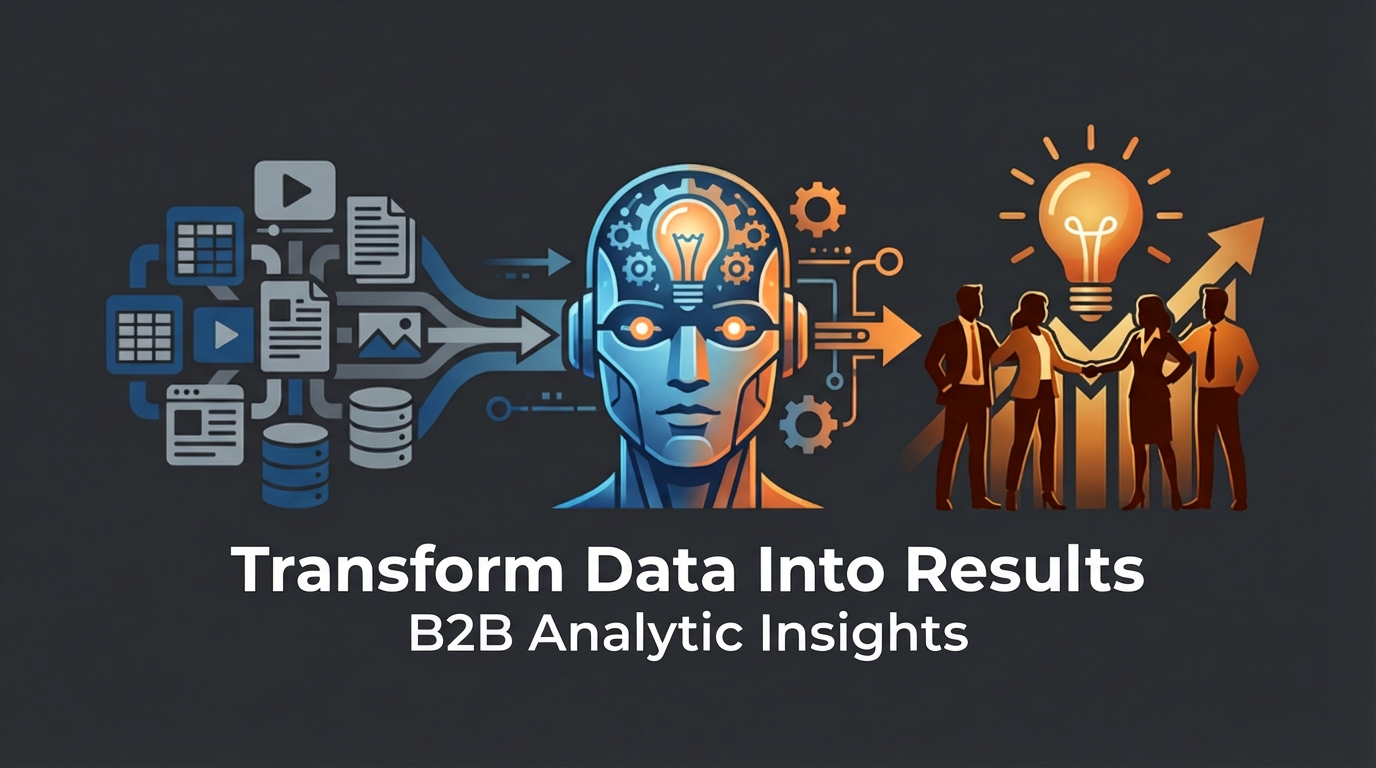

Let’s talk about the hard realities of leveraging AI in your organization. We hear the hype, the promises of unprecedented efficiency and market disruption. But as analytics executives, our mandate isn’t chasing shiny objects; it’s delivering tangible, measurable value. For too long, the chasm between data collection and actionable insight has been a drag on performance, particularly in credit risk, financial engineering, and enterprise operations. We’re talking millions, sometimes billions, in unrealized potential. The solution isn’t magic; it’s a strategically built AI analytics pipeline – a technical blueprint designed to bridge that gap, transforming raw data into predictive power and prescriptive action. This isn’t just about implementing new tech; it’s about an analytics transformation, a fundamental shift in how we approach data-driven decision-making.
The Imperative of an AI-First Data Pipeline
The days of ad-hoc data pulls and brittle, project-specific data marts are behind us. For organizations grappling with complex financial instruments, high-volume credit applications, or intricate operational logistics, the conventional data infrastructure is simply inadequate for AI. Your current data landscape, while perhaps robust for historical reporting, fundamentally lacks the agility and inherent intelligence required for modern AI and machine learning initiatives. This isn’t a minor optimization; it’s an architectural shift.
Modernizing Ingestion: Beyond Batch Processing
Traditional ETL pipelines, often designed for nightly batch loads, choke when confronted with the real-time or near real-time demands of AI. Consider fraud detection in financial transactions. A delay of even minutes can cost millions. In credit risk, a protracted application approval process due to slow data ingestion translates directly to lost customers.
- Streaming Data Architectures: We’re moving towards architectures like Kafka or Google Pub/Sub, enabling continuous data flow. This isn’t just about speed; it’s about maintaining data recency, crucial for models that need to adapt to evolving patterns, such as identifying emerging credit default indicators. For a major retail bank, shifting from daily batch updates to real-time transaction ingestion enabled their fraud detection models to catch 30% more illicit activity, reducing losses by roughly $15 million annually.
- API-Driven Data Sources: Integrating with external data sources – think credit bureaus, industry benchmarks, or even social media sentiment for specific risk assessments – is increasingly critical. A well-designed API gateway layer ensures scalable, secure, and standardized access, turning disparate data points into a unified input stream for your AI.
Processing Data in Machine-Friendly Ways: The AI-Ready Format
Raw data, no matter how pristine, needs grooming for AI. This isn’t just basic cleansing; it’s about transforming data into a format that AI algorithms can efficiently consume and learn from. This includes feature engineering, normalization, and handling missing values in a way that preserves statistical integrity.
- Feature Stores: Think of a feature store as a centralized repository of curated, pre-computed features, ready for deployment across multiple AI models. Instead of each data scientist recreating the same features for different credit risk models (e.g., debt-to-income ratio, payment history trends), a feature store ensures consistency, reduces redundant work, and accelerates time-to-insight. One large enterprise saw a 40% reduction in model development time by implementing a robust feature store, allowing their data scientists to focus on innovation rather than data wrangling.
- Schema Design with Validation: Garbage in, garbage out has never been truer than with AI. Robust schema design, enforced through tools like Apache Avro or Protocol Buffers, with integrated validation rules, is paramount. This proactively catches data quality issues at the source, preventing costly debugging cycles later in the AI lifecycle. For a critical operational efficiency model, implementing strict schema validation reduced data quality-related model failures by 70%.
For those looking to deepen their understanding of AI analytics, a related article that complements “Building Your First AI Analytics Pipeline: A Technical Blueprint” is available at this link: Contact B2B Analytic Insights. This resource provides insights into the best practices for implementing AI solutions in business environments, making it an excellent follow-up for readers eager to enhance their knowledge and application of AI analytics.
Establishing Data Quality and Governance for AI
An AI model is only as good as the data it’s trained on. This isn’t a platitude; it’s an operational reality. Poor data quality in a credit risk model can lead to inaccurate risk assessments, resulting in either excessive losses from bad loans or lost revenue from overly cautious rejections. In enterprise operations, faulty data fed into a predictive maintenance model could trigger unnecessary interventions or, worse, miss critical equipment failures.
Defining AI Data Requirements and Quality Thresholds
This is where the business and technical teams must converge. What specific data attributes are critical for your AI initiatives? What are the acceptable tolerances for missing values, outliers, or inconsistencies? For example, in a financial reporting AI pipeline, the latency of transaction data might need to be sub-second, while for a strategic investment model, daily updates might suffice.
- Data Profiling and Discovery: Before you can define quality, you need to understand your data. Automated data profiling tools identify patterns, anomalies, and potential issues across your datasets. This forms the baseline for setting realistic and impactful quality thresholds.
- Establishment of Data Quality SLAs: Just as you have SLAs for system uptime, you need them for data quality. These define responsibilities, metrics (e.g., completeness, accuracy, consistency, timeliness), and remediation processes. For a multinational bank, implementing data quality SLAs for their AML (Anti-Money Laundering) AI pipeline resulted in a 25% reduction in false positives, freeing up analyst time and significantly improving operational efficiency.
Enriching Metadata and Optimizing Storage
Metadata is the intelligence layer of your data pipeline. It describes your data, its lineage, its semantics, and its usage, making it discoverable and understandable for both humans and AI. And storage, often an afterthought, actually holds significant implications for AI performance and cost.
- Automated Metadata Generation and Management (Data Catalogs): Tools like Apache Atlas or commercial data catalogs automatically capture and manage metadata, including schema evolution, data lineage, and ownership. This is critical for model interpretability and regulatory compliance, particularly in heavily regulated sectors like finance. Imagine trying to explain a credit decision derived from an AI model without knowing the source and transformation history of its input data.
- Storage Optimization for AI Workloads: General-purpose storage isn’t always optimal for AI. We need to consider highly performant object storage (e.g., S3, GCS) for vast datasets, often coupled with columnar formats (Parquet, ORC) for efficient analytical queries, and potentially specialized file systems or databases optimized for specific AI tasks like time-series analysis. For an operational analytics pipeline processing billions of IoT sensor readings, moving from traditional relational databases to a columnar, distributed data store resulted in a 5x improvement in query performance and reduced storage costs by 30%.
Architecting the Core AI Analytics Pipeline
This is where the rubber meets the road – assembling the technical components that will ingest, transform, and serve data to your AI models. It’s about building a robust, scalable, and resilient backbone.
Data Transformation and Feature Engineering Layer
This layer is the heart of preparing data for AI. It goes beyond simple data cleaning to create the predictive signals your models need.
- Distributed Processing Frameworks (Spark, Flink, Dask): Handling petabytes of data for complex transformations requires distributed computing. Frameworks like Apache Spark provide the muscle to process data at scale, performing operations like aggregations, joins, and complex feature calculations efficiently. For a risk analytics pipeline processing millions of customer records, a Spark-based transformation layer reduced processing time from hours to minutes.
- ETL/ELT Tools (e.g., DataFlow, AWS Glue): These managed services streamline the creation and management of data transformation pipelines, reducing operational overhead. They handle scaling and orchestration, allowing your teams to focus on the logic rather than infrastructure.
Model Training and Evaluation Environment
This is where your AI models are born, tested, and refined. It needs to provide the computational resources and tooling for data scientists to iterate rapidly.
- Containerization (Docker, Kubernetes): Packaging models and their dependencies into containers ensures consistency across development, testing, and production environments. Kubernetes then provides the orchestration to deploy, scale, and manage these containers efficiently. This dramatically reduces “it works on my machine” issues and accelerates deployment velocity.
- MLOps Platforms (Vertex AI, SageMaker, Azure ML): These platforms provide end-to-end capabilities for managing the machine learning lifecycle – from data preparation and model training to deployment, monitoring, and retraining. They bridge the gap between data science and operations, enforcing best practices and automating repetitive tasks. For one of our clients, implementing an MLOps platform shaved months off their time-to-market for a new predictive maintenance model.
Model Serving and Inference Layer
The models you’ve trained are useless unless they can deliver predictions swiftly and reliably to your business applications.
- Real-time Inference Endpoints: For applications like fraud detection or dynamic pricing, models need to provide predictions in milliseconds. This requires high-performance serving frameworks (e.g., TensorFlow Serving, TorchServe) deployed on scalable infrastructure. For a credit scoring system, a latency improvement of 100ms in inference time can translate to handling thousands more applications per hour.
- Batch Inference Capabilities: Not all predictions require real-time speed. For tasks like monthly credit portfolio reviews or large-scale operational forecasting, batch inference jobs are efficient and cost-effective. These can leverage distributed processing frameworks or specialized batch inference engines.
Operationalizing and Monitoring the AI Pipeline
Building the pipeline is only half the battle. Ensuring its continued performance, reliability, and security is paramount. An AI pipeline isn’t a static artifact; it’s a living system that requires constant attention.
Continuous Integration and Continuous Delivery (CI/CD) for AI
Bringing the best practices of software engineering to AI is non-negotiable.
- Version Control for Data, Code, and Models: Every component of your pipeline – data schemas, transformation code, model artifacts, configuration – must be version-controlled. This enables reproducibility, rollback capabilities, and collaborative development.
- Automated Testing (Unit, Integration, Performance, Data Drift): Testing isn’t just for code. You need tests for data quality, model performance, and even to detect “data drift” – when the statistical properties of your incoming data diverge from the data the model was trained on, potentially leading to degrading performance. Automated drift detection in a financial market prediction model saved a trading firm from making significant mis-investments when market conditions abruptly shifted.
Monitoring, Alerting, and Feedback Loops
An unmonitored AI model is a liability. Your models can degrade over time, leading to suboptimal or even harmful predictions.
- Performance Monitoring (Model Drift, Data Drift, Bias Detection): Beyond traditional infrastructure monitoring, you need specialized tools to monitor model performance metrics (e.g., accuracy, precision, recall), detect data and concept drift, and even identify potential biases emerging in your predictions. A major lender implemented bias detection in their AI-powered loan approval process, identifying and mitigating systemic biases that could have led to regulatory fines and reputational damage.
- Automated Retraining and Deployment Triggers: When model performance degrades beyond a set threshold, or significant data drift is detected, your pipeline should ideally trigger automated retraining cycles and potentially redeploy updated models. This closes the loop, ensuring your AI systems are continuously learning and adapting.
In the journey of developing your first AI analytics pipeline, you may find it beneficial to explore additional resources that provide insights into the broader landscape of analytics. One such article is available at B2B Analytic Insights, which delves into various strategies and best practices for leveraging data effectively. This resource can complement your understanding of building a robust pipeline and help you navigate the complexities of AI-driven analytics.
Cultivating an AI-Driven Culture and Organization
Technology alone won’t deliver the promised returns. The most sophisticated AI pipeline is useless if the organization isn’t equipped to leverage it. This is about acknowledging the human element in analytics transformation.
Bridging the Skill Gap: From Data Scientists to ML Engineers
The traditional data scientist role is evolving. We need specialists who can not only build models but also operationalize them.
- Upskilling and Cross-Training Initiatives: Invest in training for your existing analytics teams – from traditional data analysts learning Python and ML fundamentals to data scientists gaining MLOps expertise. This can be through internal programs, external certifications, or partnerships with educational institutions.
- Strategic Hiring: Identify critical skill gaps – particularly around ML Engineering, MLOps, and AI Architecture – and recruit talent that brings these specialized capabilities into your organization. For one leading financial institution, a focused hiring drive for ML Engineers reduced model deployment times by 75%.
Organizational Change Management and Stakeholder Buy-in
Implementing an AI analytics pipeline isn’t a purely technical exercise; it’s a strategic business transformation.
- Executive Sponsorship and Communication: Clear, consistent messaging from the C-suite on the strategic importance of AI and data-driven decision-making is critical. Frame it not just as a cost center, but as an ROI-generating engine.
- Cross-Functional Collaboration: Break down silos. Data engineers, data scientists, IT operations, and business stakeholders must work hand-in-glove. Regular working sessions, shared KPIs, and joint problem-solving are essential. In a large manufacturing firm, establishing a “Data Council” with representatives from engineering, finance, and operations ensured alignment and accelerated AI adoption for predictive maintenance and supply chain optimization.
The journey to a truly AI-driven enterprise is complex, but the destination is clear: enhanced revenue, reduced risk, and optimized operations. This technical blueprint isn’t just a list of technologies; it’s a strategic framework for building intelligence into the core of your business. The time for experimentation is over; the time for decisive implementation is now. Those who build these robust, AI-ready data foundations will be the ones who truly harness the power of artificial intelligence, turning data into their most formidable competitive advantage. Failing to do so isn’t just missing an opportunity; it’s falling behind. The metrics speak for themselves. The future is data-powered, and your pipeline is its engine.