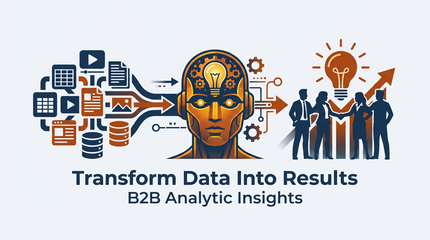

The era of enterprise analytics is undergoing a profound transformation. We’re moving beyond descriptive dashboards and into a world where intelligent systems are not just supporting, but actively shaping critical business decisions. From credit risk scoring and fraud detection to optimizing supply chains and personalizing customer experiences, AI is no longer a luxury, but a core strategic imperative. However, with this power comes unprecedented responsibility. The unchecked deployment of AI systems without robust data governance is a recipe for disaster – risking regulatory penalties, reputational damage, and ultimately, a breakdown of trust with customers and stakeholders. The clock is ticking, particularly with the EU AI Act’s data-governance obligations now a live deadline. We must shift our mindset from viewing data governance as a compliance chore to recognizing it as the foundational bedrock for successful, ethical, and scalable AI adoption.
The Imperative of Data Governance in the AI Era
For decades, we’ve preached the gospel of data-driven decision making. Now, with AI, the stakes have never been higher. A faulty model, trained on biased or inaccurate data, can propagate errors at machine speed, leading to financially damaging outcomes – consider the impact on a bank’s loan portfolio from an AI-driven credit scoring model with an embedded bias against certain demographics, or the operational inefficiencies introduced by an AI-optimized logistics system making decisions based on stale inventory data. This isn’t just about technical debt; it’s about significant bottom-line impact and systemic risk.
The Cost of Neglect
Organizations that fail to prioritize data governance in their AI initiatives face a multitude of risks. We’re talking about direct financial penalties from regulators, particularly as broader regulatory pressure increases across jurisdictions. Beyond fines, there’s the very real prospect of reputational damage that can erode customer loyalty and shareholder value. Consider a healthcare provider deploying an AI diagnostic tool that produces discriminatory outcomes due to biased training data; the public backlash would be immediate and severe. Furthermore, poorly governed AI systems lead to unreliable insights, hindering our time-to-insight and undermining the very purpose of analytics transformation. Our models become black boxes of doubt, not sources of truth.
Shifting Regulatory Landscape
The regulatory environment is no longer nascent; it’s becoming codified and prescriptive. The EU AI Act, with Article 10’s requirements for high-risk AI systems to use properly governed training, validation, and testing data, is a wake-up call for every executive. These mandates are not suggestions; they are legal obligations taking effect on August 2, 2026. This isn’t just an EU phenomenon; 2026 enforcement guidance points to similar trends in Colorado, California, and other jurisdictions. The message is clear: AI governance is moving from voluntary best practice to regulated obligation. We must embed documented quality, bias assessment, and fitness-for-purpose practices directly into our data pipelines and model development lifecycles.
In the rapidly evolving landscape of artificial intelligence, understanding the implications of data governance has never been more crucial. A related article that delves deeper into the challenges and strategies for effective data management in AI systems can be found at B2B Analytic Insights. This resource provides valuable insights into how organizations can navigate the complexities of data governance while harnessing the power of intelligent systems.
From Periodic Review to Continuous Control: Governance in the Flow
The traditional model of data governance – periodic reviews, annual audits, and static policy documents – is utterly insufficient for the dynamic nature of AI. AI-native tools, copilot technologies, and the proliferation of “shadow AI” within organizations mean that governance can no longer be an afterthought or a one-time approval step. It must be embedded directly into daily workflows, a seamless part of the development, deployment, and operationalization of intelligent systems.
Embedding Governance in the CI/CD Pipeline
For enterprise operations and financial analysis, where model updates can be frequent and impact immediate, governance must be a continuous, automated process. This means integrating data quality checks, bias detection algorithms, and privacy impact assessments directly into the continuous integration/continuous deployment (CI/CD) pipelines for AI models. Every data ingest, every model training run, every model deployment should trigger automated governance checks. This isn’t just about catching errors; it’s about proactively preventing them and ensuring continuous compliance. We need to build governance into the very fabric of our engineering practices.
Policy-as-Code and Automated Enforcement
The notion of “policy-as-code” is critical here. Instead of relying on human interpretation of lengthy policy documents, governance rules should be codified into executable scripts and automated workflows. This allows for real-time enforcement of data quality standards, access controls, and bias thresholds. For example, a credit risk model attempting to train on data lacking specific demographic attributes required by anti-discrimination policies could be automatically flagged or halted. This approach ensures that governance is enforceable at runtime, preventing non-compliant data or models from ever reaching production. We’re moving beyond aspirational policies to actively enforced guardrails.
Auditability and Provenance: Non-Negotiable Design Features
In the AI era, traceability is paramount. When an AI system makes a decision with significant business impact – say, approving a multi-million-dollar commercial loan or flagging a complex financial transaction for fraud – stakeholders, regulators, and even the system’s users need to understand why. This demands an unparalleled level of auditability and provenance, designed into every intelligent system from its inception.
Immutable Audit Logs and Data Lineage
Current guidance emphasizes the need for immutable audit logs, capturing every interaction, every data point used, and every decision made by an AI system. This is not just about logging; it’s about creating an unalterable record that can withstand scrutiny. Coupled with this is the necessity of robust data lineage, tracing data from its source systems, through various transformations, into the training data, and finally, to the model’s outputs. For financial analysis, this is crucial for satisfying compliance requirements and internal controls. If we can’t reconstruct the journey of data to an insight, that insight carries diminished trust and utility.
Model Cards and Datasheets
To bridge the gap between technical complexity and business understanding, documentation practices like model cards and datasheets are becoming mandatory design features. A model card provides a concise, standardized summary of an AI model’s purpose, performance metrics, training data characteristics, known biases, and ethical considerations. Similarly, datasheets for datasets provide comprehensive metadata about the data’s collection, preprocessing, and potential limitations. These tools offer transparency and context, enabling analytics leaders and C-suite executives to better understand the capabilities and limitations of the AI systems they oversee, ensuring they are fit for purpose and used responsibly.
Converging Privacy and Transparency Rules
The digital economy thrives on data, and AI amplifies its utility. Yet, the use of personal data in AI systems introduces significant privacy challenges. The converging landscape of privacy and transparency rules is creating new expectations around how we collect, process, and utilize data for AI.
Purpose Limitation and Consent-Driven Training
The principle of purpose limitation – using data only for the explicit purposes for which it was collected – is becoming even more critical for AI. Training AI models on personal data requires clear justification and, increasingly, explicit consent, especially when dealing with sensitive information. For instance, in credit risk modeling, using customer transaction data for novel AI applications beyond the initial scope might require re-consenting customers. This shift necessitates a complete overhaul of data collection strategies and consent management frameworks to ensure that data used for AI training is both legally and ethically sourced.
Disclosure and Control for Personal Data
Beyond consent, there’s an increasing emphasis on disclosure and user control. Individuals have a right to know when AI systems are using their personal data, how those systems operate, and to have mechanisms to correct inaccuracies or challenge automated decisions. For B2B contexts, this might translate to customers having greater transparency into how their proprietary data, shared for service optimization, is being used by an AI service provider. This moves beyond simply complying with GDPR or CCPA; it’s about building trust by empowering individuals and organizations with agency over their data in the AI ecosystem.
In the context of evolving data governance frameworks, it’s essential to understand how analytics can play a pivotal role in enhancing decision-making processes. A related article that delves into this topic is “The Power of Analytics: Transforming Data into Meaningful Actions,” which explores how organizations can leverage data analytics to derive actionable insights. By examining the intersection of data governance and analytics, businesses can better navigate the complexities of intelligent systems in the AI era. For more insights, you can read the article here.
Risk Assessments and Monitoring: Central Compliance Requirements
The deployment of AI, particularly in high-risk domains like financial services or critical infrastructure, demands a proactive and continuous approach to risk management. The notion that an AI model is “done” after deployment is a dangerous fallacy. Risk assessments and ongoing monitoring are now central compliance requirements, not optional best practices.
Documented AI Risk Assessments
Before deploying any high-risk AI system, organizations must conduct and document comprehensive AI risk assessments. This involves identifying potential harms – from discriminatory outcomes to security vulnerabilities – and implementing mitigation strategies. For instance, a lending institution developing an AI-powered loan approval system must meticulously assess and document risks related to fairness, accuracy, robustness, and interpretability. This isn’t a one-and-done activity; it’s an iterative process that evolves with the system’s lifecycle and changes in the operational environment.
Ongoing Monitoring and Discrimination Safeguards
Once deployed, AI systems require continuous, rigorous monitoring. This goes beyond traditional performance monitoring; it includes actively looking for model drift, data drift, and most critically, discriminatory outcomes. The 2026 enforcement guidance specifically highlights safeguards against discrimination, especially for high-risk systems. For a fraud detection system, this means not only tracking detection rates but also ensuring that false positives are not disproportionately affecting certain customer segments. We need to invest in robust AI observability platforms that can detect and alert on these issues in real-time, allowing for rapid intervention and remediation.
Tightening Data Quality and Access Governance
At the heart of every successful AI initiative lies high-quality data. Yet, achieving and maintaining data quality at scale, particularly when dealing with diverse, distributed, and rapidly evolving data sources, remains a significant challenge. Moreover, controlling access to this data, especially as more stakeholders interact with AI systems, is paramount.
Data Contracts and Validation SLAs
To ensure consistent data quality and fitness for purpose, enterprises are increasingly adopting data contracts. A data contract formally defines the schema, quality expectations, ownership, and service level agreements (SLAs) for data exchange between different systems or teams. For example, a contract might specify the expected range for a ‘credit score’ field, the update frequency for a ‘customer behavior’ dataset, and the allowed null values for a ‘transaction amount’. This approach moves data quality from an aspirational goal to an enforceable agreement, with clear responsibilities and consequences for non-compliance. It’s about proactive quality assurance, not reactive firefighting.
Zero-Trust Access and Policy-as-Code
Given the sensitivity of data used by AI systems and the potential for misuse, zero-trust access models are becoming standard. This means explicitly verifying every user, device, and application attempting to access data, regardless of their location within the network. This is coupled with the expansion of policy-as-code to enforce granular access controls. For example, only approved AI models and authorized personnel should have access to sensitive customer PII for training purposes, and these access rights should be dynamically managed and auditable. This layered approach ensures that data access is not only secure but also compliant with evolving privacy regulations.
The journey of analytics transformation, particularly with the advent of AI, is complex and fraught with both immense opportunity and significant challenges. Our ability to harness the power of intelligent systems, drive unprecedented insights, and unlock new value is directly proportional to the maturity and rigor of our data governance frameworks. The confluence of regulatory pressures, technological advancements, and escalating business risks makes data governance in the AI era a non-negotiable strategic imperative.
To navigate this landscape successfully, organizations must:
- Elevate Data Governance to a C-Suite Priority: Frame governance not as a cost center, but as an enabler of responsible AI innovation and a mitigator of significant financial and reputational risk. Emphasize ROI through trusted insights and reduced compliance burdens.
- Invest in Automated, Embedded Governance: Move beyond manual, periodic checks. Integrate governance into every stage of the AI lifecycle – from data ingestion to model deployment and monitoring – leveraging policy-as-code and automated validation. This empowers analytics leaders with the tools for continuous control.
- Prioritize Transparency and Auditability by Design: Mandate immutable audit logs, comprehensive data lineage, and the adoption of model cards and datasheets. This provides practitioners with the tools for debugging, validating, and explaining AI systems, while also building trust with business stakeholders.
- Adopt a Proactive Risk Management Stance: Implement rigorous, continuous AI risk assessments and monitoring, with a particular focus on bias detection and discrimination safeguards. This is about building resilient, ethical AI systems.
- Foster a Culture of Data Responsibility: Recognize that technology alone is insufficient. Data governance for AI requires a blend of technological solutions, robust processes, and a highly skilled, ethically conscious workforce. This necessitates continuous training, clear ownership, and interdisciplinary collaboration.
The future of data-driven decision making hinges on our ability to govern our intelligent systems with precision, foresight, and a deep understanding of both their immense potential and inherent risks. The deadline is looming; the opportunity is now. Let’s build a future where AI is not just intelligent, but also trustworthy and responsible.