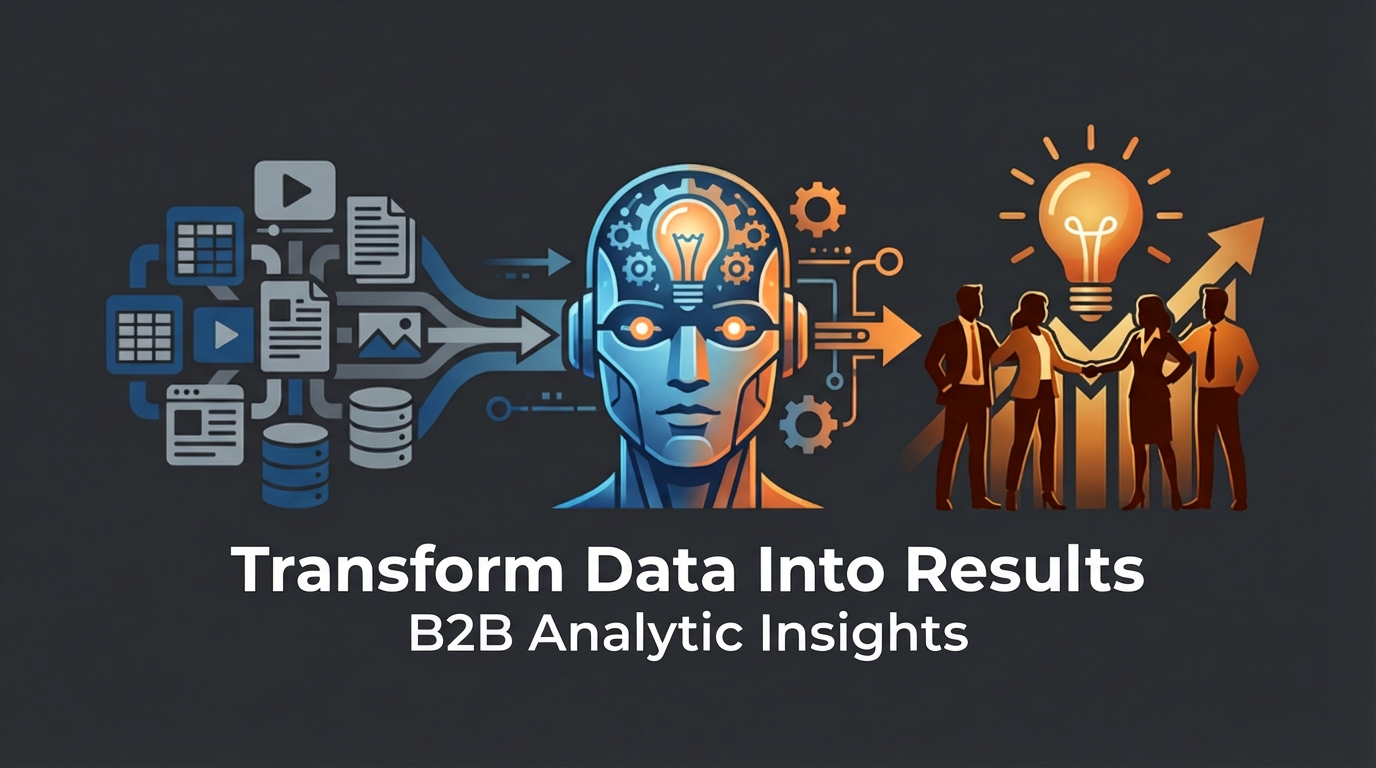

The persistent challenge for C-suites and analytics leaders isn’t merely about amassing more data, but about unlocking its strategic value at the pace the enterprise demands. We’ve spent decades building centralized data warehouses and lakes, only to find ourselves drowning in data but starved for actionable insights. The promise of data-driven decision making remains elusive for many, bogged down by slow reporting cycles, data silos, and the sheer complexity of integrating diverse datasets for critical functions like credit risk assessment, financial analysis, and optimizing enterprise operations. This is where the convergence of Data Mesh and AI presents a profound shift, moving us from centralized bottlenecks to decentralized agility.
The reality we face is this: a global financial institution struggles to accurately assess credit risk in real-time due to disparate data sources – loan origination systems, market data feeds, and external economic indicators – all siloed and updated at different cadences. Their current time-to-insight for a nuanced credit assessment can stretch to days, even weeks, costing them potential revenue and exacerbating risk exposure in volatile markets. Similarly, an industrial conglomerate can’t effectively perform predictive maintenance on its vast network of machinery. Diagnostic data resides in separate operational technology (OT) systems, maintenance logs are unstructured text, and financial impact models are disconnected. The result? Unforeseen downtime, skyrocketing repair costs, and missed opportunities for operational optimization. These are not theoretical problems; they represent billions in potential losses and competitive disadvantage.
The industry is responding. We’re witnessing the emergence of what can only be described as agentic, decentralized analytics. It’s not just about having data; it’s about enabling intelligent agents, powered by AI, to work directly with domain-owned data products. This democratization of data access, coupled with intelligent automation, promises to accelerate time-to-insight and foster true data-driven decision making across the enterprise. The question is no longer if we need this; it’s how we architect and implement it at enterprise scale, especially as AI capabilities become increasingly sophisticated.
For too long, our approach to data architecture has been akin to building ever-larger libraries, hoping that by housing all information under one roof, we’d magically enable better discovery and analysis. This centralized model, whether a data warehouse or a data lake, has inherent limitations. As data volume, velocity, and variety explode, the central team becomes a bottleneck. They struggle to keep pace with domain-specific needs, understand the nuances of every data source, and deliver the precisely curated data products required for complex analytical tasks at scale.
This is where the Data Mesh paradigm offers a foundational shift. The core tenets – domain ownership, data as a product, self-serve data infrastructure, and federated computational governance – are not just architectural patterns; they are organizational and cultural enablers. Domain teams, who intimately understand their data and its business context (e.g., the credit risk team understands loan application data, market risk understands trading data, and operations understands sensor data), are empowered to own and serve their data as well-defined, discoverable, and trustworthy products.
Consider the impact on credit risk analysis. Instead of waiting for a central data team to extract and transform data from multiple siloed systems, the credit risk domain team, owning their data products, can expose cleansed, standardized datasets directly. This drastically reduces their reliance on others, shortening the lead time for obtaining the precise data needed for sophisticated modeling. Similarly, in enterprise operations, the predictive maintenance team can leverage data products exposed by the sensor data domain and the equipment maintenance domain. This self-service access, underpinned by clear data contracts and discoverability, fundamentally changes the speed and efficacy of operational analytics. We’re moving from a model where analytics leaders are constantly fighting for resources and access to one where they leverage a robust, decentralized ecosystem.
The Challenge of Scale and Integration
The promise of decentralization is immense, but the practical implementation at enterprise scale is fraught with complexities. How do we ensure consistency, quality, and interoperability across hundreds, if not thousands, of domain-owned data products? How do we govern data access and usage without reintroducing centralized bottlenecks? This is where the synergy with AI becomes not just beneficial, but essential. AI, when strategically applied within a Data Mesh framework, can provide the intelligence needed to manage this complexity, automate compliance, and unlock deeper insights.
Bridging Technical Concepts to Business Strategy
The key is to frame these technical shifts in terms of tangible business outcomes. For the C-suite, it’s about increased revenue, reduced costs, improved customer satisfaction, and enhanced risk management. For analytics leaders, it’s about achieving faster time-to-insight, enabling true data-driven decision making, and scaling analytics capabilities without proportional increases in headcount. The shift to a Data Mesh, augmented by AI, is fundamentally about achieving higher ROI from our data assets.
In exploring the intersection of decentralized analytics and artificial intelligence, the article “Data Mesh Meets AI: Decentralized Analytics at Enterprise Scale” provides valuable insights into how organizations can leverage a data mesh architecture to enhance their analytical capabilities. For further reading on the broader implications of analytics in the business landscape, you may find the article on B2B Analytical Insights particularly enlightening, as it discusses various strategies and frameworks that can empower enterprises in their data-driven journeys. You can access it here: B2B Analytical Insights.
The Rise of Agentic Analytics: AI in the Data Mesh Fabric
The integration of AI into the Data Mesh is not just about using AI to analyze data; it’s about embedding AI within the decentralized data fabric itself, creating what is increasingly being termed “agentic” or “decentralized” analytics. This is a significant evolution beyond traditional AI deployments within centralized data warehouses. Vendors are now actively extending the concept into what is being called an “AI Mesh,” where distributed AI agents can dynamically interact with and leverage data products across the decentralized architecture.
DataMesh’s launch of the FactVerse AI Agent on March 10, 2026, represents a significant marker. Positioning it as simulation-driven operational intelligence, FactVerse AI moves enterprises beyond static dashboards into a realm of computable, verifiable, and executable analytics. This is particularly impactful for complex industrial environments. Imagine an AI agent that doesn’t just report on equipment status but can simulate the impact of different maintenance strategies, predict failure cascades with verifiable accuracy, and then execute recommended actions through integrated systems. This moves us from reporting what happened to actively shaping what will happen.
The official release and integration of FactVerse AI into the FactVerse cloud platform makes this powerful AI capability readily available to enterprise users. This isn’t a theoretical concept; it’s a tool designed to drive measurable business outcomes. For instance, in a heavy manufacturing setting, an AI agent could analyze real-time sensor data from a critical production line, cross-reference it with historical maintenance records (as data products), and simulation models of component wear, to proactively identify a potential failure several weeks in advance. Importantly, it can then provide a verifiable prediction of the financial impact of this failure (downtime costs, lost production) and recommend specific mitigation strategies, such as rerouting production or scheduling preemptive maintenance during a planned low-demand period.
Autonomous Agents and Data Products
The synergy here is profound. The AI agents operate on domain-owned data products. These data products, adhering to defined semantic and data contracts, become the reliable building blocks for sophisticated AI analysis. The AI agent, in essence, becomes a highly sophisticated consumer of these data products, capable of performing complex analytical tasks that would be incredibly difficult and time-consuming for human analysts to execute manually on decentralized data.
This decentralization of AI capabilities means that AI models and their data needs are no longer dictated by a central AI team’s infrastructure. Instead, domain-aligned AI agents can access and process data directly from their respective domains, reducing data movement and latency. This directly improves the time-to-insight for AI-driven operations.
Consider the implications for credit risk. An AI agent, embedded within the credit risk domain, could continuously monitor a vast array of internal and external data products – economic indicators, sector-specific trends, even public sentiment data – to dynamically adjust risk profiles and flag potential defaults. The “computable” aspect means the agent can not only predict but also simulate scenarios, providing the credit officer with concrete, AI-validated insights into the potential exposure of a given credit line under various market conditions. This translates to a quantifiable reduction in bad debt.
AI Mesh for Dynamic Workflows
Vendors are extending this concept further, framing it as an “AI Mesh.” This isn’t just about AI analyzing data; it’s about distributed AI agents overlaying decentralized data architectures to handle enterprise data access and operational workflows more dynamically. This implies AI agents capable of understanding data contracts, discovering relevant data products, orchestrating data consumption, and even triggering business processes – all autonomously.
Technical Depth for Practitioners
For analytics practitioners, this means embracing a new paradigm of AI development and deployment. Instead of building monolithic AI platforms, the focus shifts to developing modular, domain-specific AI agents that can plug into the Data Mesh ecosystem. This requires understanding how to define clear data interfaces (semantic and data contracts), how to train and deploy AI models that can effectively consume these decentralized data products, and how to ensure the explainability and verifiability of AI-driven insights in a distributed environment. The emphasis is on pragmatic, implementable AI solutions that deliver clear ROI.
DataMesh Inspector and Predictive Maintenance: A Real-World Synergy
The release of DataMesh Inspector (Version 2601 / Internal 8.0.0), a digital twin-powered operations and maintenance platform, alongside their AI ventures, provides concrete validation of the Data Mesh and AI convergence. Aimed at industrial enterprises, smart facilities, and critical infrastructure, Inspector is not just a visualization tool; it’s an operational intelligence platform. When combined with AI, it becomes a powerful engine for proactive and predictive operations.
The AI-powered predictive maintenance partnership with Yokogawa further exemplifies this. By combining industrial sensing, AI analytics, and digital twins – all within the context of a decentralized data architecture – this partnership addresses a critical challenge for industrial enterprises: minimizing downtime and optimizing maintenance schedules.
Imagine a scenario in a large chemical plant. Sensors on critical pumps and turbines generate continuous data streams. In a traditional model, this data might be aggregated into a central data lake, processed by a separate analytics team, and then sent back as reports to the operations team. This process is slow, prone to errors, and often too late to prevent significant disruption.
With DataMesh Inspector and the AI partnership, the process is fundamentally different:
- Domain Ownership of Data Products: Sensor data is exposed as well-defined data products by the OT domain. Maintenance records and historical repair data are exposed as data products by the maintenance domain.
- Digital Twin Integration: DataMesh Inspector creates and maintains high-fidelity digital twins of the physical assets, consuming these data products in near real-time.
- AI-Powered Analysis: AI agents, trained on the historical data products and integrated with the digital twins, analyze the real-time sensor data. They can identify subtle anomalies that precede failures, using the digital twin to simulate potential failure modes and their operational impact. For example, the AI might detect an unusual vibration pattern on a turbine, cross-reference it with past failures triggered by similar patterns and specific environmental conditions (also available as data products), and predict a high probability of bearing failure within the next 500 operating hours.
- Verifiable and Computable Insights: The AI doesn’t just flag an anomaly; it provides a verifiable prediction of the failure probability and the potential impact (e.g., estimated downtime costs, impact on production schedule). This makes the analytics computable and verifiable, allowing operations managers to make informed decisions with confidence. The system can even propose optimal maintenance schedules based on predicted failure times, cost of downtime, and availability of maintenance resources.
- Executable Actions: In mature implementations, the insights can trigger automated workflows, such as scheduling a maintenance request, ordering necessary parts, or even adjusting operating parameters to mitigate immediate risk, all orchestrated through the AI Mesh.
This approach leads to a quantifiable reduction in unplanned downtime, lowered maintenance costs through scheduled interventions rather than emergency repairs, and extended asset lifespan. The time-to-insight for identifying critical operational issues is dramatically reduced, enabling proactive, rather than reactive, management. This is data-driven decision making at its most potent, transforming operational efficiency and directly impacting the bottom line – a clear ROI for enterprise operations.
Optimizing Financial Analysis and Credit Risk
The principles of DataMesh Inspector and AI-powered predictive analytics extend beyond industrial operations. In financial services, AI agents can monitor market data products, economic indicator data products, and internal ledger data products to provide real-time, sophisticated credit risk assessments. The ability to run simulations based on these integrated data products allows for a more granular understanding of risk, leading to better loan origination decisions and more effective portfolio management. This translates to a demonstrable improvement in credit risk mitigation and increased profitability.
Enterprise Operations Beyond Manufacturing
The application isn’t limited to heavy industry. Smart facilities, critical infrastructure (like power grids or water treatment plants), and even complex IT operations can benefit. Predictive maintenance for IT infrastructure, optimization of energy consumption in buildings, or proactive identification of supply chain disruptions are all areas where agentic, decentralized analytics powered by AI can drive significant efficiencies. The core idea is to leverage domain-owned data products and intelligent agents to achieve operational excellence at scale.
Federated Governance: The Backbone of Trust and Compliance

The most compelling advances in AI and data analytics are rendered moot if the underlying data is untrusted or its usage is non-compliant. This is precisely why the federated computational governance tenet of Data Mesh is so critical, especially when integrating AI at enterprise scale. Centralized governance models, while well-intentioned, struggle to keep up with the distributed nature of Data Mesh and the dynamic, often opaque, execution of AI algorithms.
Federated governance in a Data Mesh context means that governance policies and standards are defined centrally but enforced computationally and across distributed domains. For AI integration, this has several crucial implications:
- Data Access Control and Auditing: Because data products are served by their owning domains, access controls can be managed at the domain level, aligning resource grants with specific analytical needs. AI agents, operating within this framework, can only access data products for which they have been granted permissions, typically defined by data contracts. This is vital for sensitive data like credit information or customer PII. Auditing trails become more granular, tracking not just who accessed data but which AI agent accessed it, for what purpose, and what derived insights were generated. This provides a verifiable lineage crucial for regulatory compliance and risk management.
- Data Quality and Interoperability Standards: Federated governance ensures that all domain data products adhere to common standards for quality, schema, and metadata. This is paramount for AI. AI models are notoriously sensitive to data quality. By enforcing these standards through federated governance mechanisms (e.g., automated quality checks embedded in the self-serve infrastructure), we ensure that AI agents are trained on and operate with reliable data. Semantic contracts, defining the meaning and usage of data, become the lingua franca, ensuring that AI agents can interpret data products consistently across different domains.
- AI Model Governance: The concept extends to governing the AI models themselves. While not solely a data governance issue, federated governance principles can apply. This could involve requirements for model explainability, bias detection, and performance monitoring, all of which can be defined centrally and enforced computationally at the domain or agent level. For instance, a federated policy might mandate that any AI agent used for credit risk assessment must provide an explainability report for its decisions, which is then automatically logged against the AI agent’s activity.
Balancing Autonomy with Oversight
The goal of federated governance is to strike a dynamic balance between the autonomy granted to domain teams and the need for overarching enterprise oversight. It empowers domains to innovate and serve their data efficiently while ensuring that the entire organization adheres to critical compliance and ethical standards. This is particularly important as AI agent capabilities become more sophisticated. We need to ensure that these agents operate within defined boundaries of ethical data usage and risk.
The Role of Data Contracts
Data contracts are a cornerstone of this governance model. They act as legally binding agreements between data producers and consumers, defining the schema, quality SLAs, and usage policies of a data product. For AI agents, these contracts are essential for understanding what data to expect, how it will be formatted, and what guarantees are in place. This creates a trust layer, vital for enabling AI to operate reliably across decentralized data landscapes.
In exploring the intersection of decentralized analytics and artificial intelligence, a related article that delves into the implications of these technologies for businesses can be found at B2B Analytic Insights. This resource provides valuable insights into how organizations can leverage data mesh principles to enhance their analytical capabilities while maintaining scalability and flexibility. By understanding these concepts, enterprises can better navigate the complexities of modern data environments.
The Human Element: Expertise and Organizational Change
| Metrics | Data Mesh Meets AI |
|---|---|
| Data Processing Speed | High |
| Scalability | Enterprise Scale |
| Decentralization | Enabled |
| Analytics Integration | Seamless |
It’s tempting to focus purely on the technological architecture of Data Mesh and AI. However, as an analytics executive with over 25 years of experience, I can attest that technology is only one half of the equation. The success of any analytics transformation hinges on the human element – expertise, skills, and organizational change management.
The shift to a decentralized, agentic analytics model requires a fundamental recalibration of roles, responsibilities, and skill sets.
- Empowering Domain Teams: Domain teams, now owners of their data products, need to develop data product management skills. This includes understanding data quality, defining clear product metadata, and collaborating with data consumers (including AI agents). They require training in data modeling, data governance principles relevant to their domain, and how to expose their data effectively.
- Upskilling Analytics Leaders and Practitioners: Analytics leaders need to shift their focus from being data wranglers to becoming orchestrators of decentralized data products and AI agents. They must understand the Data Mesh architecture, the capabilities of AI within this framework, and how to leverage new tools like DataMesh Inspector. Practitioners will need to develop skills in data product design, API development for data services, and potentially in building or customizing AI agents that interact with decentralized data. The time-to-insight is achieved not just by faster processing but by better alignment of analytical efforts with business needs, facilitated by the domain experts.
- Cultural Transformation: Perhaps the most significant challenge is the cultural shift required for true data-driven decision making. Moving from a culture of data hoarding and scarcity to one of data sharing and collaboration is a journey. This involves fostering trust between domains, encouraging cross-functional collaboration, and promoting a mindset where data is seen as a shared asset with clear ownership and accountability.
- The Role of the Chief Data Officer (CDO) / Chief Analytics Officer (CAO): These leaders are pivotal in driving this transformation. Their role evolves from managing a central data infrastructure to establishing the overarching strategies for data productization, federated governance, and the ethical integration of AI. They are the champions of the analytics transformation, ensuring that the organizational structure, culture, and skills development align with the technological advancements.
Recognizing the Interplay of Technology and Talent
It’s a common misconception to believe that AI will simply replace human analysts. While AI can automate many repetitive tasks and augment human capabilities with sophisticated analytical power, human expertise remains indispensable. AI agents can process vast datasets and identify patterns, but human analysts are crucial for interpreting these findings in the broader business context, asking the right questions, performing qualitative analysis, and making strategic decisions based on AI-generated insights. The ROI is maximized when technology and human expertise work in concert. We are not overselling AI; we are recognizing it as a powerful co-pilot.
Bridging Silos through Shared Understanding
The Data Mesh, by design, encourages domain expertise to be closer to the data. This proximity fosters a deeper understanding of the data’s nuances and its business implications. AI, when integrated with this model, can amplify this understanding. For example, an AI agent analyzing credit risk data might identify a pattern that a human analyst with deep domain knowledge of a specific industry segment can then contextualize and explain, leading to a more robust risk assessment. This interplay ensures that data-driven decision making is not just data-informed but also strategically sound.
In exploring the innovative concepts of Data Mesh and its integration with AI for decentralized analytics at enterprise scale, it’s also valuable to consider how analytics can transform data into meaningful actions. A related article discusses this transformative power and provides insights into leveraging analytics effectively. For more information, you can read the article on the power of analytics. This connection highlights the broader implications of data strategies in driving impactful business decisions.
Strategic Recommendations for Enterprise Scale
The convergence of Data Mesh and AI represents a paradigm shift, not just an incremental improvement. To successfully navigate this transformation and harness its full potential for your enterprise:
- Prioritize Data as a Product: Begin by identifying critical data domains and empowering their owners to treat data as a product. This involves establishing clear ownership, accountability, and adopting product management discipline for data assets. Focus on ensuring data products are discoverable, addressable, trustworthy, and self-describing. This is the bedrock of both effective AI and decentralized analytics.
- Invest in Self-Serve Data Infrastructure: To enable domain teams and AI agents to thrive, robust, self-serve data infrastructure is non-negotiable. This includes capabilities for data cataloging, metadata management, data lineage tracking, and scalable data processing. The goal is to reduce friction for data consumption and production, thereby accelerating time-to-insight.
- Embrace Federated Computational Governance: Establish clear, enterprise-wide governance standards for data quality, security, and compliance. Crucially, ensure these standards are codifiable and enforceable computationally across the decentralized architecture. This builds trust in your data and your AI outputs, vital for regulatory compliance and ethical operations.
- Strategically Integrate AI with Domain Data Products: Don’t approach AI as a monolithic, centralized initiative. Instead, identify key business problems in specific domains (e.g., credit risk, predictive maintenance, operational efficiency) and explore how AI agents can leverage domain-owned data products to solve them. Vendors like DataMesh are already providing off-the-shelf solutions like FactVerse AI Agent that can accelerate this integration, offering actionable, verifiable analytics.
- Foster a Culture of Data Literacy and Collaboration: Technology alone is insufficient. Invest in upskilling your workforce in data product management, data governance, and AI literacy. Champion a culture that values data sharing, cross-domain collaboration, and continuous learning. The most successful analytics transformations are driven by people and processes aligned with technology.
- Start with Clear ROI-Driven Use Cases: For your initial forays into Data Mesh and AI, select use cases with a clear, quantifiable business impact (e.g., reducing credit defaults by X%, decreasing unplanned downtime by Y%, improving forecast accuracy by Z%). This will provide tangible evidence of value, build momentum, and secure continued executive sponsorship for broader adoption.
- Build for Scalability and Agility: The future demands an analytical architecture that is both scalable and agile. Data Mesh principles, augmented by agentic AI, provide this foundation. Focus on building modular, interoperable systems that can adapt to evolving business needs and emerging technologies, ensuring your organization remains competitive in an increasingly data-intensive world.
The path to enterprise-scale, decentralized analytics powered by AI is a journey of continuous evolution. By focusing on these strategic recommendations, organizations can move beyond the limitations of traditional data architectures, unlock unprecedented value from their data, and truly embed data-driven decision making into the fabric of their operations. The next era of analytics is here, and it’s decentralized, intelligent, and ultimately, more powerful.