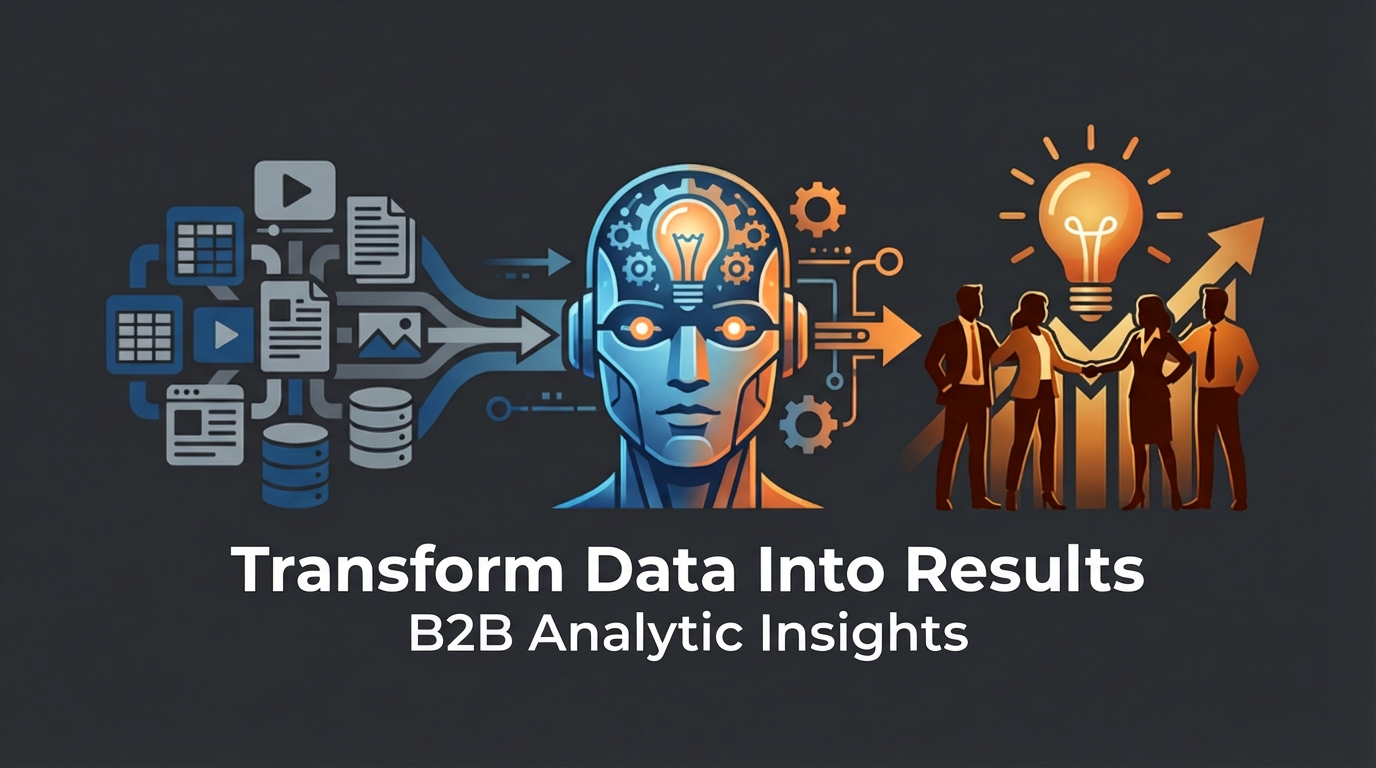

The credit risk landscape is evolving at an unprecedented pace. Lenders are grappling with increasing data volumes, regulatory scrutiny, and the demand for faster, more accurate credit decisions that directly impact profitability and market share. Simultaneously, enterprise operations are crying out for greater efficiency, predictive maintenance, and optimized resource allocation, all underpinned by reliable financial analysis. The question isn’t whether to leverage advanced analytics; it’s how to do so effectively, sustainably, and with a demonstrable return on investment, especially in a B2B context where stakes are incredibly high. This is where the strategic imperative of hybrid analytics architectures emerges, not as a technological fad, but as a foundational shift towards robust, adaptable decision-making.
For over two decades, I’ve witnessed the transformative power of data. We’ve moved from descriptive reporting to sophisticated predictive modeling, and now, the age of AI is upon us. My experience, particularly in financial services and large-scale enterprise operations, highlights a crucial truth: the most impactful advancements rarely stem from a complete overhaul, but from a thoughtful integration. Hybrid analytics architectures represent precisely this – a mature approach that leverages the strengths of both traditional, proven methods and the emergent power of AI and machine learning. This isn’t about AI replacing what works; it’s about AI augmenting and accelerating our ability to achieve sophisticated data-driven decision making and unlock faster time-to-insight.
The Imperative for Hybrid Architectures: Beyond the Hype
The allure of Artificial Intelligence is undeniable. Its ability to sift through vast quantities of unstructured data, identify intricate patterns, and predict complex outcomes holds immense promise. However, many organizations, particularly in B2B sectors like credit risk management and complex financial operations, are discovering that a purely AI-driven approach, while powerful, can be brittle, opaque, and challenging to integrate into existing, highly regulated workflows. This is where hybrid architectures shine. They acknowledge that established analytical methods, built over years of refinement and regulatory compliance, offer invaluable stability, interpretability, and often, the required precision for critical business functions.
Hybrid architectures allow us to strategically deploy AI where it offers a significant advantage – perhaps in the initial identification of novel fraud patterns, the complex segmentation of a vast customer base, or the nuanced prediction of equipment failure in an industrial setting. Concurrently, traditional statistical models and expert-driven rules can maintain oversight, provide interpretability for auditors and regulators, and ensure a baseline level of accuracy for core processes. This synergy is not theoretical. Recent research, even as of March 2025, is consistently demonstrating that hybrid deep-learning and analytics approaches can outperform single-model or conventional methods, particularly on large-scale datasets. These studies highlight benefits such as better convergence rates, significantly improved processing times, and enhanced scalability – all critical for the demanding environments of enterprise financial analysis and credit risk assessment. The adoption of hybrid analytics isn’t just a trend; it’s a pragmatic evolution driven by the need for efficacy and efficiency.
In exploring the concept of Hybrid Analytics Architectures, which aim to balance AI-driven methodologies with traditional analytical techniques, it is essential to consider the broader implications of such frameworks. A related article that delves into the evolving landscape of analytics and the integration of various approaches can be found at B2B Analytic Insights. This resource provides valuable insights into how businesses can leverage both AI and conventional methods to enhance their data-driven decision-making processes.
Unifying Disparate Worlds: The Foundation of Hybrid
A true hybrid analytics architecture necessitates a robust and integrated data foundation. For too long, organizations have operated with siloed data lakes, transactional systems, and analytical sandboxes, creating significant friction and latency in the analytics transformation journey. The modern enterprise data platform is now evolving towards “true hybrid” designs. This critical shift involves seamlessly connecting cloud and on-premise environments. Imagine a scenario where your sensitive customer credit data resides securely on-premise for regulatory compliance, while your sophisticated AI training models leverage the elastic scalability of a cloud platform. This secure portability of analytics and AI workloads across the entire infrastructure stack is paramount.
IBM, a long-standing leader in enterprise solutions, has been a vocal proponent of hybrid data architecture for real-world AI deployments. Their vision, exemplified by platforms like watsonx.data, focuses on unifying access to both structured and unstructured data sources, regardless of their location. This unified approach is crucial for financial institutions performing credit risk analysis. They need to aggregate traditional financial statements (structured) with news articles, social media sentiment, and geopolitical reports (unstructured) to gain a comprehensive view of borrower risk. Without this unified data layer, the analytical insights remain fragmented, and the time-to-insight is unnecessarily prolonged. The ability to tap into this consolidated data for both AI-powered anomaly detection and traditional financial ratio analysis is where the power of hybrid truly begins to manifest.
Edge and Cloud Collisions: Real-Time Decision Power
The rise of the Internet of Things (IoT) and the increasing demand for real-time decision-making have propelled edge computing into the spotlight, especially within hybrid analytics frameworks. This isn’t an either/or proposition; it’s a strategic division of labor. Edge + Cloud hybrid AI is becoming a dominant paradigm for use cases demanding immediate action. Think about industrial manufacturing where predictive maintenance is critical. Sensors on machinery can perform initial inference at the edge, detecting immediate anomalies or deviations from normal operating parameters. This allows for instantaneous alerts and potential shutdowns, preventing catastrophic failures and costly downtime – a direct impact on enterprise operations and financial reporting.
Simultaneously, the heavier lifting – model training, complex simulations, and large-scale data storage – can be managed in the cloud. This distributed approach optimizes performance, reduces latency for critical actions, and maintains resource efficiency. On-premise environments often remain vital for maintaining strict security and robustness for highly sensitive data or mission-critical infrastructure where direct cloud connectivity might be a concern. For a credit risk analyst, this could translate to edge devices flagging unusual transaction activity in real-time, triggering an immediate alert that is then analyzed by more sophisticated AI models in the cloud to determine the likelihood of fraud before a transaction is even completed. This is data-driven decision making at its finest, enabled by a sophisticated hybrid architecture.
Transactional and Analytical Convergence: Eliminating Latency
A significant bottleneck in achieving rapid data-driven decision making has historically been the disconnect between transactional processing (OLTP – Online Transaction Processing) and analytical processing (OLAP – Online Analytical Processing). Moving data from operational systems into data warehouses or data lakes for analysis introduces latency. This means that the insights derived from your data are always a snapshot of the past, potentially days or even hours old. A newer, yet incredibly powerful, trend is transactional/analytical convergence. Merging OLTP and OLAP into unified data stacks is revolutionizing how businesses can operate and analyze.
This convergence allows for immediate querying of live transactional data for analytical purposes. For a credit risk manager, this means they can analyze a customer’s current transaction behavior in real-time, alongside historical data, without the delay inherent in traditional ETL (Extract, Transform, Load) processes. This drastically reduces data-copy latency and simplifies operational complexity. Imagine a scenario where a large B2B enterprise is applying for a significant line of credit. With transactional/analytical convergence, their entire financial footprint, from core banking transactions to purchase order activity, can be analyzed instantaneously, providing a much more dynamic and accurate credit risk assessment. This capability is a game-changer for both speed and depth of insight, directly impacting financial analysis and operational efficiency.
The Human-AI Nexus: Augmentation, Not Just Automation
One of the most critical aspects of embracing AI within established B2B sectors like credit risk and enterprise operations is understanding its role relative to human expertise. The narrative that AI will completely replace human judgment is not only an oversimplification but also a significant misstep in strategic implementation. The reality is that the most potent advancements lie in human-AI hybrid analytics. Current research and practical implementations are increasingly framing AI as a powerful force multiplier for expert judgment, rather than a complete automation replacement.
Consider the domain of financial crime detection. AI models excel at sifting through millions of transactions to flag suspicious patterns that might indicate money laundering or fraud. However, the nuanced interpretation of these flags, the understanding of intent, and the contextualization within a broader economic or regulatory framework still require human expertise. An AI might raise an alert, but a seasoned financial investigator, armed with both AI-generated insights and their deep domain knowledge, will make the final determination. This symbiotic relationship accelerates the investigative process, improves accuracy by reducing false positives, and ensures that critical decisions are made with both data-driven precision and human wisdom. This is a core component of analytics transformation that directly impacts an organization’s ability to manage risk and optimize operations.
Furthermore, in areas like complex B2B credit underwriting, AI can assist in segmenting applicants, identifying potential red flags from alternative data sources that a human might miss, and even automating the initial stages of document review. However, the ultimate decision to extend credit, especially for large, complex deals, often hinges on strategic considerations, long-term relationship building, and a qualitative assessment of management that only human experts can provide. The hybrid model ensures that technology enhances, rather than supplants, these vital human capabilities, leading to more robust and responsible decision-making.
Bridging BI and AI: Precision with Flexibility
The impact of hybrid approaches extends even into the realm of Business Intelligence (BI), which has long relied on structured data and rule-based systems. Hybrid methods are being used in BI too, combining rule-based systems with Large Language Models (LLMs) to balance precision, flexibility, and actionable insights. Traditionally, BI dashboards provided static views of key performance indicators. While robust, they often lacked the flexibility to answer emergent questions or adapt to rapidly changing business conditions.
Now, by integrating LLMs with established BI platforms, organizations can achieve a new level of dynamic insight generation. Imagine a BI dashboard that not only presents sales figures but also allows an analyst to ask natural language questions like, “What are the key drivers behind the recent dip in sales in the manufacturing sector in Southeast Asia?” An LLM, trained on the BI data and relevant external information, can then generate a narrative explanation, identify contributing factors based on both historical trends and current events, and even suggest potential strategic responses. This blend of precise, rule-based reporting and flexible, AI-driven narrative generation provides a much richer and more actionable understanding of business performance. For credit risk analytics, this could mean blending traditional credit scoring models with LLM-driven analysis of macroeconomic trends to provide a more holistic risk assessment. This dramatically enhances data-driven decision making and shortens the time-to-insight for strategic planning and operational adjustments.
Navigating the Hybrid Landscape: Challenges and Opportunities
Implementing a hybrid analytics architecture is not without its complexities. The primary challenge lies in achieving true interoperability between disparate systems. Integrating legacy on-premise systems with modern cloud-native AI platforms requires significant technical effort and a well-defined strategy. Data governance across a hybrid environment becomes more intricate, demanding robust policies for data lineage, access control, and quality management. Security is another paramount concern; ensuring that sensitive financial data is protected whether it resides on-premise or in the cloud, and that AI models are not susceptible to adversarial attacks, requires a multi-layered security approach.
However, the opportunities far outweigh these challenges. Hybrid architectures offer a pathway to unlock the full potential of both existing investments in traditional analytics and the groundbreaking capabilities of AI. They enable a phased approach to AI adoption, allowing organizations to experiment and scale gradually, reducing the risk of large-scale, disruptive implementations. This is particularly important for B2B environments with long development cycles and stringent compliance requirements.
The ability to achieve greater accuracy and scalability through the synergistic combination of AI and traditional methods directly translates to improved financial outcomes. In credit risk, this means reduced defaults, more competitive pricing, and expanded market reach. In enterprise operations, it translates to optimized supply chains, reduced waste, enhanced customer service, and increased operational efficiency. The analytics transformation enabled by hybrid architectures is not merely about adopting new technologies; it’s about fundamentally enhancing an organization’s ability to make smarter, faster, and more profitable decisions. The journey requires a clear vision, a strong commitment to organizational change, and a recognition that the most successful analytics capabilities require both sophisticated technology and deeply knowledgeable human expertise.
In exploring the evolving landscape of data analytics, the article on Hybrid Analytics Architectures: Balancing AI and Traditional Methods provides valuable insights into the integration of modern technologies with established practices. For those interested in further enhancing their understanding of analytics strategies, a related piece can be found at this link, which discusses the importance of effective communication in analytics projects. This connection highlights how both innovative and traditional approaches can work together to drive better decision-making in organizations.
Strategic Recommendations for C-Suite and Analytics Leaders
For C-suite executives, the imperative is clear: view hybrid analytics not as a technical project, but as a strategic enabler of business advantage. Focus on ROI – how can a hybrid approach lead to tangible improvements in revenue growth, cost reduction, and risk mitigation? Prioritize building a unified, governed data foundation that can support both AI and traditional analytics workloads. This requires investment in modern enterprise data platforms that facilitate seamless cloud and on-premise integration. Champion a culture that embraces data-driven decision making by fostering collaboration between business units and analytics teams. Understand that the time-to-insight is a critical competitive differentiator.
For analytics leaders, the focus must be on pragmatic implementation and talent development. Develop a clear roadmap for integrating AI into existing analytical workflows, identifying specific use cases where hybrid models offer the greatest immediate value. This might start with augmenting existing credit scoring models with AI-driven anomaly detection or using LLMs to enhance financial reporting narratives. Invest in training your teams, not just in AI tools, but in the principles of hybrid architecture and the art of augmenting human expertise. Establish robust data governance frameworks that span your entire hybrid environment. Understand that the success of your analytics transformation hinges on your ability to balance technological innovation with practical, executable strategies.
For practitioners, embrace the opportunity to expand your skill sets. Learn how to leverage AI tools to enhance your existing analytical capabilities, whether it’s in credit risk modeling, financial forecasting, or operational optimization. Understand the principles of hybrid architectures and how to effectively integrate AI-generated insights with traditional statistical methods. Focus on demonstrating the business value of your work by clearly articulating how your analytics contribute to key performance indicators. The evolution towards hybrid analytics presents an exciting opportunity to deepen your expertise, drive more impactful data-driven decision making, and shorten time-to-insight in ways that were previously unimaginable. The future of analytics is not a choice between AI or traditional methods; it is the intelligent, synergistic integration of both.