
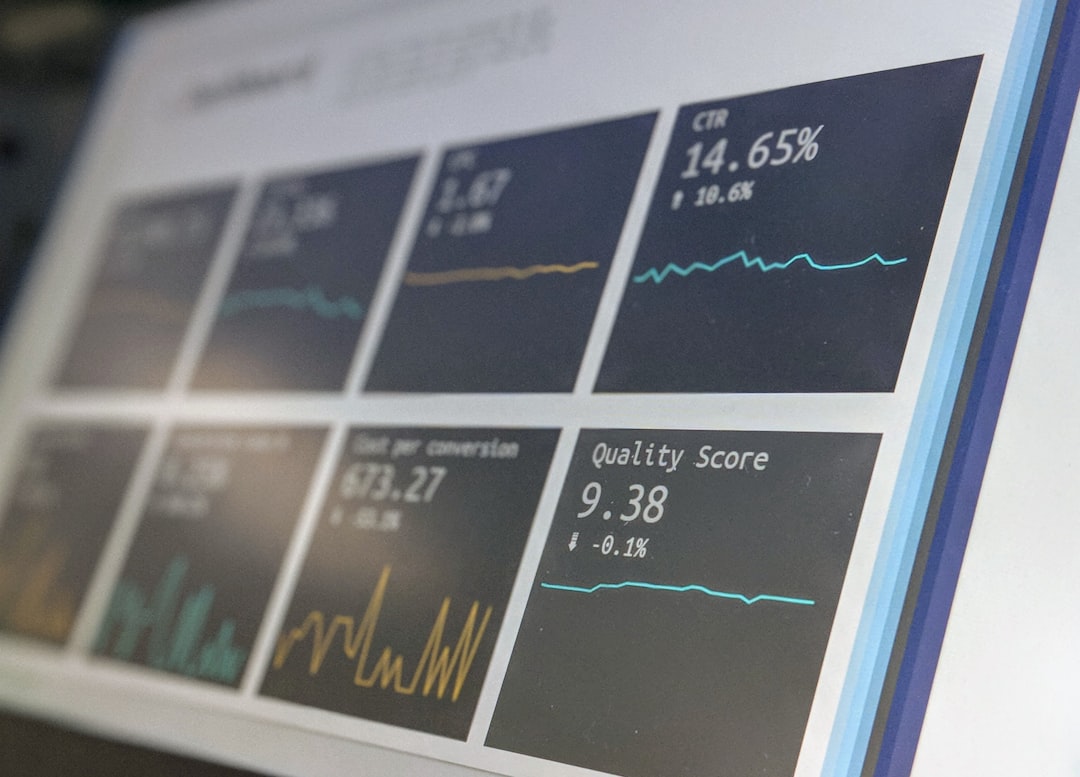
The relentless pressure to maintain and expand market share is a perennial challenge for every B2B enterprise. In disciplines like credit risk assessment, financial analysis, and enterprise operations, even fractional shifts in market positioning can have profound implications for revenue, profitability, and long-term viability. Organizations grapple with opaque competitive landscapes, fragmented data, and the sheer volume of information that defines today’s operating environment. The question is not whether competition exists, but how to accurately measure, predict, and respond to it with agility. This is where market share analytics, particularly when augmented by advanced artificial intelligence, offers a transformative pathway. It is no longer sufficient to merely react; proactive, data-informed competitive positioning is the bedrock of sustainable growth.
Unpacking the Imperative of Market Share Analytics
Understanding where an organization stands within its competitive ecosystem is fundamental. Without a clear picture of market share dynamics, strategic decisions regarding product development, pricing, and go-to-market initiatives are made blind. The stakes are particularly high in B2B sectors, where sales cycles are long, customer relationships are deeply entrenched, and differentiation often hinges on complex offerings and service level agreements.
Consider the challenge of a financial institution attempting to grow its commercial lending portfolio. They need to understand not just their current market penetration but also how competitors are adjusting their credit criteria, pricing structures, and turnaround times. Relying on anecdotal evidence or quarterly reports from public filings is insufficient; these methods offer rearview mirror perspectives. What is required is dynamic insight into competitive actions and their real-time impact on customer acquisition and retention.
Historically, market share analysis involved labor-intensive data gathering, often relying on surveys, syndicated reports, and manual competitive benchmarking. This approach was slow, expensive, and frequently outmoded by the time insights were generated. The result was a lag in strategic response, missed opportunities, and a reactive posture. We have transitioned from an era where market intelligence was a privilege to one where it is a prerequisite for survival.
In the realm of Market Share Analytics, understanding competitive positioning is crucial for businesses aiming to leverage artificial intelligence effectively. A related article that delves deeper into the implications of AI in market analysis can be found at B2B Analytic Insights, where it explores various methodologies and tools that can enhance a company’s strategic decision-making process. This resource provides valuable insights into how AI can transform data into actionable intelligence, ultimately shaping a firm’s market presence.
AI as the Catalyst for Deep Competitive Intelligence
The advent and maturation of AI have fundamentally reshaped the potential of market share analytics. It moves us beyond simple aggregation to predictive capability and strategic foresight. For B2B firms, this means transitioning from merely knowing to actively anticipating.
Beyond Traditional Competitive Monitoring
Traditional competitive intelligence often fixated on product features and pricing. While these remain important, AI extends the analysis to encompass a much broader, more nuanced set of signals. This includes parsing vast quantities of unstructured data from news, social media, regulatory filings, patent applications, and even hiring trends. A financial analytics firm, for example, can use AI to track not just competitor-offered APIs but also their key hires in specific technology stacks, signaling future product directions in areas like real-time fraud detection or algorithmic trading.
In fact, integrated AI competitive intelligence has been shown to drive a remarkable 23% higher market share growth specifically by predicting shifts beyond just features and pricing. This is critical as 72% of marketers now deem AI-driven competitive analysis essential for 2025, with 87% combining it with traditional market research methods to validate and enrich insights. This blending of quantitative and qualitative data provides a robust foundation for strategic decision-making.
Predictive Analytics for Market Share Shifts
The real power of AI lies in its ability to transform descriptive data into predictive models. By analyzing historical market share fluctuations alongside a myriad of competitive actions, economic indicators, and customer sentiment signals, AI algorithms can identify patterns that humans simply cannot discern at scale. This allows organizations to forecast potential competitive moves and their likely impact on market positioning.
Imagine an enterprise software provider. AI can identify leading indicators of a competitor gaining traction within a specific vertical, perhaps by analyzing unusual upticks in search queries for their product, a surge in LinkedIn engagement from employees at target accounts, or even subtle changes in their messaging on industry forums. This provides invaluable time-to-insight, enabling proactive counter-strategies such as targeted marketing campaigns, incentivized upgrades, or adjustments to sales force allocation.
Enhanced Data Security and Self-Validation
A notable advancement in AI for market research, particularly since April 2026, is the incorporation of enhanced memory, security, and self-validation capabilities. This means AI systems are not just processing data; they are learning from past analyses, improving the accuracy of their insights, and doing so within secure frameworks. They can instantly provide competitor traffic and keyword intelligence, evolving from tactical tools to collaborative environments that augment human analysts rather than replace them. This evolution addresses prior concerns about data integrity and strengthens the trustworthiness of AI-generated insights.
Operationalizing AI for Market Share Gains
Implementing AI for market share analytics is not just a technological undertaking; it is an organizational transformation. It requires strategic foresight, robust data infrastructure, and a commitment to integrating insights into daily operations.
Building a Robust Competitive Intelligence Architecture
The foundation for successful AI-driven market share analytics is a well-designed data architecture. This involves consolidating internal sales, operational, and customer data with external competitive intelligence data. External data sources include financial news, industry reports, social media, public review sites, patent databases, and even scraped competitor websites. The challenge lies in harmonizing these disparate data types into a unified, accessible format.
For a company operating in high-volume enterprise operations, extracting competitor pricing for their service level agreements often involves parsing complex contract documents or public tenders. AI, specifically natural language processing (NLP), excels at this, extracting relevant terms, conditions, and pricing models that would be prohibitively time-consuming for human analysts. The market for competitive intelligence tools, valued at $0.87 billion in 2026 and projected to reach $4.03 billion by 2034 with a 21.17% CAGR, underscores the increasing investment in these capabilities. AI integration, exemplified by tools like Digimind AI Sense, which tracks social media and digital footprints for real-time rival strategies, is a key driver of this growth, with North America leading adoption.
In the ever-evolving landscape of business, understanding competitive positioning is crucial for success. A related article that delves deeper into this topic is available at B2B Analytic Insights, where they explore how AI can enhance market share analytics. This resource provides valuable insights into leveraging artificial intelligence to gain a competitive edge, making it a must-read for professionals looking to refine their strategies in today’s market.
Integrating AI Tools and Platforms
Selecting the right AI tools is paramount. This can range from off-the-shelf competitive intelligence platforms equipped with AI capabilities to custom-built machine learning models that address specific, niche competitive threats. The key is to find solutions that can ingest and process the diverse data types discussed while providing actionable, easy-to-interpret outputs.
A large B2B credit risk assessment provider, for instance, might leverage specialized AI tools that not only track publicly available credit ratings but also analyze news sentiment around competitors’ key clients, shifts in supply chain financing offerings, or even geopolitical events that could impact their counterparties. This level of granular insight can inform adjustments to risk models and competitive pricing. The broader AI/ML in Business market, projected to grow from $120.9 billion in 2022 to $190.5 billion by 2032 (a 32% CAGR), highlights the significant investment in these technologies, with data analytics dominating for competitive insights.
Fostering a Data-Driven Culture
Technology alone is insufficient. The most sophisticated AI platform will yield limited value if the organization lacks a data-driven decision-making culture. This involves training employees across sales, marketing, product, and strategy teams on how to interpret AI-generated insights and, crucially, how to act upon them. It requires establishing clear feedback loops where the outcomes of AI-informed decisions are tracked and used to further refine the models. Organizational change management is as critical as algorithmic sophistication. Without it, the insights remain static, failing to translate into tangible market share gains.
Measuring Success and Adapting Strategy
Market share analytics, powered by AI, is an iterative process. It requires continuous measurement, evaluation, and adaptation. The goal is to move beyond simply identifying where you stand to systematically improving that positioning.
Defining Key Performance Indicators (KPIs) for Market Share
Clear KPIs are essential to quantify the impact of AI-driven competitive intelligence. Beyond the ultimate metric of market share percentage, an organization should track indicators such as customer win rates against specific competitors, pricing realization compared to identified market benchmarks, churn rates among customers targeted by competitors, and the speed at which new competitive threats are identified and neutralized.
For a firm in financial analysis, KPIs might include the percentage increase in new client acquisition for services where a competitor recently launched a similar offering, or a reduction in RFP response time dueously to AI-powered competitive intelligence that pre-populates common competitor positioning. Metrics that measure time-to-insight are especially relevant here.
Leveraging Insights for Agile Strategy Adjustment
The true advantage of AI in this context is its ability to provide near real-time insights, enabling agile strategic adjustments. This means moving away from annual strategic planning cycles that can quickly become obsolete, towards continuous strategic recalibration.
An enterprise operations platform provider, for example, could use AI to detect a new entrant aggressively undercutting prices in a specific geographic market or industry segment. With rapid insight, they can then deploy targeted promotions, adjust pricing for specific client tiers, or communicate differentiated value propositions to key accounts before significant market share erosion occurs. This proactive response minimizes competitive damage and protects revenue streams. This is the essence of analytics transformation enabling strategic agility.
The Role of Human Expertise in an AI-Driven Landscape
While AI automates much of the data processing and pattern recognition, human expertise remains indispensable. Analysts and strategists are needed to contextualize AI outputs, formulate hypotheses, design experiments, and make the ultimate strategic decisions. AI acts as an accelerator and augmenter of human intelligence, not a replacement.
Analytics leaders must cultivate teams capable of interfacing effectively with AI platforms – understanding their capabilities, limitations, and how to frame the right questions. This hybrid approach, combining precise algorithmic capability with nuanced human judgment, is where maximum market share gains are realized. The broader AI software market, set to reach $467 billion by 2030 with a 25% CAGR, particularly with generative AI as the fastest-growing segment, signifies the continuous innovation in tools that can support and amplify human strategic thinking. Companies gaining competitive edges, such as Arista Networks in the networking market through its software, illustrate how leveraging these advanced tools can directly translate to market share.
In conclusion, the pursuit of market share in the B2B landscape is an ongoing battle, and traditional methods are increasingly inadequate. AI-powered market share analytics provides the necessary edge by offering granular, predictive, and actionable insights. It transforms competitive intelligence from a descriptive exercise into a strategic imperative. This is not about abstract concepts or theoretical models; it is about tangible ROI through sharper competitive positioning, reduced competitive vulnerability, and accelerated growth. Every C-suite executive, analytics leader, and practitioner must recognize that leveraging AI here is no longer optional; it is a fundamental requirement for securing and expanding market dominance in a hyper-competitive world. Strategic recommendations include investing in AI-enabled competitive intelligence platforms, building internal capabilities for data integration and analysis, and critically, nurturing a culture that empowers agile, data-driven decision-making at every level of the organization.